
Pheidole prattorum
- Sci. Name
- Pheidole prattorum
- Tribe
- Attini
- Subfamily
- Myrmicinae
- Author
- Wilson, 2003
- Distribution
- Found in 5 countries
Introduction
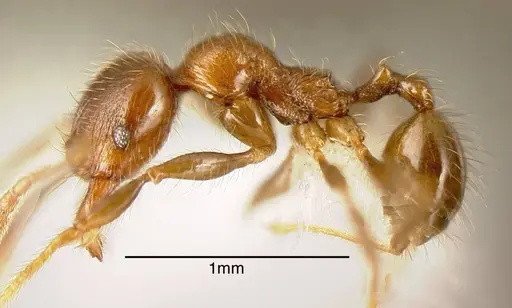
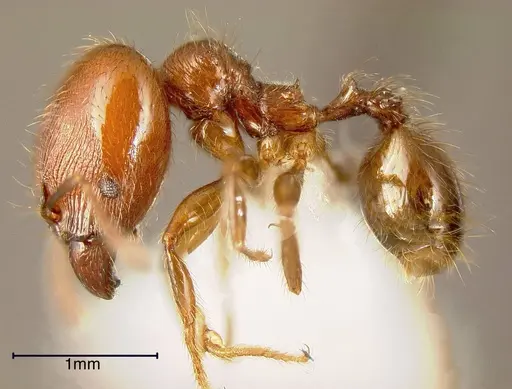
Pheidole prattorum is a dimorphic ant species native to the Neotropical region, found from Mexico to Costa Rica . Colonies inhabit cloud forest and tropical rainforest at elevations between 140 and 1,100 meters . This small ant has two worker castes: majors with reddish-yellow coloration and distinctive head sculpture, and smaller minors that are almost smooth and shiny. The species was described by Wilson in 2003 and named after Joe D. Pratt for his support of biodiversity studies.
Quick Summary
- Difficulty: Medium
- Origin & Habitat: Neotropical region, Costa Rica, Guatemala, Honduras, Mexico, and Nicaragua [1]. Inhabits cloud forest and tropical rainforest at 140 to 1,100m elevation [2].
- Colony Type: Likely monogyne with single queen per colony, based on Pheidole genus patterns [3].
- Size & Growth:
- Queen: Size data unavailable, inferred from Pheidole genus (~5-7mm total length)
- Worker: Size data unavailable, workers are dimorphic with majors larger than minors
- Colony: Up to several hundred workers, estimated from genus patterns
- Growth: Moderate
- Development: 6-10 weeks, estimated based on tropical Pheidole species at 24-26°C (Development time inferred from typical Pheidole patterns in warm conditions)
- Antkeeping:
- Temperature: Keep at 24-28°C, they are a tropical species adapted to warm conditions [2].
- Humidity: Keep nest substrate consistently moist but not waterlogged, as they inhabit humid rainforests [1].
- Diapause: No, as a tropical species, they do not require hibernation.
- Nesting: Prefers humid nest chambers. Y-tong or plaster nests work well [2].
- Behavior: These ants are active foragers. Majors may deliver mild bites if handled. Minor workers are very small, so escape prevention is critical due to high escape risk.
- Common Issues: high humidity needs mean mold can develop if ventilation is poor, balance airflow carefully., tiny minor workers can escape through small gaps, use fine mesh barriers and check all connections., tropical species will become sluggish or die if temperatures drop below 20°C for extended periods., colonies may struggle if kept too dry, rainforest species need consistent moisture., majors take longer to develop than minors, so colony structure may appear delayed.
Housing and Nest Setup
Pheidole prattorum does well in Y-tong (AAC) nests or plaster formicariums that retain moisture well [2]. Since they come from humid rainforest environments, the nest material should stay damp without becoming waterlogged [1]. A test tube setup can work for founding colonies, but monitor moisture levels closely. The outworld should have a water tube or damp cotton as a drinking source. Because minor workers are tiny, ensure all connections are tight and consider using fine mesh on any ventilation holes.
Feeding and Diet
Pheidole species are typically granivorous and protein-seeking. Offer small seeds like millet or sesame as a staple carbohydrate source. Protein should come from small insects like fruit flies or small mealworms. Sugar water or honey can be offered occasionally. Feed seeds continuously and protein 2-3 times per week. Remove uneaten food to prevent mold.
Temperature and Seasonal Care
As a tropical species, Pheidole prattorum needs warm conditions year-round. Keep the nest area at 24-28°C [2]. A heating cable on one side creates a temperature gradient. Avoid temperatures below 20°C for extended periods, this species is not cold-tolerant. There is no diapause requirement.
Colony Development
This is a dimorphic species with distinct major and minor worker castes [3]. Majors develop larger heads and help with food processing. The first workers will be smaller, but the colony will produce larger majors as it grows. Pheidole colonies can live for several years with a healthy queen producing workers continuously.
Behavior and Handling
These ants are active foragers but not particularly aggressive. If threatened, majors may deliver a mild bite. Minors are very small and handle most tasks. The colony establishes scent trails to food sources. Watch for escape attempts, especially through small gaps, as minors are tiny.
Frequently Asked Questions
How long does it take for Pheidole prattorum to produce first workers?
Expect first workers in about 6-10 weeks at optimal temperatures of 24-28°C, based on typical Pheidole development patterns.
What do Pheidole prattorum ants eat?
They are granivorous and protein-seeking. Offer small seeds like millet or sesame, along with small insects for protein.
Do Pheidole prattorum ants need hibernation?
No, they do not need hibernation as a tropical species.
Can I keep multiple Pheidole prattorum queens together?
This is not recommended, as Pheidole species are typically monogyne.
How big do Pheidole prattorum colonies get?
Colony size is not specifically documented, but typical Pheidole colonies reach up to several hundred workers.
What temperature is ideal for Pheidole prattorum?
Keep them at 24-28°C, as they are a tropical species [2].
Are Pheidole prattorum good for beginners?
They are rated as medium difficulty due to humidity needs and escape risk from tiny workers.
When should I move Pheidole prattorum to a formicarium?
Keep them in a test tube setup for founding. Move to a formicarium when the colony is crowded, always having a second nest connected first.
Why are my Pheidole prattorum dying?
Common causes include temperatures below 20°C, nest drying out, poor escape prevention, or mold from overwatering.
Report an Issue
The current care sheet is based fully on literature. See inconsistencies, or something that's incorrect? Please , it will be resolved after review from an admin. Contributing to the blogs tab also helps providing information, to make us be able to further improve the caresheets. Thank you for your support!
References

This caresheet is licensed under CC BY-SA 4.0 .
Community Blogs
CASENT0635505
View on AntWeb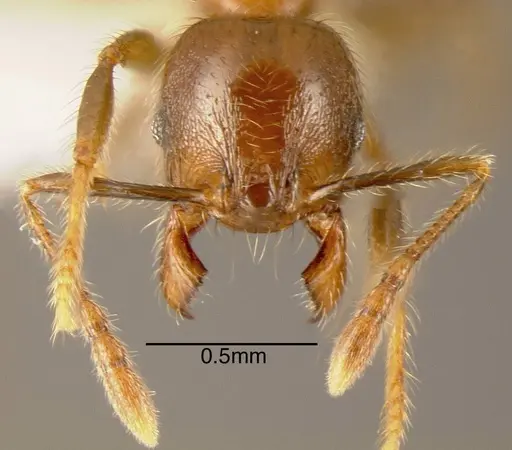
JTLC000003456
View on AntWeb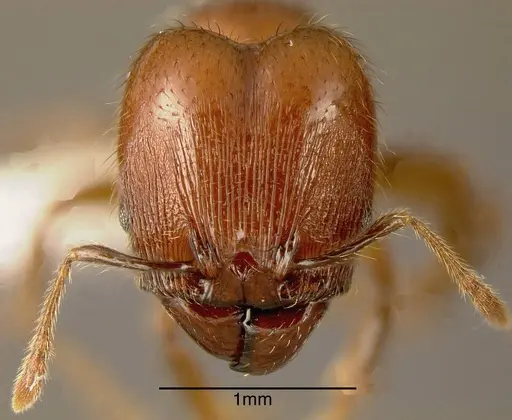
Literature
Loading distribution map...Loading products...