
Pheidole portalensis
- Sci. Name
- Pheidole portalensis
- Tribe
- Attini
- Subfamily
- Myrmicinae
- Author
- Wilson, 2003
- Distribution
- Found in 2 countries
Introduction
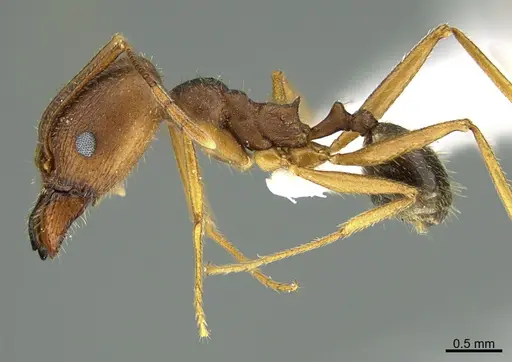
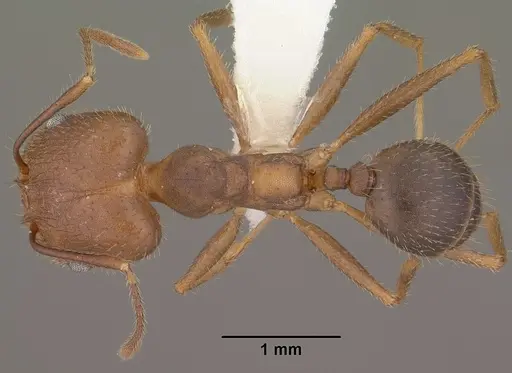
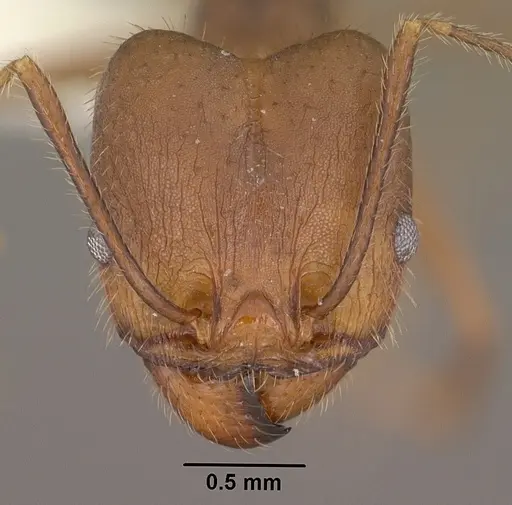
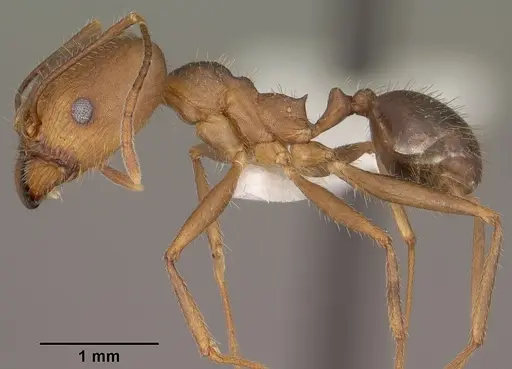
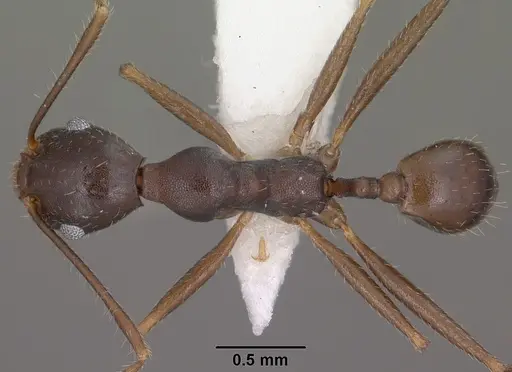
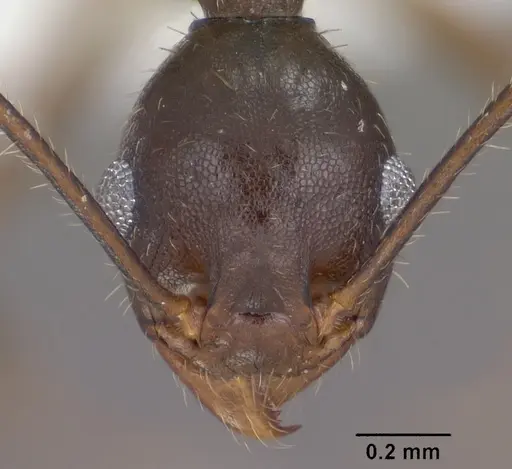
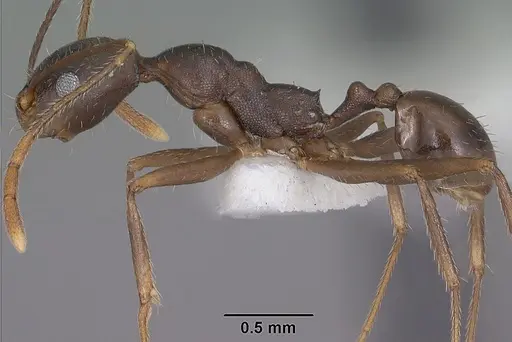
Pheidole portalensis is a dimorphic ant species native to the mountains of southern Arizona and northern Mexico. It belongs to the fallax group and has two distinct worker castes: large majors with powerful mandibles and smaller minors that handle foraging tasks. The body is light reddish brown with a medium brown gaster, and the surface has a foveolate (pitted) texture . This species is adapted to life on rock walls, nesting in cracks at elevations between 1100 and 1800 meters. Colonies contain several hundred workers. Minor workers forage individually on rock surfaces and recruit nestmates to food sources .
Quick Summary
- Difficulty: Medium
- Origin & Habitat: Mountainous regions of southern Arizona and northern Mexico, at elevations 1100-1800m, nesting in rock cracks [1][2].
- Colony Type: Unconfirmed, no specific data on queen number, but based on Pheidole patterns, likely monogyne [1].
- Size & Growth:
- Queen: Size data unavailable, no total length measurements provided [1].
- Worker: Workers are dimorphic with majors and minors of different sizes [1].
- Colony: Up to several hundred workers [1].
- Growth: Moderate, based on typical Pheidole colonies [1].
- Development: 6-8 weeks estimated, based on typical Pheidole development at warm temperatures [1]. (Development time varies with temperature, warmer conditions within safe range speed development.)
- Antkeeping:
- Temperature: Keep at 22-26°C, as they prefer cooler mountain conditions [1].
- Humidity: Low to moderate, provide a moisture gradient with good ventilation [1].
- Diapause: Yes, based on mountain habitat, reduce temperature to 10-15°C for 2-3 months in winter [1].
- Nesting: Provide rock-like structures or tight crevices, use Y-tong nests or formicarium with slate pieces [1].
- Behavior: Minor workers forage individually and recruit nestmates using chemical trails, majors defend and process food. Not particularly aggressive, but will defend if threatened. Escape risk is moderate, use standard barriers [1].
- Common Issues: colonies may stagnate if temperatures are too high, keep them cooler than typical tropical ants., mold can develop if humidity is too high, ensure good ventilation., foundating queens often fail if disturbed, provide quiet, dark conditions., colonies grow slowly compared to some species, patience is required., wild-caught colonies may have parasites that cause problems in captivity.
Housing and Nest Setup
Pheidole portalensis requires a setup that mimics rock crevices. Use Y-tong nests with narrow chambers or a formicarium with slate pieces to create tight spaces [1]. Place the nest in a quiet location with minimal vibration, as disturbance can stress the colony [1]. The outworld should include textured surfaces for foraging [1]. Keep the setup away from direct sunlight and drafts [1].
Feeding and Diet
These ants are omnivorous. Offer protein sources like small insects 2-3 times per week, and provide sugar water or honey constantly [1]. Minor workers forage individually and recruit nestmates to food [1]. Remove uneaten prey after 24-48 hours to prevent mold [1].
Temperature and Seasonal Care
Maintain temperatures between 22-26°C during active seasons [1]. Avoid overheating, as they are adapted to cooler mountain conditions [1]. During winter, reduce temperature to 10-15°C for 2-3 months to simulate diapause [1]. Reduce feeding during this period but ensure moisture remains [1].
Colony Development and Growth
Colonies grow at a moderate pace [1]. A queen may lay eggs after 1-2 weeks, with first workers emerging in 6-8 weeks at optimal temperatures [1]. Growth accelerates as workers increase, but colonies typically reach several hundred workers over 1-2 years [1]. Major workers appear once the colony has dozens of workers [1].
Behavior and Observation
Minor workers handle foraging and brood care, while majors defend and process food [1]. Workers recruit nestmates using chemical trails when food is found [1]. The species is not aggressive toward keepers but will defend the nest if threatened [1].
Frequently Asked Questions
How long does it take for Pheidole portalensis to produce first workers?
Expect first workers to emerge 6-8 weeks after the queen lays eggs, assuming temperatures around 24-26°C [1].
What temperature do Pheidole portalensis ants need?
Keep them at 22-26°C during the active season. Avoid temperatures above 28°C, which can stress the colony [1].
Do Pheidole portalensis ants need hibernation?
Yes, they benefit from a winter dormancy period. Reduce temperatures to 10-15°C for 2-3 months during winter [1].
How big do Pheidole portalensis colonies get?
Wild colonies contain up to several hundred workers. In captivity, expect similar sizes with good care [1].
What do Pheidole portalensis ants eat?
They are omnivorous. Offer protein sources like small insects 2-3 times per week, and keep sugar sources available constantly [1].
Are Pheidole portalensis good for beginners?
They are moderate difficulty, not the easiest but not difficult either. Challenges include providing proper habitat and maintaining cooler temperatures [1].
Can I keep multiple Pheidole portalensis queens together?
Pheidole species are typically monogyne, but this is unconfirmed for this species. Combining unrelated queens is not recommended as they may fight [1].
When should I move Pheidole portalensis to a formicarium?
Wait until the colony has a decent worker count, such as 30-50 workers, before moving to a formicarium [1].
Why are my Pheidole portalensis dying?
Common causes include temperatures too high, excessive humidity causing mold, disturbance during founding, or poor nutrition. Review your setup and ensure quiet conditions [1].
Report an Issue
The current care sheet is based fully on literature. See inconsistencies, or something that's incorrect? Please , it will be resolved after review from an admin. Contributing to the blogs tab also helps providing information, to make us be able to further improve the caresheets. Thank you for your support!
References

This caresheet is licensed under CC BY-SA 4.0 .
Community Blogs
Literature
Loading distribution map...Loading products...