
Pheidole polita
- Sci. Name
- Pheidole polita
- Tribe
- Attini
- Subfamily
- Myrmicinae
- Author
- Emery, 1894
- Distribution
- Found in 2 countries
Introduction
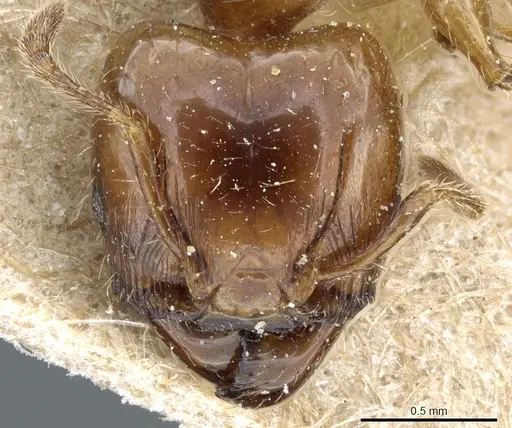
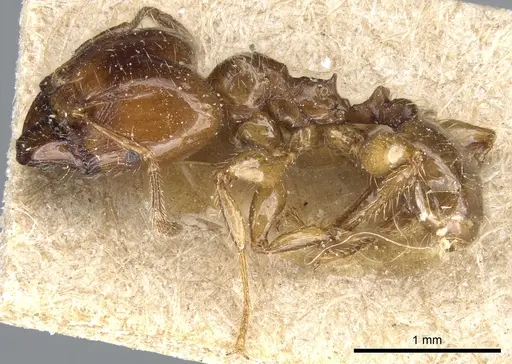
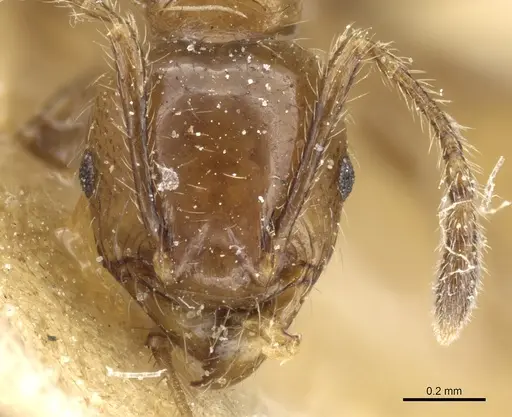
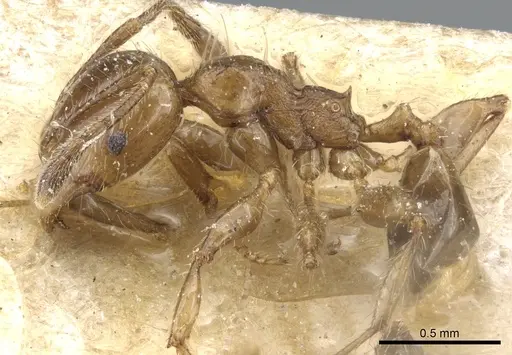
Pheidole polita is a Neotropical ant species native to the Amazon basin in Bolivia, Brazil, and Peru . It belongs to the tristis group, and its name means "smooth" in Latin, referring to its shiny appearance . Workers have two castes: major workers with enlarged heads and prominently angulate humeri, and smaller minor workers. Body color ranges from reddish brown to brownish yellow . The species thrives in disturbed forest edge habitats, such as clearings with logging detritus .
Quick Summary
- Difficulty: Medium
- Origin & Habitat: Amazon basin of Bolivia, Brazil, and Peru, found in clearings with logging detritus [1][2].
- Colony Type: Colony structure is unconfirmed for this species. Based on Pheidole patterns, likely monogyne (single queen colonies) [1].
- Size & Growth:
- Queen: Size data unavailable, no total length measurements in literature
- Worker: Minor workers ~2-3 mm, major workers ~3-5 mm, inferred from Pheidole genus [1]
- Colony: Up to several thousand workers, inferred from Pheidole genus [1]
- Growth: Moderate
- Development: 6-10 weeks at tropical temperatures (Development is faster in warm conditions, major workers appear after colony reaches several hundred workers.)
- Antkeeping:
- Temperature: Keep at 24-28°C, inferred from Amazon habitat [1]
- Humidity: Keep substrate consistently moist but not waterlogged, inferred from Amazon habitat [1]
- Diapause: No, tropical species do not require diapause
- Nesting: Standard test tube setups for founding, Y-tong or plaster nests for established colonies, typical for Pheidole [1]
- Behavior: Temperament: Not particularly aggressive but will defend nest vigorously. Escape risk: Moderate, use barrier methods like fluon on smooth surfaces.
- Common Issues: tropical species may be sensitive to temperature drops below 22°C [1], colonies may develop slowly until major workers appear, wild-caught colonies may carry parasites that affect survival, test tube setups must have proper water reservoir management to prevent flooding, moderate humidity is needed, too dry can kill brood
Housing and Nest Setup
For founding colonies, use a standard test tube setup: fill about one-third with water and plug with a cotton wick for humidity [1]. Cover the tube with dark cloth to simulate natural dark chambers. Once the colony reaches 50+ workers, move to a Y-tong or plaster nest with moderate moisture [1]. Provide a water gradient in the outworld for drinking [1].
Feeding and Diet
Pheidole polita is omnivorous. Offer protein sources like small insects every 2-3 days and constant sugar water [1]. Major workers can handle larger prey items. Remove uneaten prey after 24 hours to prevent mold.
Temperature and Seasonal Care
Keep nest area at 24-28°C, as inferred from Amazon habitat [1]. Avoid temperatures below 22°C to prevent slowed brood development [1]. No diapause needed for this tropical species.
Colony Development and Major Workers
Major workers appear once the colony reaches several hundred workers, typically after 6-12 months. They serve as defenders and process larger food items [1].
Behavior and Temperament
Minor workers handle foraging and brood care, major workers defend the nest [1]. They are not aggressive toward humans but will bite if threatened. Use barrier methods for escape prevention [1].
Frequently Asked Questions
How long does it take for Pheidole polita to have first workers?
Expect first workers in about 6-10 weeks at optimal temperatures (24-28°C).
What do I feed Pheidole polita?
Offer protein sources like small insects every 2-3 days and constant sugar water [1].
Can I keep multiple queens together in one colony?
Colony structure is unconfirmed, most Pheidole species are monogyne, but combining queens is not recommended [1].
What temperature do Pheidole polita need?
Keep them at 24-28°C, inferred from Amazon habitat [1].
Do Pheidole polita need hibernation?
No, as a tropical species, they do not require diapause.
When will my colony develop major workers?
Major workers typically appear after the colony reaches several hundred workers, which may take 6-12 months.
Are Pheidole polita good for beginners?
They are rated medium difficulty due to temperature and humidity requirements [1].
How big do Pheidole polita colonies get?
Colonies can reach up to several thousand workers, inferred from Pheidole genus [1].
What size escape prevention do I need for Pheidole polita?
Use standard barrier methods like fluon on smooth surfaces, as they can squeeze through small gaps [1].
Report an Issue
The current care sheet is based fully on literature. See inconsistencies, or something that's incorrect? Please , it will be resolved after review from an admin. Contributing to the blogs tab also helps providing information, to make us be able to further improve the caresheets. Thank you for your support!
References

This caresheet is licensed under CC BY-SA 4.0 .
Community Blogs
CASENT0904381
View on AntWeb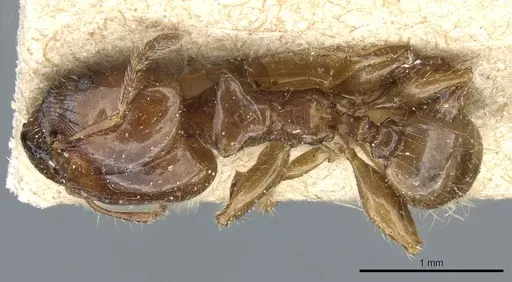
CASENT0904382
View on AntWeb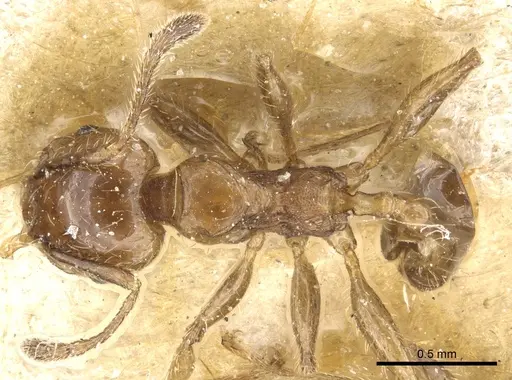
Literature
Loading distribution map...Loading products...