
Pheidole peruviana
- Sci. Name
- Pheidole peruviana
- Tribe
- Attini
- Subfamily
- Myrmicinae
- Author
- Wilson, 2003
- Distribution
- Found in 2 countries
Introduction
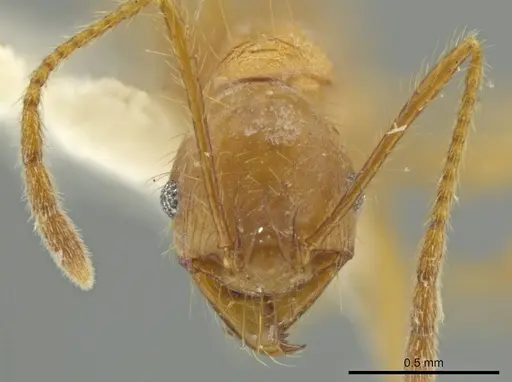
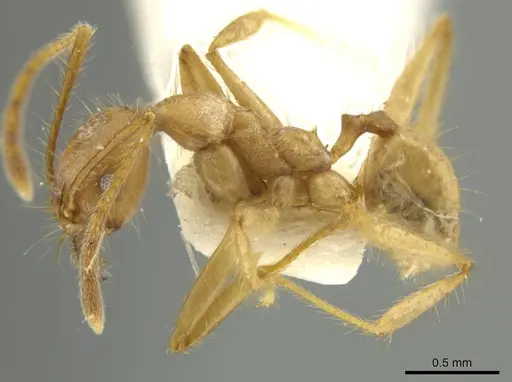
Pheidole peruviana is a small Neotropical ant species native to the Amazon basin of Peru and Ecuador. Major workers are reddish-yellow, while minors are plain yellow. This species was described in 2003 from specimens collected in Manu National Park at 400m elevation . It is considered an infrequent species in its native range, ground-nesting, and known or suspected to be a granivore . Major workers make up less than 1% of foragers at food baits, indicating they primarily stay within the nest to process seeds and care for brood .
Quick Summary
- Difficulty: Medium
- Origin & Habitat: Amazon basin of Peru and Ecuador, specifically Manu National Park (Madre de Dios) at 400m elevation. The habitat is lowland tropical rainforest [1][4].
- Colony Type: Unconfirmed, no data on queen number or social structure.
- Size & Growth:
- Queen: Size data unavailable, no measurements available.
- Worker: Size data unavailable, no total length measurements. Head measurements are not body size.
- Colony: Unknown
- Growth: Unknown
- Development: Based on typical Pheidole patterns, estimate 6-8 weeks at optimal tropical temperatures. (No species-specific development data exists. Growth depends on warm, humid conditions.)
- Antkeeping:
- Temperature: Keep at 24-28°C, aim for warm, stable tropical conditions. A gentle heat gradient allows ants to regulate their own temperature.
- Humidity: Provide a humidity gradient, keep the nest substrate mostly moist but not waterlogged, as this species is flood-intolerant [3].
- Diapause: No, as an Amazonian species, they do not require winter dormancy. Maintain warm conditions year-round.
- Nesting: Ground-nesting species. In captivity, use a naturalistic setup with moist soil or a plaster nest with moisture chambers. Y-tong nests also work well for these small ants [3].
- Behavior: This species has low dominance at food sources and small foraging ranges [3]. Major workers rarely forage, they stay in the nest to process seeds and assist with brood care. Minors handle most foraging. They are not aggressive and pose minimal threat to keepers. Escape risk is moderate due to small size, use fine mesh barriers.
- Common Issues: limited data makes care recommendations uncertain, this species has not been studied in captivity, flood intolerant in the wild, avoid overwatering and ensure drainage in the nest [3], slow colony growth is typical for Pheidole, don't overfeed or over-stimulate founding colonies, granivorous diet means seeds should be a primary food source, research acceptance before relying solely on protein [2], very small minor workers require fine mesh and tight-fitting lids to prevent escapes
Nest Preferences and Housing
Pheidole peruviana is a ground-nesting species that naturally excavates tunnels in soil. In captivity, provide a naturalistic setup with moist soil at least 5-8cm deep, or use a plaster nest with moisture chambers to maintain humidity. Y-tong nests also work well for these small ants, providing narrow chambers that help them feel secure. The key is maintaining consistently moist substrate without flooding, remember this species is flood-intolerant in the wild [3]. Ensure the nest has a foraging area connected to the nest chamber, as minors will venture out to collect food while majors remain inside to process seeds and care for brood.
Feeding and Diet
This species is known or suspected to be a granivore, meaning seeds form an important part of their diet [2]. In captivity, offer small seeds appropriate to their size, grass seeds, millet, or commercially available ant seed mixes work well. Major workers stay in the nest to crack and process seeds, so provide a seed cache they can access. Supplement their diet with small protein sources like fruit flies, tiny crickets, or mealworm pieces. Sugar water or honey can be offered occasionally, though granivorous ants may not strongly prefer sweet liquids. Feed every 2-3 days and remove uneaten food to prevent mold.
Temperature and Humidity
As an Amazonian species from lowland Peru, Pheidole peruviana requires warm, humid conditions. Maintain temperatures between 24-28°C with minimal fluctuations, a heating cable on one side of the nest creates a gentle gradient. Humidity should be managed with a gradient, keep the nest substrate mostly moist but not waterlogged, as this species is flood-intolerant [3]. Use moist substrate and consider a water reservoir connected to the nest to maintain consistent moisture. Mist the foraging area occasionally, but avoid direct misting of the nest which can cause flooding. Do not allow the nest to dry out, and avoid temperatures below 20°C for extended periods.
Behavior and Colony Dynamics
This species shows typical Pheidole social structure with distinct minor and major castes. However, majors are rare at only under 1% of foragers [3], meaning they rarely leave the nest. Minors handle all foraging and most external tasks while majors specialize in seed processing and brood care within the nest. Colonies are likely slow-growing, as is typical for Pheidole. The species has low dominance at food sources and small foraging ranges [3], so they are not aggressive competitors. Majors will emerge when significant food processing is needed or during colony stress. This peaceful nature makes them suitable for observation but means colony growth may seem slow, patience is key.
Frequently Asked Questions
How long does it take for Pheidole peruviana to produce first workers?
The exact timeline is unknown, no species-specific development data exists. Based on typical Pheidole genus patterns, expect first workers (nanitics) in approximately 6-8 weeks after the queen lays eggs, provided temperatures are kept warm (24-28°C). Growth will be slow initially, which is normal for this genus.
What do Pheidole peruviana ants eat?
They are granivorous (seed-eating) ants. Offer small seeds like grass seeds, millet, or commercial ant seed mixes. Supplement with small protein sources like fruit flies, tiny crickets, or mealworm pieces. Occasional sugar water or honey may be accepted but is not required [2].
Can I keep multiple queens together?
Not recommended, there is no data on colony founding behavior for this species. Most Pheidole species are monogyne (single queen), and combining unrelated queens typically leads to fighting. It is safest to start with one queen per colony.
What size colony do Pheidole peruviana reach?
Colony size is unknown, no data exists on maximum colony size for this species. Related Amazonian Pheidole species typically reach several hundred to a few thousand workers. Expect slow growth over months to years.
Do they need hibernation or diapause?
No, as an Amazonian tropical species, they do not require winter dormancy. Maintain warm, stable temperatures (24-28°C) year-round. Do not expose them to temperatures below 20°C for extended periods.
What nest type is best for Pheidole peruviana?
A naturalistic setup with deep, moist soil or a plaster nest with moisture chambers works well. The key requirements are: deep substrate for tunneling, consistent moisture, and a connected foraging area. Y-tong nests are also suitable for Pheidole species [3].
Are Pheidole peruviana good for beginners?
Care difficulty is medium due to limited biological data. They require warm, humid tropical conditions and a granivorous diet. Their peaceful nature and small size make them interesting, but their slow growth and specific humidity needs may challenge newer keepers. More common Pheidole species are better studied for beginners.
Why are my major workers not coming out?
This is normal behavior, in this species, majors make up less than 1% of foragers [3]. They specialize in seed processing and brood care inside the nest. Minors handle all external foraging. You will mainly see minors in the foraging area.
Report an Issue
The current care sheet is based fully on literature. See inconsistencies, or something that's incorrect? Please , it will be resolved after review from an admin. Contributing to the blogs tab also helps providing information, to make us be able to further improve the caresheets. Thank you for your support!
References

This caresheet is licensed under CC BY-SA 4.0 .
Community Blogs
JTLC000016491
View on AntWeb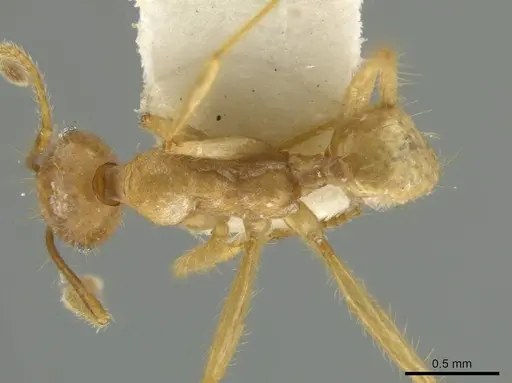
Literature
Loading distribution map...Loading products...