
Pheidole oliveirai
- Sci. Name
- Pheidole oliveirai
- Tribe
- Attini
- Subfamily
- Myrmicinae
- Author
- Wilson, 2003
- Distribution
- Found in 1 countries
Introduction
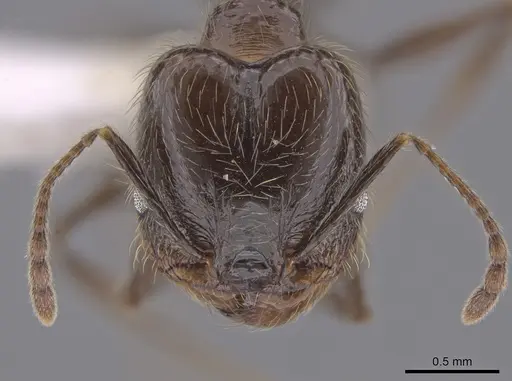
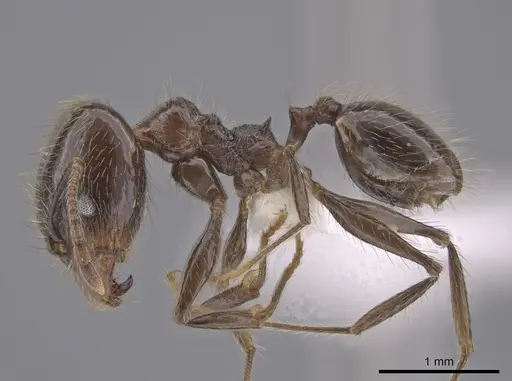
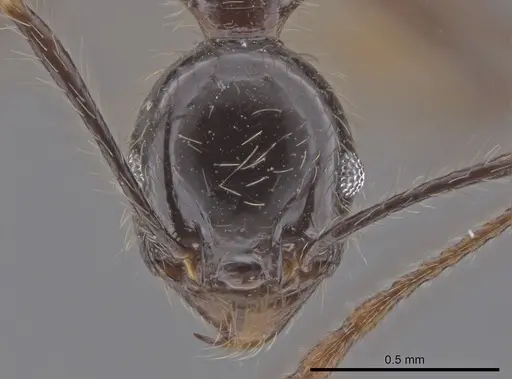
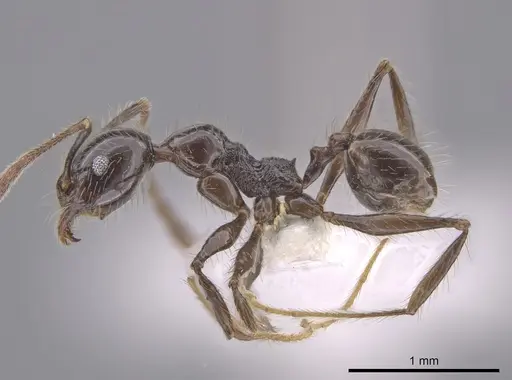
Pheidole oliveirai is a small Neotropical ant species from Colombia, belonging to the fallax group. It was described by Wilson in 2003 and named after Brazilian myrmecologist Paulo S. Oliveira. This species has a caste system with major workers (soldiers) that have a large head and reduced propodeal spines, and minor workers that are smaller. Body color is light brown with a dark brown gaster. It is found in steep forested slopes in Cundinamarca and Meta regions . Like other Pheidole, they have reduced propodeal spines that appear as small denticles. Pheidole oliveirai is notable for its distinct major and minor worker castes, with majors specialized in defense and seed processing. The species was previously misidentified in Brazil, but its correct distribution is limited to Colombia .
Quick Summary
- Difficulty: Medium
- Origin & Habitat: Colombia, found in steep forested slopes in Cundinamarca and Meta regions [1][2]. The type locality is along the Bogotá-Villavicencio Highway in Cundinamarca [3].
- Colony Type: Colony structure is unconfirmed for this species. No specific data on queen number or social structure is available.
- Size & Growth:
- Queen: Typically 6-10 mm total length, inferred from Pheidole genus patterns
- Worker: Workers range from small minors to larger majors, with total length typically 2-4 mm, inferred from Pheidole genus patterns
- Colony: Up to a few thousand workers, estimated based on typical Pheidole colonies
- Growth: Moderate
- Development: Estimated 6-8 weeks at tropical temperatures, inferred from related Pheidole species (Development time may vary with temperature, specific data for P. oliveirai is unavailable)
- Antkeeping:
- Temperature: Keep warm, around low-to-mid 20s°C, as this species comes from tropical Colombia [1]
- Humidity: Keep nest substrate consistently moist but not waterlogged, typical of forest-floor species [3]
- Diapause: No, species from tropical Colombia does not require diapause
- Nesting: Natural nesting occurs in soil under stones on forested slopes. In captivity, use a test tube setup for founding colonies, transitioning to a Y-tong or plaster nest as the colony grows.
- Behavior: Pheidole oliveirai is diurnal and not aggressive toward keepers. Major workers have functional stingers and can deliver a mild sting if threatened. Escape risk is moderate due to their small size, use standard escape prevention measures.
- Common Issues: colonies may grow slowly initially, patience is needed during the founding phase., humidity control is important, too dry and brood desiccates, too wet and mold becomes a problem., major workers may block nest entrances if chambers are too small., wild-caught colonies may contain parasites that can devastate captive colonies., test tube flooding can kill founding colonies if water reservoir is too large.
Nest Preferences and Housing
In the wild, Pheidole oliveirai nests in soil under stones on steep forested slopes in the Colombian Andes [1]. For captive care, start with a simple test tube setup for the founding queen, fill a test tube one-third with water, plug with cotton, and place the queen in the tube. The tube should be kept in darkness during the founding phase. Once the colony reaches 20-30 workers, transition to a small formicarium like a Y-tong nest with narrow chambers. These ants prefer tight spaces that match their small size. Avoid tall, open chambers where minors may feel exposed. A small outworld for foraging completes the setup.
Feeding and Diet
Pheidole oliveirai is granivorous, typical of the genus, they collect and process seeds as a primary food source. In captivity, offer commercial ant seeds or small grains like millet. They also need protein to raise brood, offer small insects like fruit flies, pinhead crickets, or mealworms. Minor workers handle most foraging while major workers help crack seeds and defend the colony. Feed protein sources 2-3 times per week and keep seeds available constantly. Remove uneaten protein after 24 hours to prevent mold.
Temperature and Seasonal Care
As a species from tropical Colombia, Pheidole oliveirai requires warm conditions, aim for low-to-mid 20s°C in the nest area. A heating cable on one side of the nest can create a temperature gradient, allowing ants to regulate their own exposure. Room temperature in heated homes is often adequate. Since they come from an equatorial region, they do not require true hibernation, but may slightly reduce activity during cooler months. Avoid temperatures below 18°C for extended periods. Humidity should be moderate, keep the nest substrate slightly moist but not waterlogged. [1]
Colony Growth and Development
Pheidole colonies grow through the claustral founding method, the queen seals herself in a chamber, lives off her stored fat reserves, and raises the first brood alone. The first workers (nanitics) are typically smaller than normal workers. Once workers emerge, the queen stops foraging entirely and focuses on egg-laying while workers handle all colony maintenance and foraging. Growth rate is moderate, expect the first 20-30 workers to appear over 2-3 months under optimal conditions. Colony growth accelerates after this point as the queen's egg production increases. Major workers (soldiers) typically appear once the colony reaches several dozen workers.
Behavior and Defense
Pheidole oliveirai exhibits typical Pheidole behavior, minor workers handle daily foraging and colony maintenance, while major workers serve as defenders and help process hard food items like seeds. Majors have functional stingers and can deliver a mild sting if threatened, though the pain is minor for most keepers. They are not particularly aggressive and typically retreat when disturbed. The caste system is pronounced, majors have the distinctive large head with rugoreticular sculpturing, while minors are small and smooth [2]. They forage primarily during daylight hours. Escape risk is moderate, while not the smallest ants, they are still small enough to exploit gaps in poorly sealed setups.
Frequently Asked Questions
How long does it take for Pheidole oliveirai to produce first workers?
Expect first workers (nanitics) to emerge in approximately 6-8 weeks under optimal temperature conditions (24-26°C). This is an estimate based on typical Pheidole development patterns, as specific data for this species is unavailable.
What do Pheidole oliveirai ants eat?
They are primarily granivorous, they collect and eat seeds. They also need protein from small insects like fruit flies, pinhead crickets, or mealworms to raise brood. Offer seeds constantly and protein 2-3 times per week.
Can I keep multiple Pheidole oliveirai queens together?
The colony structure for this specific species is unconfirmed. Many Pheidole species are polygynous (multiple queens) in the wild, but combining unrelated foundress queens in captivity often leads to fighting. It is not recommended without documented evidence that this species tolerates multiple queens.
What temperature is best for Pheidole oliveirai?
Keep them at low-to-mid 20s°C. This species comes from tropical Colombia, so they need warmth. A heating cable on part of the nest can help maintain optimal temperatures, but always provide a gradient so ants can move to cooler areas if needed.
Are Pheidole oliveirai good for beginners?
This species is rated as medium difficulty. They are more forgiving than some tropical species but require attention to temperature and humidity. The main challenge is their moderate growth rate, beginners may need patience during the founding phase.
When should I move my colony to a formicarium?
Move from the test tube setup to a formicarium once the colony reaches 20-30 workers. At this size, they need more space for foraging and brood-rearing. A Y-tong nest with narrow chambers works well.
How big do Pheidole oliveirai colonies get?
Maximum colony size is unknown for this specific species, but typical Pheidole colonies reach up to a few thousand workers. The presence of major workers (soldiers) indicates a mature colony, typically appearing once the colony reaches several dozen workers.
Do Pheidole oliveirai need hibernation?
No, they do not require true hibernation. As a species from tropical Colombia, they are adapted to year-round warmth. They may slightly reduce activity during cooler months but should be kept warm (above 18°C) year-round.
Why are my Pheidole oliveirai dying?
Common causes include: too low temperature (below 18°C), improper humidity (too dry or waterlogged), mold from uneaten food, or parasites from wild-caught colonies. Check your setup parameters and remove uneaten food promptly. If the colony was wild-caught, parasites are a common cause of colony failure.
Report an Issue
The current care sheet is based fully on literature. See inconsistencies, or something that's incorrect? Please , it will be resolved after review from an admin. Contributing to the blogs tab also helps providing information, to make us be able to further improve the caresheets. Thank you for your support!
References

This caresheet is licensed under CC BY-SA 4.0 .
Community Blogs
CASENT0643896
View on AntWeb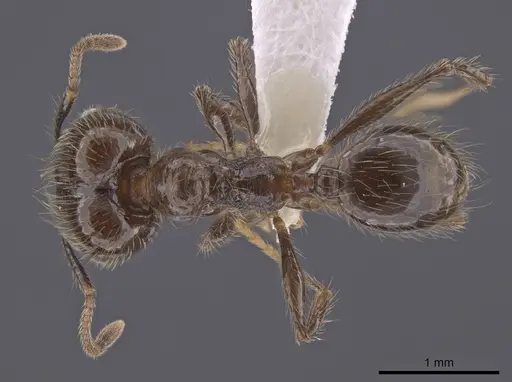
CASENT0643897
View on AntWeb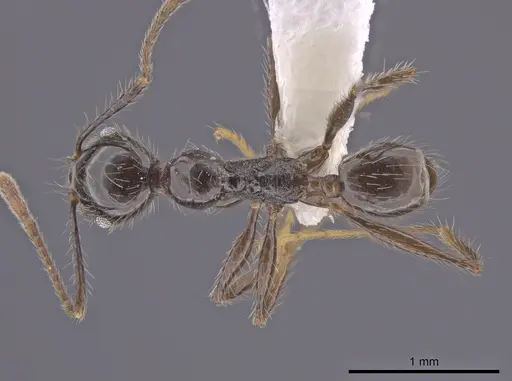
Literature
Loading distribution map...Loading products...