
Pheidole oculata
- Sci. Name
- Pheidole oculata
- Tribe
- Attini
- Subfamily
- Myrmicinae
- Author
- Emery, 1899
- Distribution
- Found in 1 countries
Introduction
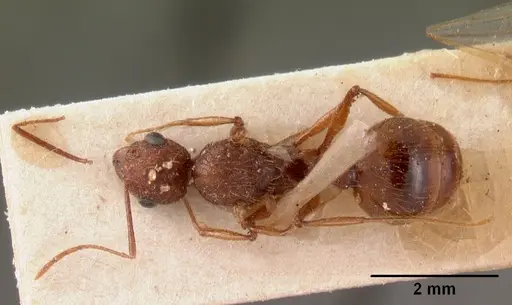
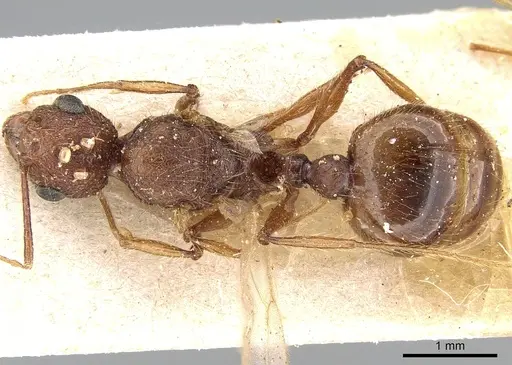
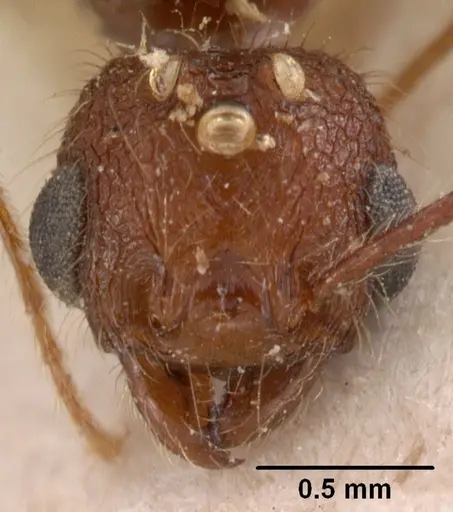
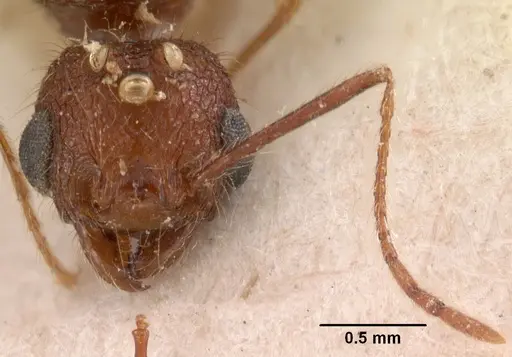
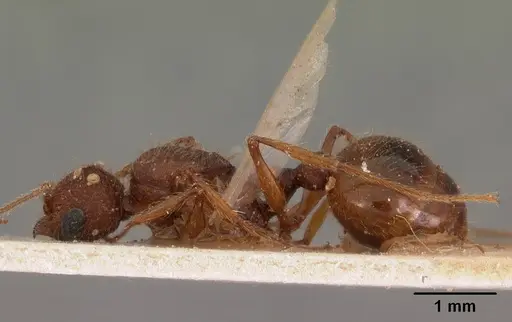
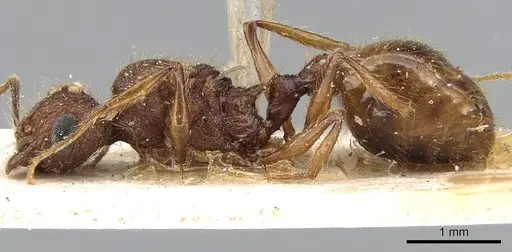
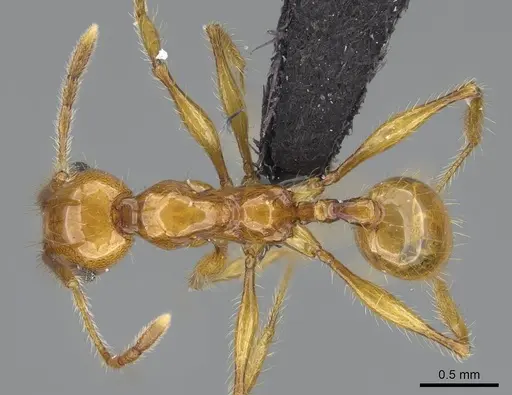
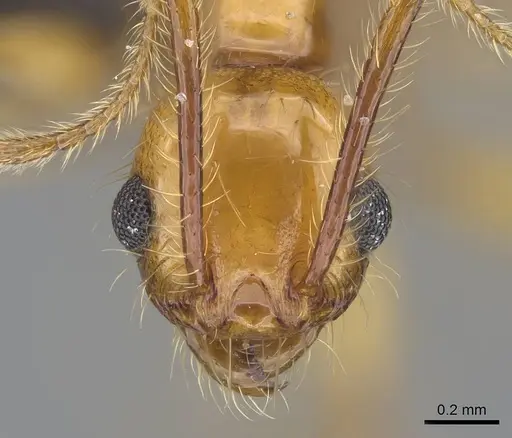
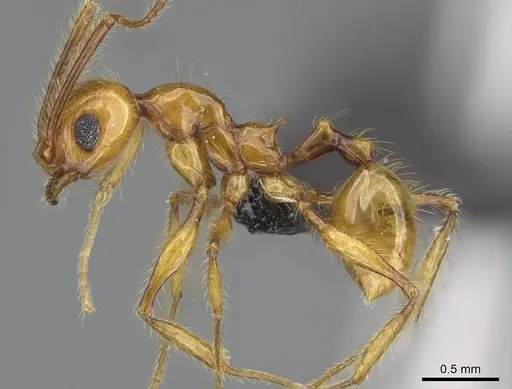
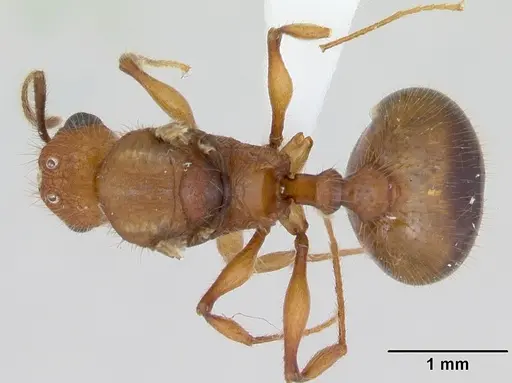
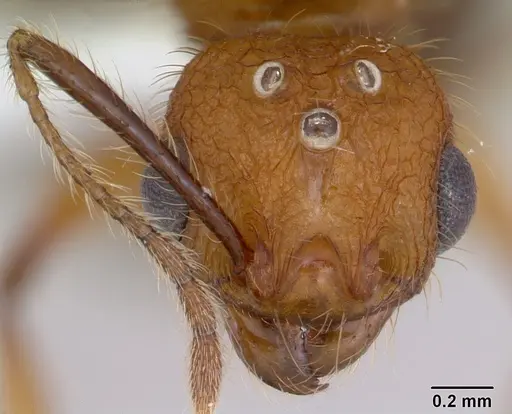
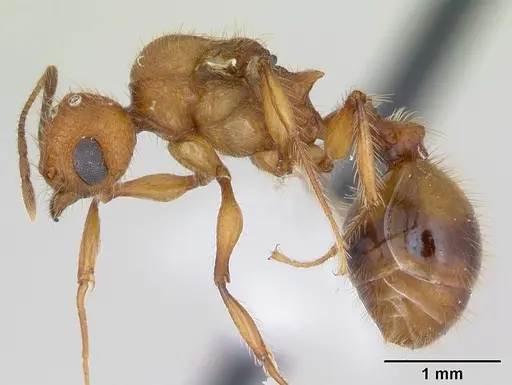
Pheidole oculata is a rare ant from Madagascar that is one of the most unusual members of its genus. Unlike typical Pheidole species which have distinct major and minor worker castes, this species has completely lost the major worker caste. The minor workers have reduced mandibles and pale coloration, while queens show classic 'parasitic syndrome' features: rounded heads, elongated antennae, and a broadened postpetiole. This species belongs to the exclusive Pheidole lucida group, consisting of only 13 known species that are strongly suspected to be social parasites living in the nests of other Pheidole species . The type locality is Antongil Bay, Madagascar .
Quick Summary
- Difficulty: Expert
- Origin & Habitat: Madagascar, specifically the Antongil Bay region. Found in the Malagasy rainforests [2]. This species is associated with other Pheidole host species in Madagascar [1].
- Colony Type: Social parasite, lives within nests of host Pheidole species. Major worker caste entirely absent. Colony structure is unconfirmed but likely functions as an inquiline parasite dependent on host colonies [1].
- Size & Growth:
- Queen: Unknown, not documented in available literature
- Worker: Unknown, not documented in available literature
- Colony: Unknown, dependent on host colony size
- Growth: Unknown
- Development: Unknown, cannot develop independently as a parasite (As a social parasite, this species cannot produce workers independently. It relies entirely on host workers to raise its brood [1].)
- Antkeeping:
- Temperature: Unknown for this species. Based on Madagascar habitat, likely 22-28°C. Start around 24-26°C and observe colony health.
- Humidity: Unknown. Based on Madagascar rainforest habitat, likely 60-80% humidity.
- Diapause: Unknown, likely minimal or no diapause given tropical origin.
- Nesting: This species cannot be kept in traditional ant-keeping setups. It requires a host Pheidole colony to survive. Natural nesting occurs within host colony nests [1].
- Behavior: This is a highly specialized social parasite. Workers are likely docile and non-aggressive, living peacefully within host colonies. They may help suppress host queen reproduction and redirect host resources toward producing parasite reproductives [1]. Escape risk cannot be assessed due to the unique housing requirements. This species cannot be maintained in captivity without a host colony.
- Common Issues: this species cannot be kept as a standalone colony, it requires a host Pheidole colony [1]., major worker caste is absent, making traditional Pheidole keeping impossible [1]., social parasitism means queens cannot found colonies independently [1]., very limited scientific data available on basic biology., wild-caught colonies may not survive transfer to captive conditions., this species is listed as Vulnerable on the IUCN Red List, collecting from the wild is discouraged [1].
Understanding Pheidole oculata as a Social Parasite
Pheidole oculata belongs to the exclusive 'Pheidole lucida group' consisting of only 13 known species, all showing strong evidence of being social parasites. Unlike typical Pheidole ants that have both major and minor worker castes, P. oculata has completely lost the major worker caste, this is unprecedented in a genus of over 1,000 species. The minor workers have reduced mandibles and loss of cuticular pigmentation, making them appear pale and somewhat underdeveloped compared to their host counterparts. Queens display classic 'parasitic syndrome' features including a rounded head shape, elongated antennae, and a broadened postpetiole, all adaptations seen in other known social parasite ant species [1]. This species was frequently collected as part of nest series of other Pheidole species, providing strong evidence that they live within host colonies rather than establishing their own [1].
Why This Species Cannot Be Kept in Traditional Ant Farms
If you are hoping to add Pheidole oculata to your ant collection, you need to understand a fundamental biological fact: this species cannot be kept in captivity using traditional methods. As a confirmed social parasite, P. oculata depends entirely on a host Pheidole colony for survival. The queen cannot found a colony independently, she must invade an established colony of another Pheidole species, likely kill or suppress the host queen, and use the host workers to raise her own brood. This is fundamentally different from claustral species like Lasius or Camponotus where the queen seals herself in a chamber and raises her first workers alone. There is no documented case of successfully cultivating a pure P. oculata colony in captivity, and attempting to do so would require obtaining both the parasite and a compatible host species, then establishing a relationship between them, a process that has never been scientifically documented or attempted [1].
The Unique Morphology of Pheidole oculata
The physical characteristics of Pheidole oculata reveal its parasitic lifestyle through dramatic adaptations. The complete absence of the major worker caste is perhaps the most striking feature, in the entire Pheidole genus, which is known for its soldier ants, only the P. lucida group lacks this caste entirely. Minor workers have reduced mandibles, meaning they cannot perform the typical Pheidole tasks of seed-processing or strong defensive biting. They also lack normal cuticular pigmentation, appearing pale and translucent compared to typical ants. Queens have evolved the 'parasitic syndrome' that appears across many independent lineages of social parasites: a rounded head (rather than the typical Pheidole rectangular head), elongated antennae (possibly for detecting host colony chemicals), and a notably broadened postpetiole (the segment connecting the thorax to the abdomen). These morphological changes represent adaptations toward a dependent lifestyle [1].
Distribution and Natural History
Pheidole oculata is endemic to Madagascar, with the type locality recorded at Antongil Bay in the northeastern part of the island [2]. This region features tropical rainforest with high humidity and warm temperatures year-round. The species has been documented as being collected alongside host Pheidole colonies, confirming its inquiline lifestyle [1]. Madagascar is home to extraordinary ant biodiversity, with numerous endemic species that have evolved unique ecological relationships. The Pheidole lucida group appears to be a recently recognized phenomenon, with Fischer et al. (2020) identifying these 13 species as a distinct evolutionary lineage specialized for parasitic lifestyles [1]. The vulnerable IUCN status suggests wild populations face threats from habitat loss [1].
Legal and Ethical Considerations
Given that Pheidole oculata is classified as Vulnerable on the IUCN Red List and is endemic to Madagascar, any hypothetical collection would require careful consideration of legal and ethical issues. Madagascar has strict regulations on exporting native wildlife, and many species are protected [1]. Furthermore, since this species cannot be maintained in captivity without a host colony, there is no legitimate reason for a hobbyist to attempt to obtain it. Rather than seeking to keep this species, antkeepers interested in unusual biology should study its fascinating natural history through scientific literature. If you are looking for challenging but achievable species, consider other Pheidole species that can be kept successfully, there are over 1,000 species in this genus with normal biology [1].
Frequently Asked Questions
Can I keep Pheidole oculata in a formicarium?
No. This species is a social parasite that cannot survive without a host Pheidole colony. It cannot be kept in traditional ant-keeping setups and has never been documented in captivity [1].
Why does Pheidole oculata have no major workers?
This species belongs to the rare Pheidole lucida group, the only Pheidole species known to have completely lost the major worker caste. This appears to be an adaptation to their parasitic lifestyle, since they live in host colonies, they don't need their own soldiers for defense or food processing [1].
How do Pheidole oculata queens found colonies?
As social parasites, queens cannot found colonies independently. They must invade an established colony of another Pheidole species, likely using chemical mimicry to enter undetected, then establish themselves as parasites that use host workers to raise their young [1].
What does Pheidole oculata eat?
Unknown for this specific species. As a parasite living within host colonies, they likely rely on food collected by host workers, similar to how other inquiline species feed. They would not need to forage independently [1].
Where is Pheidole oculata found in the wild?
This species is endemic to Madagascar, specifically documented from the Antongil Bay region in the northeast. It lives within nests of other Pheidole species [2][1].
Is Pheidole oculata dangerous or aggressive?
No. As a specialized parasite living within host colonies, they are likely docile and non-aggressive. Their reduced mandibles would also limit their ability to bite or sting effectively [1].
What temperature and humidity does Pheidole oculata need?
This has not been studied. Based on Madagascar rainforest habitat, they would likely thrive in warm, humid conditions around 24-26°C and 60-80% humidity. However, since they cannot be kept in captivity, this information is purely academic.
Are there similar ants I can keep instead?
Yes! If you are interested in Pheidole ants, many species have normal biology and can be kept successfully. Look for common species like Pheidole megacephala or Pheidole pallidula. These have typical Pheidole colonies with major and minor workers, can be kept in test tubes and formicaria, and are suitable for intermediate antkeepers.
How many queens does Pheidole oculata have per colony?
This is unconfirmed. As a parasite, colony structure would depend on the host colony. Some social parasites have single queens while others have multiple, but no research has specifically documented P. oculata colony structure [1].
Report an Issue
The current care sheet is based fully on literature. See inconsistencies, or something that's incorrect? Please , it will be resolved after review from an admin. Contributing to the blogs tab also helps providing information, to make us be able to further improve the caresheets. Thank you for your support!
References

This caresheet is licensed under CC BY-SA 4.0 .
Community Blogs
Literature
Loading distribution map...Loading products...