
Pheidole neokohli
- Sci. Name
- Pheidole neokohli
- Tribe
- Attini
- Subfamily
- Myrmicinae
- Author
- Wilson, 1984
- Distribution
- Found in 1 countries
Introduction
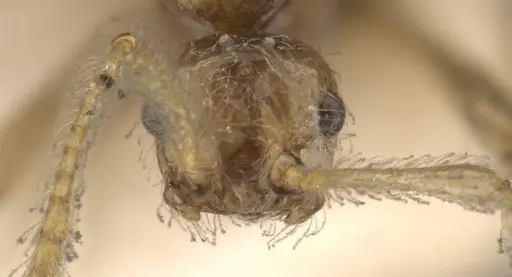
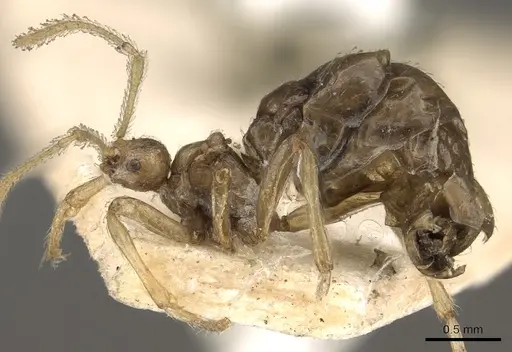
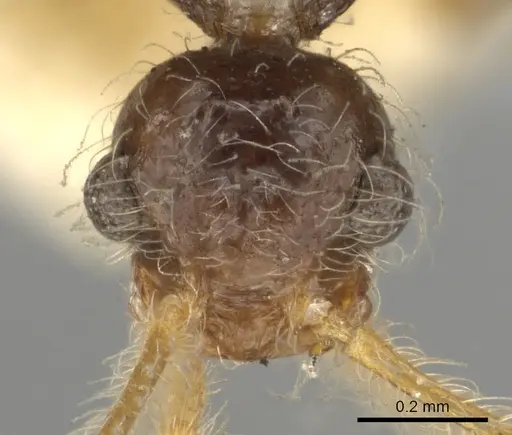
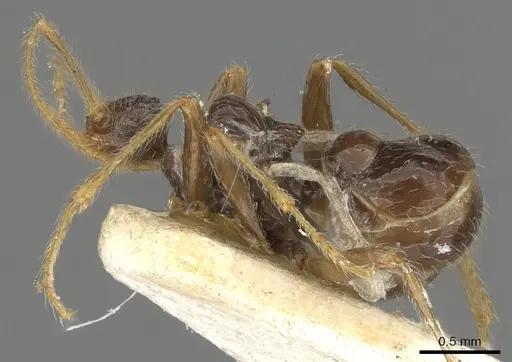
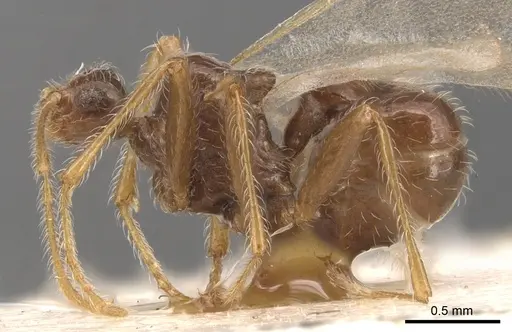
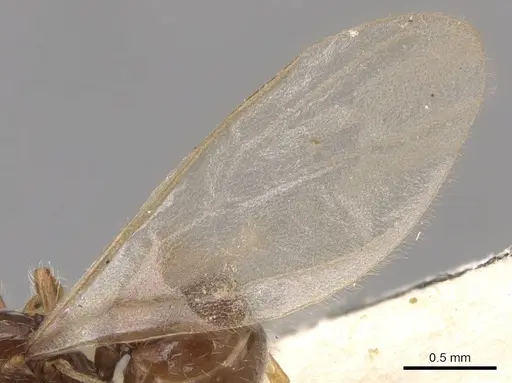
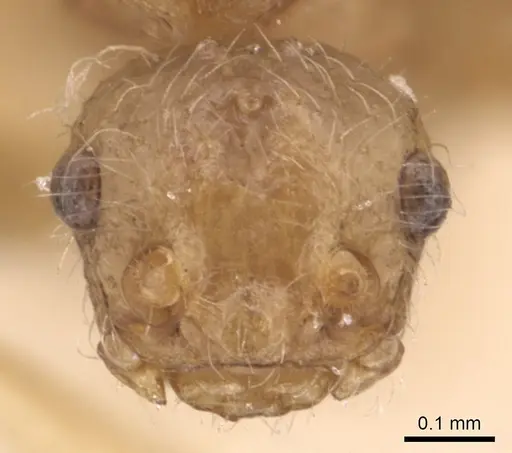
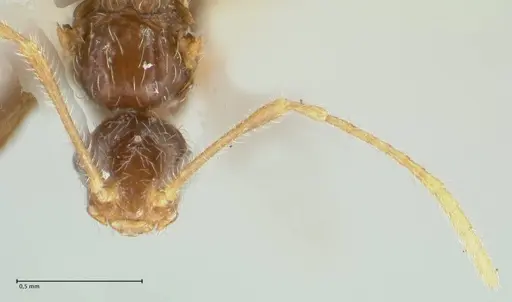
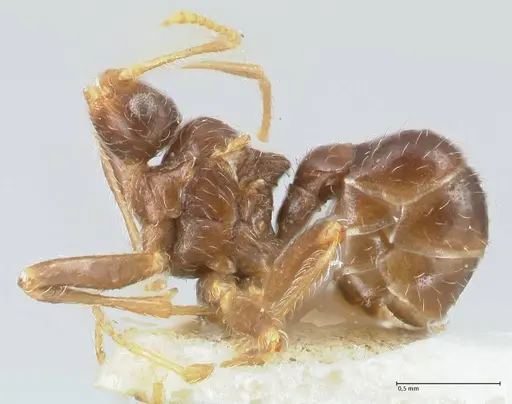
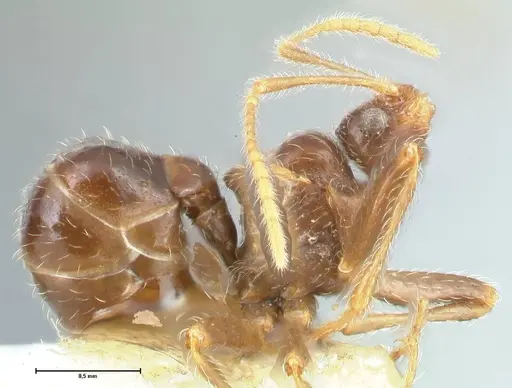
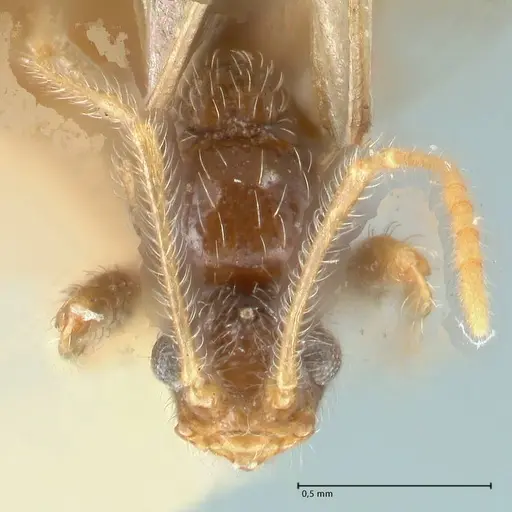
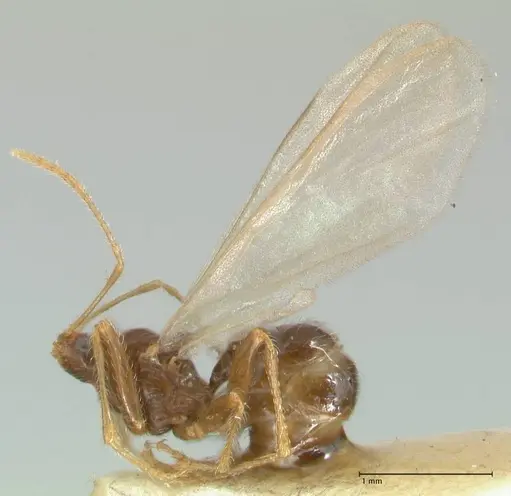
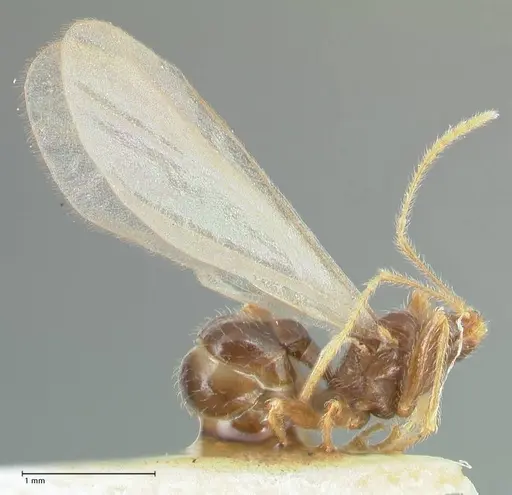
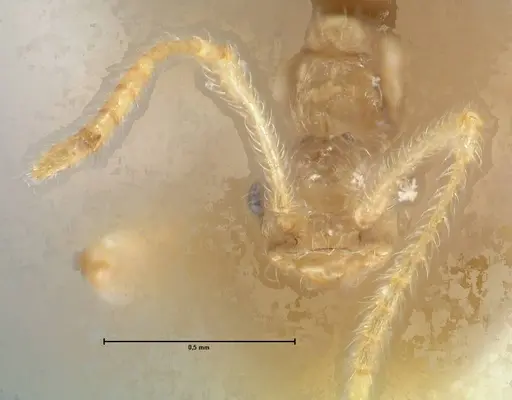
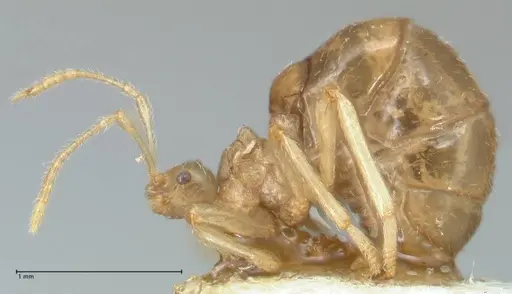
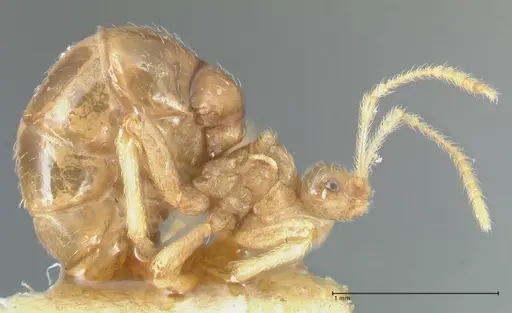
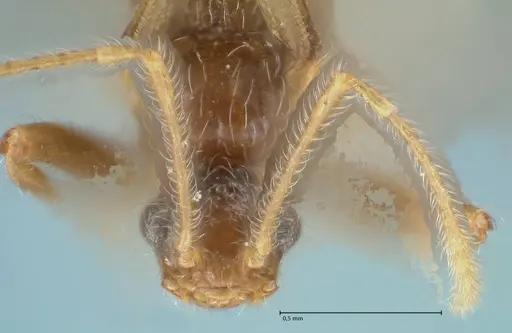
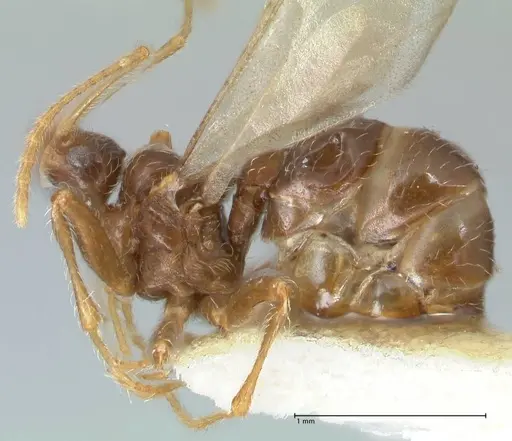
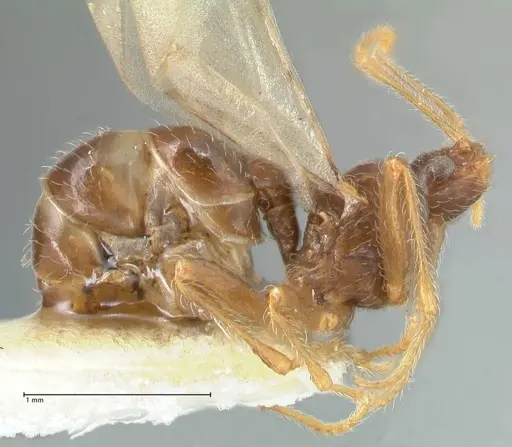
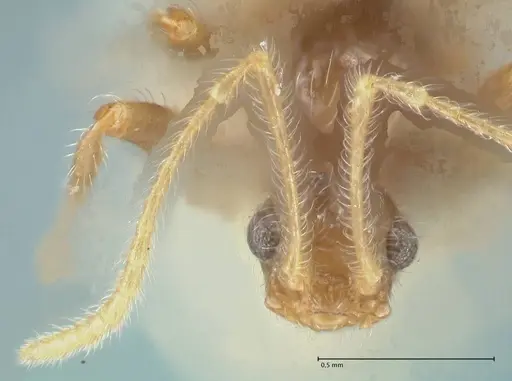
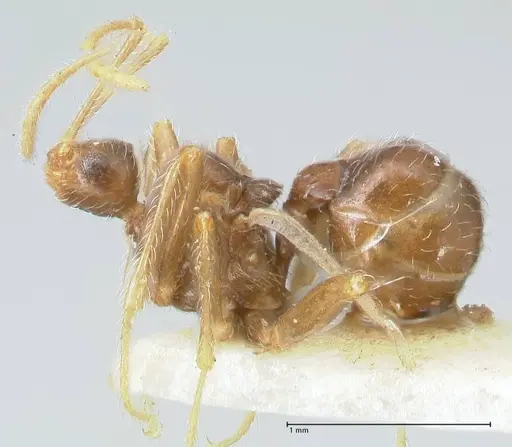
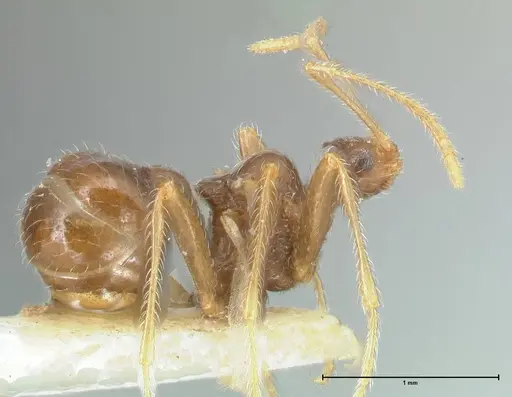
Pheidole neokohli is a small, workerless social parasite native to the Democratic Republic of Congo in Central Africa, with records also from Ethiopia and Yemen . Size data is unavailable, as no total length measurements are provided in the research. Originally described as Anergatides kohli in 1915,it was renamed by Wilson in 1984 after being recognized as a Pheidole species. This species is unique among Pheidole because it cannot produce workers and relies entirely on host colonies for survival .
Quick Summary
- Difficulty: Expert
- Origin & Habitat: Endemic to the Democratic Republic of Congo, specifically the Tshopo region, but recorded in Ethiopia and Yemen [2][1]. It inhabits Afrotropical regions and depends on host colonies of Pheidole megacephala melancholica [1].
- Colony Type: Workerless social parasite, the queen cannot produce workers and depends entirely on host colonies. She invades host colonies, kills or replaces the host queen, and uses host workers to raise her brood [1].
- Size & Growth:
- Queen: Size data unavailable, no total length measurements provided
- Worker: Not applicable, this species does not produce workers
- Colony: Unknown, dependent on host colony size
- Growth: Unknown
- Development: Unknown, this species does not produce workers, the queen lays eggs that develop into new queens and males using host worker resources [1] (As a social parasite, reproduction depends entirely on host colony resources)
- Antkeeping:
- Temperature: Temperature needs are unclear, start around 24-26°C and observe, based on typical Pheidole patterns
- Humidity: Keep the nest substrate consistently moist but not waterlogged, similar to host species requirements [1]
- Diapause: Unknown, likely follows host colony seasonal patterns
- Nesting: This species does not establish independent nests. In the wild, the queen lives within the nest of her host species. Captive keeping would require maintaining a host colony [1]
- Behavior: Pheidole neokohli is a specialized social parasite with no worker caste. The queen relies entirely on host workers for all colony functions. Escape risk is minimal as the queen cannot survive independently without a host [1].
- Common Issues: this species cannot be kept independently, it requires a host colony of Pheidole megacephala melancholica to survive [1]., obtaining both the parasite and appropriate host species is extremely difficult., the host colony may reject the parasite queen, leading to failure [1]., this is not a beginner-friendly species and is rarely available in the antkeeping hobby., releasing this species outside its native range could cause ecological problems [1].
Understanding the Parasitic Lifestyle
Pheidole neokohli is a workerless social parasite. Unlike typical ants, it cannot found a colony independently or produce workers. The queen must invade an established colony of Pheidole megacephala melancholica, kill or displace the host queen, and use host workers to raise her own reproductive brood [1]. This is temporary social parasitism, where the parasite queen eventually replaces the host queen's role [1].
Why This Species Is Not Recommended for Most Antkeepers
Pheidole neokohli is not practical for most antkeepers because it cannot survive without a host colony. Even if obtained, establishing a mixed colony is difficult due to host rejection or integration failure. The species is rare and endemic to specific regions, making legal acquisition nearly impossible [1][2].
The Host Species: Pheidole megacephala
Keeping P. neokohli requires maintaining its host, Pheidole megacephala melancholica. This host is widespread and invasive, known for forming massive supercolonies. It has dimorphic workers and thrives in various habitats [1].
Taxonomic History and Nomenclature
Pheidole neokohli was first described as Pheidole kohli in 1915 but renamed by Wilson in 1984 due to naming conflicts. It is known only from the Democratic Republic of Congo, specifically the Tshopo region [2].
Frequently Asked Questions
Can I keep Pheidole neokohli as a pet ant?
No, Pheidole neokohli cannot be kept as a pet ant. This is a workerless social parasite that cannot survive without a host colony of Pheidole megacephala melancholica [1].
Why does Pheidole neokohli have no workers?
Pheidole neokohli has evolved to be completely dependent on host colonies, losing the ability to produce workers over time [1].
How does the queen of Pheidole neokohli take over a host colony?
The queen invades a host colony, uses chemical deception to avoid detection, kills or displaces the host queen, and uses host workers to care for her brood [1].
Where is Pheidole neokohli found in the wild?
Pheidole neokohli is endemic to the Democratic Republic of Congo, specifically the Tshopo region, with records from Ethiopia and Yemen [2][1].
Is Pheidole neokohli dangerous or aggressive?
Pheidole neokohli itself has no workers and cannot defend itself. The host species Pheidole megacephala can bite if threatened but is not dangerous to humans [1].
What do I feed Pheidole neokohli?
You cannot keep P. neokohli independently, so feeding is not applicable. If maintained with a host colony, the host workers forage for the entire colony. The host species is omnivorous, accepting sugars, proteins, and seeds [1].
What makes Pheidole neokohli different from other Pheidole species?
Most Pheidole species are independent colony-founding ants with workers. P. neokohli is a workerless social parasite that depends entirely on host colonies [1].
How long do Pheidole neokohli queens live?
The lifespan is not specifically documented. As a parasite integrated into a host colony, the queen's lifespan may be tied to the host colony's survival.
Is Pheidole neokohli a good species for beginners?
No, this species is not suitable for beginners due to its requirement for a specific host colony, extreme rarity, and specialized biology [1].
Report an Issue
The current care sheet is based fully on literature. See inconsistencies, or something that's incorrect? Please , it will be resolved after review from an admin. Contributing to the blogs tab also helps providing information, to make us be able to further improve the caresheets. Thank you for your support!
References

This caresheet is licensed under CC BY-SA 4.0 .
Community Blogs
CASENT0901312
View on AntWeb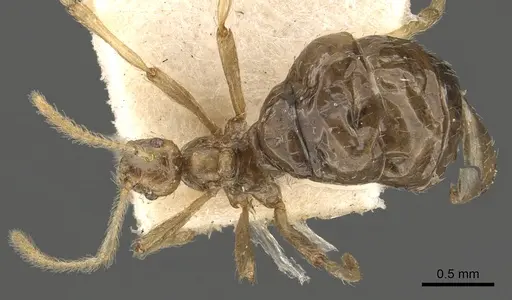
CASENT0901314
View on AntWeb
CASENT0904456
View on AntWeb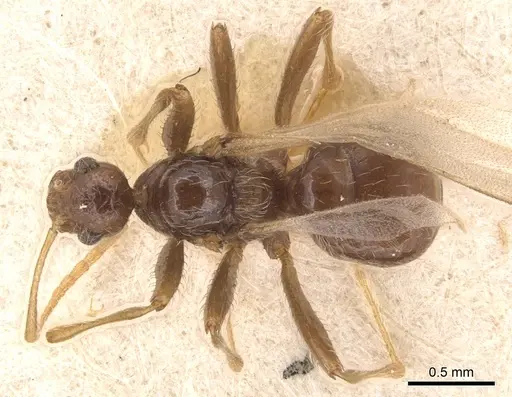
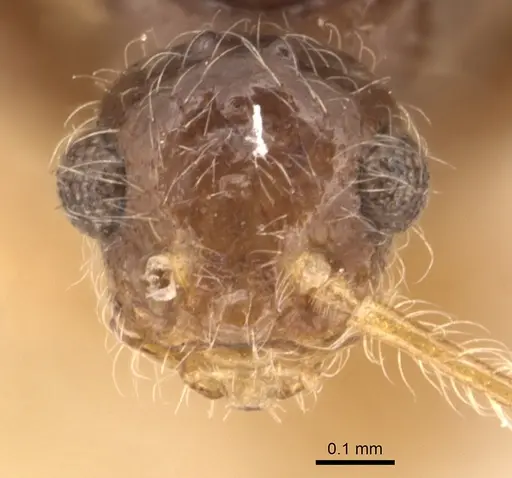
CASENT0904457
View on AntWeb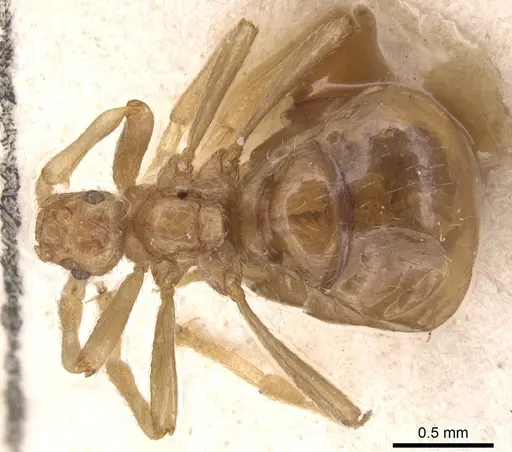
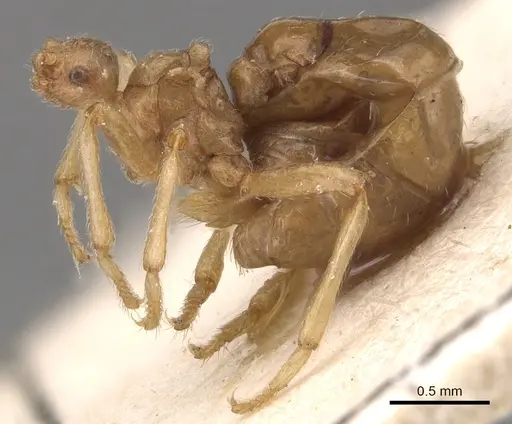
CASENT0904491
View on AntWeb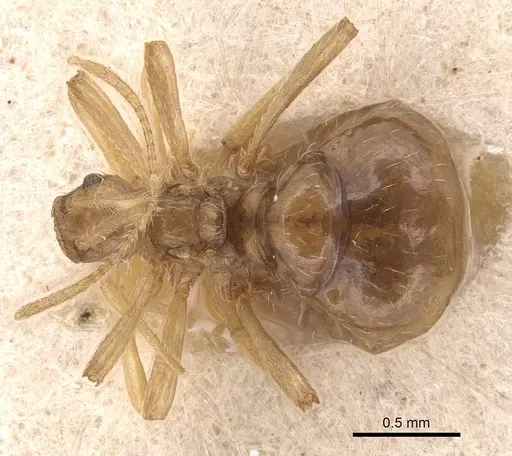
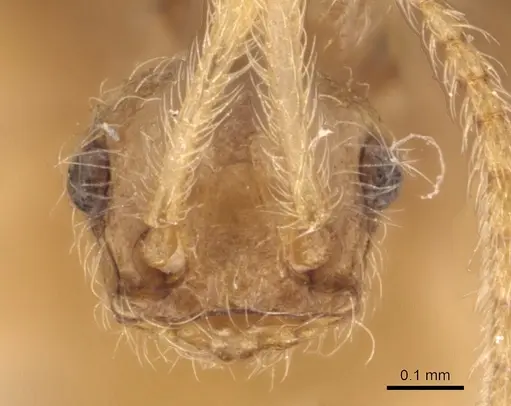
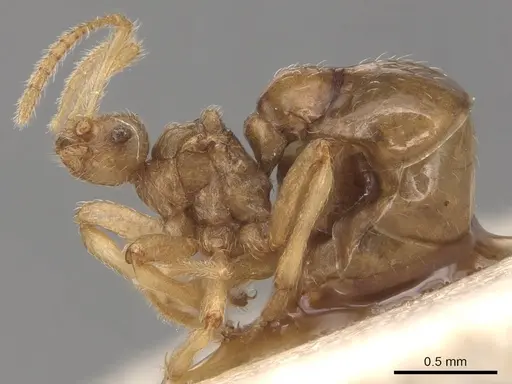
FOCOL1570
View on AntWeb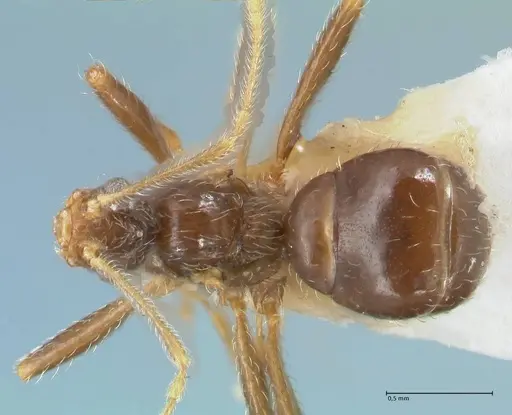
FOCOL1571
View on AntWeb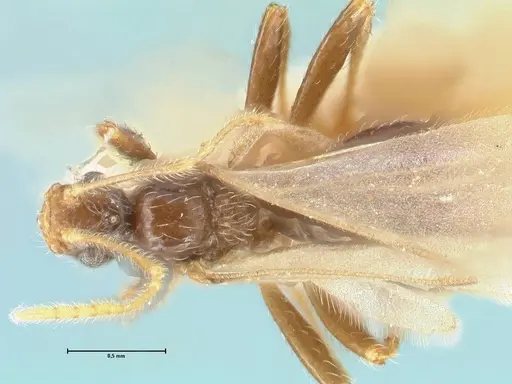
FOCOL1572
View on AntWeb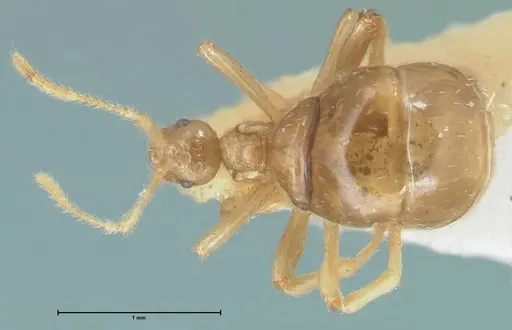
FOCOL1573
View on AntWeb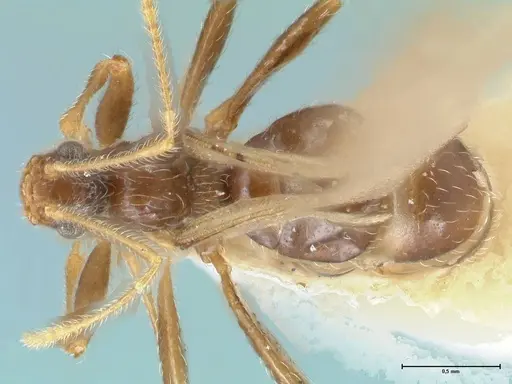
FOCOL1574
View on AntWeb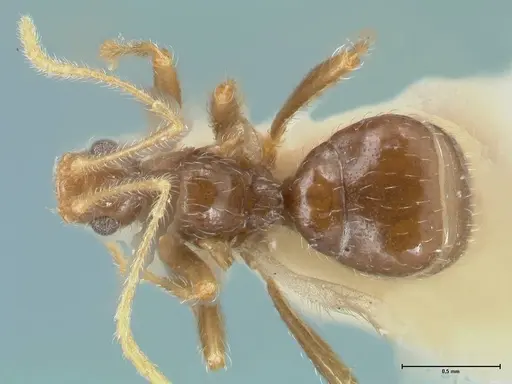
Literature
Loading distribution map...Loading products...