
Pheidole mus
- Sci. Name
- Pheidole mus
- Tribe
- Attini
- Subfamily
- Myrmicinae
- Author
- Forel, 1902
- Distribution
- Found in 1 countries
Introduction
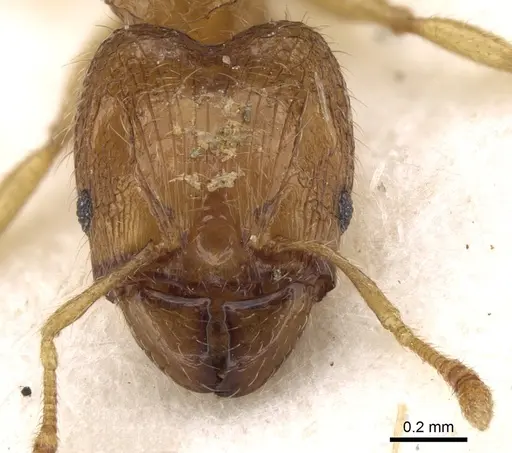
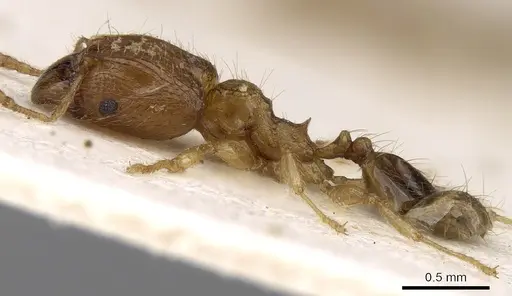
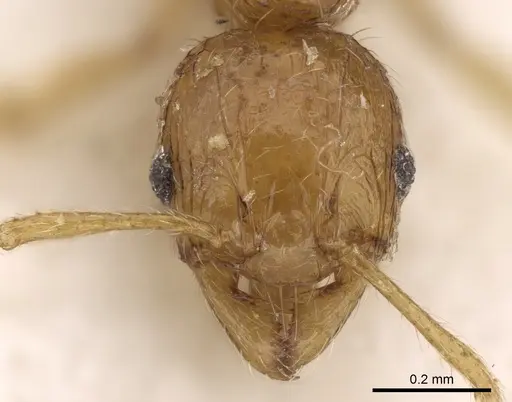
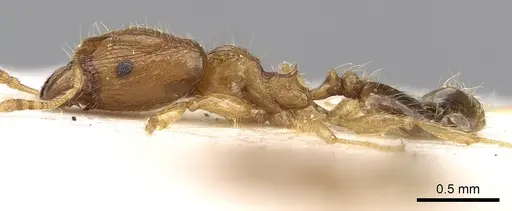
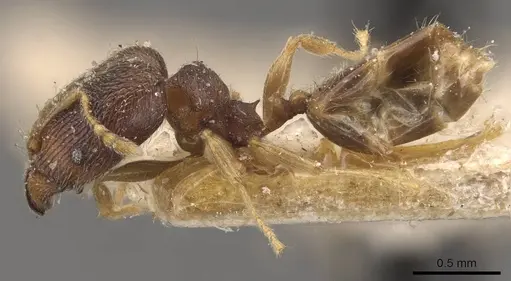
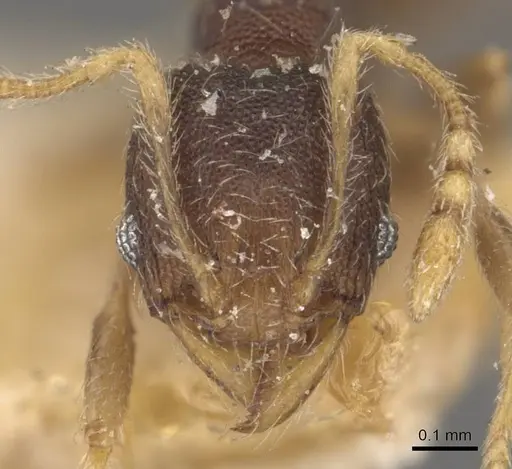
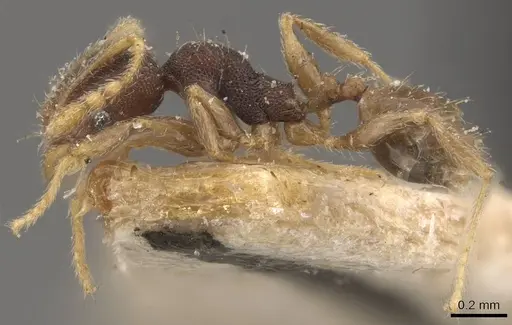
Pheidole mus is a small ant species native to South Asia, with workers measuring 3-4mm in total length . They have a dark brown head and mesosoma, with brownish yellow antennae, legs, and abdomen . Found in India (Karnataka, Maharashtra, Meghalaya, Sikkim, West Bengal) and Pakistan (Islamabad, Rawalpindi, Mansehra, Karak) , they inhabit grasslands, agricultural fields, and disturbed areas near paths . This species is known for its soldier caste, with larger major workers that help process seeds and defend the colony. They are versatile scavengers and decomposers, playing a role in breaking down organic matter .
Quick Summary
- Difficulty: Easy
- Origin & Habitat: India (Karnataka, Maharashtra, Meghalaya, Sikkim, West Bengal) and Pakistan (Islamabad, Rawalpindi, Mansehra, Karak) [2][3][4]. Natural habitat includes grasslands, agricultural fields of maize and wheat, and disturbed areas beside foot paths and roads [1].
- Colony Type: Single-queen colonies (monogyne), typical for the genus Pheidole. Colonies develop distinct minor and major workers.
- Size & Growth:
- Queen: Size data unavailable for queens, inferred from Pheidole genus to be around 8-10mm
- Worker: 3-4mm for minor workers [1]
- Colony: Estimated several hundred workers at maturity
- Growth: Moderate
- Development: Estimated 6-8 weeks at optimal temperature (Development faster in warmer conditions. First workers are smaller than normal minors.)
- Antkeeping:
- Temperature: Keep warm, around 24-28°C, based on subtropical habitat. Start with this range and observe colony activity.
- Humidity: Provide moderate humidity, keeping substrate moist but not waterlogged. This matches their grassland and agricultural habitats.
- Diapause: No diapause required, as species is from subtropical regions.
- Nesting: Y-tong nests or test tube setups work well. Prefer compact chambers scaled to their small size. Naturalist setups with soil or plaster also suit their ground-level nesting habits [1].
- Behavior: Peaceful and non-aggressive toward keepers. Workers are active foragers both day and night, primarily scavenging for food. They have functional stingers but due to their small size, they rarely penetrate human skin. Escape prevention is critical, their tiny size means they can squeeze through small gaps.
- Common Issues: escape prevention is critical due to their tiny 3-4mm size, they can slip through standard test tube cotton if not packed tightly [1], overfeeding can lead to mold problems in nest areas, remove uneaten protein foods within 24-48 hours, colonies may be slow to establish initially, be patient during the founding phase, wild-caught colonies may carry parasites that can decimate captive colonies, major workers (soldiers) may appear alarming to beginners but are completely harmless
Housing and Nest Setup
Pheidole mus does well in standard ant keeping setups. Test tubes work perfectly for founding colonies, use a water tube with cotton properly packed to prevent leaks while allowing humidity to diffuse. For established colonies, Y-tong nests are ideal because they provide clear visibility and work well with the moderate humidity needs of this species. The chambers should be appropriately sized for their small workers, tight spaces help them feel secure. Avoid very large, open formicaria as these small ants can become stressed in oversized enclosures. A small outworld for foraging allows you to observe their scavenging behavior. Escape prevention is essential: use fine mesh (0.5mm or smaller) and ensure all lids fit tightly, these tiny ants can squeeze through small gaps [1].
Feeding and Diet
As generalist scavengers, Pheidole mus accepts a wide variety of foods. Protein sources should include small insects like fruit flies, small mealworms, and cricket pieces. They are good decomposers in the wild, so they will readily accept dead insects and other organic matter [1]. Sugar sources are also important, offer sugar water, honey (diluted with water), or small drops of honey water. A constant sugar water supply helps sustain the colony. Feed protein 2-3 times per week, adjusting based on colony size and consumption. Remove uneaten food within 24-48 hours to prevent mold, which can be fatal to ant colonies. Fresh water should always be available, a small water tube or damp cotton ball works.
Temperature and Seasonal Care
Keep your colony at 24-28°C for optimal development and activity. This species comes from subtropical India and Pakistan where temperatures remain warm year-round. A small heating cable placed on one end of the nest creates a temperature gradient, allowing ants to regulate their own temperature by moving between warmer and cooler areas. Room temperature in most homes (20-24°C) is acceptable but may slow colony growth slightly. No formal diapause or hibernation is required, these ants do not experience cold winters in their native range. During cooler winter months, you may notice reduced activity and brood development, which is normal. Simply maintain stable temperatures above 20°C and the colony will continue functioning.
Colony Development and Castes
Pheidole colonies develop distinct worker castes, minor workers (the small foragers) and major workers (soldiers) with notably larger heads. The major workers develop as the colony matures and serve specialized roles in seed processing and colony defense. A founding queen will lay her first batch of eggs after sealing herself in a chamber. These eggs develop through larva and pupa stages to become nanitic workers, smaller than normal workers but functional foragers. As the colony grows, normal-sized workers and eventually major workers appear. The development from egg to worker takes approximately 6-8 weeks at optimal temperature. Colony growth is moderate, expect several months to reach significant numbers. The presence of major workers is a sign of a healthy, maturing colony.
Behavior and Observation
Pheidole mus workers are active foragers that search for food both during the day and at night. They are not aggressive and will typically flee from disturbance rather than attack. Their small size makes them excellent at navigating complex terrain and finding food particles. In the wild, they are important decomposers, breaking down organic matter in grasslands and agricultural areas [1]. Watching their foraging behavior is rewarding, minor workers scout for food while major workers often stay near the nest or help process larger food items. They do not have a painful sting for humans due to their small size, though they may attempt to bite if severely threatened. The colony will establish scent trails to food sources once discovered, creating efficient foraging highways.
Frequently Asked Questions
How long does it take for Pheidole mus to have first workers?
Expect first workers (nanitics) approximately 6-8 weeks after the queen lays her first eggs, when kept at optimal temperature of 25-28°C. Development is faster in warmer conditions and slower at room temperature.
Can I keep multiple Pheidole mus queens together?
No. This species is monogyne, meaning single-queen colonies. Multiple queens will fight until only one remains. Always start with one queen per colony.
What do Pheidole mus eat?
They are generalist scavengers. Offer small insects (fruit flies, mealworms, cricket pieces) for protein, and sugar water or honey for carbohydrates. They also accept dead insects and organic matter [1].
What temperature do Pheidole mus need?
Keep them warm at 24-28°C. This subtropical species thrives in warm conditions. Room temperature is acceptable but may slow growth slightly.
Are Pheidole mus good for beginners?
Yes. They are easy to care for, accept a wide variety of foods, and have simple temperature requirements. The main challenge is escape prevention due to their tiny size.
Do Pheidole mus need hibernation?
No. As a subtropical species from South Asia, they do not require hibernation or diapause. Simply maintain warm temperatures year-round.
When should I move my colony to a formicarium?
Move from test tube to a proper nest (Y-tong or naturalistic setup) when the colony reaches 30-50 workers or when the test tube becomes cramped. Pheidole colonies can outgrow test tubes relatively quickly.
Why are my Pheidole mus escaping?
Their small 3-4mm size allows them to squeeze through tiny gaps. Use fine mesh (0.5mm or smaller), pack cotton tightly in test tubes, and check all connections and lids for gaps [1].
How big do Pheidole mus colonies get?
Based on typical Pheidole species, expect several hundred workers at maturity. Major workers (soldiers) appear as the colony grows and numbers increase.
Report an Issue
The current care sheet is based fully on literature. See inconsistencies, or something that's incorrect? Please , it will be resolved after review from an admin. Contributing to the blogs tab also helps providing information, to make us be able to further improve the caresheets. Thank you for your support!
References

This caresheet is licensed under CC BY-SA 4.0 .
Community Blogs
CASENT0281696
View on AntWeb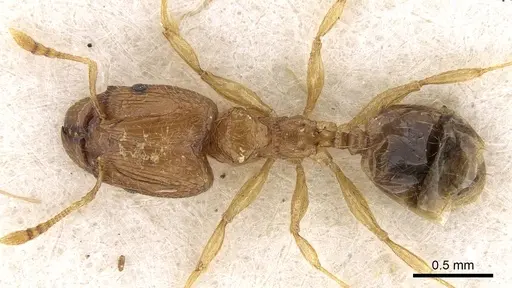
CASENT0281697
View on AntWeb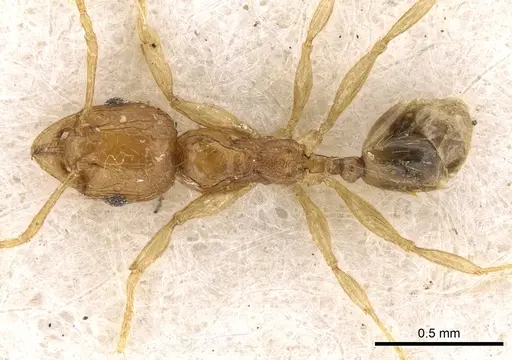
CASENT0907977
View on AntWeb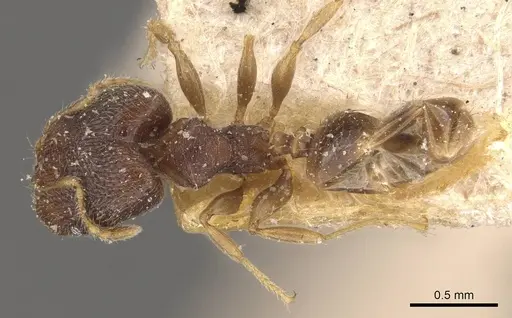
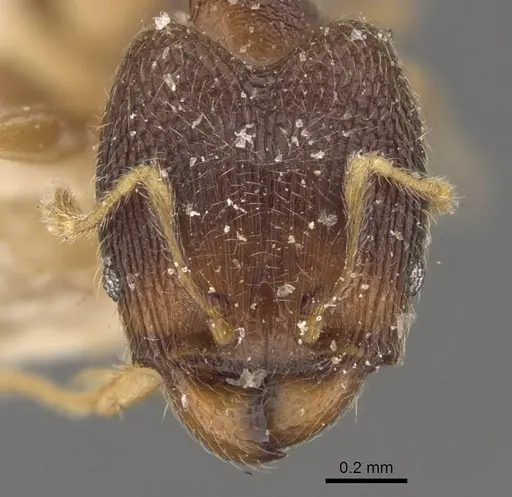
CASENT0907978
View on AntWeb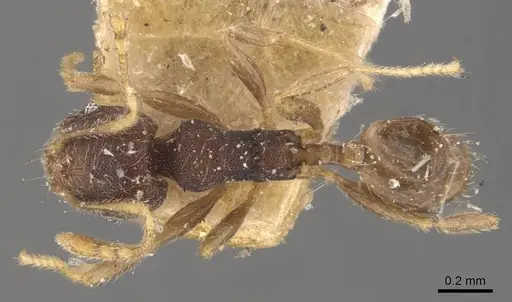
Literature
Loading distribution map...Loading products...