
Pheidole morelosana
- Sci. Name
- Pheidole morelosana
- Tribe
- Attini
- Subfamily
- Myrmicinae
- Author
- Wilson, 2003
- Distribution
- Found in 1 countries
Introduction
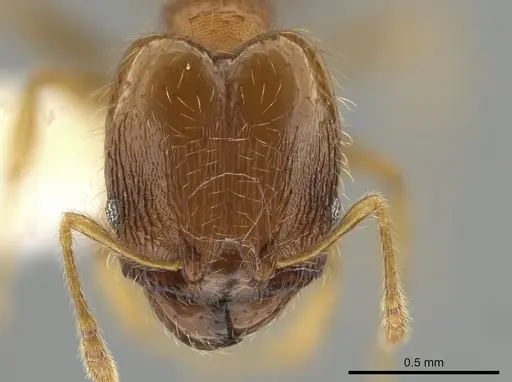
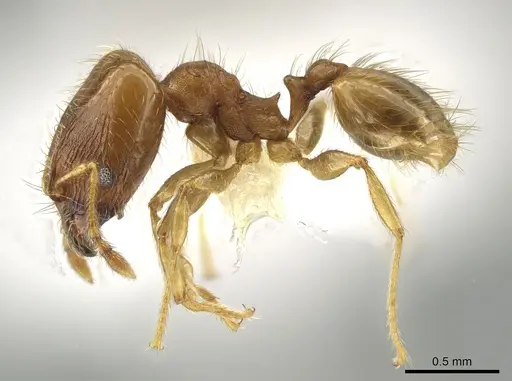
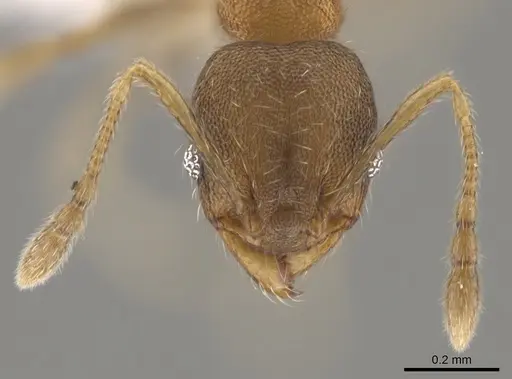
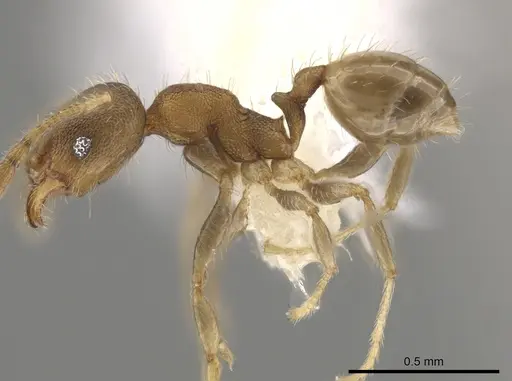
Pheidole morelosana is an ant species only known from the type locality in Miacatlan, Morelos, Mexico . Major workers are dark yellow with dense, long hairs, and minor workers are medium yellow . The species was described by E.O. Wilson in 2003 . This species is notable for being poorly known, with no biological observations published, making it a challenge for antkeepers .
Quick Summary
- Difficulty: Expert
- Origin & Habitat: Only known from Miacatlan, Morelos, Mexico, likely in tropical dry forest habitats [1].
- Colony Type: Unconfirmed, colony structure has not been documented.
- Size & Growth:
- Queen: Unknown, no queen specimens described.
- Worker: Size data unavailable for body length. Workers are small, inferred from Pheidole genus patterns.
- Colony: Unknown, no colony size data.
- Growth: Unknown
- Development: Unknown, no development data exists. (Based on related Pheidole species, development may take several weeks at warm temperatures, but this is estimated.)
- Antkeeping:
- Temperature: Unknown, no specific data. Based on Mexican distribution, keep at room temperature with a gradient, around 22-26°C [1].
- Humidity: Unknown, no specific data. Provide a humidity gradient with moist substrate areas.
- Diapause: Unknown, no seasonal data.
- Nesting: Unknown, no natural nesting observations. Test tubes work for founding, small nests for established colonies.
- Behavior: Not documented. Most Pheidole species are non-aggressive, but this species may vary. Their tiny size means escape prevention is critical.
- Common Issues: no biological data exists, this species may have unique requirements unknown to science., escape prevention is critical due to tiny worker size., slow growth is normal for Pheidole, beginners may lose patience., wild-caught colonies may have parasites since nothing is known about their health., difficulty finding this species for sale since it's rarely collected.
Why This Species Is Challenging
Pheidole morelosana presents a unique challenge: virtually nothing is known about its biology. This species was described only from workers in Morelos, Mexico, and no queen or colony observations exist [1]. You'll be entering unexplored territory with no care guide or experienced keepers to turn to [1]. This makes it exciting for advanced keepers but poor for beginners [1].
Housing Recommendations
Since nesting preferences are unknown, follow general Pheidole care. Test tubes work for founding [1]. For established colonies, small nests with tight chambers are better. Escape prevention is critical due to tiny size [1].
Feeding and Diet
Pheidole species are typically omnivorous, eating seeds and honeydew [1]. Offer seeds, sugar water, and protein, and observe what they accept [1].
Temperature and Seasonal Care
Morelos, Mexico has a warm climate [1]. Keep at room temperature with a gradient [1]. Winter care is uncertain, but central Mexico has mild winters [1].
Frequently Asked Questions
How difficult is Pheidole morelosana to keep?
Difficulty cannot be assessed, this species has never been kept in captivity and nothing is known about its biology. Only experienced antkeepers willing to experiment should attempt this species.
What do Pheidole morelosana ants eat?
Based on typical Pheidole diet, they likely eat seeds, honeydew, and small insects. Offer seeds, sugar water, and protein and observe what they accept.
How long does it take for Pheidole morelosana to produce workers?
Unknown, no development data exists. Based on related species, expect several weeks from egg to first worker at warm temperatures, but this is entirely an estimate.
What temperature should I keep Pheidole morelosana at?
Start around 24-26°C and observe colony behavior. Based on their Mexican origin, they likely prefer warm conditions. A temperature gradient allows ants to choose their preferred spot.
Can I keep multiple queens together?
Unknown, colony structure has not been documented. Most Pheidole are single-queen species, but we don't know if this applies to Pheidole morelosana. Not recommended until more is known.
How big do Pheidole morelosana colonies get?
Unknown, no colony size data exists. Most Pheidole colonies reach several hundred to a few thousand workers.
Where can I get Pheidole morelosana?
This species is extremely rare in the antkeeping hobby. It's only known from a single collection in Mexico and has never been deliberately cultivated. You'll likely need to locate it in the wild near Miacatlan, Morelos, Mexico, but check local laws before collecting.
Do Pheidole morelosana need hibernation?
Unknown, no seasonal data exists. Central Mexico has mild winters, so they may not require a true diapause. Observe your colony's activity levels and reduce feeding/temperature slightly during winter months if they show reduced activity.
What makes Pheidole morelosana different from other Pheidole?
This species is distinguished by its dark yellow color, very dense long hairs, and specific head shape in major workers. But critically, we know almost nothing about its actual behavior, colony structure, or captive requirements, making it a true mystery species.
Report an Issue
The current care sheet is based fully on literature. See inconsistencies, or something that's incorrect? Please , it will be resolved after review from an admin. Contributing to the blogs tab also helps providing information, to make us be able to further improve the caresheets. Thank you for your support!
References

This caresheet is licensed under CC BY-SA 4.0 .
Community Blogs
CASENT0644584
View on AntWeb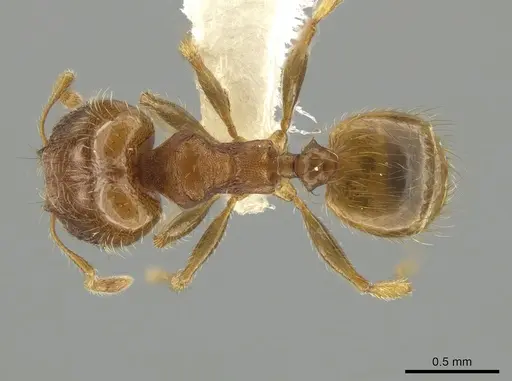
CASENT0644587
View on AntWeb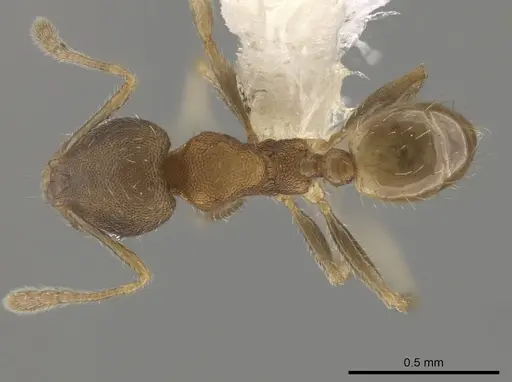
Literature
Loading distribution map...Loading products...