
Pheidole moerens
- Sci. Name
- Pheidole moerens
- Tribe
- Attini
- Subfamily
- Myrmicinae
- Author
- Wheeler, 1908
- Distribution
- Found in 7 countries
Introduction
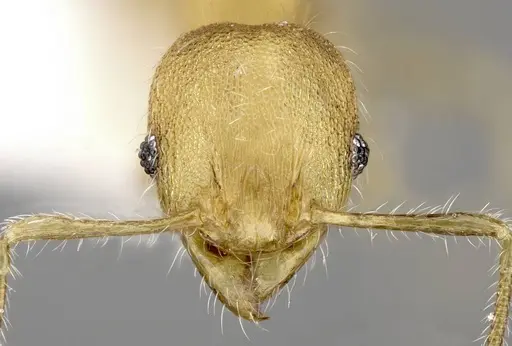
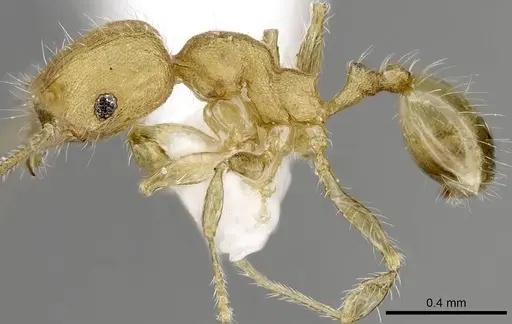
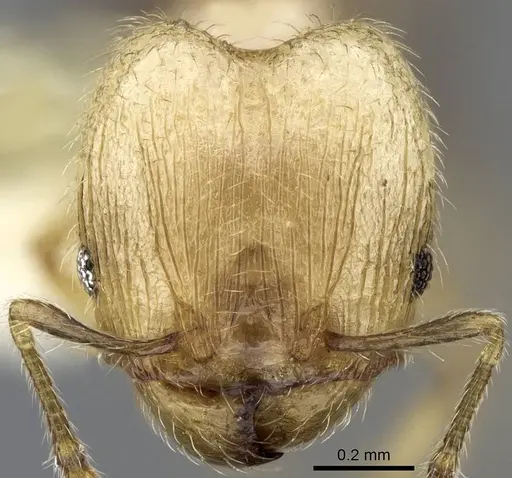
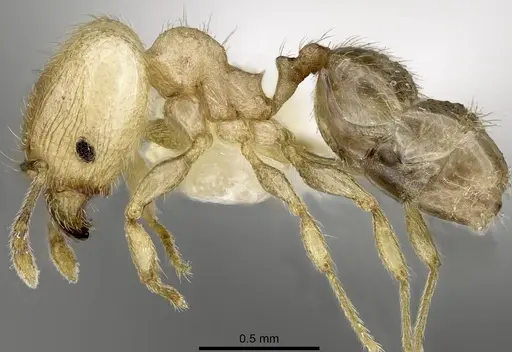
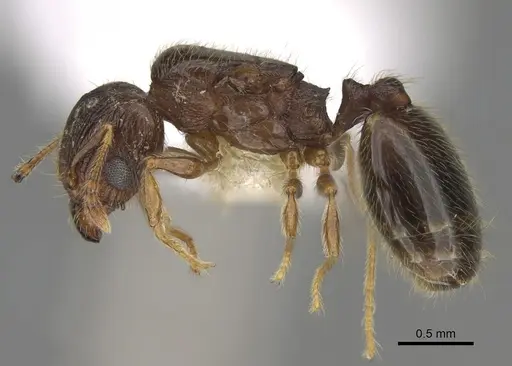
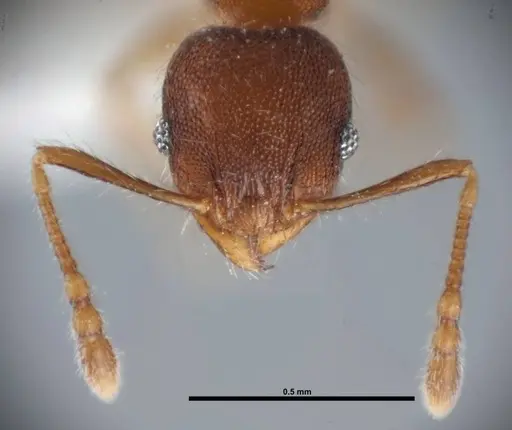
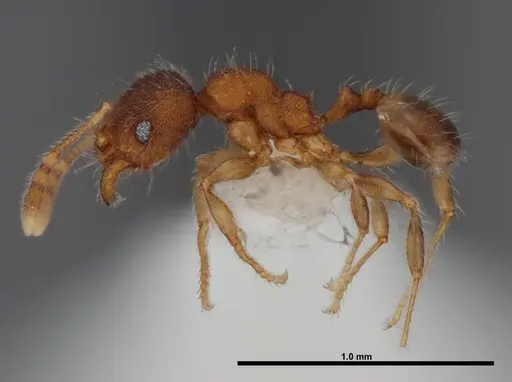
Pheidole moerens is a small dimorphic ant species native to the Greater Antilles, including Puerto Rico and Hispaniola, that has spread to the southeastern United States and Hawaii . Minor workers are 1.5-1.75 mm in total body length, while major workers (soldiers) are 2.5-2.75 mm with large, square heads . Color varies from reddish yellow to almost black depending on diet . This species is a successful invader, often introduced through the commercial plant trade, and is now common in disturbed and undisturbed habitats where it may compete with native ants .
Quick Summary
- Difficulty: Expert
- Origin & Habitat: Native to the Greater Antilles (Puerto Rico, Hispaniola), introduced to southeastern US (Florida, Alabama, Texas, Louisiana, Mississippi, North Carolina) and Hawaii. Found in diverse habitats from dry forest to rainforest, coffee plantations, and urban areas [4][5][3].
- Colony Type: Monogyne (single-queen colonies). Multiple queens may start founding a nest together, but the dominant queen kills the others before the first brood emerges [4][6].
- Size & Growth:
- Queen: ~4-5 mm (inferred from Pheidole genus patterns)
- Worker: Minor workers: 1.5-1.75 mm, Major workers: 2.5-2.75 mm [1][2]
- Colony: Up to 1,000 workers [5]
- Growth: Fast, produces large numbers of sexuals throughout spring and summer and can increase nest density nearly twofold in two years [7]
- Development: 6-10 weeks (inferred from typical Pheidole development) (Development time is estimated based on related species, warmer temperatures speed up development.)
- Antkeeping:
- Temperature: Keep warm, around 20-26°C, as they are tropical/subtropical.
- Humidity: Keep nest substrate slightly moist but not waterlogged, reflecting their natural nesting in decaying wood and soil [5].
- Diapause: No, being tropical, they do not require hibernation.
- Nesting: Opportunistic nesters, do well in test tubes, Y-tong, or plaster nests. Provide substrate like soil or sand for chamber building [5].
- Behavior: Generally calm and non-aggressive toward keepers. They possess a sting (typical of Myrmicinae) but it is not medically significant to humans. Foraging is primarily nocturnal in warm weather. Their small size makes them excellent escape artists, use fine mesh barriers [4].
- Common Issues: escape prevention is critical due to tiny size, use tight-fitting lids and fine mesh, colonies may fail if kept too dry, maintain slightly moist nest conditions, this species is invasive in non-native areas, do not release colonies and take extreme precautions to prevent escape, wild-caught colonies may have parasites that kill them in captivity
Housing and Nest Setup
You can use test tubes for founding colonies: fill one-third with water, plug with cotton, and the queen will seal herself in the dry end. For growing colonies, Y-tong or plaster nests work well. They prefer tight chambers scaled to their tiny size, avoid large open spaces. Add a layer of substrate like sand or soil for them to dig chambers. Keep the outworld simple with a protein dish, sugar water, and water tube. Use fine mesh on ventilation holes and apply fluon to barriers to prevent escapes [5][4].
Feeding and Diet
In the wild, they eat seeds and insects, hunting small arthropods and scavenging [5]. In captivity, offer protein sources like small crickets or fruit flies 2-3 times per week, and keep sugar water or honey available constantly. Seeds like millet can be provided as enrichment. Remove uneaten protein after 24-48 hours to prevent mold [7][5].
Temperature and Seasonal Care
Keep colonies at room temperature (20-26°C) as they are adapted to warm climates. They do not require diapause, but may slow slightly in cooler months. If your home is cold, use a heating cable on one side of the nest. Watch for workers clustering near heat sources, this indicates they want it warmer.
Understanding Their Dimorphic Workers
Minor workers (1.5-1.75 mm) handle foraging and brood care, while majors (2.5-2.75 mm) have large heads for processing food like cracking seeds [1][2]. Majors are not aggressive defenders, they stay closer to the nest. About 20% of a mature colony are majors [4].
Colony Growth Timeline
A queen may lay eggs within weeks of mating. First workers emerge in 6-10 weeks at room temperature. Growth accelerates after that, colonies can reach 100+ workers in 6 months and up to 1,000 in a year or two. Sexuals are produced in spring and summer [7][5].
Frequently Asked Questions
How long does it take for Pheidole moerens to have first workers?
Expect first workers in 6-10 weeks after the queen lays eggs, inferred from typical Pheidole development at room temperature.
Can I keep multiple Pheidole moerens queens together?
No, this is a monogyne species with a single queen per colony. Multiple queens may found together in the wild, but the dominant kills the others [4][6].
What do Pheidole moerens eat?
They are generalist feeders eating seeds and insects. In captivity, offer protein like fruit flies 2-3 times per week and sugar water constantly [5][7].
How big do Pheidole moerens colonies get?
Mature colonies reach up to 1,000 workers, with about 20% being major workers [5].
Are Pheidole moerens good for beginners?
No, this species is invasive in non-native areas and should only be kept by experts with extreme precautions to prevent escape.
Do Pheidole moerens need hibernation?
No, being tropical, they do not require diapause and remain active year-round at room temperature.
Why are my ants different colors?
Color variation is normal and depends on diet, colonies fed insects develop darker coloration [4].
Report an Issue
The current care sheet is based fully on literature. See inconsistencies, or something that's incorrect? Please , it will be resolved after review from an admin. Contributing to the blogs tab also helps providing information, to make us be able to further improve the caresheets. Thank you for your support!
References

This caresheet is licensed under CC BY-SA 4.0 .
Community Blogs
ANTWEB1008489
View on AntWeb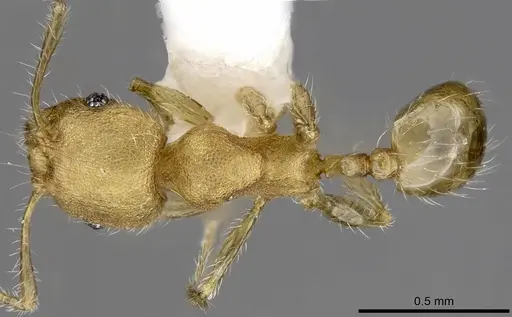
ANTWEB1008490
View on AntWeb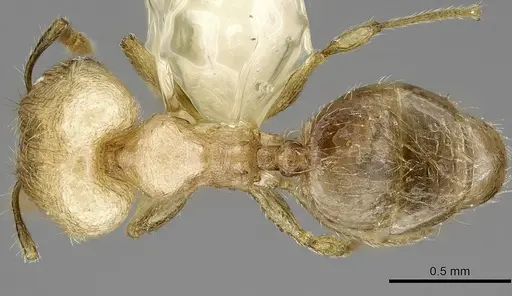
CASENT0862460
View on AntWeb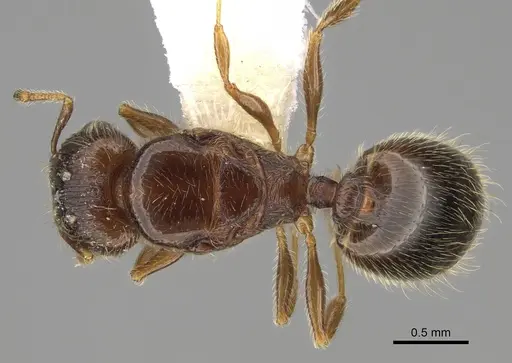
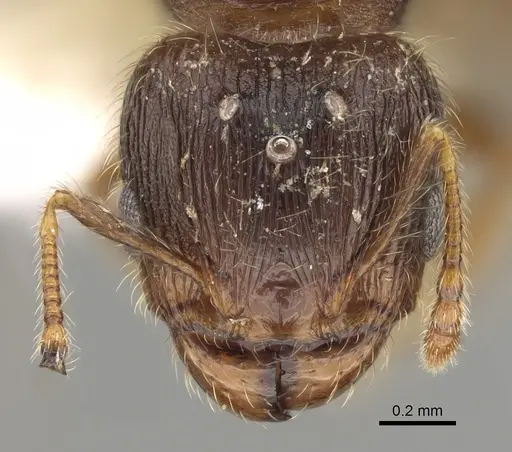
FMNHINS0000078506
View on AntWeb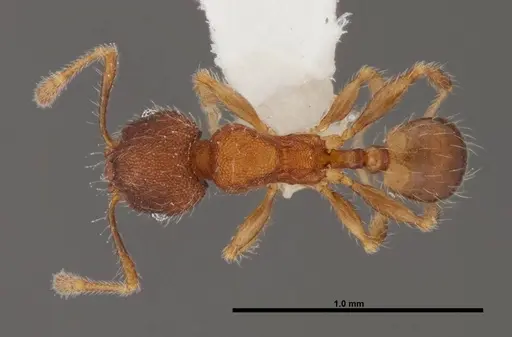
Literature
Loading distribution map...Loading products...