
Pheidole minuscula
- Sci. Name
- Pheidole minuscula
- Tribe
- Attini
- Subfamily
- Myrmicinae
- Author
- Bernard, 1953
- Distribution
- Found in 2 countries
Introduction
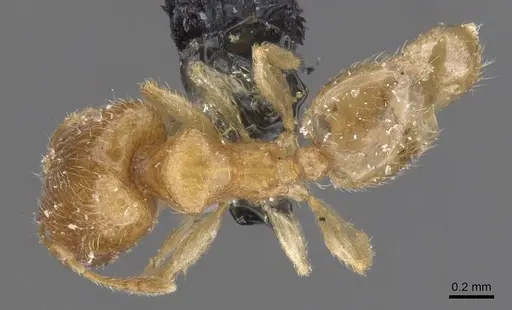
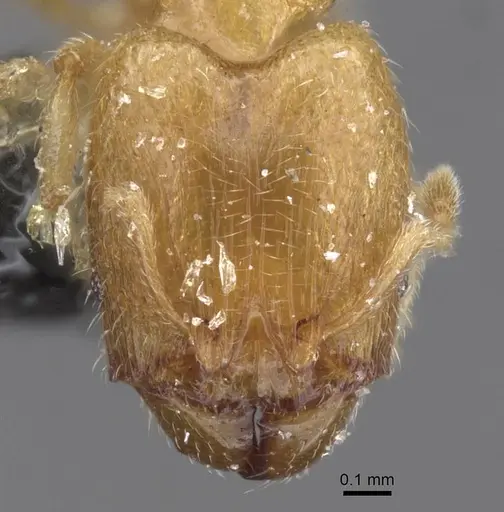
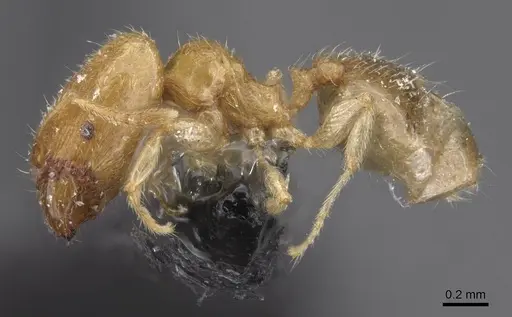
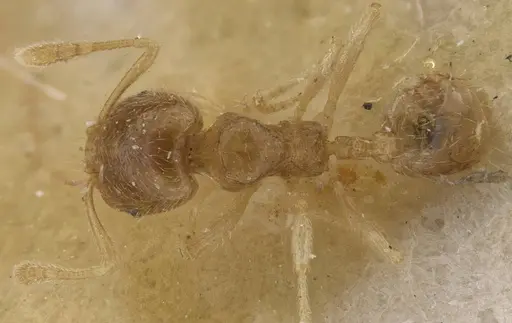
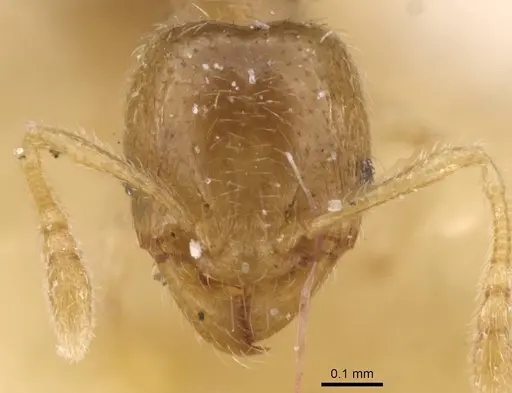
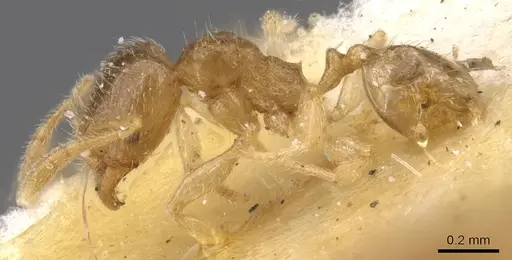
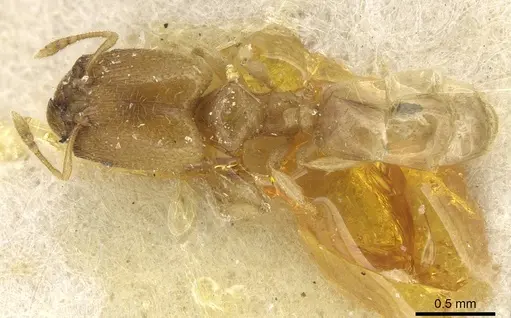
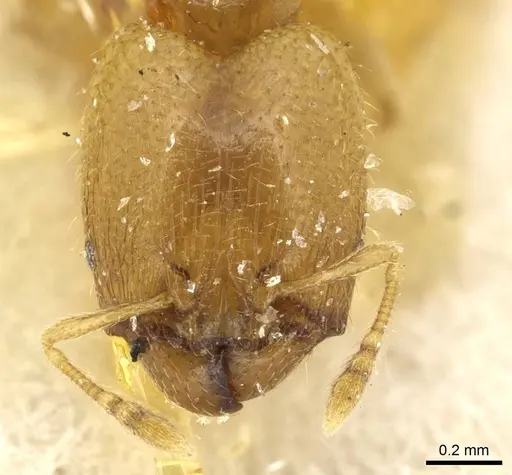
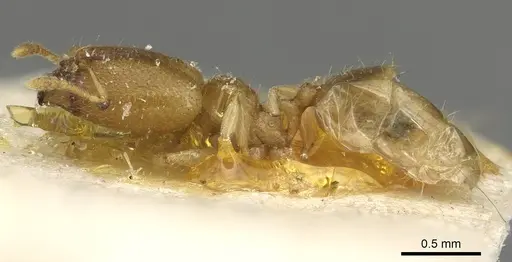
Pheidole minuscula is a tiny ant species with workers having head width less than 1 mm . The species is found in West Africa (Guinea, Ivory Coast), Arabian Peninsula (Saudi Arabia, Yemen), and Middle East (Iraq, Israel) . It inhabits tropical forest margins and arid to semi-arid regions. What makes P. minuscula interesting is its presence at the boundary between Afrotropical and Palaearctic zones, adapting to both tropical and arid environments.
Quick Summary
- Difficulty: Medium
- Origin & Habitat: West Africa (Guinea, Ivory Coast), Arabian Peninsula (Saudi Arabia, Yemen), and Middle East (Iraq, Israel). Found in tropical forest margins and arid to semi-arid regions [2][3].
- Colony Type: Based on Pheidole patterns, likely single-queen colonies with distinct major and minor workers.
- Size & Growth:
- Queen: Size data unavailable, no total length measurements in research.
- Worker: Size data unavailable, head width is less than 1 mm [1], but body length not specified.
- Colony: Up to several hundred workers, inferred from Pheidole genus patterns.
- Growth: Moderate
- Development: Estimated 6-8 weeks at optimal temperature, based on related Pheidole species. (Development time inferred from genus-level data, specific timing for this species unconfirmed.)
- Antkeeping:
- Temperature: Keep warm, around 24-28°C, based on tropical and subtropical range.
- Humidity: Moderate humidity with a moisture gradient, inferred from habitat diversity.
- Diapause: Likely requires mild diapause in cooler months, given temperate range edges.
- Nesting: Y-tong or plaster nests work well, inferred from genus preferences.
- Behavior: Generally peaceful but will defend the nest vigorously if threatened. Escape risk is high due to tiny size, they can slip through small gaps.
- Common Issues: escape prevention is critical due to tiny size, slow founding phase may stall if conditions are not optimal, overfeeding can lead to mold in small setups, wild-caught colonies may contain parasites affecting survival
Nest Preferences and Housing
Pheidole minuscula is a small ant that needs appropriately scaled housing. Y-tong nests or plaster nests work well, inferred from genus patterns. For founding colonies, a simple test tube setup is fine, but move them to a proper nest once the colony reaches 20-30 workers. Keep chambers proportional to their tiny size to avoid stress. Naturalistic setups with fine substrate can work but require excellent escape prevention. [1]
Feeding and Diet
Like most Pheidole species, P. minuscula is a generalist forager. Offer a mix of protein and carbohydrates: small insects like fruit flies, seeds such as millet, and sugar sources like honey water. Feed protein 2-3 times per week and keep sugar available. Remove uneaten food promptly to prevent mold.
Temperature and Seasonal Care
These ants come from warm regions, so maintain temperatures around 24-28°C. A heating cable on one side creates a gradient for self-regulation. At northern range edges like Israel, consider a mild diapause by reducing temperatures to 15-18°C for 2-3 months in winter. [3]
Behavior and Colony Dynamics
Pheidole minuscula shows a social structure with minor workers handling tasks and major workers specializing in seed cracking and defense. Colonies are peaceful but defend against intruders. Activity levels are moderate, with gradual colony expansion.
Escape Prevention
Escape prevention is critical due to their tiny size. Use fluon on rim edges, baby powder barriers, and fine mesh for ventilation. Check setups daily for gaps. [1]
Growth and Development
Colony growth follows typical Pheidole patterns. A queen seals herself in a claustral chamber and lays eggs. First workers emerge smaller but functional. Major workers appear once the colony reaches around 50 workers. Growth depends on temperature and feeding.
Frequently Asked Questions
How long does it take for Pheidole minuscula to produce first workers?
Expect first workers in about 6-8 weeks at optimal temperatures of 24-28°C, estimated from related Pheidole species.
What do I feed Pheidole minuscula?
Offer small insects, seeds, and sugar sources like honey water. Remove uneaten food promptly.
Can I keep multiple Pheidole minuscula queens together?
This species is likely monogyne, so combining queens may result in fighting. Keep one queen per colony.
How big do Pheidole minuscula colonies get?
Up to several hundred workers, inferred from Pheidole genus patterns.
Do Pheidole minuscula need hibernation?
A mild winter period is beneficial, inferred from their temperate range edges. Reduce temperatures to 15-18°C for 2-3 months.
Why are my Pheidole minuscula escaping?
Their tiny size makes escape prevention critical. Use fine barriers and check setups daily.
Is Pheidole minuscula good for beginners?
Medium difficulty due to escape challenges and slow founding. Suitable for those with experience in escape prevention.
When should I move Pheidole minuscula to a formicarium?
Move them once the colony reaches 20-30 workers or when the test tube is crowded.
What temperature is best for Pheidole minuscula?
Keep nest areas at 24-28°C with a gradient for self-regulation.
Are Pheidole minuscula aggressive?
They are not particularly aggressive toward humans but will defend their nest if threatened.
Report an Issue
The current care sheet is based fully on literature. See inconsistencies, or something that's incorrect? Please , it will be resolved after review from an admin. Contributing to the blogs tab also helps providing information, to make us be able to further improve the caresheets. Thank you for your support!
References

This caresheet is licensed under CC BY-SA 4.0 .
Community Blogs
Literature
Loading distribution map...Loading products...