
Pheidole minax
- Sci. Name
- Pheidole minax
- Tribe
- Attini
- Subfamily
- Myrmicinae
- Author
- Wilson, 2003
- Distribution
- Found in 1 countries
Introduction
Pheidole minax is a rare Neotropical ant species described from a single collection in Peru's Manu National Park. Only the minor worker caste has been documented - the major workers remain unknown. Body size data is unavailable for this species. The ant is known only from the type locality in the Amazon lowlands of Madre de Dios, Peru, at 400m elevation . Nothing has been documented about its biology in the scientific literature . The most unusual aspect of Pheidole minax is that only minor workers have been described; major workers and the queen are completely unknown, making it one of the least documented Pheidole species .
Quick Summary
- Difficulty: Hard
- Origin & Habitat: Only known from Manu National Park, Madre de Dios, Peru at 400m elevation in lowland Amazon rainforest [1][2].
- Colony Type: Unconfirmed, only minor workers have been described, major workers and queen are unknown. Based on typical Pheidole patterns, likely single-queen colonies but this is unconfirmed.
- Size & Growth:
- Queen: Size data unavailable, queen has not been described
- Worker: Size unknown, inferred from Pheidole genus (~2-4 mm)
- Colony: Unknown, colony size has not been documented
- Growth: Unknown
- Development: Unconfirmed, no development data exists for this species. Based on typical Pheidole patterns from tropical regions, expect 4-8 weeks at warm temperatures [2]. (This is a genus-level estimate only, as no species-specific data exists.)
- Antkeeping:
- Temperature: Based on its lowland Amazon origin, keep warm around 24-28°C. This is an estimate based on habitat, adjust based on colony activity [2].
- Humidity: Based on Amazon rainforest origin, provide high humidity. Keep the nest substrate consistently moist but not waterlogged [2].
- Diapause: Unknown, as a tropical species from lowland Peru, it likely does not require hibernation, but this is unconfirmed.
- Nesting: In nature, Pheidole species typically nest in soil, under stones, or in rotting wood. In captivity, a test tube setup works for founding colonies, transitioning to a Y-tong or plaster nest as the colony grows. Keep nesting material moist [2].
- Behavior: Based on typical Pheidole patterns, colonies may produce major workers with enlarged heads for defense. Minor workers likely handle foraging and brood care. Escape risk is moderate due to small size, use standard barriers.
- Common Issues: lack of species-specific data may lead to improper care and colony failure, tropical species may be sensitive to temperature drops below 20°C, founding colonies may be slow with no species-specific guidance, only minor workers are known, so major worker behavior is unpredictable
Species Identification and Status
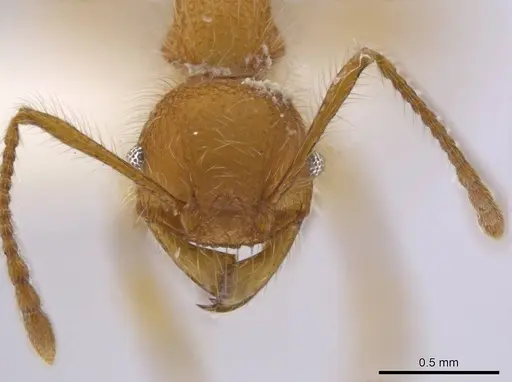
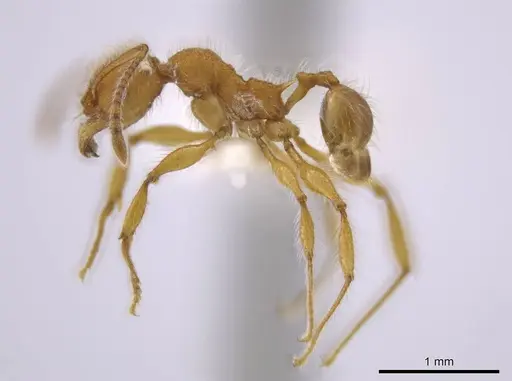
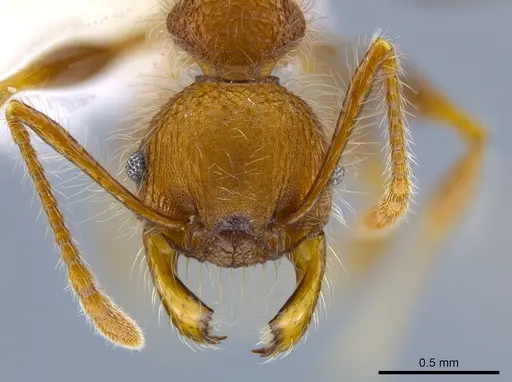
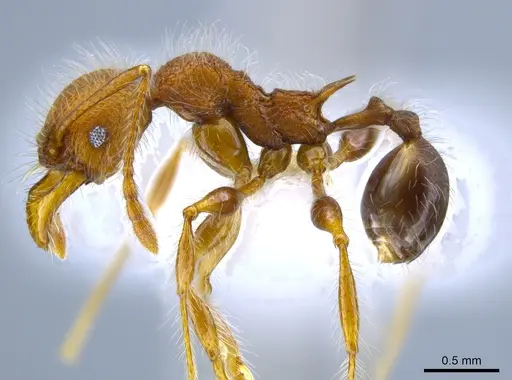
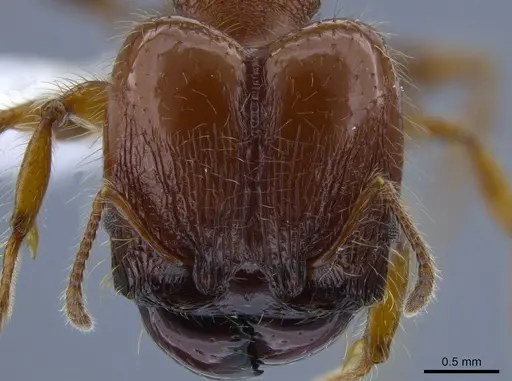
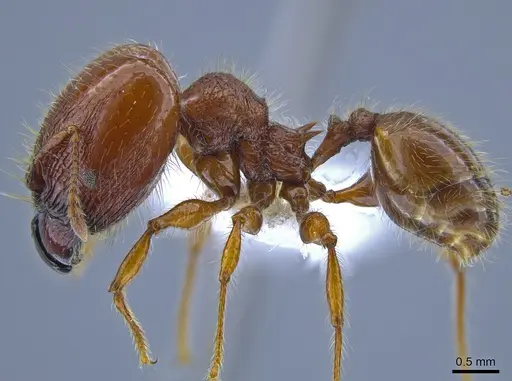
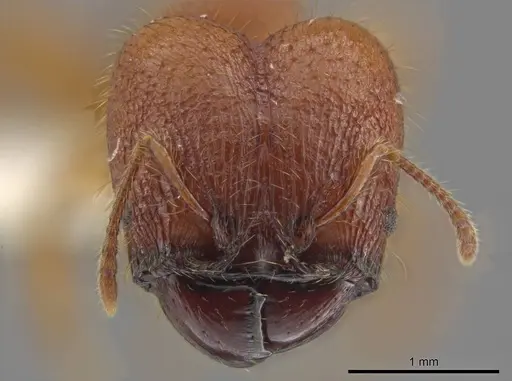
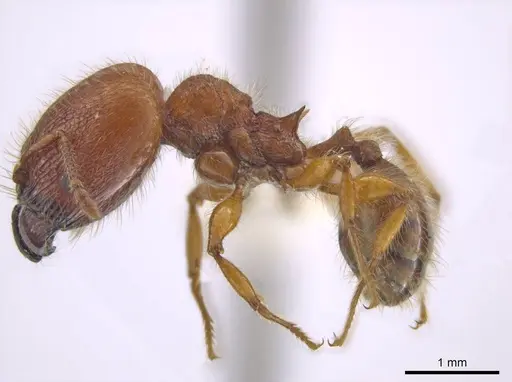
Pheidole minax was described by E.O. Wilson in 2003 from specimens collected in Peru's Manu National Park. The species is known only from the minor worker caste, the major workers and queen have never been described. This makes it one of the least documented Pheidole species. The minor workers can be identified by their narrow occiput with a nuchal collar, rugoreticulate head sculpture, and the distinctive shagreened texture on the first gastral tergite [2].
Distribution and Habitat
This species is known only from the type locality: Estacion Biologia Cocha Cashu in Manu National Park, Madre de Dios, Peru, at approximately 400m elevation. This location is in the Amazon lowland rainforest, one of the most biodiverse regions on Earth. The habitat is typical lowland tropical rainforest with high humidity and warm temperatures year-round [1][2].
Estimated Care Requirements
Since no biological data exists for this species, all care recommendations are estimates based on typical Pheidole genus behavior and the species' Amazon origin. Provide a warm, humid environment mimicking the lowland rainforest. Start with a simple test tube setup for any founding colony, then transition to a more spacious formicarium as the colony grows. Feed standard ant foods including protein sources (insects) and carbohydrates (sugar water or honey). Monitor your colony closely and adjust conditions based on their behavior and activity levels [2].
Pheidole Genus Characteristics
Pheidole is one of the largest ant genera with over 1,000 species worldwide. They are commonly called 'big-headed ants' due to the dramatic size difference between minor and major workers. Colonies can grow quite large, sometimes reaching thousands of workers. Most Pheidole species are omnivorous, feeding on seeds, insects, honeydew, and various household food scraps [2].
Frequently Asked Questions
How do I keep Pheidole minax ants?
Since nothing is known about this species' biology, all care is estimated. Provide a warm, humid environment (around 24-28°C) based on its Amazon origin. Use a test tube for founding colonies, transitioning to a Y-tong or plaster nest as the colony grows. Feed standard ant foods including protein and sugar sources [2].
What do Pheidole minax ants eat?
No species-specific diet data exists. Based on typical Pheidole behavior, they likely accept protein sources (insects), carbohydrates (honey, sugar water), and possibly seeds. Start with small insects and sugar water and observe what your colony accepts [2].
How long does it take for Pheidole minax to develop from egg to worker?
No species-specific development data exists. Based on typical tropical Pheidole species, expect approximately 4-8 weeks from egg to first worker at warm temperatures (around 26-28°C). This is a rough estimate [2].
Are Pheidole minax ants dangerous?
Pheidole ants are not considered dangerous to humans. Major workers (when produced) have powerful mandibles and can bite, but the bite is not medically significant. They are not aggressive and will typically flee or use minor biting as a last resort [2].
How big do Pheidole minax colonies get?
Colony size is unknown for this species as it has never been documented. Most Pheidole colonies grow to thousands of workers. Expect your colony to potentially reach several thousand individuals with proper care over time [2].
Do Pheidole minax ants need hibernation?
This is unknown but unlikely. As a tropical species from lowland Peru, they likely do not require a hibernation period. However, some reduction in activity during cooler months may occur naturally.
Can I keep multiple Pheidole minax queens together?
This has not been studied for this species. Most Pheidole species are single-queen (monogyne), but some can be polygynous. Do not attempt combining unrelated queens without specific knowledge of this species' behavior [2].
Where can I get Pheidole minax ants?
This species is extremely rare in the antkeeping hobby. It is only known from a single collection in Peru's Manu National Park. You would likely need to locate a specialized supplier or collector working with rare South American species [1].
What temperature should I keep Pheidole minax at?
Based on its Amazon origin, aim for warm temperatures around 24-28°C. A heating cable on one side of the nest can create a gradient. Avoid temperatures below 20°C or above 32°C [2].
Are Pheidole minax good for beginners?
This species is not recommended for beginners due to the complete lack of documented care information. Every aspect of keeping this species requires estimation from genus patterns. Choose a better-documented species like Pheidole pallidula or Pheidole indica for your first colony.
Report an Issue
The current care sheet is based fully on literature. See inconsistencies, or something that's incorrect? Please , it will be resolved after review from an admin. Contributing to the blogs tab also helps providing information, to make us be able to further improve the caresheets. Thank you for your support!
References

This caresheet is licensed under CC BY-SA 4.0 .
Community Blogs
CASENT0636787
View on AntWeb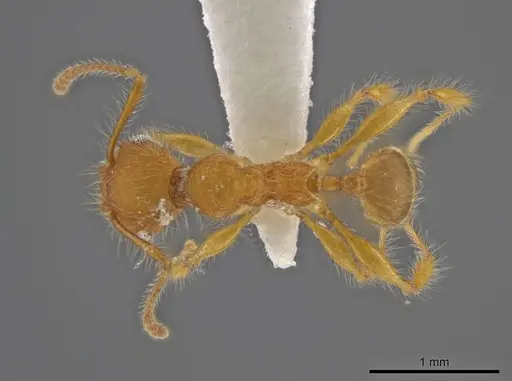
CASENT0650595
View on AntWeb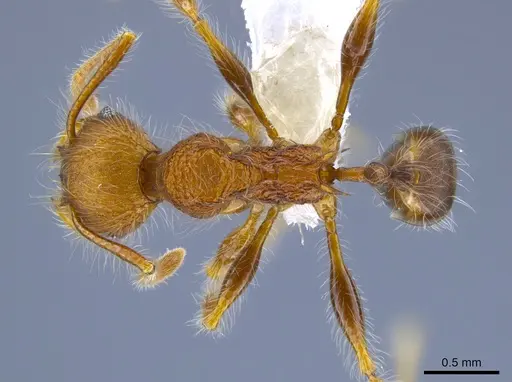
CASENT0650596
View on AntWeb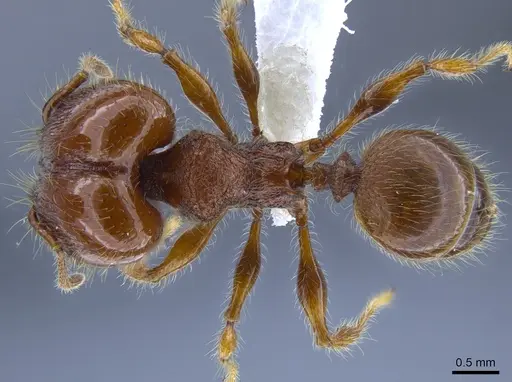
JTLC000016455
View on AntWeb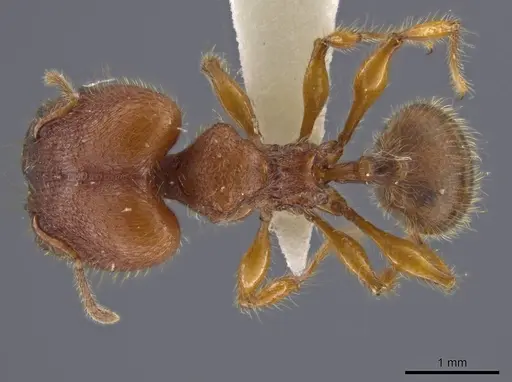
Literature
Loading distribution map...Loading products...