
Pheidole militicida
- Sci. Name
- Pheidole militicida
- Tribe
- Attini
- Subfamily
- Myrmicinae
- Author
- Wheeler, 1915
- Distribution
- Found in 1 countries
Introduction
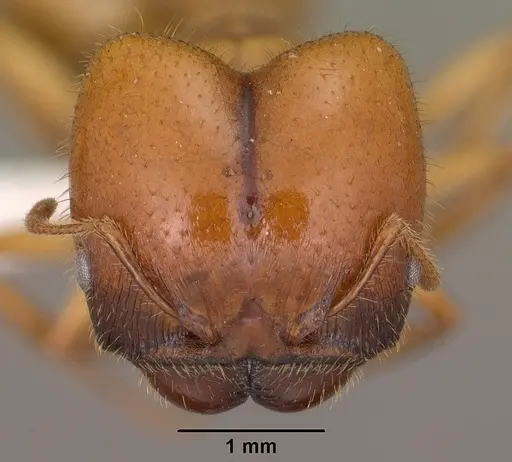
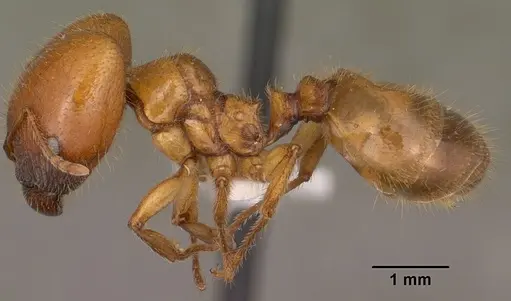
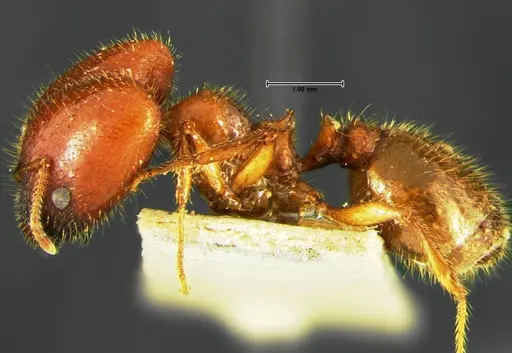
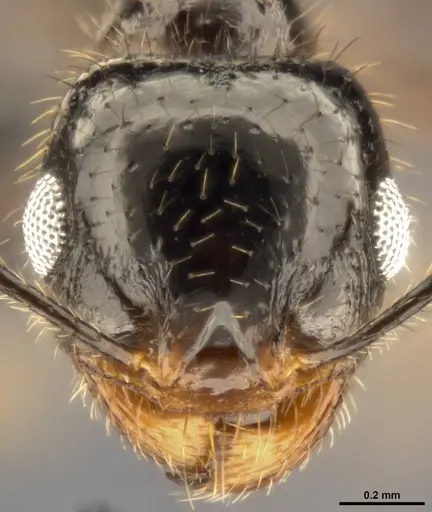
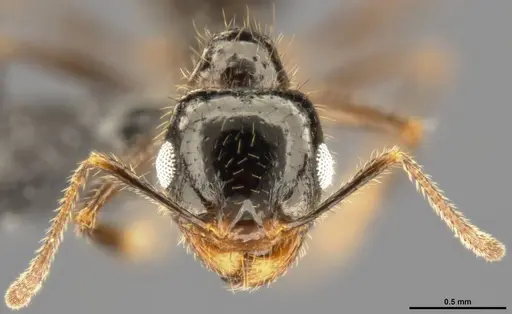
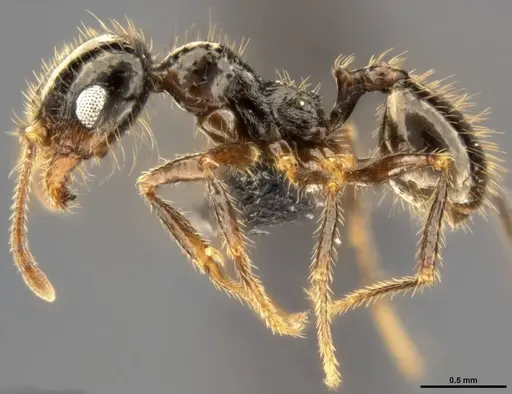
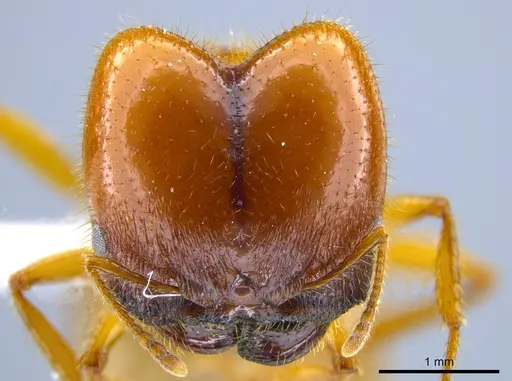
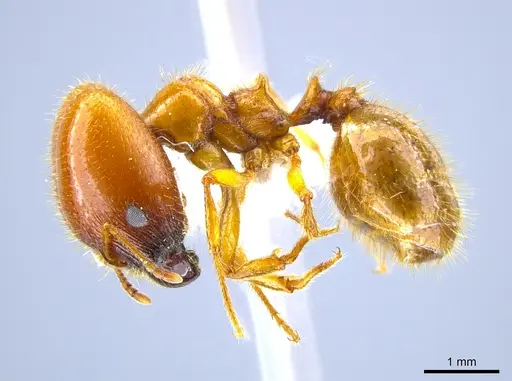
Pheidole militicida is a dimorphic ant with majors over 5 mm total length and minors about 2 mm, native to southern Arizona, New Mexico, and extreme western Texas, inhabiting desert environments where it builds crater nests . The species is known for its soldier majors that defend nest entrances against competitors and for its trunk-trail foraging system where minors harvest seeds .
Quick Summary
- Difficulty: Medium
- Origin & Habitat: Desert habitats in southern Arizona, New Mexico, and extreme western Texas at elevations of 1300-1500 m. Nests are built in light soil between large stones [1].
- Colony Type: Based on Pheidole genus patterns, likely monogyne with single queen colonies.
- Size & Growth:
- Queen: Size data unavailable
- Worker: Majors: over 5 mm total length, minors: about 2 mm total length [1].
- Colony: Colony size data is limited, unknown maximum size.
- Growth: Moderate
- Development: Estimated 6-8 weeks based on typical Pheidole development. (Development time inferred from genus patterns, direct measurements not available for this species.)
- Antkeeping:
- Temperature: Foraging begins at 16°C and peaks at 31°C. Keep nest at 20-26°C with a warm side [1].
- Humidity: Keep nest substrate dry with minimal moisture, as this is a desert species [1].
- Diapause: Partial winter rest, foraging reduces to afternoon hours in winter. No full hibernation required [1].
- Nesting: Prefers dry, well-drained nests like Y-tong or plaster. Provide outworld with sand/soil for seed storage [1].
- Behavior: Majors are soldiers that guard nest entrances and defend against competitors. Minors handle seed harvesting and processing. Workers show low inter-colony aggression. Escape risk is moderate for minors due to small size, low for majors [1].
- Common Issues: desert species is sensitive to excess humidity, keep nesting area dry to prevent mold [1]., majors are clumsy and can be trapped in deep substrate, avoid deep layers in outworld [1]., winter foraging is limited to afternoon hours, adjust expectations [1]., seed storage behavior requires appropriate outworld setup [1]., colonies may be slow to establish due to specialized diet.
Housing and Nest Setup
Pheidole militicida needs dry, well-drained housing. Use Y-tong or plaster nests and connect to an outworld with sand/soil for seed storage. Provide a water tube but avoid high humidity in the nest chamber. Escape prevention is straightforward for majors but standard barriers are needed for minors [1].
Feeding and Diet
This species is an obligate seed harvester. Offer small grass seeds as primary food, mimicking natural diet of fluff grass and spike pappus grass. Minors process seeds by gnawing, majors do not handle seeds and may starve if isolated with seeds. Supplement occasionally with small insects [1].
Temperature and Seasonal Care
Temperature is critical for natural behavior. Foraging begins at 16°C and peaks at 31°C. Keep nest at 20-26°C with a warm side. During winter, reduce temperatures to 15-18°C but maintain partial activity [1].
The Major Worker Role
Majors are specialized soldiers that guard nest entrances and defend against competitors like Pogonomyrmex. They wedge into passages with open jaws, targeting mandibles of attackers. In captivity, they patrol but rarely interact with food [1].
Foraging Behavior
P. militicida uses trunk-trail foraging similar to Messor and Pogonomyrmex. Minors establish chemical trails that become stabilized with visual markers. When seed supplies diminish, the colony shifts foraging pathways [2].
Frequently Asked Questions
How long does it take for Pheidole militicida to produce first workers?
Expect 6-8 weeks from founding to first workers based on typical Pheidole development.
Can I keep multiple Pheidole militicida queens together?
This is likely a monogyne species, so multiple queens are not typical.
Do Pheidole militicida majors need to eat seeds?
No, majors are soldiers and do not process seeds. They feed on food brought by minors [1].
What temperature do Pheidole militicida ants need?
Keep the nest at 20-26°C with a warm side reaching 31°C for foraging [1].
Are Pheidole militicida good for beginners?
Medium difficulty, they require specific dry conditions and seed-based diet.
Do Pheidole militicida need hibernation?
No full hibernation, but partial winter rest with reduced foraging [1].
Why do my majors never eat seeds?
This is normal, majors are soldiers and do not crack seeds. Only minors process seeds [1].
What do I feed my Pheidole militicida colony?
Primary food should be small grass seeds, with occasional insect supplements [1].
When will my colony start foraging actively?
Foraging begins at 16°C and peaks at 31°C. Ensure outworld can warm to these temperatures [1].
How big do Pheidole militicida colonies get?
Colony size data is limited, unknown maximum size.
Report an Issue
The current care sheet is based fully on literature. See inconsistencies, or something that's incorrect? Please , it will be resolved after review from an admin. Contributing to the blogs tab also helps providing information, to make us be able to further improve the caresheets. Thank you for your support!
References

This caresheet is licensed under CC BY-SA 4.0 .
Community Blogs
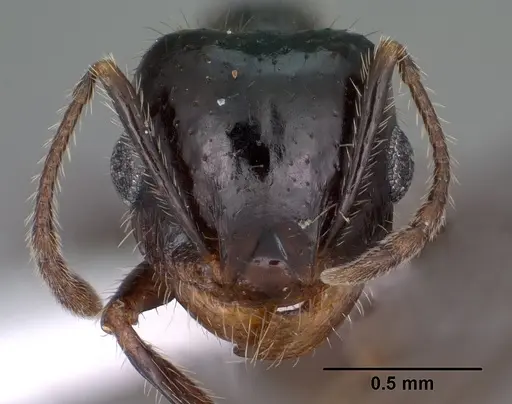
CASENT0102884
View on AntWeb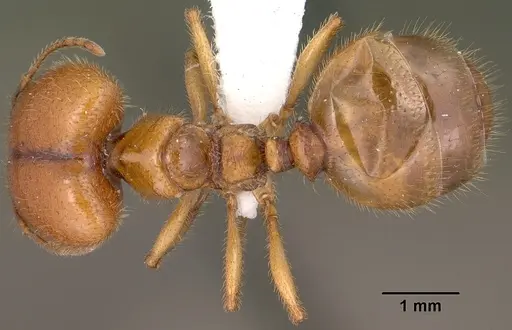
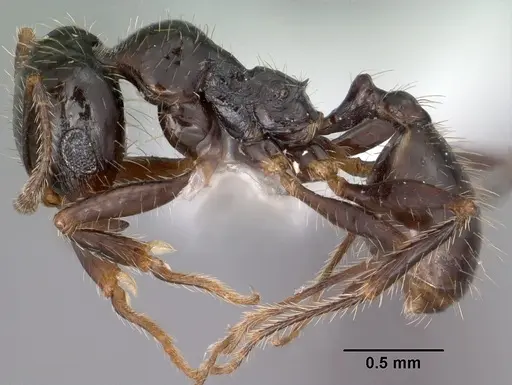
CASENT0102885
View on AntWeb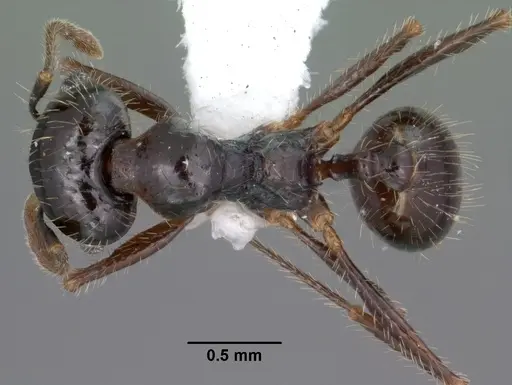
CASENT0105649
View on AntWeb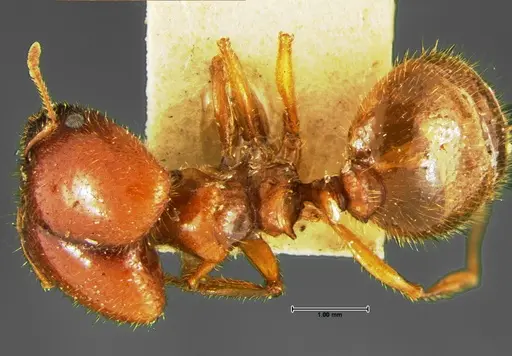
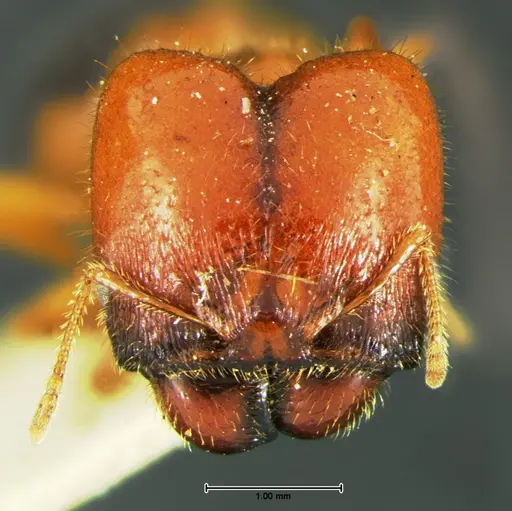
CASENT0282702
View on AntWeb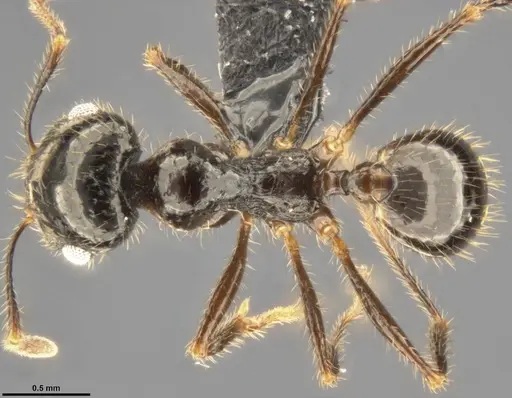
CASENT0612970
View on AntWeb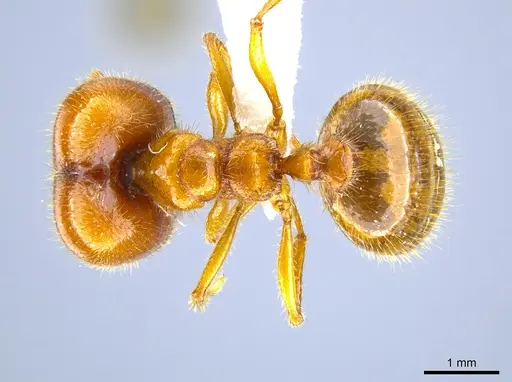
Literature
Loading distribution map...Loading products...