
Pheidole mikros
- Sci. Name
- Pheidole mikros
- Tribe
- Attini
- Subfamily
- Myrmicinae
- Author
- Salata & Fisher, 2020
- Distribution
- Found in 1 countries
Introduction
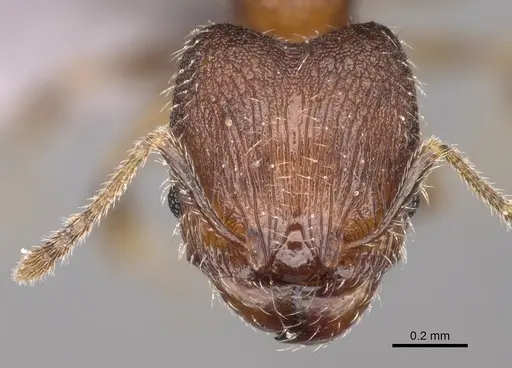
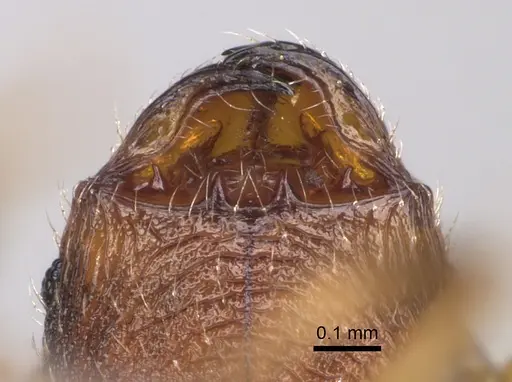
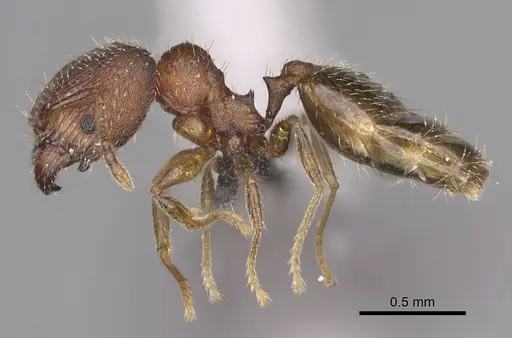
Pheidole mikros is a minute ant species from Madagascar, belonging to the sikorae species group. Major workers have head lengths of 0.86-0.88 mm, and minor workers have head lengths of 0.47-0.48 mm , but full body size measurements are not available. The species is found in northern Madagascar (Antsiranana region) at elevations of 80-450 meters, in rainforest and tropical dry forest habitats . Majors are brownish orange, while minors are yellowish brown .
Quick Summary
- Difficulty: Medium
- Origin & Habitat: Northern Madagascar (Antsiranana region), in rainforest and tropical dry forest at 80-450 m elevation. Nests are located in rotten logs and under tree bark [1].
- Colony Type: Colony structure is unconfirmed. No specific data on queen number or social structure is available.
- Size & Growth:
- Queen: Size data unavailable, no total length measurements provided in literature.
- Worker: Size data unavailable, no total length measurements provided in literature. Head lengths are documented but do not represent full body size [1].
- Colony: Unknown, no specific colony size data available for this species.
- Growth: Unknown, likely moderate based on typical Pheidole patterns.
- Development: Estimated 6-8 weeks based on typical Pheidole development at tropical temperatures [1]. (Development time is unconfirmed for this species, estimate based on genus-level data.)
- Antkeeping:
- Temperature: Keep at 22-26°C, they are a tropical species from Madagascar [1].
- Humidity: Keep nest substrate consistently moist but not waterlogged, based on their rainforest and dry forest habitat [1].
- Diapause: No, as a tropical species, they do not require hibernation [1].
- Nesting: In the wild, they nest in rotten logs and under tree bark [1]. In captivity, use test tubes or Y-tong nests with damp substrate.
- Behavior: Pheidole species are generally calm toward keepers but will defend their nest. They have a functional stinger as part of the Myrmicinae subfamily defense mechanism. Due to their tiny size, escape prevention is critical, use fine mesh barriers. They are active foragers.
- Common Issues: tiny size means escapes are likely without fine mesh barriers, newly described species means limited captive care information available, wild-caught colonies may have parasites that kill them in captivity, test tube setups must be properly sealed, these small ants can squeeze through tiny gaps
Nest Preferences
In their natural habitat, Pheidole mikros nests in rotten logs and under tree bark in Madagascar's rainforest and tropical dry forest [1]. This indicates they prefer damp, enclosed spaces with wood material. For captive care, a test tube setup works well for founding colonies. Once the colony grows, you can move them to a Y-tong formicarium. Keep the nest material slightly moist, these ants appreciate humidity but not standing water [1].
Feeding and Diet
Pheidole species are generalist omnivores that typically eat seeds, small insects, and honeydew [2]. As a very small species, offer appropriately sized food like fruit flies or pinhead crickets. Provide sugar water or honey as a constant sugar source. Remove uneaten prey after 24 hours to prevent mold.
Temperature and Care
As a tropical species from Madagascar, Pheidole mikros needs warm conditions. Keep the nest area at 22-26°C to support normal activity and brood development [1]. Use a heating cable if needed to create a gentle gradient. Avoid temperatures below 20°C or above 30°C. They do not require hibernation.
Behavior and Temperament
Pheidole ants are generally calm and not aggressive toward keepers. They have a functional stinger as part of the Myrmicinae defense mechanism, but are not considered dangerous to humans. Workers are active foragers. Due to their tiny size, escape prevention is critical, use fluon on barriers and ensure all connections are sealed.
Colony Founding
Pheidole mikros founding behavior is unconfirmed. Based on typical Pheidole patterns, queens may seal themselves in a chamber, but no specific data is available. Do not disturb the founding chamber during this period.
Frequently Asked Questions
Can I keep Pheidole mikros in a test tube?
Yes, test tubes work well for founding colonies. Use a standard test tube setup with a water reservoir sealed with cotton. Ensure tight-fitting lids or barriers since these tiny ants can escape through small gaps [2].
How long until first workers appear in Pheidole mikros?
Estimated 6-8 weeks from egg to first worker at optimal tropical temperatures (22-26°C) [1]. This is based on typical Pheidole development patterns.
How big do Pheidole mikros colonies get?
Colony size is unconfirmed for this species. No specific data is available on maximum colony size.
What do Pheidole mikros eat?
Feed small insects like fruit flies or pinhead crickets as protein sources, and provide constant access to sugar water or honey [2].
What temperature do Pheidole mikros need?
Keep them at 22-26°C. They are a tropical species from Madagascar and do not require hibernation [1].
Are Pheidole mikros good for beginners?
This species is suitable for intermediate antkeepers. Their tiny size requires careful attention to escape prevention, and limited captive information is available.
When should I move Pheidole mikros to a formicarium?
Move from test tube to formicarium once the colony has active foragers and you can manage the setup. Ensure the new nest has appropriate moisture and small chambers.
Why are my Pheidole mikros escaping?
Their very small size means they can squeeze through tiny gaps. Use fine mesh on all openings, apply fluon to barrier surfaces, and check connections regularly.
Do Pheidole mikros need hibernation?
No, they are a tropical species from Madagascar and do not require hibernation. Keep them warm year-round at 22-26°C [1].
Report an Issue
The current care sheet is based fully on literature. See inconsistencies, or something that's incorrect? Please , it will be resolved after review from an admin. Contributing to the blogs tab also helps providing information, to make us be able to further improve the caresheets. Thank you for your support!
References

This caresheet is licensed under CC BY-SA 4.0 .
Community Blogs
CASENT0261101
View on AntWeb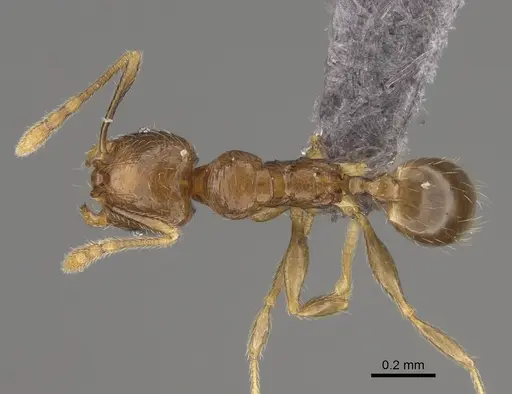
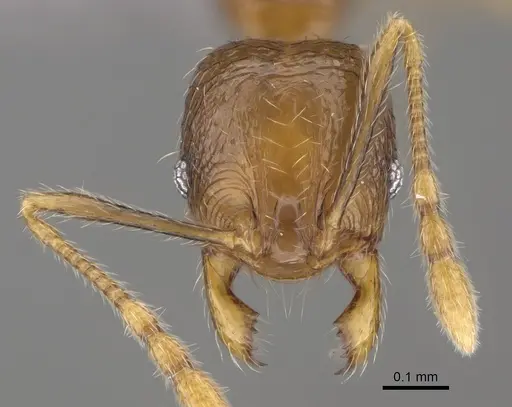
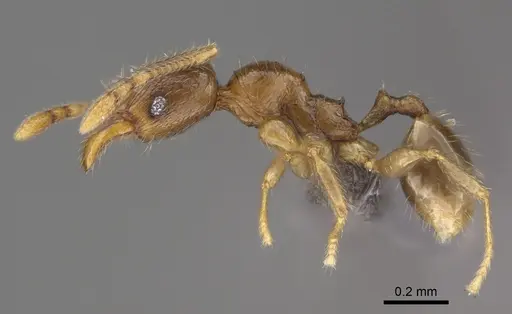
CASENT0923271
View on AntWeb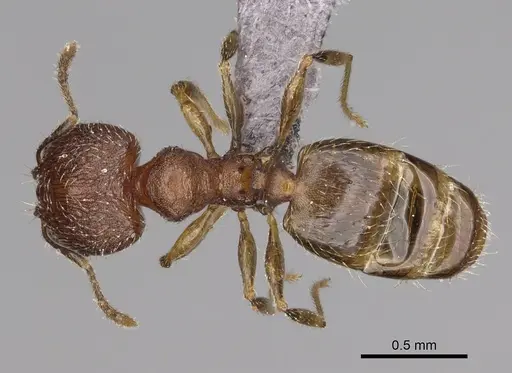
Literature
Loading distribution map...Loading products...