
Pheidole mendicula
- Sci. Name
- Pheidole mendicula
- Tribe
- Attini
- Subfamily
- Myrmicinae
- Author
- Wheeler, 1925
- Distribution
- Found in 9 countries
Introduction
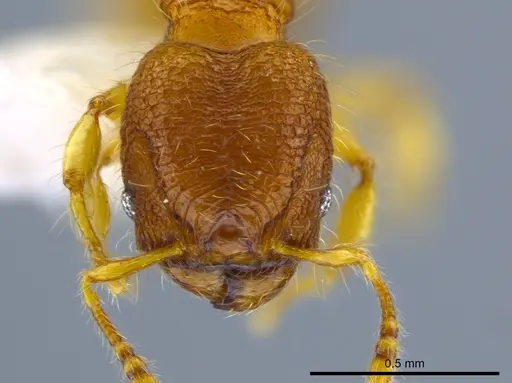
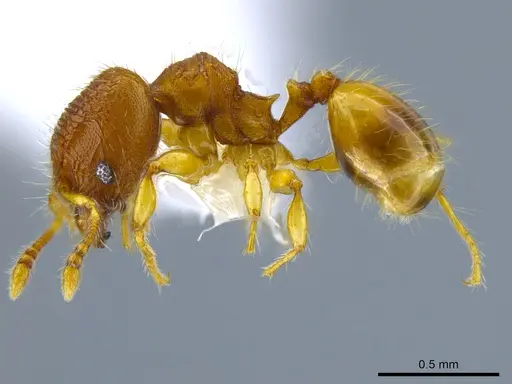
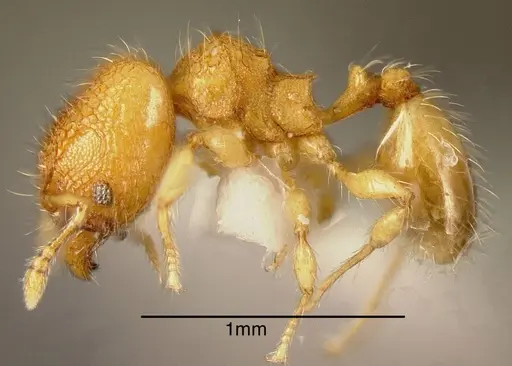
Pheidole mendicula is a very small reddish-brown ant belonging to the tachigaliae-group, characterized by its 11-segmented antennae . Body size data is unavailable, but this species is among the smallest Pheidole ants. It ranges across the Neotropics, from Panama and Costa Rica through Colombia, Ecuador, Peru, and into Amazonian Brazil, with additional populations in the Caribbean islands of Cuba, Guadeloupe, and Trinidad . In the wild, these ants nest in varied habitats including clay soil in lawn areas surrounded by rainforest, rotten branches in bamboo groves, and decaying wood on the rainforest floor . They have been documented visiting extrafloral nectaries of Passifolia plants . A notable trait is that major workers can function as repletes, storing liquid food in their distended gasters . Winged queens have been found in nests from May to July, indicating the nuptial flight season .
Quick Summary
- Difficulty: Medium
- Origin & Habitat: Neotropical species found across Central America (Panama, Costa Rica), northern South America (Colombia, Ecuador, Peru, Brazil), and the Caribbean (Cuba, Guadeloupe, Trinidad). Inhabits tropical rainforests, second-growth forest, bamboo groves, and disturbed areas like lawn edges. Nests in clay soil, rotten wood, and under debris on the rainforest floor [1][2].
- Colony Type: Unconfirmed, no specific data on queen number or social structure from research context.
- Size & Growth:
- Queen: size data unavailable, inferred from Pheidole genus patterns
- Worker: size data unavailable, inferred from Pheidole genus patterns
- Colony: Unknown, no species-specific data available
- Growth: Moderate, inferred from related small Pheidole species
- Development: Estimated 6-8 weeks at optimal temperatures based on genus patterns (Development time is estimated, no direct species-specific studies exist. Tropical species typically develop faster than temperate ones.)
- Antkeeping:
- Temperature: Keep warm and stable, roughly 24-28°C, as inferred from tropical habitat. Provide a gentle gradient for self-regulation.
- Humidity: Keep substrate consistently moist but not waterlogged, with some drier areas for foraging, based on forest-floor habitat inference.
- Diapause: No, as a tropical species, they do not require hibernation. Maintain stable temperatures year-round.
- Nesting: Will accept various nest types such as test tubes, Y-tong (AAC) nests, or plaster nests. Provide appropriate scaling for small workers and some substrate depth for nesting material.
- Behavior: Generally peaceful and non-aggressive toward keepers. Workers are active foragers that search for seeds, small insects, and honeydew. Major workers can serve as repletes, storing liquid food, this behavior is observed in the species [4]. Escape prevention is important due to small size, use fine mesh barriers.
- Common Issues: tiny minor workers can escape through standard barrier setups, use fine mesh and tight-fitting lids., tropical species may struggle if temperatures drop below 22°C for extended periods., overfeeding can lead to mold issues in the outworld, remove uneaten food promptly., colonies may be slow to establish initially, patience is needed during the founding stage., major workers with distended gasters are fragile and can be damaged if disturbed.
Housing and Nest Setup
Pheidole mendicula is adaptable and will accept various nest types. For founding colonies, a simple test tube setup works well, fill the tube one-third with water, plug with cotton, and place the queen in the dark [2]. The queen will seal herself in and lay eggs without needing to forage. Once workers emerge, you can keep them in the test tube or transition to a formicarium.
For established colonies, Y-tong (AAC) nests work excellently, the small chambers accommodate their tiny size. Plaster nests are also suitable as they maintain humidity well. If using a naturalistic setup, provide a layer of moist soil or coconut fiber with some rotting wood pieces, based on their natural nesting habits [3][2]. The outworld should be simple with a foraging area, these ants are small so avoid large open spaces. Always provide a water tube for drinking.
Feeding and Diet
In the wild, Pheidole mendicula is a generalist forager that collects seeds, small insects, and honeydew from extrafloral nectaries [3]. In captivity, offer a varied diet: protein sources like small crickets, fruit flies, or mealworm pieces twice weekly, and a constant sugar source like sugar water, honey, or diluted maple syrup.
A unique aspect of this species is that major workers can function as repletes, they store liquid food in their distended gasters, similar to honeypot ants [4]. You may observe major workers with unusually swollen abdomens after feeding on sugar water or honey. This is normal behavior. Remove any uneaten prey after 24-48 hours to prevent mold. Fresh water should always be available.
Temperature and Seasonal Care
As a Neotropical species from lowland rainforests, Pheidole mendicula requires warm conditions year-round. Keep the nest area at roughly 24-28°C. Temperatures below 22°C for extended periods can slow colony development and may stress the ants. A small heating cable on one side of the nest can create a gentle gradient, allowing workers to move to warmer or cooler areas as needed.
Unlike temperate species, these ants do not require hibernation or diapause. Maintain stable temperatures throughout the year. Avoid placing the nest near air conditioning vents or drafty areas. Room temperature within the warm range is typically suitable without additional heating in most homes. Monitor colony behavior, if workers cluster near the heat source, increase temperature slightly, if they avoid it and seem sluggish, the area may be too warm.
Behavior and Observation
Pheidole mendicula is a rewarding species to observe. Workers are active foragers that quickly emerge to collect food. The size difference between major and minor workers is striking, majors have larger heads with specialized mandibles for seed processing or defense, while minors handle most foraging and brood care.
The replete behavior of major workers is particularly interesting to watch. When fed liquid sugar sources, major workers may develop distended gasters filled with liquid, serving as living food storage [4]. This is a social adaptation that benefits the colony during lean times. The ants are generally peaceful and not prone to stinging. They are small but can be observed closely as they are not overly skittish. Their small size does mean they can squeeze through tiny gaps, ensure your setup has fine mesh barriers and tight-fitting lids.
Colony Development and Growth
Colony growth follows typical Pheidole patterns. After the claustral founding stage (queen sealed in with her eggs), the first workers, called nanitics, emerge. These nanitics are crucial as they take over foraging and brood care, allowing the queen to focus exclusively on egg-laying.
From there, colony size increases progressively. Expect moderate growth rates, the colony will likely reach several hundred workers within the first year under good conditions. The presence of major workers becomes more common as the colony matures. Patience is important during the founding stage as the colony may appear static for weeks before eggs appear, then larvae, then the exciting emergence of first workers.
Common Problems and Solutions
The primary challenges with Pheidole mendicula relate to their small size and tropical requirements. Escape prevention is critical, minor workers are tiny and can slip through standard barriers. Use fine mesh on any ventilation and ensure all connections are tight.
Temperature management is important, these ants are not cold-hardy. If your room temperature falls below 22°C regularly, consider adding a small heat source. Conversely, avoid overheating which can dry out the nest quickly.
Mold can be an issue if you overfeed or keep the nest too wet. Remove uneaten food promptly and provide ventilation. If mold appears in the foraging area, clean it out and reduce feeding. During the founding stage, avoid disturbing the queen, she is sensitive to vibrations and may eat her eggs if stressed.
Finally, be patient during the initial weeks. Claustral founding takes time, and the queen needs peace and darkness to raise her first brood successfully.
Frequently Asked Questions
How long does it take for Pheidole mendicula to have first workers?
Expect first workers (nanitics) to emerge in approximately 6-8 weeks at optimal temperatures of 25-28°C. This is an estimate based on typical Pheidole genus patterns, as this specific species has not been studied for exact development times [2]. The queen seals herself in during claustral founding and relies on her stored energy reserves until the first workers hatch.
Can I keep Pheidole mendicula in a test tube?
Yes, test tubes work well for founding colonies. Simply fill one-third with water, plug with cotton, and place the queen inside. Keep the tube in darkness and undisturbed [2]. Once the colony establishes with workers, you can either keep them in the test tube or transition to a formicarium. Test tubes are excellent for maintaining humidity.
What do Pheidole mendicula ants eat?
They are generalist feeders. Offer protein (small insects like fruit flies, crickets, or mealworm pieces) twice weekly, and provide a constant sugar source (sugar water, honey, or diluted maple syrup). They will also collect seeds and tend extrafloral nectaries [3]. Major workers can act as repletes, storing liquid food in their distended gasters [4].
What temperature do Pheidole mendicula need?
Keep them warm at roughly 24-28°C. As a Neotropical species from lowland rainforests, they require year-round warmth. Temperatures below 22°C for extended periods can stress the colony and slow development. A small heating cable on part of the nest can help maintain optimal temperatures.
Do Pheidole mendicula need hibernation?
No, they do not require hibernation. As a tropical species from Central and South America, they are active year-round. Maintain stable warm temperatures throughout the year. Do not expose them to cold temperatures or simulate winter conditions.
Are Pheidole mendicula good for beginners?
They are rated as medium difficulty. They are small and require attention to escape prevention, and they need warm tropical conditions. However, they are generally hardy once established and fascinating to watch with their replete behavior. Beginners should be prepared for the slow founding stage and ensure they can maintain appropriate temperatures.
How big do Pheidole mendicula colonies get?
The exact maximum colony size is unknown for this species. Based on typical Pheidole patterns, colonies likely reach several hundred to a low thousand workers. They are not among the largest Pheidole species, but colonies can still become impressive over time.
When should I move Pheidole mendicula to a formicarium?
You can keep them in a test tube long-term if it remains humid and the colony fits. Move to a formicarium when the test tube becomes crowded or dries out. A Y-tong or plaster nest works well for this species. Many keepers transition once they have 50-100 workers, but there is no strict deadline.
Why are my Pheidole mendicula dying?
Common causes include: temperatures below 22°C (tropical species are cold-sensitive), too dry conditions, mold from overfeeding, or escape of tiny workers through gaps. Check that your setup maintains proper warmth and humidity, remove uneaten food promptly, and ensure all barriers are tight. Colonies in the founding stage are particularly vulnerable, avoid disturbing the queen.
Report an Issue
The current care sheet is based fully on literature. See inconsistencies, or something that's incorrect? Please , it will be resolved after review from an admin. Contributing to the blogs tab also helps providing information, to make us be able to further improve the caresheets. Thank you for your support!
References

This caresheet is licensed under CC BY-SA 4.0 .
Community Blogs
CASENT0630818
View on AntWeb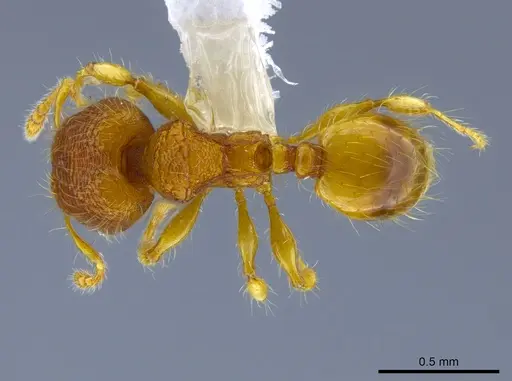
CASENT0635488
View on AntWeb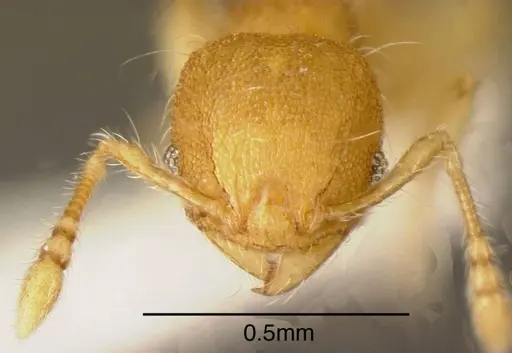
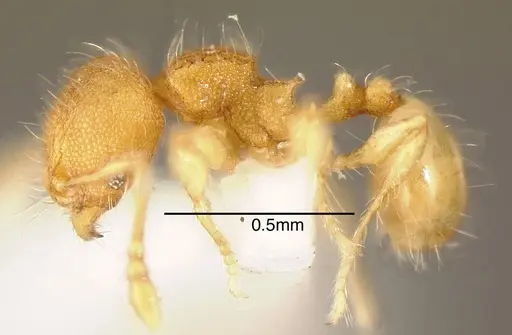
CBUMAGENT42002
View on AntWeb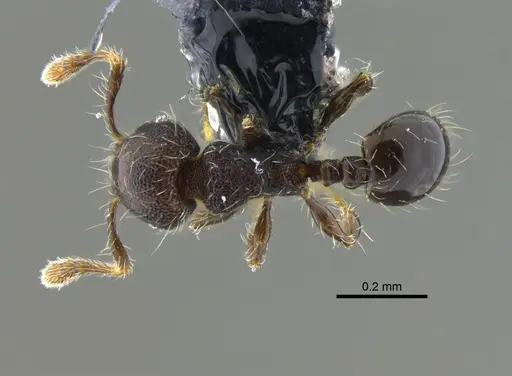
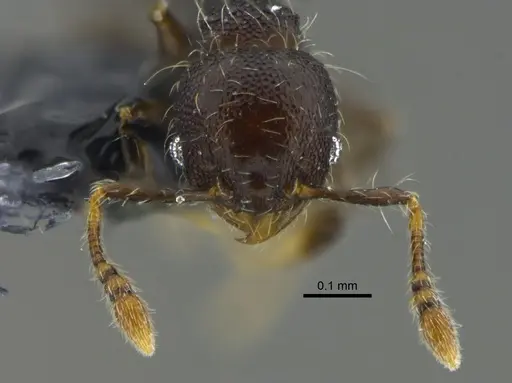
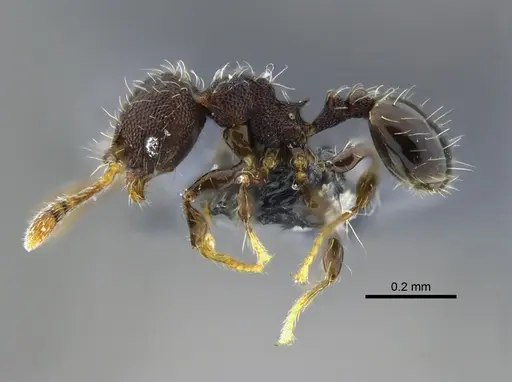
INBIOCRI002279723
View on AntWeb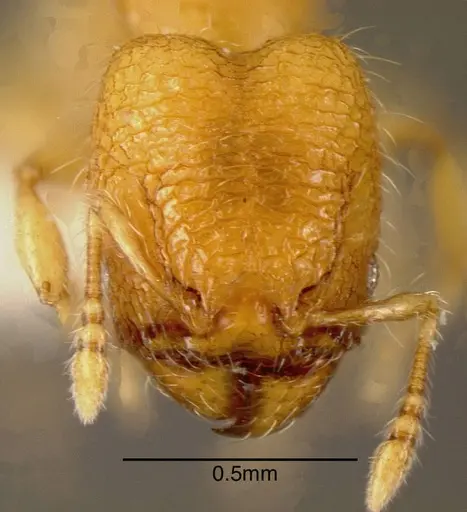
Literature
Loading distribution map...Loading products...