
Pheidole mavohavoana
- Sci. Name
- Pheidole mavohavoana
- Tribe
- Attini
- Subfamily
- Myrmicinae
- Author
- Salata & Fisher, 2020
- Distribution
- Found in 1 countries
Introduction
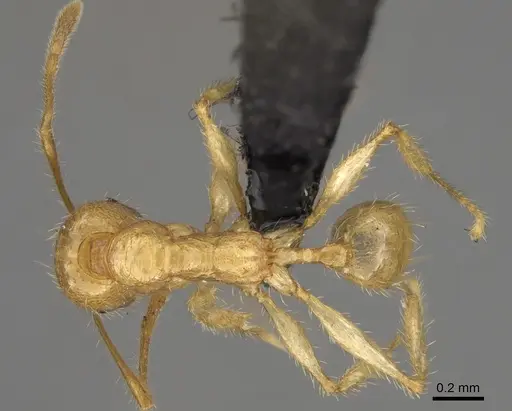
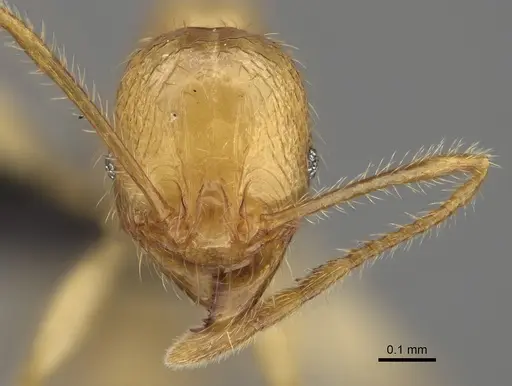
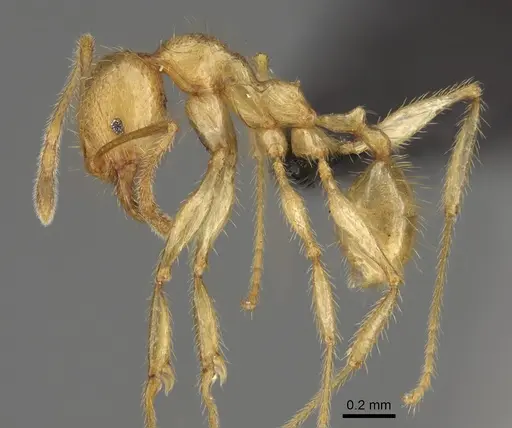
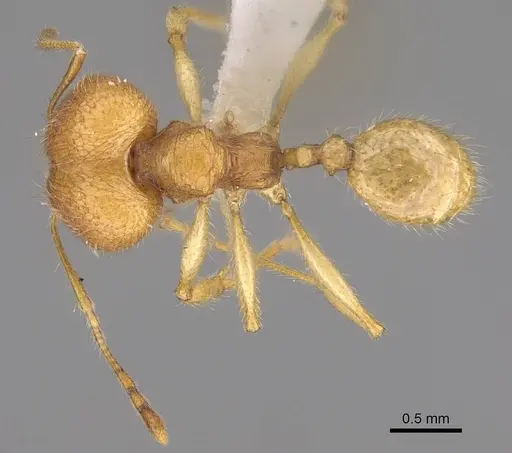
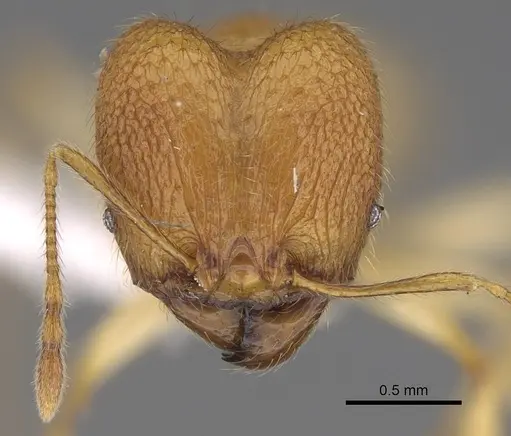
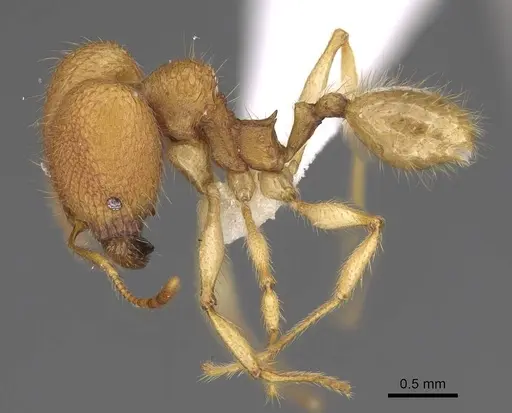
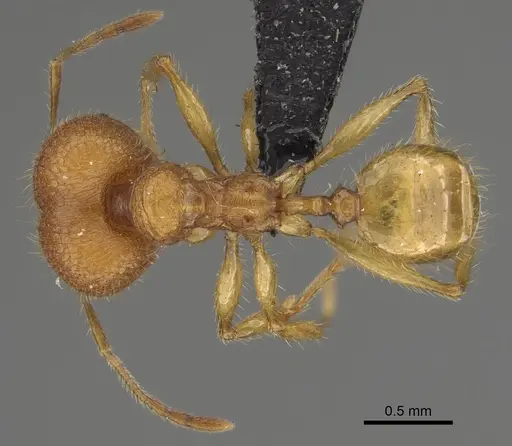
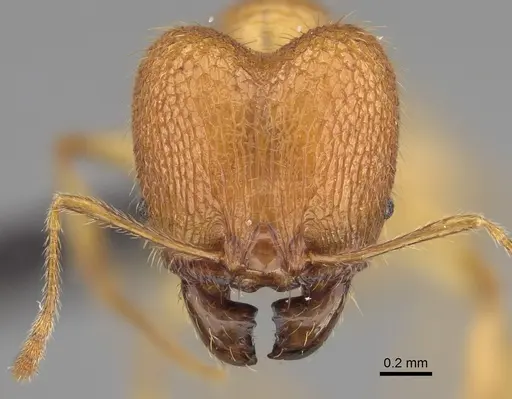
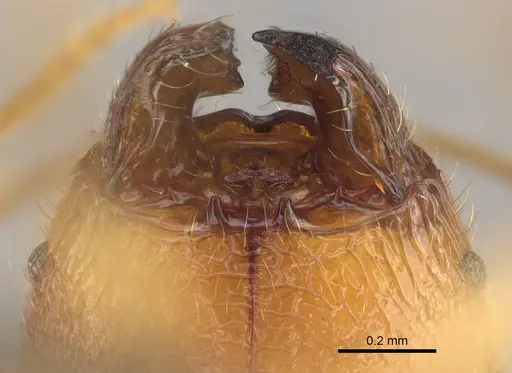
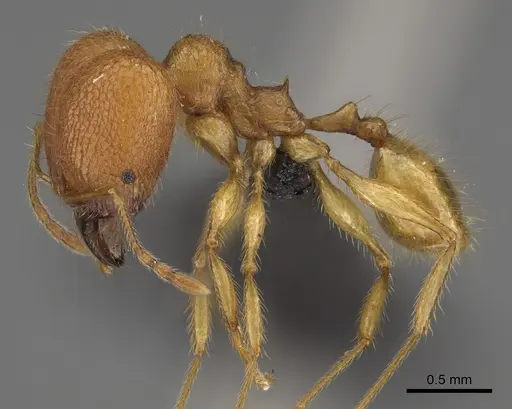
Pheidole mavohavoana is a moderately large ant species from Madagascar, first described in 2020. It belongs to the Pheidole sikorae species group, which has distinctly different major and minor workers (polymorphic). Major workers are orange with a very dense covering of short hairs on their gaster. Minor workers are a plain yellow with a smooth, shiny head . The species name comes from the Malagasy words for 'yellow' and 'hill', referring to the ants' yellow colour and the mountainous habitat they live in . So far this ant has only been found at two locations in eastern Madagascar: near Andrambovato in Fianarantsoa and in Parc National d'Andohahela in Toliara. It lives in montane rainforest between 900 and 1075 metres elevation, where colonies nest in rotten logs and under stones .
Quick Summary
- Difficulty: Medium
- Origin & Habitat: Eastern Madagascar, montane rainforest at 900-1075 m elevation. Nests in rotten logs and under stones [1][2].
- Colony Type: Unknown, no queen data exist. Based on typical Pheidole patterns, colonies are probably monogyne (single queen), but this has not been confirmed.
- Size & Growth:
- Queen: Unknown, no queen measurements available. Based on genus patterns, queens are likely 6-8 mm, but this is an estimate.
- Worker: Total body length not recorded. Major workers are described as 'moderately large' with a head length of about 1.3 mm, but total length is not given. Minor workers are smaller, with head lengths around 0.65 mm [1]. (These are head measurements, not body size.)
- Colony: Unknown, not documented for this species. Related Pheidole species can reach several hundred to a few thousand workers, but this is only a guess.
- Growth: Moderate, estimated from related Pheidole species. No specific data for P. mavohavoana.
- Development: 6-10 weeks at optimal temperature, estimated from related Pheidole species [1]. (Development time is estimated because no studies exist for this species.)
- Antkeeping:
- Temperature: Around 20-24°C. As a montane species from high elevation, they prefer cooler conditions than typical tropical ants. Avoid temperatures above 28°C [1].
- Humidity: High humidity, montane rainforest species. Keep the nest substrate consistently moist but not waterlogged. Provide good ventilation to prevent mold.
- Diapause: Unknown, no specific data. Given their montane origin, they may experience cooler winters and could benefit from a slight temperature drop (3-5°C) during winter, but this is optional.
- Nesting: In nature they nest in rotten logs and under stones [1]. In captivity, use a Y-tong (AAC), plaster, or soil nest that holds humidity well. Start with a test tube for founding colonies. Avoid dry nests like pure ceramic.
- Behavior: This species has the classic Pheidole division of labor: minor workers do most of the foraging and brood care, while major workers defend the nest. They belong to the myrmicine subfamily and have a functional stinger, but it is not medically significant to humans. Majors will bite if disturbed. Minor workers are small and can slip through tiny gaps, so secure the outworld well. Overall they are not particularly aggressive, but a large colony will defend itself vigorously.
- Common Issues: high humidity needs can lead to mold if ventilation is poor., montane origin means they may struggle in hot, dry rooms, keep cool., colonies may grow slowly at first, be patient during the founding stage., minor workers are small (head length ~0.65 mm) and can escape through tiny cracks., wild-caught colonies may carry parasites that affect survival, especially since little is known about this species.
Housing and Nest Setup
In the wild, Pheidole mavohavoana nests in rotten logs and under stones in humid montane rainforest [1]. For a captive colony, start with a test tube setup for the founding stage. Once the colony has about 20-30 workers, transfer them to a Y-tong (AAC), plaster, or soil nest that holds humidity. These nest types let you control moisture and provide a natural feel. Make sure the nest has a humidity gradient, keep most of it moist but leave one area slightly drier so ants can choose. Also provide an outworld for foraging. Avoid pure acrylic nests because they don't hold humidity and are hard for ants to grip. Add some leaf litter or rotten wood pieces to mimic their natural habitat.
Feeding and Diet
Like most Pheidole, P. mavohavoana is omnivorous. Offer small insect protein such as fruit flies, pinhead crickets, or small mealworms. Provide a sugar source like honey, sugar water, or nectar substitute. Members of the tribe Attini often accept seeds, but this is not confirmed for this species. Feed every 2-3 days. Remove uneaten prey after a day to prevent mold. Minor workers handle most of the feeding, but majors help process larger items inside the nest. Since colony size and growth rate are unknown, adjust portions as you observe the colony's appetite.
Temperature and Seasonal Care
This species comes from high-elevation montane rainforest, so it likes it cool. Keep the nest around 20-24°C. Temperatures above 28°C can stress or kill the colony [1]. Room temperature is usually fine, but watch during heatwaves. No diapause data exist, but given the montane origin, you can try a slight temperature drop (by 3-5°C) during winter to mimic natural seasonal changes. This is optional, the colony may do fine without it. Avoid sudden temperature swings.
Colony Development
Pheidole mavohavoana has a polymorphic worker caste: majors and minors. Majors develop when certain larvae get extra food and grow larger. The timing of major emergence is unknown, in related Pheidole species, majors appear once the colony has several dozen workers. The first workers (nanitics) are smaller than mature ones. Development from egg to worker is estimated at 6-10 weeks at 20-24°C, based on related species [1]. Growth is probably moderate, but since this is a newly described species with no colony studies, be prepared for slow initial growth.
Behavior and Defense
The division of labor is typical of Pheidole: minors do the daily work of foraging, brood care, and nest upkeep, while majors act as soldiers, defending the colony. When disturbed, majors will block the nest entrance and may bite, but their bite is harmless to humans. This species also has a functional stinger (as a member of Myrmicinae), but it is not medically significant. Minor workers are fast and can escape through small gaps, so make sure your outworld is escape-proof. Workers use chemical trails to communicate, so you will see them follow regular routes to food sources. Overall they are not aggressive unless the nest is threatened.
Frequently Asked Questions
How long does it take for Pheidole mavohavoana to produce first workers?
There are no studies for this species. Based on related Pheidole ants, you can expect 6-10 weeks from egg to worker at around 20-24°C [1].
What do Pheidole mavohavoana ants eat?
They are omnivores. Offer small insects (fruit flies, pinhead crickets) for protein, and honey or sugar water for carbohydrates. Seeds may also be accepted, but this is not confirmed. Remove uneaten food to prevent mold.
Are Pheidole mavohavoana ants dangerous?
No. They have a stinger but it is not medically significant. Majors can bite but their jaws are too small to break human skin.
What temperature do Pheidole mavohavoana ants need?
Keep them at 20-24°C. As a montane species, they do not tolerate heat well, avoid temperatures above 28°C [1].
How big do Pheidole mavohavoana colonies get?
Colony size is not documented. Related Pheidole species can reach several hundred to a few thousand workers, but this is just an estimate.
Can I keep multiple Pheidole mavohavoana queens together?
There is no data on this species. Most Pheidole are monogyne (single queen), so it is safer to keep one queen per colony. Multiple queens in the same nest are likely to fight.
Do Pheidole mavohavoana ants need hibernation?
Diapause has not been studied. Given their montane origin, they may tolerate a mild winter slowdown. You can try a slight temperature drop (3-5°C) in winter, but it is not required.
What type of nest is best for Pheidole mavohavoana?
Use a Y-tong (AAC) or plaster nest that holds humidity, or a natural soil setup. Start with a test tube for the founding colony. Avoid dry nests [1].
Why are my Pheidole mavohavoana ants dying?
Common causes: too hot (above 28°C), too dry, poor ventilation leading to mold, or constant disturbance. Also check for parasites if the colony was wild-caught. Ensure the nest stays humid but has airflow.
When should I move my colony to a formicarium?
Move once the colony has 20-30 workers and the water tube is nearly empty. Make sure the new nest is pre-humidified and connected to the outworld before transferring.
Report an Issue
The current care sheet is based fully on literature. See inconsistencies, or something that's incorrect? Please , it will be resolved after review from an admin. Contributing to the blogs tab also helps providing information, to make us be able to further improve the caresheets. Thank you for your support!
References

This caresheet is licensed under CC BY-SA 4.0 .
Community Blogs
Literature
Loading distribution map...Loading products...