
Pheidole lupus
- Sci. Name
- Pheidole lupus
- Tribe
- Attini
- Subfamily
- Myrmicinae
- Author
- Wilson, 2003
- Distribution
- Found in 1 countries
Introduction
Pheidole lupus is a rare Neotropical ant species belonging to the 'jujuyensis complex' within the fallax group . It was originally described from Peru's Amazon lowlands and has since been recorded in Ecuador . Major and minor workers are small, but full body size measurements are not available . Nothing is known about this species' biology in the wild, making it one of the rarest Pheidole species documented in the region .
Quick Summary
- Difficulty: Hard
- Origin & Habitat: Amazon lowland forests of Peru and Ecuador at approximately 400 meters elevation. The type locality is Estación Biológica de Cocha Cashu in Madre de Dios, Peru [2][3].
- Colony Type: Unknown, colony structure has not been documented.
- Size & Growth:
- Queen: Size data unavailable [1]
- Worker: Size data unavailable, head measurements are available but full body size is not documented [1]
- Colony: Unknown, only a few specimens have been collected, indicating rarity [4]
- Growth: Unknown
- Development: Unknown, no data exists, but based on Pheidole genus patterns, development may take 4-8 weeks at tropical temperatures (This is an estimate only, as no species-specific data is available.)
- Antkeeping:
- Temperature: Keep warm, roughly 24-28°C, based on Amazon lowland habitat
- Humidity: Keep substrate consistently moist but not waterlogged, as the species is from humid Amazon forests
- Diapause: No, tropical species do not require diapause
- Nesting: Standard test tube setup for founding colonies, once established, use Y-tong or plaster nests with small chambers
- Behavior: No specific behavioral observations exist for this species. Based on Pheidole genus patterns, expect active ground-foraging, moderate aggression if threatened, and major workers that can deliver a mild sting. Their small size means escape prevention should be taken seriously.
- Common Issues: this species is extremely rare in the wild and virtually never available in the antkeeping hobby, finding a colony is the primary challenge, no captive breeding data exists, so establishing a wild-caught colony requires careful observation and guesswork, being a tropical species, they are sensitive to temperature drops, avoid keeping them in cool rooms, their small size makes escape prevention critical despite not being strong climbers, without documented care requirements, keepers must rely on genus-level assumptions which may not perfectly match this species' needs
Species Overview and Rarity
Pheidole lupus is one of the rarest Pheidole species ever documented. It was described by E.O. Wilson in 2003 from specimens in Peru's Amazon basin [5]. The species belongs to the 'jujuyensis complex' and is distinguished by specific morphological features [1]. Only a handful of specimens have been collected, earning it a 'rare' classification in community studies [4]. This scarcity makes it essentially unavailable to antkeepers.
Natural Habitat and Distribution
This species is known from the Amazon lowlands of Peru and Ecuador at approximately 400 meters elevation. The type locality is in Madre de Dios, Peru, and records confirm its presence in Ecuador [2][3]. The habitat is typical lowland tropical rainforest with high humidity and warm temperatures. For captive care, this means the species evolved in stable, warm, humid conditions.
Identification and Morphology
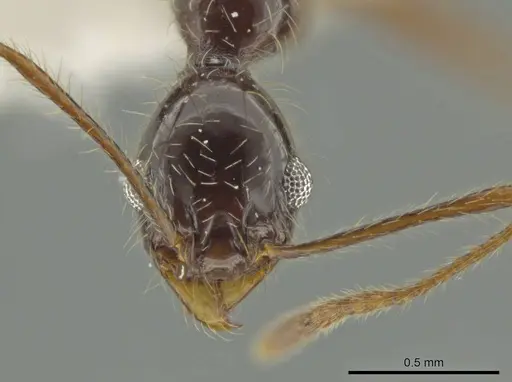
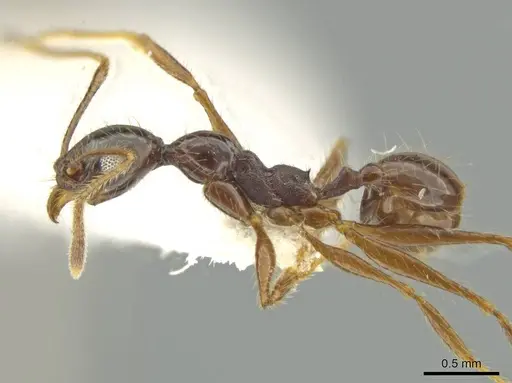
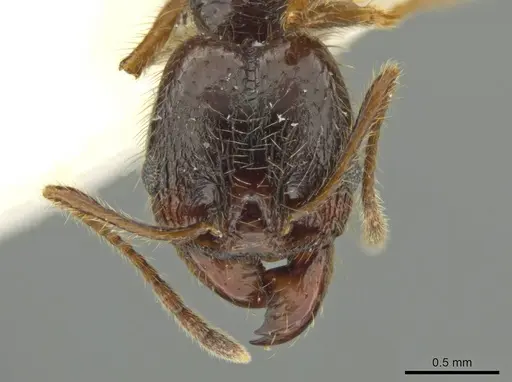
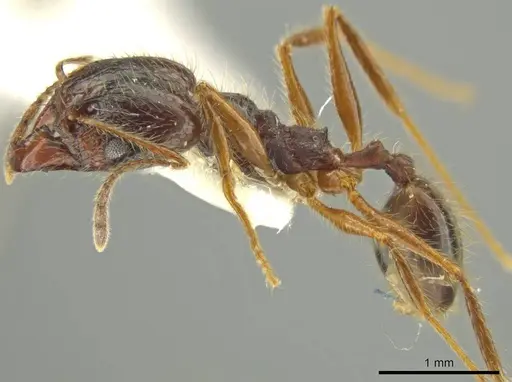
Pheidole lupus shows classic Pheidole dimorphism with major and minor workers. Major workers have a dark brown body with a reddish-brown head region, and minor workers are smaller with medium brown coloration. Specific measurements like head width are available, but full body size is not documented [1]. The species is distinguished by features like rugoreticulum on the head and dense pilosity [1].
Keeping an Unknown Species - What We Can Infer
Since no captive care data exists for Pheidole lupus, keepers must rely on inferences from the genus. Pheidole species typically require warm temperatures, moderate to high humidity, and a diet of proteins and sugars. Founding queens likely seal themselves in chambers, but this is unconfirmed for this species. Colonies probably grow to a few hundred workers at most, given their rarity [4]. Start with test tube setups and transition to nests only after establishment.
Feeding Recommendations
No specific feeding observations exist for P. lupus, but Pheidole species are typically omnivorous. Offer protein sources like small insects and sugar sources like honey water. Seed-eating may occur in majors, but this is based on genus patterns. Feed appropriately sized portions and remove uneaten prey to prevent mold.
Temperature and Seasonal Care
As an Amazon lowland species, P. lupus has no adaptation to cold. Keep the colony warm year-round, ideally around 24-28°C, based on habitat inference. Room temperature may suffice, but a heat source can help maintain stability. Avoid drafts or air conditioning vents. No diapause is needed, but slight activity reductions in cooler months are possible.
Frequently Asked Questions
Is Pheidole lupus available for purchase in the antkeeping hobby?
No. This is an extremely rare species known from only a handful of specimens collected in the wild [4]. No established captive colonies exist, and finding a wild-caught colony would be nearly impossible.
What do Pheidole lupus ants eat?
While not specifically documented, Pheidole ants are typically omnivorous. Offer protein like small insects and sugar sources like honey water. Major workers may accept seeds, based on genus patterns.
What temperature should I keep Pheidole lupus at?
Keep them warm at roughly 24-28°C, based on their Amazon lowland habitat. Room temperature may work, or use a heat source if needed.
Do Pheidole lupus ants need hibernation?
No. As a tropical species, they do not require hibernation or diapause. Keep them warm and active year-round.
How big do Pheidole lupus colonies get?
Unknown. Only a few specimens have been collected, suggesting small colony sizes [4]. Based on related species, colonies may reach a few hundred workers at most.
Are Pheidole lupus ants aggressive?
No specific aggression data exists, but Pheidole ants in general are defensive when threatened. Major workers can deliver a mild sting, but they are small and not dangerous to humans.
What is the colony structure of Pheidole lupus?
Unconfirmed. Most Pheidole species are monogyne, but this has not been documented for P. lupus specifically due to its rarity.
How long does it take for Pheidole lupus to develop from egg to worker?
Unknown. No development data exists. Based on Pheidole genus patterns, expect approximately 4-8 weeks at tropical temperatures, but this is an estimate only.
Can I keep multiple queens together?
Not recommended, and likely unnecessary. Pheidole colony structure for this species is unconfirmed, and combining unrelated queens is risky. Additionally, P. lupus is virtually unavailable in the hobby.
What type of nest should I use for Pheidole lupus?
Standard test tubes work for founding colonies. Once established, use Y-tong or plaster nests with small chambers scaled to their tiny size. Keep the nest humid but not wet.
Report an Issue
The current care sheet is based fully on literature. See inconsistencies, or something that's incorrect? Please , it will be resolved after review from an admin. Contributing to the blogs tab also helps providing information, to make us be able to further improve the caresheets. Thank you for your support!
References

This caresheet is licensed under CC BY-SA 4.0 .
Community Blogs
CASENT0645820
View on AntWeb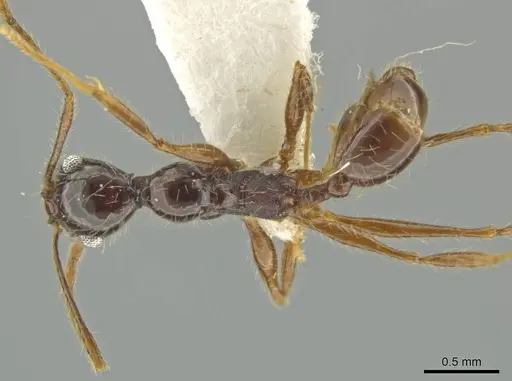
JTLC000016441
View on AntWeb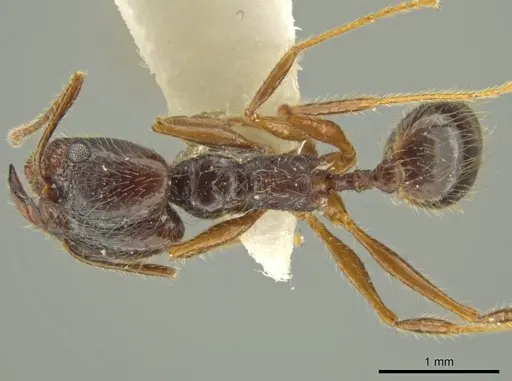
Literature
Loading distribution map...Loading products...