
Pheidole lucretii
- Sci. Name
- Pheidole lucretii
- Tribe
- Attini
- Subfamily
- Myrmicinae
- Author
- Santschi, 1923
- Distribution
- Found in 1 countries
Introduction
Pheidole lucretii is a Neotropical ant species native to the Atlantic forests of southern Brazil. Only major workers have been described; minor workers are unknown. Full body size data is unavailable. The species is known from Santa Catarina and Paraná states, inhabiting secondary and old-growth forests . This species is part of the 'jujuyensis complex' and functions as a generalist forager in ant communities .
Quick Summary
- Difficulty: Medium
- Origin & Habitat: 100 years), typically in submontane semidecidual seasonal forest fragments [2][1].
- Colony Type: Colony structure is unconfirmed. Only major workers have been described, minor workers are unknown. Based on typical Pheidole patterns, likely single-queen colonies.
- Size & Growth:
- Queen: Size data unavailable
- Worker: Size data unavailable, only head measurements are documented in literature, but full body size is not known.
- Colony: Unknown
- Growth: Moderate, inferred from typical Pheidole patterns [4].
- Development: Estimated 6-10 weeks at optimal temperature, based on typical Pheidole patterns [4]. (Development time is unconfirmed, monitor colony progress.)
- Antkeeping:
- Temperature: Keep at 22-26°C, with a gentle gradient. Inferred from tropical habitat [4].
- Humidity: Maintain moderate to high humidity with moist substrate. Inferred from Atlantic forest habitat [4].
- Diapause: Unknown, as a tropical species, they may not require hibernation [4].
- Nesting: Standard test tubes or Y-tong nests with moisture reservoirs are suitable [4].
- Behavior: Pheidole lucretii is a generalist forager [3]. They are moderately active and will defend their colony with a sting, but it is not medically significant. Escape prevention should be moderate due to their size.
- Common Issues: colony size is unknown, making it hard to gauge development., minor workers have never been described, which is unusual., development timeline is unconfirmed, so tracking growth is difficult., humidity requirements are inferred, so monitor colony behavior., diapause requirements are unknown, but tropical origin suggests no hibernation needed.
Natural History and Distribution
Pheidole lucretii is endemic to the Atlantic forest biome of southern Brazil, currently known from Santa Catarina and Paraná states. The species was originally described from Blumenau, Santa Catarina by Santschi in 1923. More recent surveys have expanded the known range to include Paraná state, where they were recorded in a submontane semidecidual seasonal forest fragment in an advanced stage of recovery [1]. They have been identified in phylogenetic studies of ant communities in secondary tropical forests, where they represent a distinct morphospecies [5].
Identification and Morphology
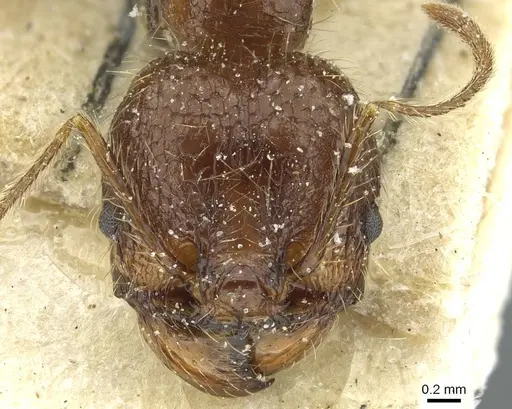
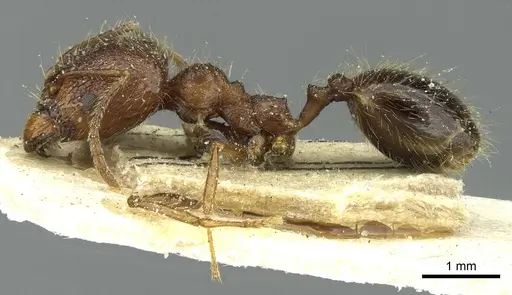
Major workers of Pheidole lucretii are distinctive within the 'jujuyensis complex' of the fallax group. The head is quadrate (square-shaped) with the antennal scape just reaching the occipital border. The posterior dorsal half of the head shows rugoreticulate sculpture. Propodeal spines are reduced to small denticles. Coloration is medium reddish-brown on the head, mesosoma, and appendages, with the waist and gaster being plain medium brown. Minor workers remain unknown [4].
Feeding and Diet
Stable isotope analysis indicates Pheidole lucretii is a generalist forager with a broad trophic niche [3]. They are known to interact with diaspores (seeds) in forest ecosystems, playing a potential role in seed dispersal [2]. In captivity, they should accept typical ant foods including sugar sources (honey, sugar water) and protein sources (insects like fruit flies, small crickets). Feed them a varied diet and remove uneaten food to prevent mold.
Housing and Nesting
In captivity, standard test tube setups work well for founding colonies. Provide a moist substrate and ensure the tube has a water reservoir. For established colonies, Y-tong nests with moisture chambers maintain appropriate humidity. Since they come from humid Atlantic forests, keep humidity moderate to high. The nest should have chambers scaled to their size, and include an outworld area for foraging [4].
Temperature and Seasonal Care
As a species from southern Brazil's Atlantic forest, Pheidole lucretii prefers warm conditions in the 22-26°C range. A heating cable on one side of the nest can create a temperature gradient, allowing workers to self-regulate. Regarding winter care, this is a tropical species so they likely do not require true hibernation, but a slight temperature reduction may be beneficial [4].
Frequently Asked Questions
How long does it take for Pheidole lucretii to raise first workers?
The development timeline is unconfirmed for this species. Based on typical Pheidole patterns, expect 6-10 weeks from egg to first worker at optimal temperature (around 24°C) [4]. Monitor your colony's progress and adjust conditions as needed.
What do Pheidole lucretii ants eat?
They are generalist foragers. Offer a varied diet including sugar sources (honey, sugar water) and protein (small insects like fruit flies, pinhead crickets) [3]. Keep sugar water available at all times and offer protein 2-3 times per week.
Are Pheidole lucretii good for beginners?
This species is rated as Medium difficulty. While not the most challenging ant to keep, there is limited captive care information available since they are not commonly kept. The lack of documented development times and specific humidity requirements means you may need to experiment [4].
What temperature should I keep Pheidole lucretii at?
Keep them at 22-26°C. As a Brazilian Atlantic forest species, they prefer warm but stable conditions. A slight gradient allowing workers to choose their preferred temperature is ideal [4].
How big do Pheidole lucretii colonies get?
Colony size is unknown, no data on maximum colony size exists in available literature. Based on typical Pheidole genus patterns, colonies likely reach several hundred to a few thousand workers over time [4].
Do Pheidole lucretii need hibernation?
Diapause requirements are unconfirmed. As a tropical/subtropical species from southern Brazil, they likely do not require true hibernation. A slight cool period during winter months may be beneficial but is probably not necessary [4].
Can I keep multiple Pheidole lucretii queens together?
Colony structure is unconfirmed for this species. Pheidole species can be either single-queen or multi-queen depending on the species. Without documented information, it is not recommended to combine unrelated queens. Start with a single queen colony for best success.
What humidity do Pheidole lucretii need?
Maintain moderate to high humidity with moist substrate. They come from humid Atlantic forests in Brazil. Keep the nest substrate consistently moist but not waterlogged [4].
Why are only major workers known for Pheidole lucretii?
Minor workers have simply never been collected or described in the scientific literature. This could indicate that majors dominate the worker population, minors are cryptic and rarely sampled, or the species has unusual colony composition [4].
Report an Issue
The current care sheet is based fully on literature. See inconsistencies, or something that's incorrect? Please , it will be resolved after review from an admin. Contributing to the blogs tab also helps providing information, to make us be able to further improve the caresheets. Thank you for your support!
References

This caresheet is licensed under CC BY-SA 4.0 .
Community Blogs
CASENT0913347
View on AntWeb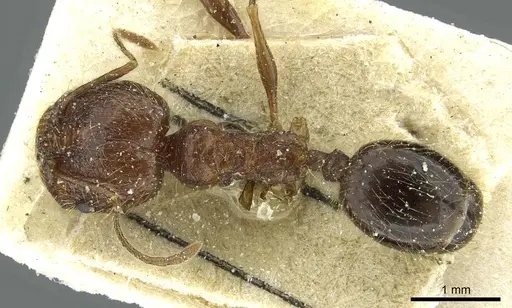
Literature
Loading distribution map...Loading products...