
Pheidole lucioccipitalis
- Sci. Name
- Pheidole lucioccipitalis
- Tribe
- Attini
- Subfamily
- Myrmicinae
- Author
- Eguchi, 2001
- Distribution
- Found in 3 countries
Introduction
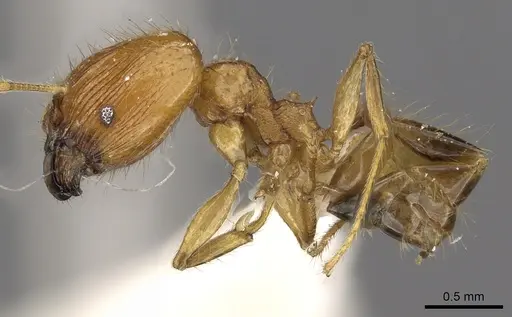
Pheidole lucioccipitalis is a small leaf-litter ant native to Southeast Asia, found in the southern Malay Peninsula, Borneo, and Sumatra . Major workers are about 2.4-2.5 mm long, and minor workers are about 1.6-1.8 mm long . The species inhabits lowland dipterocarp rainforests and has been collected from both the canopy and tree trunks . It is known for cooperative seed transport, where workers match their size to seed size for efficient carrying .
Quick Summary
- Difficulty: Medium
- Origin & Habitat: Native to Borneo, Sumatra, and the southern Malay Peninsula in lowland dipterocarp rainforests, where it forages in the canopy and on trunks [1].
- Colony Type: Colony structure is unconfirmed. No specific data on queen number or social structure is available.
- Size & Growth:
- Queen: size unknown, inferred from Pheidole genus (~5-8 mm)
- Worker: Major: ~2.4-2.5 mm, Minor: ~1.6-1.8 mm [2]
- Colony: Unknown, estimated up to a few thousand workers based on Pheidole genus patterns
- Growth: Unknown, estimated moderate based on tropical Pheidole patterns
- Development: Unknown, no specific data available (Development timeline is unconfirmed. Estimates based on related tropical Pheidole species suggest 6-8 weeks at optimal temperatures, but this is not verified for this species.)
- Antkeeping:
- Temperature: Keep warm at 24-28°C, as this species is from tropical lowland rainforests [1]. Use a heating cable to create a gradient if needed.
- Humidity: Keep the nest substrate consistently moist but not waterlogged, mimicking their natural rainforest habitat [1].
- Diapause: No, as a tropical species, they do not require hibernation.
- Nesting: Use a moist nest setup such as Y-tong (AAC), plaster, or naturalistic soil nests. This species naturally nests in leaf litter and rotting wood.
- Behavior: This species is generally not aggressive but majors may defend the colony. They demonstrate cooperative seed transport with size-matching [3]. Escape risk is high due to small size, use fine mesh barriers. They are active foragers on seeds and small insects.
- Common Issues: small size means escapes are likely without fine mesh barriers, tropical humidity requirements can lead to mold if ventilation is poor, wild-caught colonies may have parasites that kill them in captivity, slow growth may lead to overfeeding or disturbance by beginners, high humidity needs can cause flooding if water tubes are overfilled
Natural History and Distribution
Pheidole lucioccipitalis is endemic to Southeast Asia, found in the Indomalaya region including Borneo, Sumatra, and the southern Malay Peninsula [1][2]. It inhabits lowland dipterocarp forests and has been collected from both the canopy and tree trunks, suggesting it may nest in elevated locations [1]. The species is part of the Pheidole fervens clade [4].
Morphology and Identification
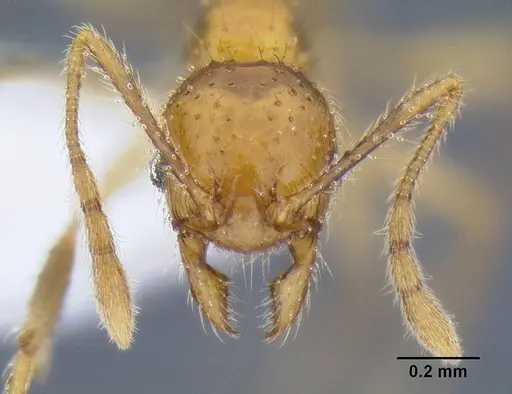
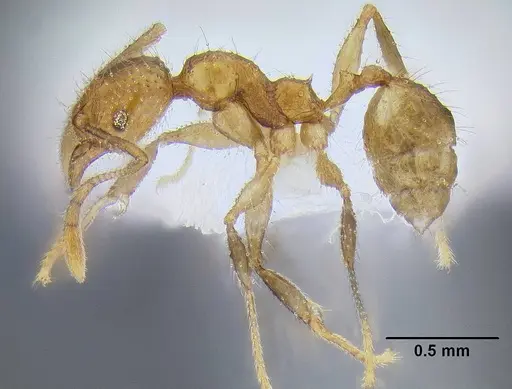
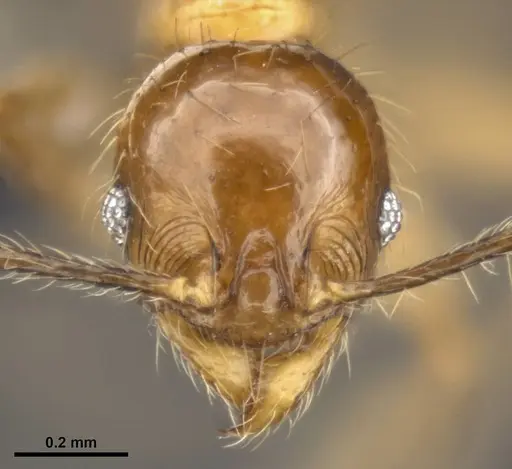
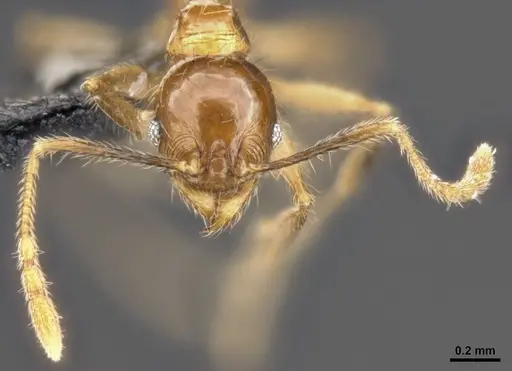
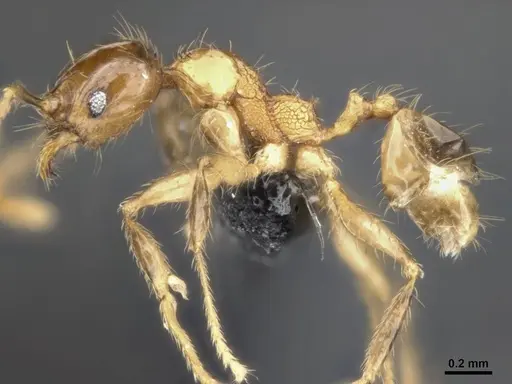
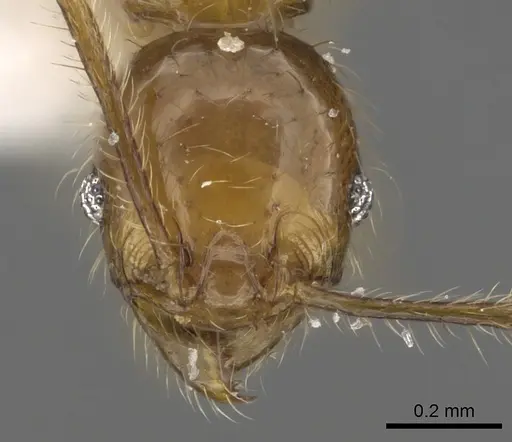
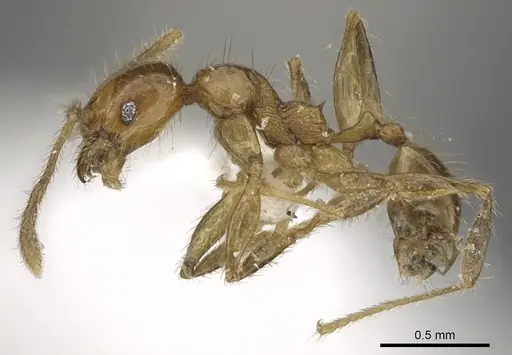
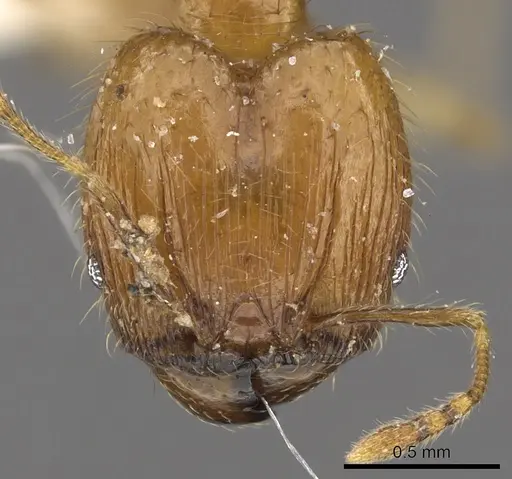
This species has distinct major and minor worker castes. Major workers are about 2.4-2.5 mm long with a smooth vertex and occipital lobe, while minor workers are about 1.6-1.8 mm long with a weak but complete occipital carina [2]. Body color is yellowish-brown to brown, with a darker gaster.
Foraging Behavior
Pheidole lucioccipitalis demonstrates cooperative seed transport, with workers showing size-matching between head width and seed size [3]. This allows efficient processing of various seed sizes. In captivity, offer seeds, small insects, and sugar sources.
Housing and Nest Setup
Provide a moist nest setup like Y-tong, plaster, or naturalistic soil to mimic their rainforest floor habitat. Keep the substrate damp but not waterlogged. Due to their small size, use fine mesh and tight-fitting lids to prevent escapes.
Feeding Guidelines
Offer a varied diet: protein sources like fruit flies or small insects twice weekly, seeds, and occasional sugar water. Remove uneaten food after 24-48 hours to prevent mold.
Temperature and Humidity Requirements
Maintain temperatures at 24-28°C and high humidity, as this species is from tropical lowland rainforests [1]. Use a heating cable for gradient and keep the nest substrate moist.
Frequently Asked Questions
How long does it take for Pheidole lucioccipitalis to produce first workers?
The exact timeline is unknown. Based on related tropical Pheidole species, it may take 6-8 weeks at optimal temperatures, but this is not confirmed for this species.
What do Pheidole lucioccipitalis ants eat?
They are generalist foragers that accept seeds, small insects, and sugar sources. Offer protein twice weekly, seeds, and occasional honey or sugar water.
Can I keep multiple queens together?
Not recommended, as Pheidole species are typically single-queen colonies, and no data exists on multi-queen setups for this species.
What temperature do they need?
Keep them at 24-28°C, as they are from tropical Borneo [1].
Do they need hibernation?
No, as a tropical species, they do not require diapause.
How big do colonies get?
Colony size is unknown, but estimated up to a few thousand workers based on Pheidole genus patterns.
Are they good for beginners?
Rated Medium difficulty due to specific humidity needs and small size requiring excellent escape prevention.
What type of nest should I use?
Use a moist nest like Y-tong, plaster, or naturalistic soil setups to mimic their natural habitat.
Why are my ants escaping?
Their small size (minors about 1.6-1.8 mm) means they can squeeze through tiny gaps. Use fine mesh and tight-fitting barriers.
When should I move them to a formicarium?
Wait until the colony has at least 20-30 workers, but no specific data exists for this species.
Report an Issue
The current care sheet is based fully on literature. See inconsistencies, or something that's incorrect? Please , it will be resolved after review from an admin. Contributing to the blogs tab also helps providing information, to make us be able to further improve the caresheets. Thank you for your support!
References

This caresheet is licensed under CC BY-SA 4.0 .
Community Blogs
CASENT0106275
View on AntWeb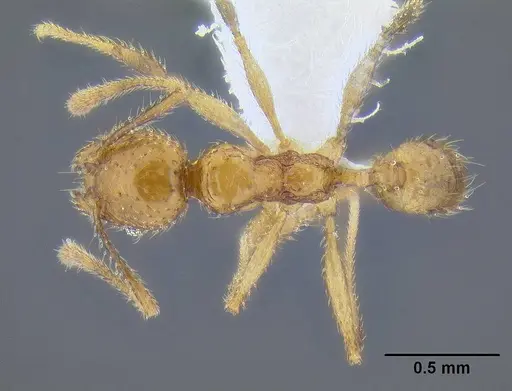
CASENT0284033
View on AntWeb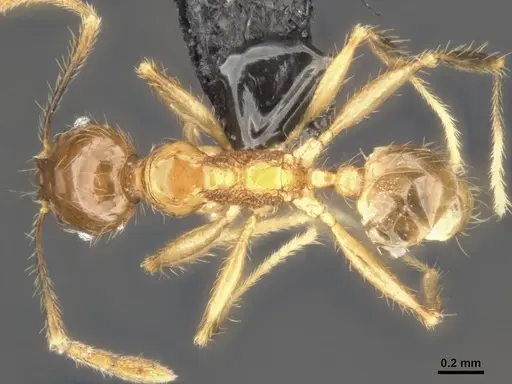
CASENT0901644
View on AntWeb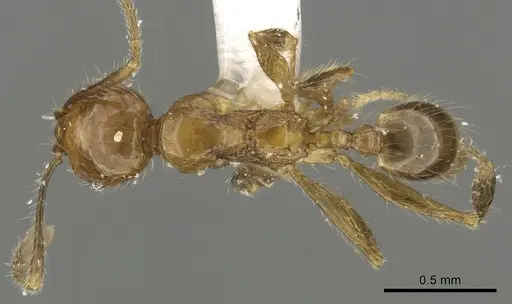
CASENT0901645
View on AntWeb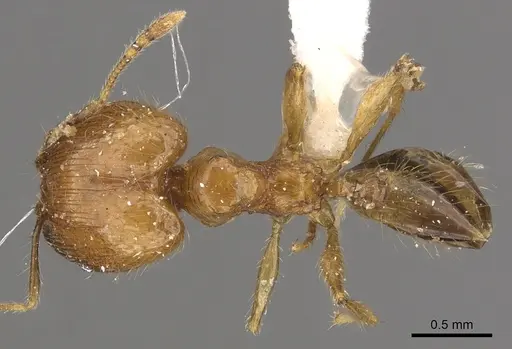
Literature
Loading distribution map...Loading products...