
Pheidole laevithorax
- Sci. Name
- Pheidole laevithorax
- Tribe
- Attini
- Subfamily
- Myrmicinae
- Author
- Eguchi, 2008
- Distribution
- Found in 1 countries
Introduction
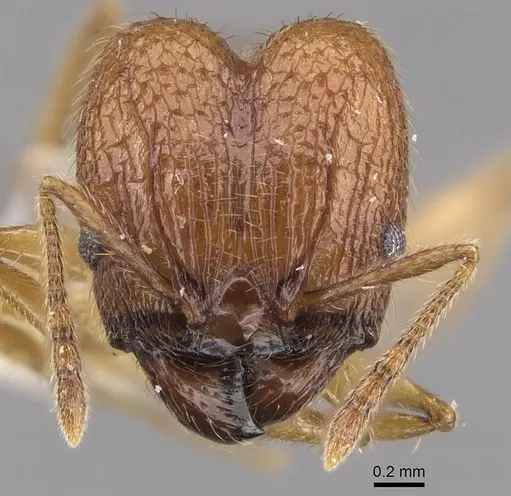
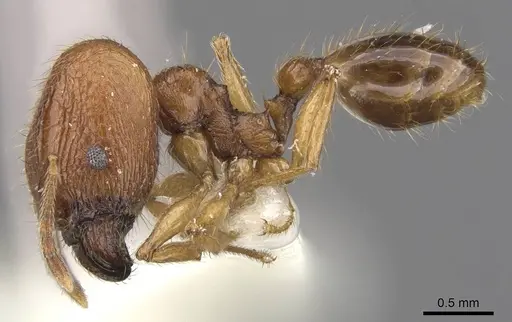
Pheidole laevithorax is a recently described ant species from northern Vietnam, first identified in 2008 . It belongs to the genus Pheidole, known for its two distinct worker castes: majors (soldiers) with enlarged heads, and minors (workers) that are much smaller. The major's head has a distinctive reticulate (net-like) pattern on the vertex, while the minor's frons and vertex are smooth and shining . The species is morphologically closest to Pheidole rugithorax and also similar to Pheidole nodus, but differs in head shape and sculpturing . No biological studies have been published on this species, everything about its colony behavior, founding, and captive care remains unknown.
Quick Summary
- Difficulty: Unknown
- Origin & Habitat: Northern Vietnam, found in forest habitats at elevations 670–1070 m [2]. Known localities include Ba Vi National Park, Chùa Yên Tử, and Tây Yên Tử [4]. In southern Vietnam's Cát Tiên National Park, they are confined to central forest biotopes, suggesting a preference for mature, shaded forest floors [5].
- Colony Type: Unconfirmed – no published data on colony structure for this species.
- Size & Growth:
- Queen: Not documented.
- Worker: Not documented, only head measurements are known (major head length ~1.3 mm, minor head length ~0.7 mm) [2]. Total body length is unknown, but based on the Pheidole genus, majors likely reach 4–6 mm and minors 2–3 mm (inferred from genus).
- Colony: Unknown – no colony size data exists for this species.
- Growth: Unknown – no development data exists for this species.
- Development: Unknown – no published development data exists for this species. (No published observations exist for this species. Any timeline is pure speculation.)
- Antkeeping:
- Temperature: Likely 22–28 °C based on Vietnamese forest habitat at 670–1070 m elevation [2]. Start around 24–26 °C and observe colony activity, adjust if workers appear sluggish or avoid the warm area.
- Humidity: Likely moderate to high (60–80%) based on forest floor habitat. Keep nest substrate moist but not waterlogged (inferred from habitat).
- Diapause: Unknown – tropical species likely does not require formal hibernation, but may slow down during cooler months.
- Nesting: No specific data. Based on forest floor habitat, likely nests in soil, under rocks, or in rotten wood. Standard test tube setups (darkened) work for founding. For larger colonies, use Y‑tong, plaster, or soil nests – avoid acrylic. Provide consistent moisture in the nest area.
- Behavior: No published behavioral observations exist. As a member of the tribe Attini, it possesses a functional sting (general taxonomic knowledge). Pheidole species typically have distinct major and minor castes, with majors often defending the colony. Escape risk is high due to the tiny size of minors (head length ~0.7 mm) – use fine mesh barriers (0.5 mm or finer).
- Common Issues: no biological data exists – all care recommendations are estimates based on related species, very small workers create escape risk – use fine mesh (0.5 mm or smaller) on all openings, tropical species may be sensitive to sudden temperature drops or extended dry conditions, wild‑caught colonies may carry unknown parasites or diseases, quarantine if possible
What Makes This Species Unique
Pheidole laevithorax is a recently described species (2008) from northern Vietnam, making it one of the younger named ant species in the hobby [1]. It belongs to the genus Pheidole, famous for its dramatic soldier caste – majors with oversized heads used to crack seeds and defend the colony. The species was identified primarily through morphological differences from close relatives like P. rugithorax and P. nodus, especially in the head sculpturing of the major and the shape of the post‑petiole [2][3]. The fact that nothing is known about their biology in the wild makes this both a challenging and potentially rewarding species to keep – you may discover aspects of their care that no one has documented before.
Appearance and Identification
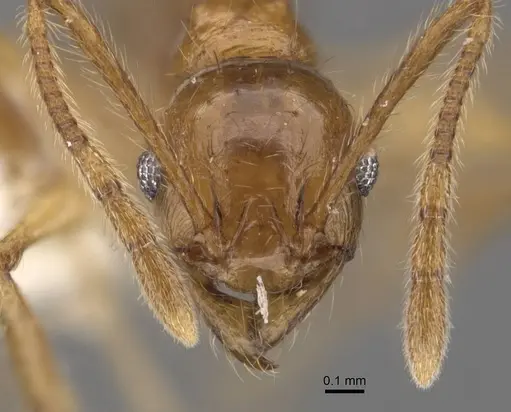
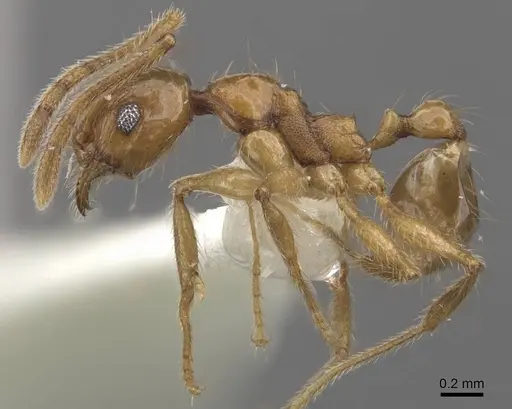
This species has the classic Pheidole two‑caste structure. Major workers (soldiers) have large, rectangular heads with a distinctive reticulate pattern on the dorsal and side surfaces of the vertex [2]. Their frontal carina (the ridge between the antennal insertions) is conspicuous, and they have a massive post‑petiole (the segment between the waist and abdomen). Minor workers are much smaller, with smooth and shining frons and vertex – quite different from the heavily sculptured majors [2]. The minors handle most daily tasks, while majors specialize in defense and processing hard food. This size difference is one of the most striking features of Pheidole species.
Natural Habitat and Distribution
Pheidole laevithorax is known from northern Vietnam at elevations between 670 and 1070 m above sea level [2]. They inhabit forest environments, with records from Ba Vi National Park, Chùa Yên Tử, and Tây Yên Tử [4]. In southern Vietnam's Cát Tiên National Park, they are found specifically in the central forest biotopes (III and IV), suggesting they prefer mature, shaded forest floor habitats rather than edge or disturbed areas [5]. This montane forest preference suggests they may prefer cooler temperatures than typical lowland tropical ants and likely need stable humidity.
Housing and Nesting
Since no specific nesting data exists for this species, housing recommendations must be based on typical Pheidole care and their likely forest floor habitat. Use standard test tube setups for founding colonies – a water reservoir connected to a cotton plug provides consistent humidity. The tube should be darkened (wrapped in foil or paper) to simulate underground conditions. For established colonies, Y‑tong (AAC), plaster, or soil nests work well, with the key requirement being consistent substrate moisture. Avoid acrylic nests. The very small minor workers (head length ~0.7 mm) mean you must use fine mesh on any openings – they can squeeze through standard barriers. A humidity reservoir in the outworld helps maintain conditions, and you can mist the nest area periodically to prevent drying.
Feeding and Diet
No published feeding data exists for this species. Based on typical Pheidole biology, they are likely omnivorous, accepting both protein sources (small insects) and sugar sources (honey, sugar water). Start with standard ant foods: fruit flies, pinhead crickets, or small mealworms for protein, and sugar water or honey for carbohydrates. Some Pheidole species also consume seeds – you can offer a small amount of birdseed or millet to see if they take it. Feed protein 2–3 times per week and keep sugar water available continuously. Remove uneaten prey after 24–48 hours to prevent mold. Document what your colony accepts, since no data exists for this species.
Temperature and Seasonal Care
No thermal tolerance data exists for this species. Based on their Vietnamese distribution at 670–1070 m elevation in forest habitats, they likely prefer temperatures in the 22–28 °C range – warmer than temperate species but not as hot as lowland tropicals [2]. The elevation suggests they may tolerate, and even prefer, slightly cooler conditions than typical lowland Vietnamese ants. Start around 24–26 °C and observe colony behavior – if workers become sluggish, warm slightly, if they avoid the heated area, reduce temperature. Since they come from a tropical climate without true winter, formal hibernation is likely not required. However, they may naturally slow down during the cooler dry season (roughly November–February in Vietnam), so expect reduced activity during winter months even without a formal diapause.
Colony Development and Growth
No published development data exists for this species – this is one of the biggest gaps in our knowledge. Pheidole colonies typically grow at a moderate pace once established, with founding queens laying their first batch of eggs shortly after mating. The founding method (claustral or otherwise) is unconfirmed. First workers (nanitics) are typically smaller than normal workers, but their development time is unknown. The lack of specific data means you should document your colony's development – when did the first eggs appear? When did workers emerge? How many workers by month six? This information would be valuable for future keepers of this species.
Frequently Asked Questions
How difficult is Pheidole laevithorax to keep?
Difficulty is unknown since no one has documented keeping this species in captivity. It is likely manageable based on typical Pheidole care, but the complete lack of biological data means you are essentially pioneering their husbandry. Expect some trial and error.
What do Pheidole laevithorax eat?
No feeding data exists for this species. Based on typical Pheidole biology, they likely accept small insects (protein) and sugar sources (honey, sugar water). Start with fruit flies or small crickets and sugar water, then experiment to see what they accept.
What temperature do they need?
Likely 22–28 °C based on their Vietnamese forest habitat at 670–1070 m elevation. Start around 24–26 °C and adjust based on colony behavior. They probably prefer it slightly cooler than typical lowland tropical ants due to their montane habitat.
How long does it take for first workers to emerge?
Unknown – no published development data exists for this species. Any timeline is pure speculation.
Do they need hibernation or diapause?
Unknown – tropical Vietnamese species likely do not require formal hibernation. They may slow down naturally during the cooler dry season (roughly November–February), but this is not a true diapause.
How big do colonies get?
No colony size data exists for this species. Pheidole colonies can range from dozens to thousands of workers depending on the species. Without data, no estimate can be given.
Can I keep multiple queens together?
Not documented for this species. Pheidole species are typically monogyne (single queen), but polygyny has been observed in some species. Without data, combining unrelated queens is not recommended.
What size escape prevention do I need?
Critical – minor workers are extremely small (head length ~0.7 mm), so standard mesh may not contain them. Use fine mesh (0.5 mm or smaller) or apply a fluon barrier to prevent escapes.
When should I move them to a formicarium?
No specific data exists. Standard practice is to keep them in a test tube setup until the colony becomes too large for the tube. Since colony size is unknown, watch for signs of overcrowding (workers unable to move freely) before moving. Be cautious – they may prefer to stay in the test tube for a long time.
Report an Issue
The current care sheet is based fully on literature. See inconsistencies, or something that's incorrect? Please , it will be resolved after review from an admin. Contributing to the blogs tab also helps providing information, to make us be able to further improve the caresheets. Thank you for your support!
References

This caresheet is licensed under CC BY-SA 4.0 .
Community Blogs
CASENT0905869
View on AntWeb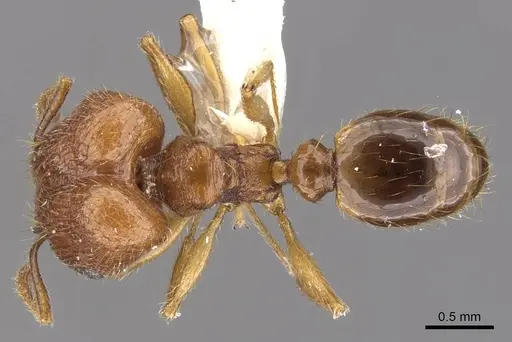
CASENT0905870
View on AntWeb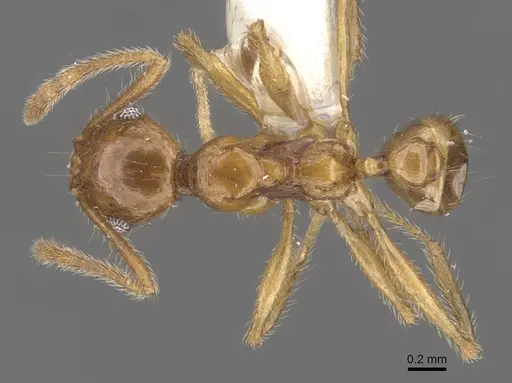
Literature
Loading distribution map...Loading products...