
Pheidole huacana
- Sci. Name
- Pheidole huacana
- Tribe
- Attini
- Subfamily
- Myrmicinae
- Author
- Wilson, 2003
- Distribution
- Found in 1 countries
Introduction
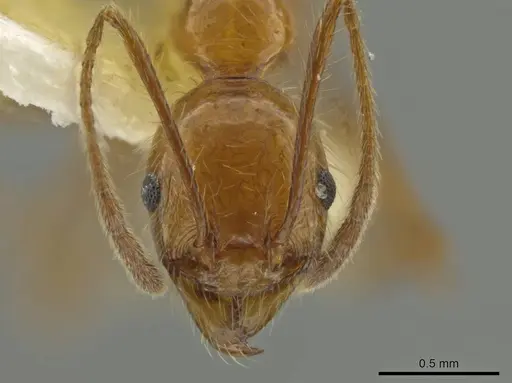
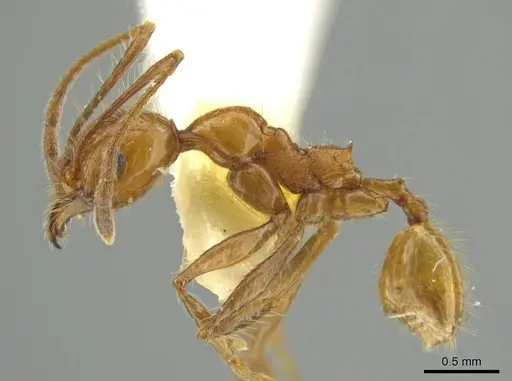
Pheidole huacana is a small Neotropical ant species described from Peru, belonging to the fallax group. It is known only from its type locality in the Cuzco region of Peru at 750m elevation, with additional records from Ecuador . Major workers are yellow to orange, and minor workers are medium yellow . This species is poorly studied, with no documented biology in scientific literature .
Quick Summary
- Difficulty: Hard
- Origin & Habitat: Type locality in Quincemil, Cuzco, Peru at 750m elevation, with records from Ecuador [1][2].
- Colony Type: Unconfirmed, colony structure has not been documented. Based on Pheidole patterns, likely monogyne [2].
- Size & Growth:
- Queen: Size data unavailable, no total length measurements provided.
- Worker: Size data unavailable, no total length measurements provided. Inferred from Pheidole genus: approximately 2-5 mm total length.
- Colony: Unknown, no colony size data exists.
- Growth: Unknown, no growth rate data exists.
- Development: Unknown, no direct measurements exist. Based on typical Pheidole patterns in tropical conditions, expect 4-8 weeks at warm temperatures [2]. (Development time is unconfirmed for this species.)
- Antkeeping:
- Temperature: Based on the Andean foothills location, likely tolerates 18-28°C. Start around 22-25°C and observe [2].
- Humidity: Likely prefers moderate to high humidity. Keep nest substrate moist but not waterlogged [2].
- Diapause: Unknown, no data on overwintering requirements.
- Nesting: No specific nesting data. Based on typical Pheidole behavior, likely nest in soil or rotting wood. In captivity, use test tubes or Y-tong nests [2].
- Behavior: Behavior is undocumented. Pheidole species typically have major workers for defense and minor workers for foraging. Expect moderate activity. Escape risk is high due to small minor workers [2].
- Common Issues: biology is completely undocumented, you are essentially pioneering captive care for this species., no confirmed diet preferences, start with standard ant foods and observe what they accept., escape prevention is important, minor workers are very small and can escape through standard barrier gaps., no information on founding behavior, assume claustral like most Pheidole but this is unconfirmed., slow or failed colony development is possible since we don't know their specific needs.
Understanding the Challenge
Pheidole huacana is one of the least-documented species in antkeeping. The original description provides only morphological details [2]. Beyond this, nothing has been published about their biology, behavior, or captive care. You will need to be patient and observant, experimenting with care conditions while prepared for possible challenges [2].
Housing and Nest Setup
Use standard Pheidole housing approaches. Test tube setups work well for founding colonies, with a water reservoir cotton at one end [2]. For established colonies, Y-tong style nests work well. Keep nest substrate consistently moist but not flooded [2].
Feeding and Diet
Diet preferences are unconfirmed. Start with sugar water or honey as a constant energy source, and provide protein sources like small insects [2]. Observe what workers accept and reject.
Temperature and Seasonal Care
The type locality suggests a tropical location at moderate elevation. Start around 22-25°C and observe colony behavior [2]. Diapause is unknown, reduce activity during cooler months if observed.
Behavior and Observation
Pheidole species have two worker castes: majors for defense and minors for foraging [2]. Escape risk is high due to small minor workers, use fine mesh and barriers.
Frequently Asked Questions
How long does it take for Pheidole huacana to develop from egg to worker?
This is unknown, no development data exists. Based on typical Pheidole patterns, expect roughly 4-8 weeks at warm temperatures [2].
What do Pheidole huacana ants eat?
Diet is unconfirmed. Start with sugar water or honey, and offer small protein sources like fruit flies or mealworms [2].
Are Pheidole huacana good for beginners?
This is not recommended for beginners due to lack of documented care requirements. You will be experimenting without benchmarks.
What temperature should I keep Pheidole huacana at?
No specific data exists. Based on the Andean foothills location, start around 22-25°C and observe [2].
Do Pheidole huacana need hibernation or diapause?
This is unknown. The Peruvian location suggests they may not need true hibernation, but observe your colony for reduced activity.
How big do Pheidole huacana colonies get?
Colony size is unconfirmed, no data exists. Most Pheidole colonies reach several hundred to a few thousand workers.
Can I keep multiple Pheidole huacana queens together?
This is unknown. Colony structure has not been documented. Do not attempt combining unrelated queens without evidence.
What size nest do Pheidole huacana need?
Use appropriately scaled nests for their small size. Test tubes work well for founding, and Y-tong nests for established colonies [2].
Why is my Pheidole huacana colony not growing?
Without documented care requirements, trial and error is expected. Try varying temperature, ensure humidity, and experiment with protein sources.
Report an Issue
The current care sheet is based fully on literature. See inconsistencies, or something that's incorrect? Please , it will be resolved after review from an admin. Contributing to the blogs tab also helps providing information, to make us be able to further improve the caresheets. Thank you for your support!
References

This caresheet is licensed under CC BY-SA 4.0 .
Community Blogs
JTLC000016407
View on AntWeb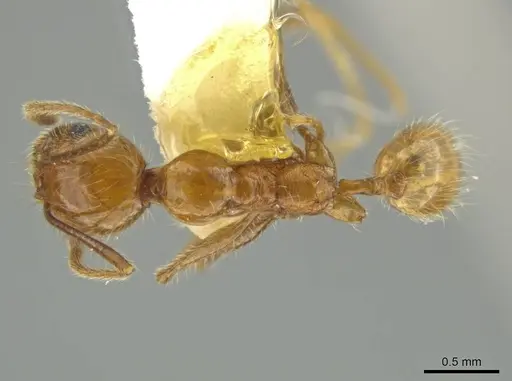
Literature
Loading distribution map...Loading products...