
Pheidole hoplitica
- Sci. Name
- Pheidole hoplitica
- Tribe
- Attini
- Subfamily
- Myrmicinae
- Author
- Wilson, 2003
- Distribution
- Found in 1 countries
Introduction
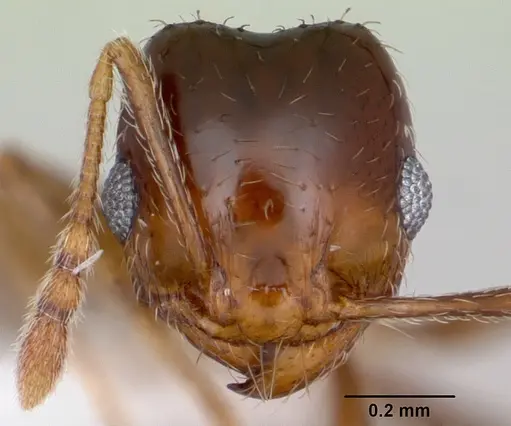
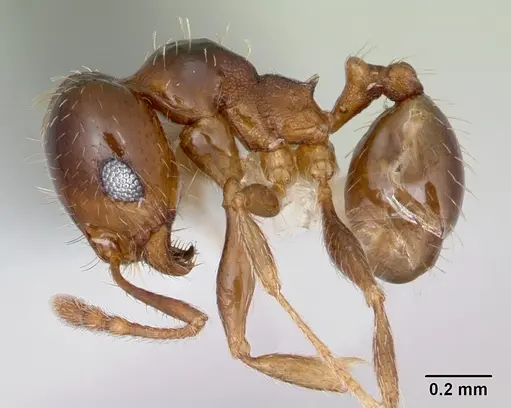
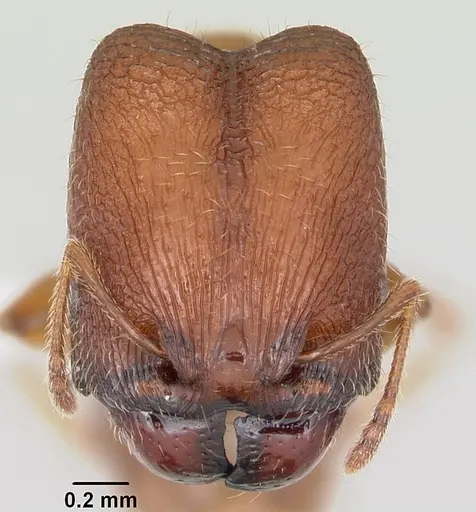
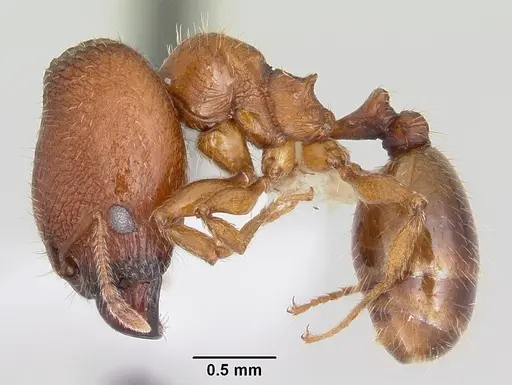
Pheidole hoplitica is a small ant species with major and minor workers, native to the southern United States and northern Mexico. Full body size data is unavailable, but majors have a distinctive concave head profile and are light reddish brown, while minors are brownish yellow. The species nests in bare sandy clay soil in full sun, often in open areas like cemeteries . It was described by E.O. Wilson in 2003 and belongs to the pilifera complex, characterized by heavily sculpted major workers .
Quick Summary
- Difficulty: Easy
- Origin & Habitat: Southern United States (Texas) and northern Mexico. Found in bare sandy clay soil in full sun [1].
- Colony Type: Single-queen colonies (monogyne), inferred from typical Pheidole patterns.
- Size & Growth:
- Queen: Size data unavailable, no total length measurements found.
- Worker: Size data unavailable, no total length measurements found.
- Colony: Unknown, no specific data on colony size.
- Growth: Moderate, inferred from genus patterns.
- Development: Estimated 6-8 weeks at optimal temperature, inferred from related Pheidole species. (Development time may vary based on temperature and colony conditions.)
- Antkeeping:
- Behavior: Generally peaceful, majors defend the colony aggressively if threatened. Escape risk is high due to the small size of minor workers, inferred from genus patterns.
- Common Issues: escape prevention is critical due to very small minor workers, use fine mesh and tight-fitting lids., colonies may grow slowly in the first few months, patience is key during the founding stage., dry soil conditions are important, overhumid nests can lead to mold problems., wild-caught colonies may have parasites, quarantine and observe new colonies., major workers develop later than minors, don't be alarmed if early workers are all minor.
Nest Preferences
In the wild, Pheidole hoplitica nests in bare sandy clay soil in full sun [1]. This indicates a preference for well-drained, dry nesting substrates. For captive care, use Y-tong nests to maintain dry conditions. Avoid overly moist substrates like plaster, which can cause mold. The small size of minor workers requires excellent escape prevention [1].
Feeding and Diet
Pheidole species are generalist omnivores. In the wild, they scavenge on insect parts [1]. For captive colonies, offer protein sources like small insects and sugar water. Seed acceptance varies, some colonies may ignore seeds.
Temperature and Seasonal Care
As a species from warm regions, keep nest area at 22-26°C for optimal brood development. A temperature gradient allows workers to self-regulate. During winter, reduce temperature to 10-15°C for 2-3 months for diapause, based on genus patterns.
Behavior and Colony Structure
Pheidole hoplitica has minor workers for daily tasks and major workers for defense. Colonies are likely monogyne with a single queen. Major workers develop later in the colony's life cycle.
Growth and Development
Colonies grow through phases: claustral founding (unconfirmed) followed by growth with workers foraging. Egg to worker development is estimated at 6-8 weeks at optimal temperature.
Frequently Asked Questions
How long does it take for Pheidole hoplitica to produce first workers?
Data is unavailable, but based on related species, it may take 6-8 weeks at optimal temperature.
What do Pheidole hoplitica ants eat?
They are generalist omnivores. Offer protein sources like small insects and sugar water [1].
What temperature do Pheidole hoplitica need?
Keep them at 22-26°C, inferred from their geographic range.
Do Pheidole hoplitica need hibernation?
Likely yes, based on temperate range and genus patterns.
Can I keep multiple Pheidole hoplitica queens together?
This species is likely monogyne, so combining queens is not recommended.
How big do Pheidole hoplitica colonies get?
Colony size is unknown, no specific data available.
What nest type is best for Pheidole hoplitica?
Y-tong nests work well, providing dry conditions [1].
Why are my Pheidole hoplitica escaping?
Minor workers are very small, so use fine mesh barriers [1].
Are Pheidole hoplitica good for beginners?
Yes, they are considered easy to keep, but escape prevention is critical due to small size.
Report an Issue
The current care sheet is based fully on literature. See inconsistencies, or something that's incorrect? Please , it will be resolved after review from an admin. Contributing to the blogs tab also helps providing information, to make us be able to further improve the caresheets. Thank you for your support!
References

This caresheet is licensed under CC BY-SA 4.0 .
Community Blogs
CASENT0103408
View on AntWeb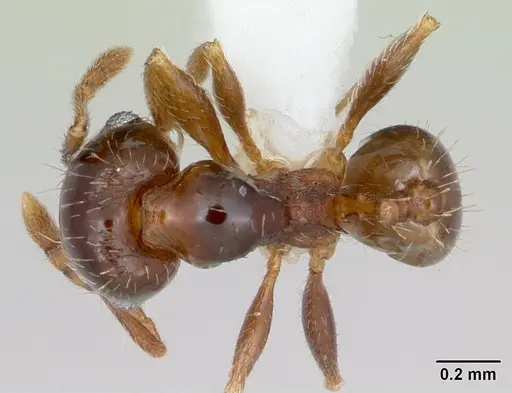
CASENT0104751
View on AntWeb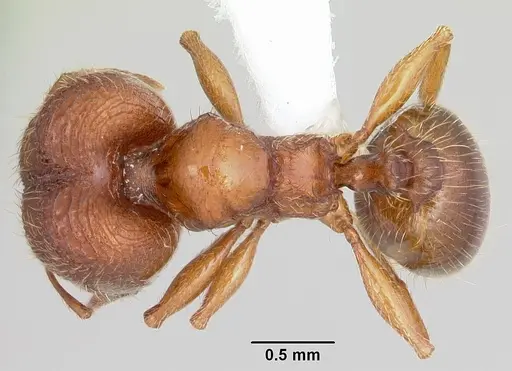
Literature
Loading distribution map...Loading products...