
Pheidole hongkongensis
- Sci. Name
- Pheidole hongkongensis
- Tribe
- Attini
- Subfamily
- Myrmicinae
- Author
- Wheeler, 1928
- Distribution
- Found in 3 countries
Introduction
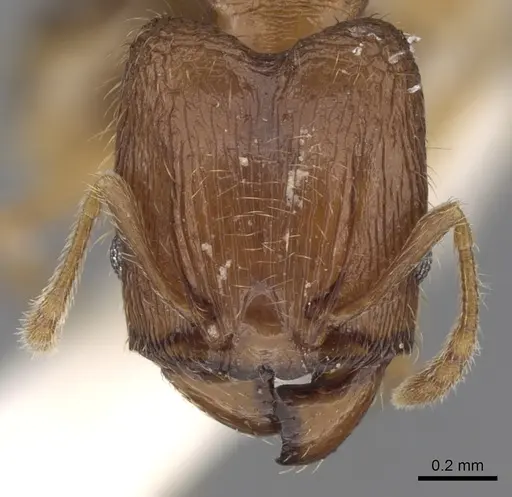
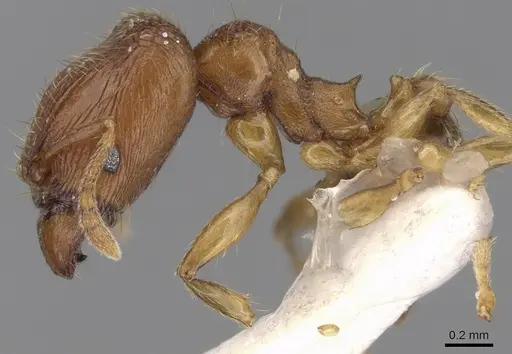
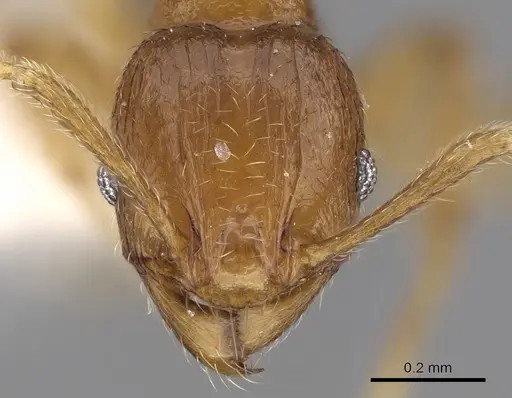
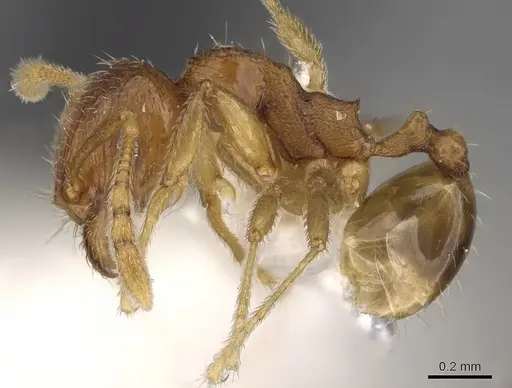
Pheidole hongkongensis is a small Myrmicinae ant native to Southern China, Northern Vietnam, and Thailand, with additional records from Laos, Macau, and Hainan . It was originally described as a subspecies of Pheidole rinae in 1928 from Hong Kong and later raised to full species status . This species lives in woody gardens, forest edges, and open habitats, nesting primarily in soil – rarely in rotting wood . It adapts well to human-modified areas and has been collected in urban parks and rubber plantations . Like most Pheidole, it has two worker castes: majors (soldiers) and minors (workers). The literature provides only head measurements (majors head length ~1mm, minors ~0.5mm), but total body length is estimated at roughly 3–4mm for majors and 2–3mm for minors based on genus proportions .
Quick Summary
- Difficulty: Medium
- Origin & Habitat: Southern China, Northern Vietnam, Thailand, Laos, and Macau. Found in woody gardens, forest edges, limestone forests, secondary forests, and rubber plantations at elevations of 550–680m [2][4][3]. Nests in soil, rarely in rotting wood [2].
- Colony Type: Unknown – single-queen colonies (monogyny) are typical for most Pheidole species, but this has not been confirmed for P. hongkongensis. The presence of major workers suggests a dimorphic worker caste.
- Size & Growth:
- Queen: Estimated ~4–6mm based on typical Pheidole queens (no direct measurements available)
- Worker: Body length not provided in literature. Head length: majors ~1mm, minors ~0.5mm [2], estimated total body length majors ~3–4mm, minors ~2–3mm.
- Colony: Estimated several hundred to a few thousand workers based on genus patterns
- Growth: Moderate (inferred from genus)
- Development: Estimated 6–8 weeks at 22–26°C based on typical Pheidole development (no species-specific data) (Development time is inferred from the genus, specific data for this species is not available.)
- Antkeeping:
- Temperature: Keep at 22–26°C. A heating cable on one side of the nest creates a gradient. Based on their subtropical range (southern China, Vietnam, Thailand) and collection sites at 550–680m elevation [4].
- Humidity: Keep the nest substrate consistently moist but not waterlogged. They inhabit soil in woody gardens and forest edges, suggesting a need for damp conditions without flooding. Provide a water source via a test tube or water feeder.
- Diapause: Likely no true diapause given their tropical/subtropical origin. Activity may slow during cooler months in temperate climates, if so, reduce feeding and keep slightly cooler (18–20°C) but do not allow temperatures below 15°C for extended periods.
- Nesting: Soil-nesting species. Use a Y-tong (AAC) nest, plaster nest, or a naturalistic setup with moist soil. Ensure chambers are narrow to suit their tiny workers. Test tubes with water and a dark chamber work well for founding.
- Behavior: Typical Pheidole behavior: minors handle foraging, brood care, and nest maintenance, majors defend the colony and process larger food items. They are not aggressive toward humans but may bite if handled – the bite is negligible due to their small size. Minors are very small (~2–3mm body length), so escape risk is high, use Fluon or oil barriers on all exposed edges. They forage actively and form trails once food is located.
- Common Issues: substrate drying out can kill the colony – monitor moisture levels regularly, tiny minor workers can slip through even small gaps – ensure all connections are tight and use barrier fluids, founding behavior is undocumented – if using a claustral setup, allow the queen to remain undisturbed for several weeks, be patient as first workers may take 6–8 weeks, major workers may not appear until the colony reaches several dozen to a hundred workers
Housing and Nest Setup
Pheidole hongkongensis nests naturally in soil, so a setup with a moist substrate is ideal. Use a Y-tong (AAC) nest or plaster nest with built-in moisture chambers. The nest chambers should be narrow – the minor workers are only about 2–3mm body length, and even smaller in head size [2]. Connect the nest to an outworld via tubing. A test tube setup with a water reservoir at the back works well for starting colonies, ensure the tube is dark and the queen can seal herself in. Because of their small size, all junctions must be airtight, and apply Fluon or a PTFE-based barrier around the outworld rim. Place the nest in a location with stable temperatures (22–26°C) and away from direct sunlight.
Feeding and Diet
The natural diet of P. hongkongensis is not specifically documented, but like other Pheidole, they are likely omnivorous. In the wild they probably feed on small insects, seeds, and honeydew. In captivity, offer protein sources such as small crickets, fruit flies, or mealworm pieces twice a week. Sugar water or honey water should be available continuously in a small dish or via a cotton ball. Remove uneaten prey after 24–48 hours to prevent mold. A varied diet supports brood development and helps produce major workers. Their small size means food items must be cut into tiny pieces or offered as liquids.
Temperature and Seasonal Care
Maintain the nest at 22–26°C for optimal activity and development. This species originates from subtropical to tropical regions (southern China, Vietnam, Thailand, Laos) where temperatures are warm year-round [2][4][3]. A heating cable on one side of the nest allows the colony to thermoregulate. In temperate climates during winter, you can reduce heat to around 18–20°C and reduce feeding – true hibernation is unlikely but activity may slow. Avoid dropping below 15°C for more than a few days. The species has been collected at elevations up to 680m, indicating some tolerance for cooler nights [4].
Colony Development
Colony founding behavior for this species is not documented, but most Pheidole queens found colonies claustrally, feeding the first brood from stored fat reserves. Expect the first workers (nanitics) to emerge about 6–8 weeks after egg laying, assuming warm temperatures. These early workers are smaller than typical minors. Major workers (soldiers) usually appear once the colony has several dozen to a hundred workers and can help process larger food. Colony growth is moderate, under good conditions, expect 50–100 workers within a few months and several hundred after a year. Patience is key during founding, as the queen is sensitive to disturbance.
Behavior and Observation
This species exhibits a typical Pheidole division of labor: the small minors do the majority of foraging, brood care, and nest maintenance, while the larger majors defend the nest and help dismember large prey. Workers are active foragers and will quickly find food sources in the outworld, establishing a well-marked trail. They are not aggressive toward keepers but may give a mild pinch if handled. Because the minors are extremely small, they can easily escape through any gap larger than about 1mm – use Fluon or oil on all barriers. They are tolerant of brief disturbances but prefer a dark, quiet nest area.
Frequently Asked Questions
How long does it take for Pheidole hongkongensis to produce first workers?
Assuming typical claustral founding (which is unconfirmed for this species), first workers may emerge 6–8 weeks after the queen lays eggs at 22–26°C. This estimate is based on genus patterns, no species-specific data exists.
What do Pheidole hongkongensis ants eat?
Their natural diet is not documented, but they likely eat small insects, seeds, and honeydew, like other Pheidole. In captivity, provide small protein sources (fruit flies, small crickets) and sugar water.
Do Pheidole hongkongensis ants need hibernation?
No true hibernation is required given their subtropical range. In temperate climates, you can reduce temperature to 18–20°C during winter and reduce feeding, but avoid prolonged temperatures below 15°C.
Are Pheidole hongkongensis good for beginners?
They can be suitable for patient beginners, but the unknown founding behavior and tiny workers (high escape risk) add challenges. The species is non-aggressive and adaptable, making them manageable once established.
When do major workers appear in Pheidole hongkongensis?
Major workers are typical for the genus and likely appear once the colony reaches several dozen to a hundred workers. This may take several months to a year after founding.
What temperature should I keep Pheidole hongkongensis at?
Keep nest temperatures between 22–26°C. Use a heating cable on one side for a gradient. Avoid frequent drops below 15°C.
How big do Pheidole hongkongensis colonies get?
Based on typical Pheidole patterns, colonies likely reach several hundred to a few thousand workers at maturity (2–3 years).
Can I keep multiple Pheidole hongkongensis queens together?
Most Pheidole are monogyne (single queen). Combining unrelated queens is not recommended as they will likely fight. Keep only one queen per setup unless pleometrosis is confirmed (unknown for this species).
What type of nest is best for Pheidole hongkongensis?
A soil-based naturalistic setup, Y-tong (AAC) nest, or plaster nest with moisture control works well. Ensure chambers are narrow to suit their tiny workers. Test tubes are suitable for founding.
Where is Pheidole hongkongensis native to?
Native to southern China (including Hong Kong, Hainan, Yunnan), northern Vietnam, Thailand, and also recorded in Laos, Macau [2][4][3][5].
Why are my Pheidole hongkongensis dying during founding?
Common causes include: queen drowning in water tubes (use a proper test tube setup with a cotton plug), mold from overfeeding or poor ventilation, disturbance, or temperature/humidity swings. Keep the founding chamber dark, undisturbed, and at 22–26°C.
Report an Issue
The current care sheet is based fully on literature. See inconsistencies, or something that's incorrect? Please , it will be resolved after review from an admin. Contributing to the blogs tab also helps providing information, to make us be able to further improve the caresheets. Thank you for your support!
References

This caresheet is licensed under CC BY-SA 4.0 .
Community Blogs
CASENT0281727
View on AntWeb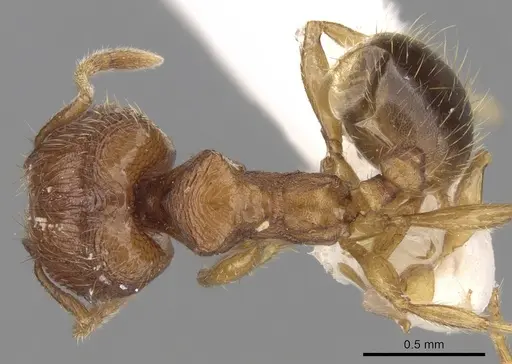
CASENT0281728
View on AntWeb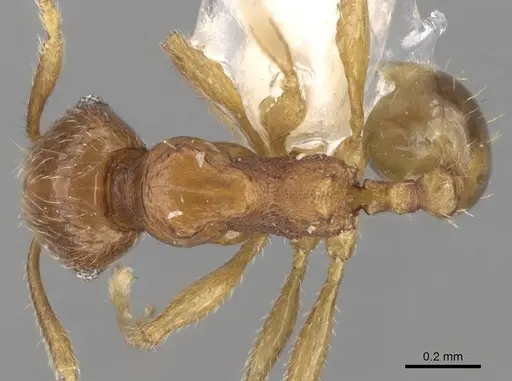
Literature
Loading distribution map...Loading products...