
Pheidole hercules
- Sci. Name
- Pheidole hercules
- Tribe
- Attini
- Subfamily
- Myrmicinae
- Author
- Donisthorpe, 1941
- Distribution
- Found in 2 countries
Introduction
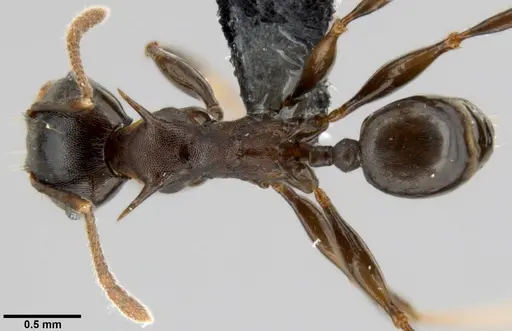
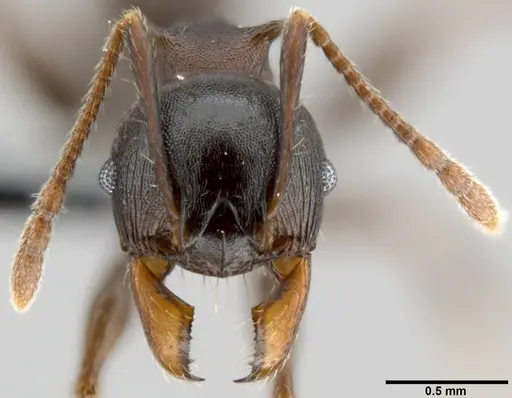
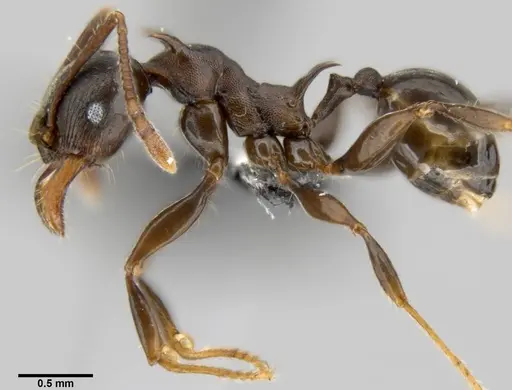
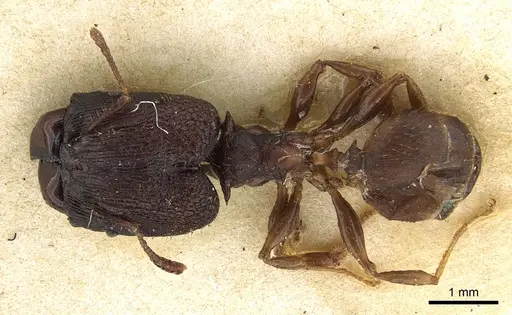
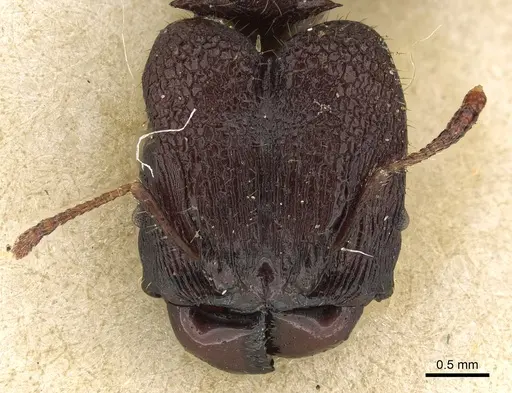
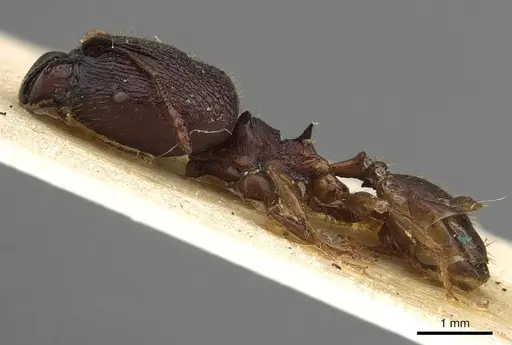
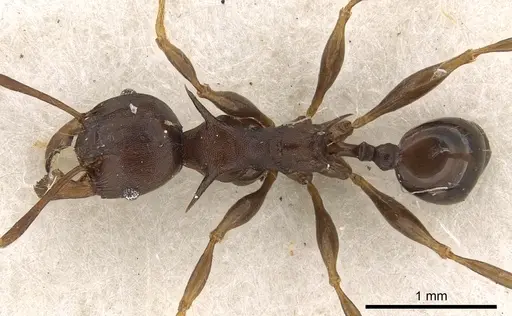
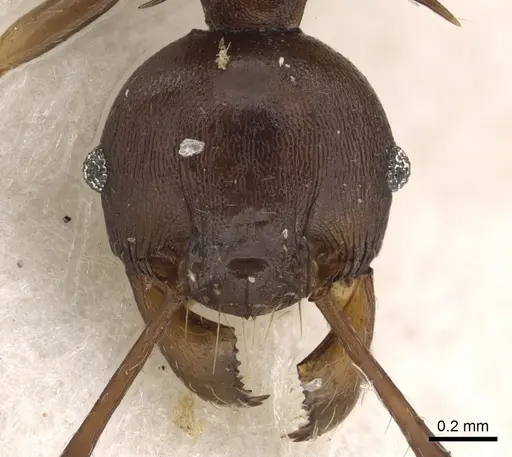
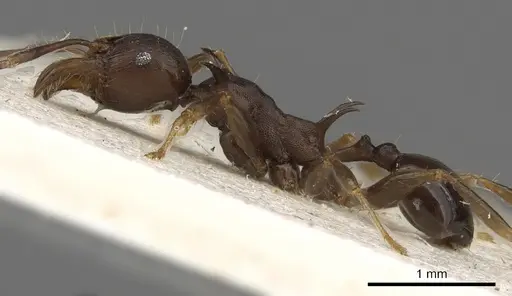
Pheidole hercules is a big-headed ant species native to New Guinea . Like all Pheidole species, they have two worker castes: minor workers are small, and major workers have enlarged heads . The species was described by Donisthorpe in 1941 . Research on head morphology shows that the wide head shape helps dissipate stress, making their bite mechanically efficient . Major workers of P. hercules have powerful mandibles for defense and seed processing. These ants are ground-nesting and form colonies with distinct castes.
Quick Summary
- Difficulty: Medium
- Origin & Habitat: New Guinea (Papua New Guinea and Indonesian Papua), tropical rainforest [1]
- Colony Type: Based on Pheidole genus patterns, likely monogyne (single queen colony).
- Size & Growth:
- Queen: ~8-10 mm, inferred from Pheidole genus
- Worker: Minor workers ~3-4 mm, major workers ~5-8 mm, inferred from Pheidole genus
- Colony: Up to 2000 workers, estimated from genus patterns
- Growth: Moderate
- Development: Estimated 6-8 weeks at tropical temperatures, inferred from genus patterns (Development time is inferred from genus-level data)
- Antkeeping:
- Temperature: Maintain warm temperatures around 24-28°C, based on tropical habitat [1]
- Humidity: Keep nest substrate moderately moist, as they are from tropical rainforest [1]
- Diapause: No, tropical species do not require hibernation [1]
- Nesting: Ground-nesting species, provide dark, humid nest chambers [1]
- Behavior: Based on Pheidole genus patterns, typically peaceful but majors defend aggressively. Escape risk is moderate due to size.
- Common Issues: mold from excessive moisture, ensure ventilation prevents stagnant, overly damp conditions, colonies may stagnate if temperatures drop below 22°C, maintain warmth, major workers can get stuck in narrow tubing if passages are too small, overfeeding leads to mold problems, remove uneaten food promptly, wild-caught colonies may have parasites, quarantine and monitor new colonies
Housing and Nest Setup
Pheidole hercules is ground-nesting [1]. Provide a nest with dark, humid chambers suitable for ground-nesting ants. Ensure passages are wide enough for major workers to prevent getting stuck [1].
Feeding and Diet
Based on Pheidole genus patterns, they are omnivorous. Offer protein sources like small insects 2-3 times per week, seeds, and sugar water. Remove uneaten food within 24-48 hours to prevent mold.
Temperature and Seasonal Care
Maintain temperatures between 24-28°C based on tropical habitat [1]. Below 22°C, colony activity may decrease. They do not require diapause [1].
Colony Development and Growth
After founding, colonies grow steadily. First workers emerge in estimated 6-8 weeks at tropical temperatures. The colony produces more minors and eventually majors as it reaches several hundred workers.
Behavior and Defense
Minor workers handle foraging and brood care, while majors specialize in defense and seed processing. Based on Pheidole genus patterns, majors defend aggressively when threatened.
Frequently Asked Questions
How long does it take for Pheidole hercules to get their first workers?
Expect first workers approximately 6-8 weeks after queen lays eggs, assuming temperatures are maintained at 25-28°C. This is inferred from genus-level patterns.
Can I keep multiple Pheidole hercules queens together?
Not recommended. Based on Pheidole genus patterns, colonies are typically monogyne. Combining unrelated queens may result in fighting.
What do Pheidole hercules ants eat?
They are omnivorous. Offer small insects, seeds, and sugar water based on genus patterns.
Are Pheidole hercules good for beginners?
They are rated as medium difficulty. They require warm, humid conditions typical of tropical ants.
When should I move Pheidole hercules to a formicarium?
Keep colonies in a test tube setup until they have 20-30 workers. Transfer to a formicarium when the colony is crowded, typically 6-12 months old.
Do Pheidole hercules need hibernation?
No. As a tropical species from New Guinea, they do not require hibernation [1].
How big do Pheidole hercules colonies get?
Based on typical Pheidole colony sizes, expect up to 2000 workers at full maturity.
Why are my Pheidole hercules dying?
Common causes include temperatures below 22°C, excessive moisture leading to mold, or poor ventilation. Check conditions and ensure proper care.
Report an Issue
The current care sheet is based fully on literature. See inconsistencies, or something that's incorrect? Please , it will be resolved after review from an admin. Contributing to the blogs tab also helps providing information, to make us be able to further improve the caresheets. Thank you for your support!
References

This caresheet is licensed under CC BY-SA 4.0 .
Community Blogs
Literature
Loading distribution map...Loading products...