
Pheidole hazenae
- Sci. Name
- Pheidole hazenae
- Tribe
- Attini
- Subfamily
- Myrmicinae
- Author
- Wilson, 2003
- Distribution
- Found in 2 countries
Introduction
Pheidole hazenae is a small, yellow ant from the flavens group, native to Ecuador and Colombia . It inhabits second-growth forests at 600-800m elevation . Major workers have a moderately convex head profile and vertical propodeal spines . The species was described by Wilson in 2003 . Notably, specimens from Colombia are larger and darker than those from Ecuador, suggesting they may represent a distinct species .
Quick Summary
- Difficulty: Hard
- Origin & Habitat: Ecuador and Colombia, second-growth forest at 600-800m elevation [2][1]
- Colony Type: Unconfirmed, colony structure has not been documented
- Size & Growth:
- Queen: Size data unavailable, inferred from Pheidole genus patterns (~6 mm)
- Worker: Size data unavailable, inferred from Pheidole genus patterns (~1-3 mm)
- Colony: Unknown
- Growth: Unknown
- Development: Unknown, no data available (Based on typical Pheidole patterns, expect 6-10 weeks at warm temperatures, but this is an estimate only)
- Antkeeping:
- Temperature: Unknown, start around 22-26°C and observe colony activity
- Humidity: Unknown, likely requires moderate humidity based on forest origin
- Diapause: Unknown, Neotropical species may not require strong diapause
- Nesting: No specific data, likely nests in soil or under stones in captivity
- Behavior: Not documented, as a Myrmicine, they have a stinger, but it is not medically significant to humans. Escape prevention is important due to small size. Likely non-aggressive but will defend the nest if threatened.
- Common Issues: experimental keeping with no established care protocols may lead to colony failure, small size increases escape risk, requiring careful containment, potential for cryptic species means geographic origin may affect care, no information on founding success rates, wild-caught colonies may have parasites with no documented treatment
Species Identification and Morphology
Pheidole hazenae is a medium-sized yellow species belonging to the flavens group. The major workers have a distinctive head shape, moderately convex (not bulging like the similar P. camilla), and feature exclusively carinulate sculpturing on the dorsal head surface [1]. The propodeal spines are vertical and curve forward when viewed from the side [1]. At 50-60X magnification, the tips of the mesosomal and gastral hairs are not flattened, unlike P. camilla [1]. The minor workers have not been specifically diagnosed or measured. The uniform yellow coloration distinguishes this species from populations in Colombia, which are notably larger and darker and may represent a separate species [1].
Distribution and Habitat
This species is known only from the Neotropical region, specifically Ecuador and Colombia [1][2]. The type locality is Rio Palenque Station in Ecuador,47km south of Santo Domingo in Pichincha province [2]. In Colombia, specimens have been collected from Zona Buenos Aires at 600-800m elevation [2][1]. The habitat is described as second-growth forest [2]. The Colombian specimens are larger and darker than the Ecuadorian type specimens, which researchers note may indicate a distinct species [1].
Keeping Considerations
Pheidole hazenae has not been documented in the antkeeping hobby [2]. Therefore, all care recommendations are based on general Pheidole genus knowledge and inference from its habitat. As a member of the Attini tribe, they likely harvest seeds. The major/minor worker dimorphism typical of Pheidole means you'll have significantly smaller minor workers alongside the larger majors, requiring appropriate escape prevention. Given how little is known about this specific species, keeping it would be experimental and would contribute valuable information if successful.
Research Gaps
This is one of the least documented ant species in the hobby literature. No scientific papers describe its colony structure, founding behavior, development timeline, temperature preferences, humidity needs, or diet in captivity. The only morphological measurements available are for major workers, with minor workers and queens entirely undescribed [1]. The potential that Colombian populations represent a distinct species adds further uncertainty. Any keeper attempting to maintain this species would be pioneering entirely new husbandry methods.
Frequently Asked Questions
How do I keep Pheidole hazenae ants?
No established care protocol exists, this species has never been documented in the antkeeping hobby [2]. You would need to experiment with general Pheidole care: warm temperatures (22-26°C), moderate humidity, moist substrate, and a diet of seeds and small protein sources. Success is uncertain.
What do Pheidole hazenae ants eat?
Not documented specifically. As a Pheidole in the Attini tribe, they likely harvest seeds and scavenge small insects like other seed-harvesting ants. Offer a mix of crushed seeds, small insects, and sugar water as a starting point.
How big do Pheidole hazenae colonies get?
Unknown, no colony size data exists for this species [1]. Typical Pheidole colonies can reach several hundred to a few thousand workers, but this species may differ significantly.
What is the difficulty level for keeping Pheidole hazenae?
Hard, this species has never been kept in captivity and has no established care protocols [2]. It would be an experimental species suitable only for advanced keepers willing to document their findings.
How long does it take for Pheidole hazenae to develop from egg to worker?
Unknown, no development data exists for this species. Based on typical Pheidole patterns, expect 6-10 weeks at warm temperatures, but this is purely an estimate.
Do Pheidole hazenae queens need to forage during founding?
Founding behavior is unconfirmed for this species. Do not assume any founding type without evidence.
Can I keep multiple Pheidole hazenae queens together?
Unknown, colony structure (monogyne vs polygyne) has not been documented for this species [1]. Do not attempt combining unrelated queens without evidence they tolerate this.
What temperature should I keep Pheidole hazenae at?
Not specifically documented. Start around 22-26°C and monitor colony activity. Adjust based on whether workers are clustering near heat or avoiding it.
Is Pheidole hazenae a good species for beginners?
No, this species has never been kept in captivity and has no established care protocols [2]. It would be an experimental species suitable only for advanced keepers.
Report an Issue
The current care sheet is based fully on literature. See inconsistencies, or something that's incorrect? Please , it will be resolved after review from an admin. Contributing to the blogs tab also helps providing information, to make us be able to further improve the caresheets. Thank you for your support!
References

This caresheet is licensed under CC BY-SA 4.0 .
Community Blogs
CASENT0635472
View on AntWeb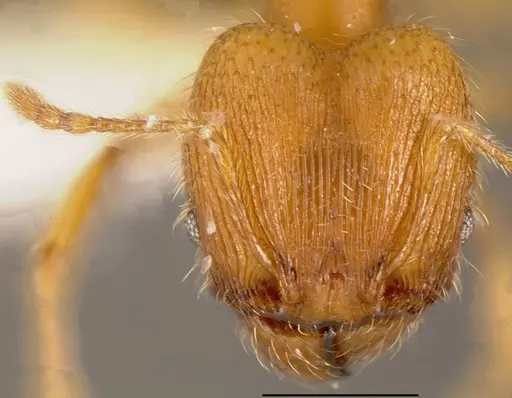
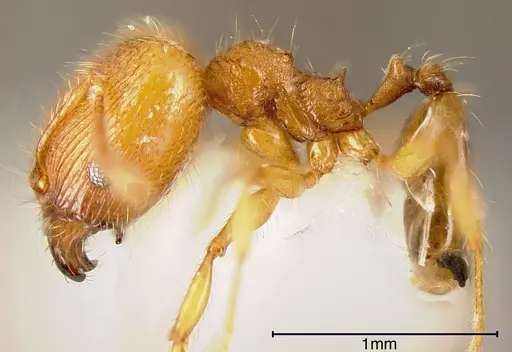
CASENT0635473
View on AntWeb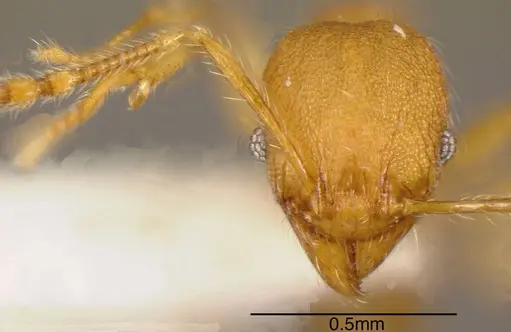
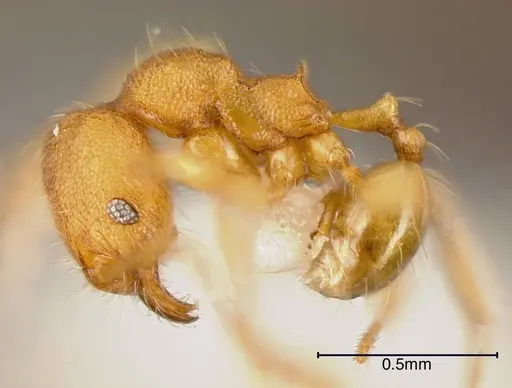
Literature
Loading distribution map...Loading products...