
Pheidole haywardi
- Sci. Name
- Pheidole haywardi
- Tribe
- Attini
- Subfamily
- Myrmicinae
- Author
- Kusnezov, 1952
- Distribution
- Found in 1 countries
Introduction
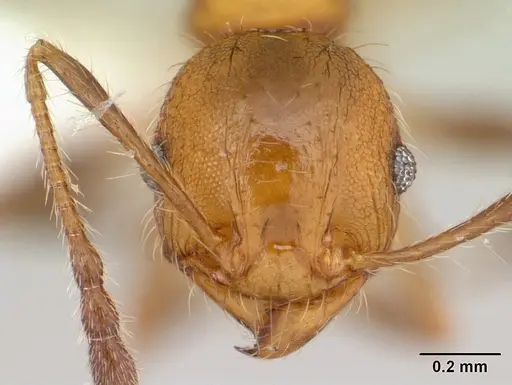
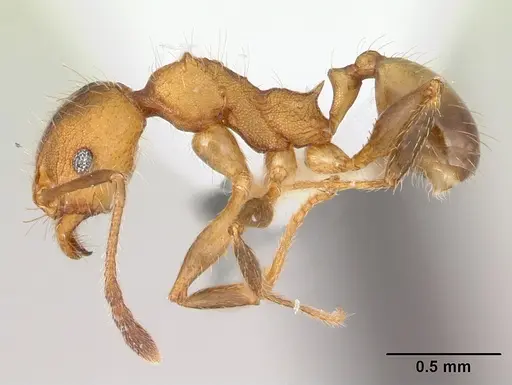
Pheidole haywardi is an ant species described from Argentina in 1952. It is native to the Mesopotamian region, including Misiones province in Argentina and Paraguay . The species has uncertain taxonomic placement within the genus Pheidole . Size data for this species is unavailable, but Pheidole ants typically exhibit size polymorphism with minor and major workers. As a member of the Generalized Myrmicinae functional group , Pheidole haywardi likely shares omnivorous feeding habits and colony structures typical of the genus.
Quick Summary
- Difficulty: Medium
- Origin & Habitat: Native to the Mesopotamian region of Argentina (Misiones province) and Paraguay in subtropical habitats [1][2].
- Colony Type: Colony structure is unconfirmed, but based on Pheidole genus patterns, likely monogyne (single queen).
- Size & Growth:
- Queen: Size data unavailable, inferred from Pheidole genus patterns as ~6-8 mm
- Worker: Size data unavailable, inferred from Pheidole genus patterns as ~3-5 mm for minors, larger for majors
- Colony: Up to several thousand workers, inferred from Pheidole genus patterns
- Growth: Moderate
- Development: Estimated 6-8 weeks, inferred from Pheidole genus patterns at warm temperatures (Development time inferred from genus patterns, no species-specific data)
- Antkeeping:
- Temperature: Keep at 22-26°C, inferred from subtropical habitat [1].
- Humidity: Keep nest substrate slightly moist but allow some drying areas, inferred from functional group [1].
- Diapause: No full hibernation required, inferred from subtropical range [1].
- Nesting: Y-tong or plaster nests work well, inferred from ground-nesting habits of Pheidole genus.
- Behavior: Based on Pheidole genus patterns, colonies are not particularly aggressive but soldiers defend the nest. Escape risk is moderate due to small size.
- Common Issues: limited species-specific data makes precise care uncertain., subtropical temperature requirements may be challenging in cooler climates., small initial colony size requires careful feeding to avoid spoilage.
Nest Preferences
Pheidole haywardi is likely a ground-nesting ant, as inferred from Pheidole genus patterns and its distribution in subtropical regions [1]. In captivity, Y-tong or plaster nests are suitable. During founding, test tubes can be used.
Feeding and Diet
As a member of the Generalized Myrmicinae functional group [1], Pheidole haywardi is likely omnivorous. Offer protein sources like small insects twice weekly and sugar water constantly. Remove uneaten food to prevent mold.
Temperature and Care
Based on its subtropical distribution [1], keep nest temperatures at 22-26°C for optimal brood development. Maintain moderate humidity by keeping the substrate slightly moist but not waterlogged.
Behavior and Temperament
Pheidole haywardi displays typical Pheidole genus behavior: colonies are not aggressive but soldiers defend the nest when disturbed. Workers are active foragers. Escape risk is moderate due to small size, use standard barrier methods.
Frequently Asked Questions
How long does it take for Pheidole haywardi to raise first workers?
Based on typical Pheidole genus patterns, expect first workers in approximately 6-8 weeks at warm temperatures.
Can I keep multiple Pheidole haywardi queens together?
Not recommended, as Pheidole species are likely monogyne. Combining queens may result in fighting and colony failure.
What do Pheidole haywardi ants eat?
They are omnivorous, as inferred from the Generalized Myrmicinae functional group [1]. Offer small insects for protein and sugar water for carbohydrates.
Are Pheidole haywardi good for beginners?
They are moderate difficulty due to subtropical temperature needs and limited species-specific data. Suitable for intermediate antkeepers.
Do Pheidole haywardi need hibernation?
No full hibernation is required, as inferred from its subtropical range [1]. Reduced activity may occur in cooler months.
When should I move Pheidole haywardi from a test tube to a formicarium?
Transition when the colony has 30-50 workers and shows signs of stress, such as avoiding the water end. Use Y-tong or plaster nests.
How big do Pheidole haywardi colonies get?
Colonies can reach up to several thousand workers, inferred from Pheidole genus patterns.
Why is Pheidole haywardi considered taxonomically uncertain?
The species was described in 1952 but is placed as incertae sedis within Pheidole, meaning its identity is not fully resolved [2].
What temperature is ideal for Pheidole haywardi?
Keep nest temperatures between 22-26°C, based on its subtropical distribution [1].
Report an Issue
The current care sheet is based fully on literature. See inconsistencies, or something that's incorrect? Please , it will be resolved after review from an admin. Contributing to the blogs tab also helps providing information, to make us be able to further improve the caresheets. Thank you for your support!
References

This caresheet is licensed under CC BY-SA 4.0 .
Community Blogs
CASENT0178030
View on AntWeb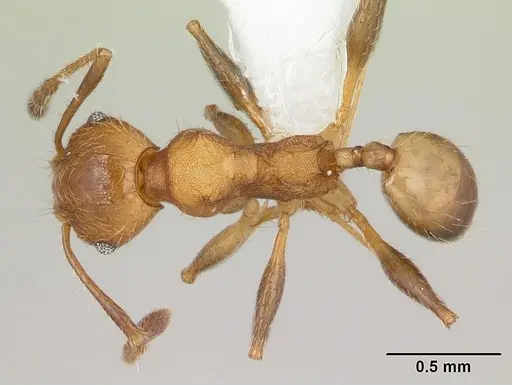
Literature
Loading distribution map...Loading products...