
Pheidole guilelmimuelleri
- Sci. Name
- Pheidole guilelmimuelleri
- Tribe
- Attini
- Subfamily
- Myrmicinae
- Author
- Forel, 1886
- Distribution
- Found in 1 countries
Introduction
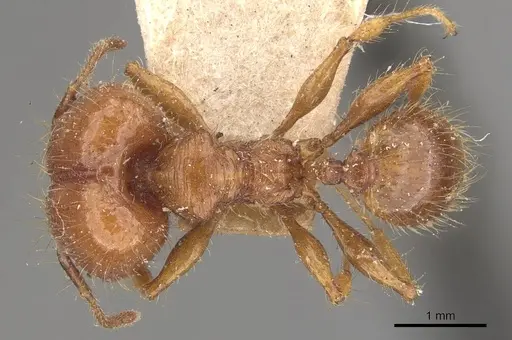
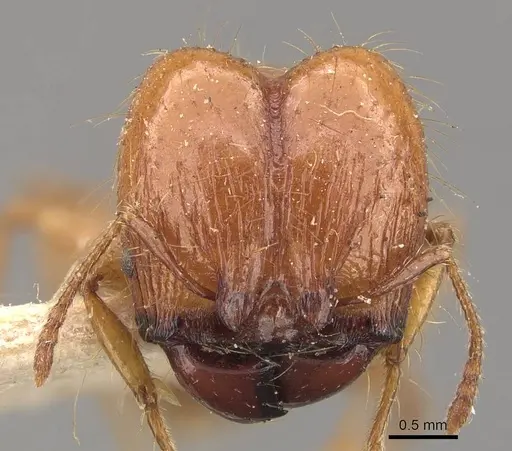
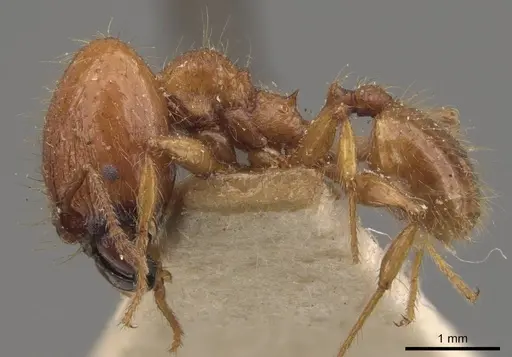
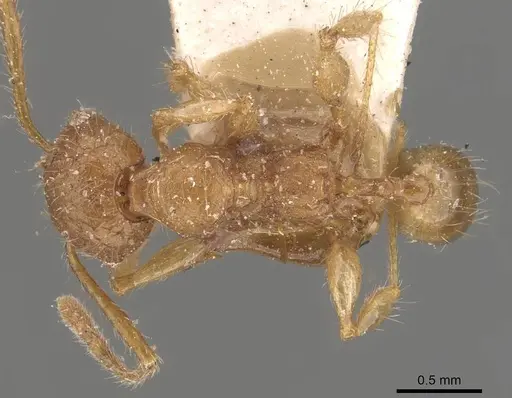
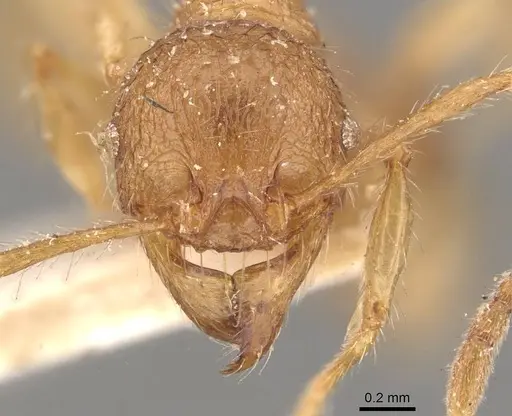
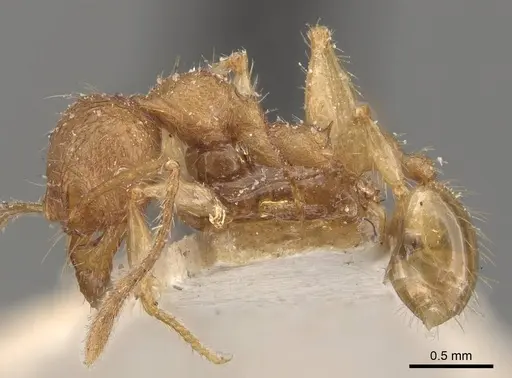
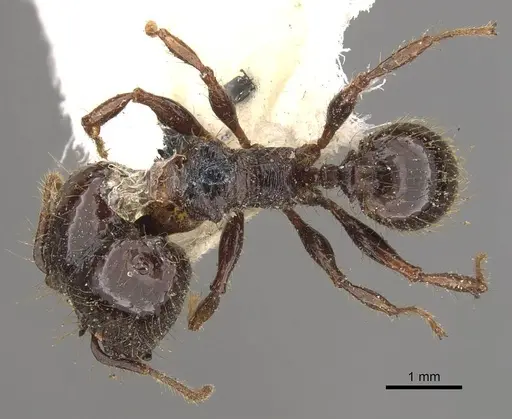
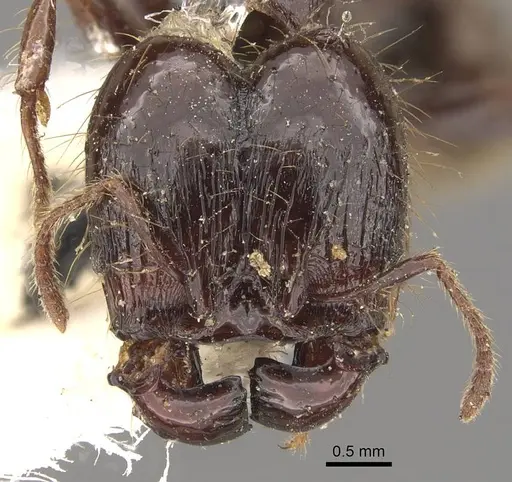
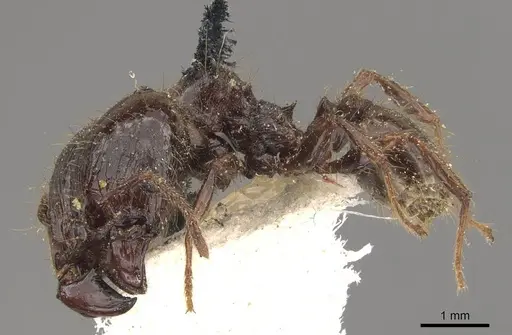
Pheidole guilelmimuelleri is a reddish-brown ant species with major and minor worker castes, native to South America. It is found in Brazil, Argentina, and Colombia in Cerrado habitats and grasslands at elevations around 980m . The species was described by Forel in 1886 and elevated to species status by Wilson in 2003 . Body size data is unavailable, but major workers have enlarged heads for defense, while minor workers handle foraging and brood care. Nothing is known about the biology of this species, but its dimorphic castes are typical of the Pheidole genus .
Quick Summary
- Difficulty: Medium
- Origin & Habitat: Southern Brazil (Santa Catarina), Argentina (Misiones), and Colombia (Antioquia) in Cerrado and grassland habitats at around 980m elevation [1][2][3][4].
- Colony Type: Unconfirmed, no research data on queen number or colony structure.
- Size & Growth:
- Queen: Size data unavailable, no total length measurements available.
- Worker: Size data unavailable, no total length measurements available.
- Colony: Unknown, no specific data on colony size for this species.
- Growth: Moderate, inferred from typical Pheidole development patterns.
- Development: Estimated 6-8 weeks at optimal temperatures, no species-specific data available. (Development time may vary with temperature.)
- Antkeeping:
- Temperature: Temperature needs are unclear, start around 24-28°C and observe, based on Neotropical habitat inference.
- Humidity: Keep nest substrate consistently moist but not waterlogged, based on typical Neotropical species needs.
- Diapause: No, as a Neotropical species, likely no diapause required.
- Nesting: Use test tube setup for founding, then Y-tong or plaster nests. Based on general Pheidole keeping practices [4].
- Behavior: Temperament is likely docile based on genus patterns. Escape risk is moderate due to small minor workers, use fine mesh barriers.
- Common Issues: slow colony growth can frustrate beginners, Pheidole often take months to establish first workers., tiny minor workers can escape through standard test tube cotton, use fine mesh barriers., limited biological data means care is based on genus inference rather than species-specific research., wild-caught colonies may contain parasites that can devastate captive populations., overheating is a risk, keep nest temperatures below 30°C.
Housing and Nest Setup
For founding colonies, a standard test tube setup works well [4]. Once established, Y-tong or plaster nests are suitable. Ensure fine mesh barriers to prevent escapes due to small minor workers [4].
Feeding and Diet
Specific diet data is unavailable for this species. Based on general Pheidole practices, feed a mix of protein (e.g., fruit flies) and carbohydrates (e.g., sugar water) [4].
Temperature and Seasonal Care
No species-specific temperature data available. Maintain around 24-28°C based on habitat inference. As a Neotropical species, no diapause is required.
Colony Development and Growth
Pheidole colonies grow through caste production. The first workers emerge within estimated 6-8 weeks under optimal conditions. Growth is moderate, with majors appearing once the colony is established.
Understanding Major and Minor Workers
Minor workers are small and handle most tasks, while majors have enlarged heads for defense and seed-crushing. Majors appear later in colony development [4].
Frequently Asked Questions
How long does it take for Pheidole guilelmimuelleri to produce first workers?
Estimated 6-8 weeks at optimal temperatures, but no species-specific data exists. This is based on typical Pheidole development patterns.
What do I feed Pheidole guilelmimuelleri?
Feed a varied diet of protein and carbohydrates, such as small insects and sugar water, based on general Pheidole practices [4].
What temperature do they need?
Temperature needs are unclear, start around 24-28°C and observe, based on Neotropical habitat inference.
Are Pheidole guilelmimuelleri good for beginners?
This species is rated Medium difficulty. While Pheidole are generally hardy, limited documented care information may challenge beginners.
When will my colony produce major workers?
Majors typically appear once the colony is well-established, but no specific timeline is available for this species.
Do they need hibernation or diapause?
No, as a Neotropical species, they likely do not require diapause.
How big do colonies get?
Maximum colony size is unknown for this species.
Can I keep multiple queens together?
Pheidole are typically single-queen colonies, but no data exists for this species. Combining queens is not recommended.
Why are my ants escaping?
Minor workers are very small and can escape through standard barriers. Use fine mesh (0.5mm or smaller) on all openings [4].
Report an Issue
The current care sheet is based fully on literature. See inconsistencies, or something that's incorrect? Please , it will be resolved after review from an admin. Contributing to the blogs tab also helps providing information, to make us be able to further improve the caresheets. Thank you for your support!
References

This caresheet is licensed under CC BY-SA 4.0 .
Community Blogs
Literature
Loading distribution map...Loading products...