
Pheidole glabrella
- Sci. Name
- Pheidole glabrella
- Tribe
- Attini
- Subfamily
- Myrmicinae
- Author
- Fischer <i>et al.</i>, 2012
- Distribution
- Found in 5 countries
Introduction
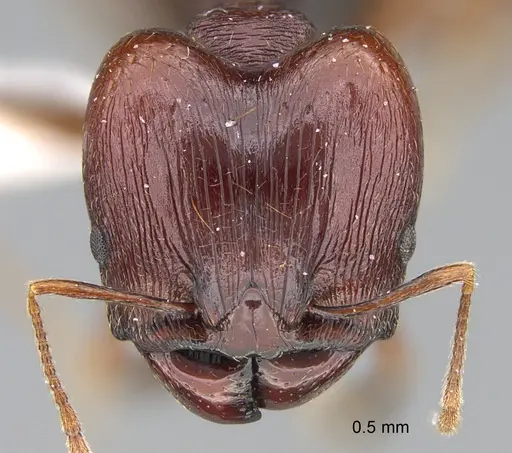
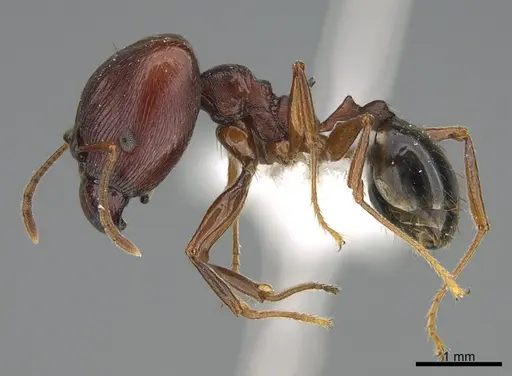
Pheidole glabrella is a small ant species from the rainforests of West and Central Africa, including Cameroon, Central African Republic, Democratic Republic of Congo, and Gabon . It has a reddish brown to dark brown coloration, with a smooth and shiny mesosoma, and is notably hairless, with standing hairs scarce to absent . Full body size measurements are not available in the literature, but minor workers are very small, and major workers are substantially larger . The species belongs to the Pheidole pulchella group and is most similar to Pheidole rebeccae . This species is named for its hairless appearance, 'glabrella' meaning 'little hair' in Latin, referring to the nearly complete absence of standing hairs on the body .
Quick Summary
- Difficulty: Medium
- Origin & Habitat: West to Central African rainforests, specifically Cameroon, Central African Republic, Democratic Republic of Congo, and Gabon. They live in damp forest floor environments, typically found in sifted leaf-litter, rotten logs, and among lower vegetation [1][2].
- Colony Type: Colony structure is unconfirmed. Pheidole species typically form monogyne (single-queen) colonies, though some species can be polygyne. No specific data exists for P. glabrella.
- Size & Growth:
- Queen: Unconfirmed, no queen measurements have been documented in scientific literature
- Worker: Size data unavailable, full body measurements not provided in literature. Inferred from Pheidole genus as minor workers ~1-2 mm and major workers ~2-4 mm.
- Colony: Unknown, no colony size data exists for this species.
- Growth: Moderate, inferred from typical Pheidole development patterns
- Development: Unknown, no specific data on development time for this species. (Development time is not documented, inferred to be typical for tropical Pheidole species.)
- Antkeeping:
- Temperature: Keep warm and stable, roughly low-to-mid 20s°C, as inferred from tropical rainforest habitat.
- Humidity: Keep nest substrate consistently moist but not waterlogged, as inferred from rainforest habitat.
- Diapause: No, tropical species do not require hibernation.
- Nesting: They naturally nest in leaf-litter, rotten logs, and among vegetation [1]. In captivity, a naturalistic setup with moist substrate works well. Y-tong nests with tight chambers also suitable.
- Behavior: Pheidole glabrella is likely calm and non-aggressive, based on typical Pheidole patterns. Major workers defend the colony, but the species is not known for being aggressive toward keepers. Workers are active foragers. Escape prevention is important due to small size.
- Common Issues: high humidity requirements mean mold can develop if ventilation is poor, ensure adequate airflow while maintaining moisture., small minor workers can escape through standard test tube barriers, use fine mesh and tight-fitting lids., tropical species may struggle if temperatures drop, maintain warm temperatures to avoid stress., wild-caught colonies may harbor parasites that can decimate the colony in captivity., founding phase may be slow, as with many Pheidole species, beginners should be patient.
Nest Preferences
In their natural rainforest habitat, Pheidole glabrella nests in decomposing organic matter, leaf-litter, rotten logs, and among lower vegetation [1][2]. For captive care, a naturalistic setup works best. Use a moist substrate like a soil-gypsum mix or coco fiber, and include pieces of rotting wood or leaf material to mimic their natural environment. Y-tong nests with tight, appropriately-sized chambers also work well for this species. The key is maintaining consistently damp substrate without waterlogging, these ants come from a humid rainforest environment where the forest floor stays moist.
Feeding and Diet
Pheidole species are generalist omnivores that primarily eat protein and carbohydrates. In captivity, feed protein sources like small insects twice weekly, and provide constant access to sugar water or honey. Since minor workers are very small, prey items should be appropriately sized, tiny insects or crushed pieces work well. Remove uneaten prey after 24-48 hours to prevent mold. The species has been collected from beating lower vegetation, suggesting they forage actively on plants as well as the forest floor [1].
Temperature and Care
As a species from Central African rainforests, Pheidole glabrella requires warm temperatures year-round. Keep the nest area warm and stable, roughly in the low-to-mid 20s°C, as inferred from their natural habitat. A temperature gradient is ideal, allowing workers to move between warmer and cooler areas. During winter, ensure room temperature doesn't drop significantly, use a heating cable if needed. Unlike temperate species, this ant does not require diapause or hibernation. Maintain warmth consistently, sudden temperature drops can stress colonies and slow or stop brood development.
Behavior and Colony Structure
Pheidole glabrella shows the typical Pheidole caste system with distinct minor workers and major soldiers. Minor workers handle most day-to-day tasks including foraging, caring for brood, and nest maintenance [1]. Major workers serve as soldiers, defending the colony and helping process large food items [1]. The species is notably hairless compared to related species, standing hairs are scarce to absent from the dorsal body surfaces [1]. Colonies are likely monogyne (single queen) based on typical Pheidole patterns, though this hasn't been specifically documented for this species.
Frequently Asked Questions
How long does it take for Pheidole glabrella to produce first workers?
Unknown, no specific data on development time for this species. Inferred to be typical for tropical Pheidole species, but not documented.
What do Pheidole glabrella ants eat?
They are generalist omnivores. Feed small protein sources like insects twice weekly, and provide constant access to sugar water or honey. Prey should be appropriately sized for their tiny minor workers.
What temperature do Pheidole glabrella need?
Keep them warm and stable, roughly in the low-to-mid 20s°C. As a Central African rainforest species, they need warm temperatures year-round. Avoid temperatures below 20°C for extended periods.
Are Pheidole glabrella good for beginners?
They are rated as medium difficulty. The main challenges are maintaining high humidity and warm temperatures consistently. Their small size also requires good escape prevention. If you can provide a warm, humid environment with appropriate feeding, they are manageable for committed beginners.
Do Pheidole glabrella need hibernation?
No. As a tropical rainforest species from Central Africa, they do not require diapause or hibernation. Maintain warm temperatures year-round.
How big do Pheidole glabrella colonies get?
Colony size is not documented for this species. Based on related species in the pulchella group, colonies likely reach several hundred workers. Growth is moderate, expect several months to a year to reach 50+ workers from a new queen.
What size are Pheidole glabrella workers?
Full body size measurements are not available. Head width measurements are: minor workers 0.67-0.86 mm, major workers 1.84-2.15 mm [1], but these are not full body size. Inferred body size from Pheidole genus is minor workers ~1-2 mm and major workers ~2-4 mm.
Can I keep multiple Pheidole glabrella queens together?
Not recommended. Pheidole species typically form single-queen colonies. Combining unrelated foundresses has not been documented for this species and would likely result in aggression.
Where is Pheidole glabrella found in the wild?
West to Central Africa, specifically Cameroon, Central African Republic, Democratic Republic of Congo, and Gabon. They live in rainforest habitats, collected from leaf-litter, rotten logs, and by beating lower vegetation [1][2].
Report an Issue
The current care sheet is based fully on literature. See inconsistencies, or something that's incorrect? Please , it will be resolved after review from an admin. Contributing to the blogs tab also helps providing information, to make us be able to further improve the caresheets. Thank you for your support!
References

This caresheet is licensed under CC BY-SA 4.0 .
Community Blogs
CASENT0218407
View on AntWeb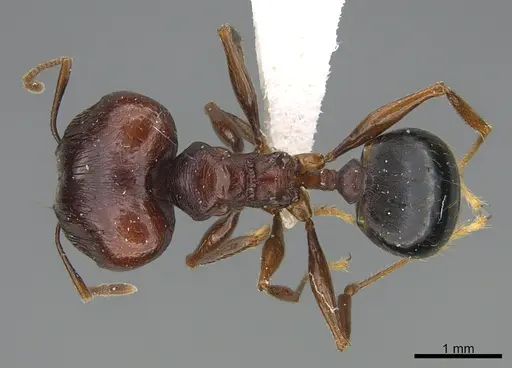
Literature
Loading distribution map...Loading products...