
Pheidole gemmula
- Sci. Name
- Pheidole gemmula
- Tribe
- Attini
- Subfamily
- Myrmicinae
- Author
- Wilson, 2003
- Distribution
- Found in 1 countries
Introduction
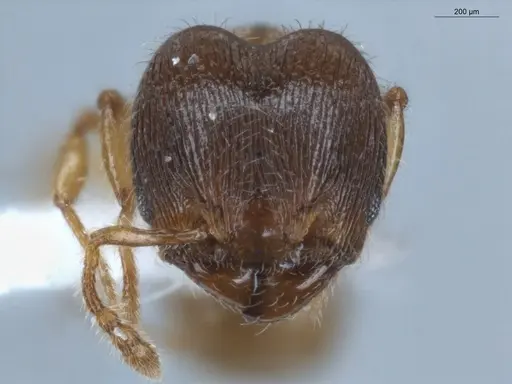
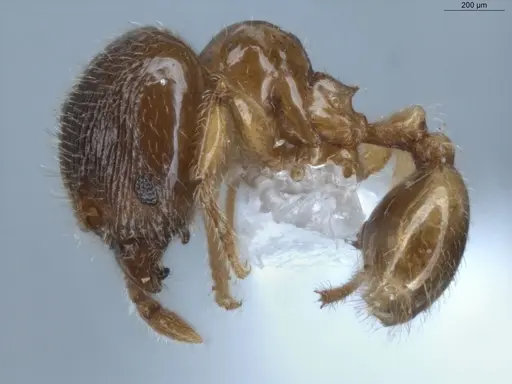
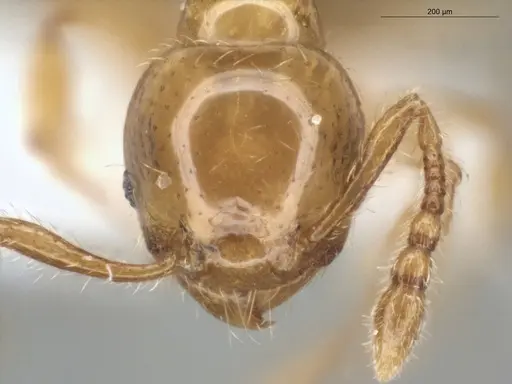
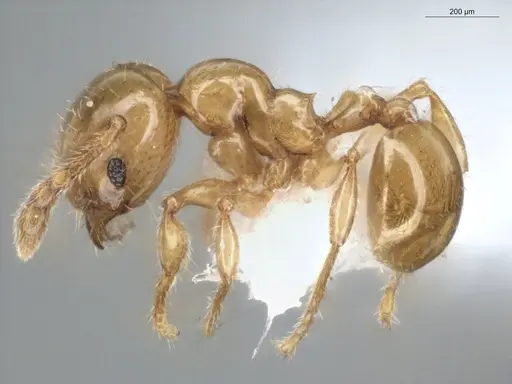
Pheidole gemmula is an exceptionally small ant species native to the Peruvian Amazon. First described by E.O. Wilson in 2003,it belongs to the perpusilla group, characterized by its tiny 10-segmented antennae and completely smooth, shiny body. Major workers feature a medium yellow body with a yellowish-brown rear head and a distinctive spot on the first gastral segment, while minor workers are a uniform clear yellow. This species is known only from a single collection in mature terra firme rainforest near Puerto Maldonado, Peru, where it was found nesting in moist rotting wood buried in leaf litter on the forest floor . Size data is unavailable for this species, but related tiny Pheidole species typically measure around 2-4 mm in total length .
Quick Summary
- Difficulty: Hard (tiny size and specialized habitat make this challenging)
- Origin & Habitat: Only known from the type locality in Madre de Dios, Peru (Cuzco Amazónico,15 km northeast of Puerto Maldonado). Found in mature terra firme rainforest, nesting in moist white rotting wood buried in leaf litter on the forest floor [1][2].
- Colony Type: Unconfirmed. Pheidole species are typically monogyne (single-queen colonies) but some can be polygyne (multiple-queen colonies). No specific data exists for this species.
- Size & Growth:
- Queen: size data unavailable
- Worker: size data unavailable
- Colony: Unknown, no colony data available
- Growth: Unknown, likely moderate based on typical Pheidole patterns
- Development: Unknown, no direct data available. Estimate based on related small tropical Pheidole species (~6-8 weeks at 25-28°C). (Direct development data unavailable for this species.)
- Antkeeping:
- Temperature: Keep warm, around 24-28°C. This species comes from the Peruvian Amazon where temperatures stay consistently warm year-round. A heating cable on one side of the nest can create a gentle gradient.
- Humidity: Requires high humidity, these ants were found in moist rotting wood in the rainforest understory. Keep the nest substrate consistently damp but not waterlogged. Provide a water reservoir and mist occasionally to maintain moisture.
- Diapause: Unlikely, as a tropical species from lowland Amazon rainforest, they probably do not require a diapause period. However, a slight seasonal slowdown during cooler months may occur.
- Nesting: Natural nesting is in moist rotting wood buried in leaf litter. In captivity, a small Y-tong (AAC) nest or plaster nest with tight chambers works well. The tiny size means chambers should be appropriately scaled, avoid large open spaces. Provide some damp substrate or cotton as a moisture source.
- Behavior: Major workers serve as soldiers and food processors, while minors handle foraging, brood care, and nest maintenance. Pheidole species are generally non-aggressive and focus on seed collection and small arthropods. However, their tiny size makes escape prevention critical, they can squeeze through remarkably small gaps. They possess a functional stinger used to inject venom, though it is less significant to humans than fire ants. Foraging activity is typically moderate, with minors readily collecting seeds, small insects, and sugar sources.
- Common Issues: tiny size makes escape prevention challenging, use fine mesh and tight-fitting lids, high humidity requirements can lead to mold if ventilation is poor, very limited distribution means wild-caught colonies are essentially unavailable, specific moisture requirements may be difficult to maintain consistently, lack of species-specific care data means keepers must rely on genus-level guidance
Housing and Nest Setup
Given their extremely small size, you need appropriately scaled housing. A small Y-tong (AAC) nest or plaster nest with narrow chambers works best, avoid large open spaces that can make the ants feel insecure. The natural nesting site was moist white rotting wood buried in leaf litter, so provide a damp substrate or water reservoir to maintain humidity. Test tube setups can work for founding colonies but may need upgrading as the colony grows. Regardless of nest type, escape prevention must be excellent, these tiny ants can squeeze through gaps that seem impossible. Use fine mesh on any ventilation holes and ensure all lids fit tightly [1][2].
Feeding and Diet
Like other Pheidole species, these ants likely have an omnivorous diet focusing on seeds and small arthropods. Pheidole ants are known for their major workers which can process seeds that minors cannot handle alone. Offer a mix of crushed seeds (millet, sesame, or specialized ant seed mixes) and small protein sources like fruit flies, pinhead crickets, or mealworm pieces. Sugar water or honey can be offered occasionally, though acceptance may vary. Feed protein sources 2-3 times per week and keep sugar water available. Remove uneaten food promptly to prevent mold in the humid environment they require [2].
Temperature and Humidity
As a species from the Peruvian Amazon lowlands, you need to maintain warm, humid conditions. Keep temperatures around 24-28°C with minimal fluctuations. A heating cable placed on one side of the nest can create a gentle thermal gradient, allowing ants to regulate their own temperature. Humidity is critical, the type specimen was found in moist rotting wood in the rainforest, indicating this species requires consistently damp conditions. Use a water reservoir or mist regularly to maintain humidity, but ensure some dry areas exist so ants can escape overly wet conditions. Avoid placing the nest near air conditioning or drafty windows [1][2].
Colony Development
This species was only described in 2003 and remains one of the least-studied Pheidole species. The founding behavior is unconfirmed but likely follows the typical Pheidole pattern: the queen seals herself in a small chamber, lives off stored fat reserves, and raises the first brood alone until nanitic (first) workers emerge. Development from egg to worker likely takes 6-8 weeks at optimal temperatures, based on related small tropical Pheidole species. Colonies probably reach a few hundred workers at maturity, though this is an estimate. The major workers (soldiers) develop later and have distinct morphology with their characteristic longitudinal carinulae on the head [2].
Frequently Asked Questions
How long does it take for Pheidole gemmula to produce first workers?
The exact timeline is unknown for this species, but based on related small tropical Pheidole species, expect first workers (nanitics) around 6-8 weeks after the queen lays eggs, at optimal temperatures of 25-28°C.
What do Pheidole gemmula ants eat?
Like other Pheidole species, they likely eat seeds and small arthropods. Offer crushed seeds, small insects like fruit flies or pinhead crickets, and occasional sugar water or honey. Protein should be offered 2-3 times per week [2].
Can I keep Pheidole gemmula in a test tube?
Yes, test tubes work well for founding colonies. Ensure the cotton remains damp but not flooded, and use excellent escape prevention since their tiny size allows them to squeeze through small gaps.
What temperature do Pheidole gemmula ants need?
Keep them warm at 24-28°C. As a tropical Amazon species, they do not require hibernation and may struggle in cool conditions [1].
How big do Pheidole gemmula colonies get?
The maximum colony size is unknown, but related tiny Pheidole species typically reach a few hundred workers. This species is known only from a single collection, so no colony data exists [1].
Are Pheidole gemmula good for beginners?
This species is not recommended for beginners due to its extremely small size, specific humidity requirements, and the fact that wild-caught colonies are essentially unavailable. It is also one of the least-studied ant species with no established captive breeding history [1].
Do Pheidole gemmula need hibernation?
No, as a tropical species from the Peruvian Amazon, they do not require hibernation. Maintain warm temperatures year-round [1].
Why are my Pheidole gemmula dying?
Common causes include: temperature too cool (keep at 24-28°C), humidity too low (they need consistently damp conditions), escape through tiny gaps, or mold from overwatering with poor ventilation. Their specific requirements make them challenging to keep.
When should I move my colony to a formicarium?
Move to a larger nest once the colony reaches a reasonable size and the test tube shows signs of crowding. A small Y-tong (AAC) or plaster nest with appropriately scaled chambers works well for this tiny species.
Report an Issue
The current care sheet is based fully on literature. See inconsistencies, or something that's incorrect? Please , it will be resolved after review from an admin. Contributing to the blogs tab also helps providing information, to make us be able to further improve the caresheets. Thank you for your support!
References

This caresheet is licensed under CC BY-SA 4.0 .
Community Blogs
ECOFOG-IT14-0062-82
View on AntWeb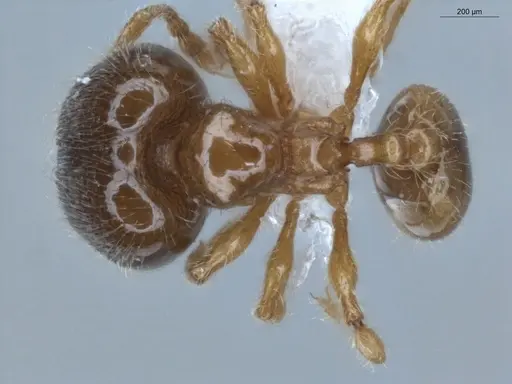
ECOFOG-IT14-0063-97
View on AntWeb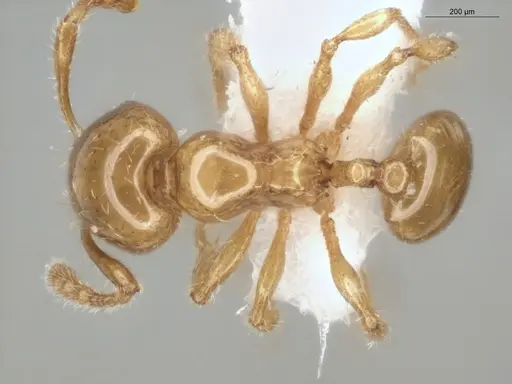
Literature
Loading distribution map...Loading products...