
Pheidole fadli
- Sci. Name
- Pheidole fadli
- Tribe
- Attini
- Subfamily
- Myrmicinae
- Author
- Sharaf, 2007
- Distribution
- Found in 1 countries
Introduction
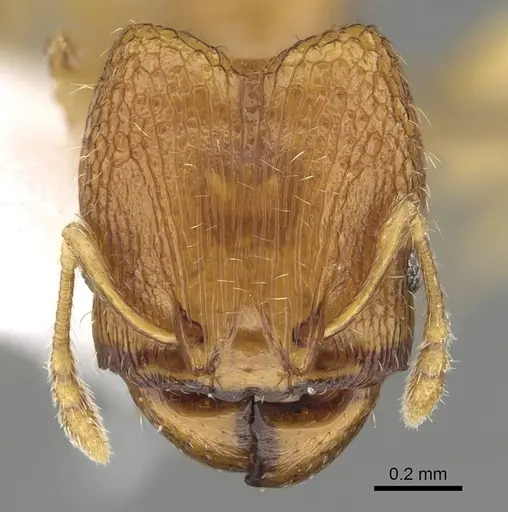
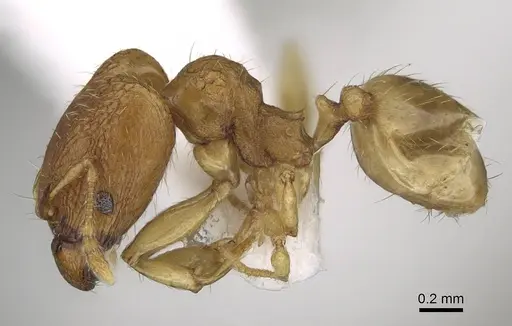
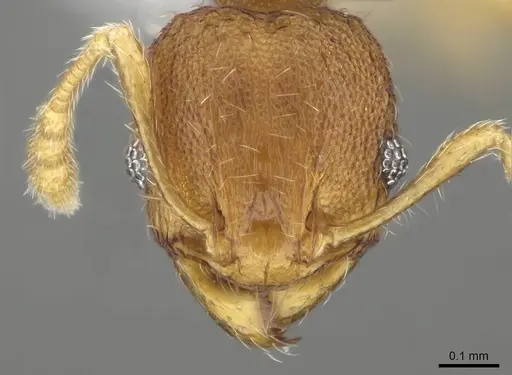
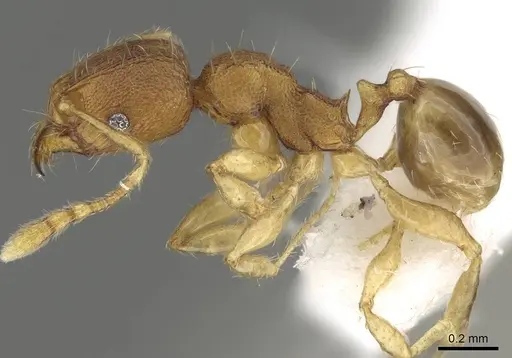
Pheidole fadli is one of the smallest Pheidole species, native to Egypt and Cyprus . Major workers have a total length of 2.8 mm, while minors are 1.63 mm . The species was described in 2007 and named after Dr. Hasan H. Fadl . Majors are reddish-yellow with strong head striations, and minors are uniformly yellow . Colonies nest under rocks near the Nile in hot, dry conditions . A notable trait is the low number of major workers in colonies, which is unusual for Pheidole species .
Quick Summary
- Difficulty: Easy
- Origin & Habitat: Found in Egypt and Cyprus, nesting under rocks near the Nile in hot, dry desert conditions [2][1].
- Colony Type: Unconfirmed, colonies have major and minor workers, but queen number is unknown [2].
- Size & Growth:
- Antkeeping:
- Temperature: Keep warm, roughly 24-28°C, based on their hot desert habitat [2]
- Humidity: Keep nest substrate relatively dry with occasional moisture access, based on desert adaptation [2]
- Diapause: Unknown, no specific data on diapause for this species
- Nesting: Y-tong or plaster nests with small chambers scaled to their size [2]
- Behavior: Peaceful and non-aggressive. Escape risk is high due to small size, use fine mesh barriers (inferred from size).
- Common Issues: escape prevention is critical due to their tiny size, use fine mesh and tight-fitting lids., slow colony growth can frustrate beginners, these are naturally slow developers., very few major workers in colonies means seed-crushing capacity may be limited., wild-caught colonies may carry parasites, quarantine and observe new colonies., overheating is a greater risk than cold, avoid temperatures above 32°C.
Housing and Nest Setup
Use Y-tong or plaster nests with narrow chambers sized for their small workers [2]. Provide a small outworld for foraging. Use fine mesh barriers to prevent escape, as these ants are tiny [2]. Add a thin layer of substrate in the outworld. Mimic their natural nesting under rocks with flat stones in compact soil [2].
Feeding and Diet
Based on typical Pheidole diet, these ants are primarily granivorous. Offer small seeds like grass seeds or millet regularly, and supplement with protein sources like fruit flies occasionally.
Temperature and Seasonal Care
Keep temperatures warm, around 24-28°C, based on their hot desert habitat [2]. Provide a temperature gradient if possible. Diapause is unknown, but if needed, reduce temperature in cooler months.
Colony Structure and Castes
Pheidole fadli has major and minor workers, with majors having enlarged heads for seed-crushing [2]. The number of major workers is very low compared to minors [2]. Queens are larger than workers, but size data is unavailable.
Handling and Temperament
These ants are peaceful and non-aggressive. Their small size means escape risk is high, so handle gently and use fine mesh barriers.
Frequently Asked Questions
How long does it take for Pheidole fadli to produce first workers?
Estimated 6-8 weeks from egg to first worker at optimal temperature, based on typical Pheidole development.
Can I keep Pheidole fadli in a test tube?
Yes, but ensure excellent escape prevention due to their tiny size. Use tight cotton plugs and fine mesh [2].
What do I feed Pheidole fadli?
Based on typical Pheidole diet, offer small seeds regularly and protein sources occasionally.
How big do Pheidole fadli colonies get?
Up to several hundred workers, inferred from Pheidole genus patterns.
Do they need hibernation?
Unknown, no specific data on diapause for this species.
Why are there so few major workers in my colony?
This is normal for the species, P. fadli naturally has very few major workers compared to minors [2].
Are Pheidole fadli good for beginners?
Yes, they are considered easy to keep, but their tiny size requires excellent escape prevention.
When should I move them to a formicarium?
Wait until the colony has 20-30 workers and is actively foraging, typically after 6-12 months.
Report an Issue
The current care sheet is based fully on literature. See inconsistencies, or something that's incorrect? Please , it will be resolved after review from an admin. Contributing to the blogs tab also helps providing information, to make us be able to further improve the caresheets. Thank you for your support!
References

This caresheet is licensed under CC BY-SA 4.0 .
Community Blogs
CASENT0919803
View on AntWeb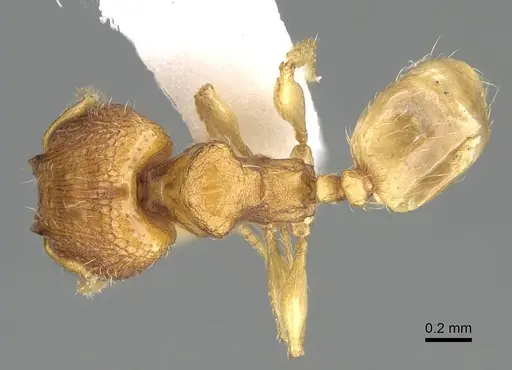
CASENT0919804
View on AntWeb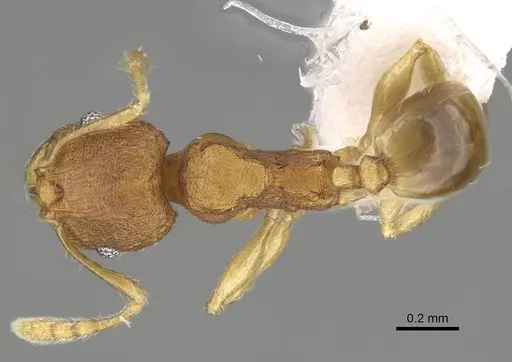
Literature
Loading distribution map...Loading products...