
Pheidole erethizon
- Sci. Name
- Pheidole erethizon
- Tribe
- Attini
- Subfamily
- Myrmicinae
- Author
- Wilson, 2003
- Distribution
- Found in 1 countries
Introduction
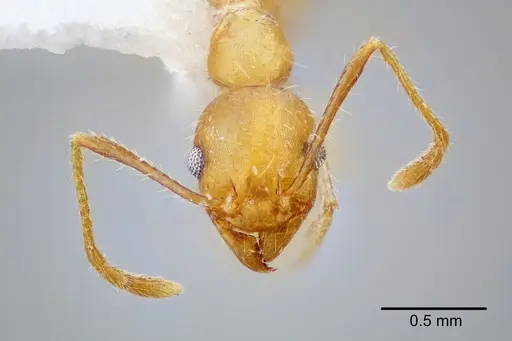
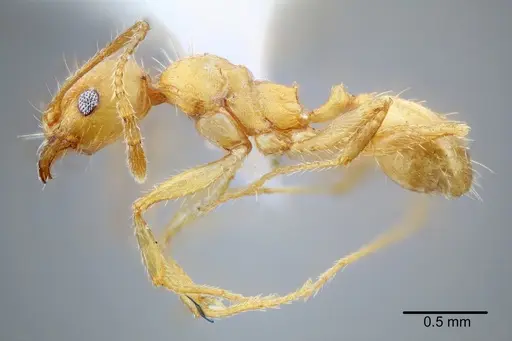
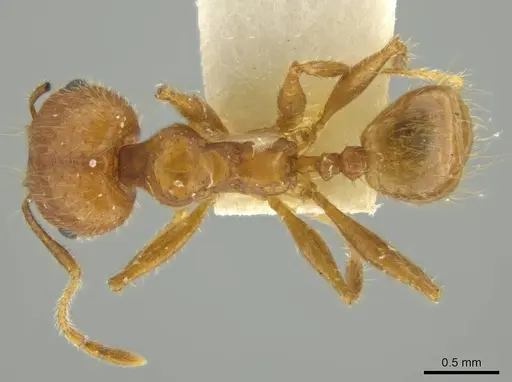
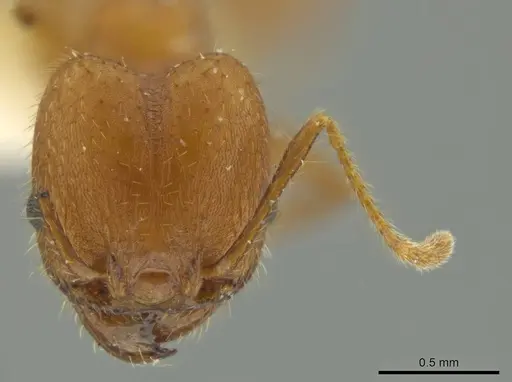
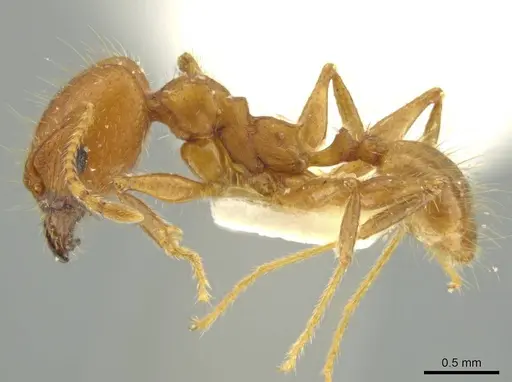
Pheidole erethizon is a small ant species native to central Mexico, first described by E.O. Wilson in 2003. It has dense, long hairs that give it a porcupine-like appearance, particularly on the abdomen of major workers. Body size data is unavailable in the literature, but inferred from the Pheidole genus, workers are approximately 2-5 mm in total length. The species is recorded in Michoacán, Guerrero, Morelos, and Puebla at elevations around 1,200 m . The biology of P. erethizon is completely unstudied, making specific care requirements uncertain. It belongs to the crassicornis group within Pheidole and has major and minor worker castes, but no behavioral or ecological details are known .
Quick Summary
- Difficulty: Medium
- Origin & Habitat: Native to central Mexico, found in Michoacán, Guerrero, Morelos, and Puebla states at elevations around 1,200 m in the Neotropical region [1][2].
- Colony Type: Unconfirmed, no data on queen number or social structure
- Size & Growth:
- Queen: Size data unavailable, no total length measurements provided
- Worker: Size data unavailable, inferred from Pheidole genus: approximately 2-5 mm
- Colony: Unknown, no wild colony data exists
- Growth: Unknown
- Development: Unknown, no data. Based on genus patterns, estimate 6-10 weeks at optimal temperature, but this is speculative (Biology is unstudied, so development timing is uncertain)
- Antkeeping:
- Temperature: Start around 22-26°C and observe colony behavior. As a Mexican highland species, they likely prefer moderate temperatures. Adjust based on activity, if sluggish, increase slightly, if avoiding heat, reduce.
- Humidity: Keep nest substrate moderately moist but not waterlogged. Allow partial drying between water additions, as Mexican Pheidole species may tolerate drier conditions.
- Diapause: Unknown, no data on overwintering requirements. Given the distribution, a cool period may be appropriate but is not confirmed.
- Nesting: No specific nesting data. Based on Pheidole preferences, likely nest in soil or under stones. Use test tube setup for founding colonies, move to Y-tong or plaster nests with small chambers for larger colonies.
- Behavior: No specific behavioral data exists. Based on Pheidole patterns, majors may defend the nest while minors forage and tend brood. Their small size requires careful escape prevention with fine mesh barriers.
- Common Issues: biology completely unstudied, care based on genus inference rather than species-specific data, no confirmed information on founding behavior, unknown diapause requirements may lead to seasonal confusion, small size requires good escape prevention, no data on acceptable foods, must experiment with standard ant diets
Appearance and Identification
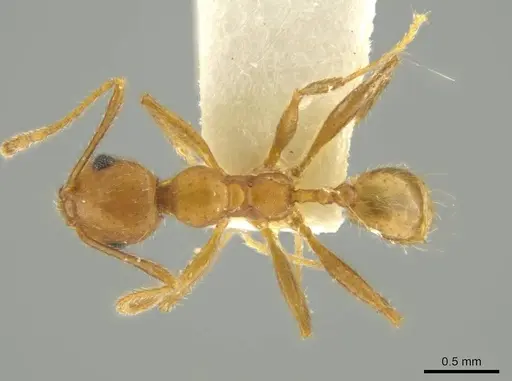
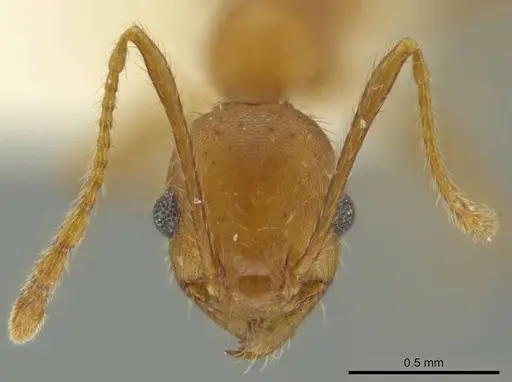
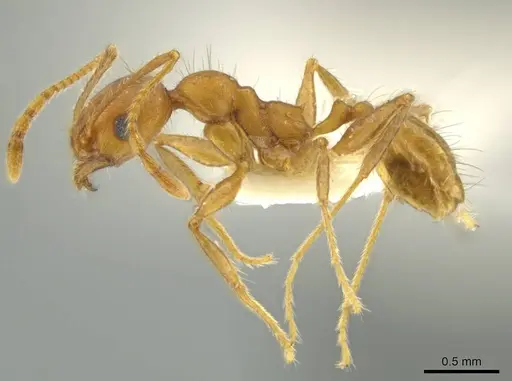
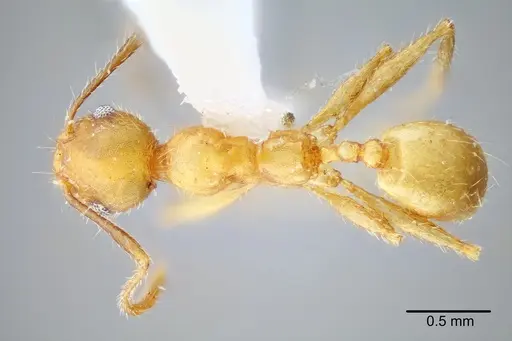
Pheidole erethizon is a small, yellow ant with exceptionally dense, long hairs that cover its body, giving it a porcupine-like appearance. This feature is most pronounced on the first abdominal segment of major workers. The species shows dimorphism with major and minor workers, but body size data is unavailable. Both castes are uniform medium yellow, with majors having a slight reddish tinge. The dense pilosity and foveolate texture of the head and body help distinguish it from similar species [1][2].
Natural Distribution and Habitat
This species is endemic to central Mexico, recorded in Michoacán, Guerrero, Morelos, and Puebla at elevations around 1,200 m. It is found in the Neotropical region, but no specific habitat details are known [1][2].
Feeding and Diet
No specific feeding data exists for this species. Based on typical Pheidole patterns, offer protein sources like small insects and carbohydrates like sugar water. Experiment with standard ant diets and observe what the colony accepts. Remove uneaten food to prevent mold.
Temperature and Heating Requirements
No specific temperature data exists. Start with 22-26°C and adjust based on colony behavior. As a Mexican highland species, they likely prefer moderate temperatures. Create a gentle gradient using a heating cable on one side of the nest.
Nesting and Housing
No specific nesting data exists. Based on Pheidole preferences, use a test tube setup for founding colonies. For larger colonies, move to Y-tong or plaster nests with small chambers scaled to their size. Keep substrate moderately moist.
Colony Development and Growth
The development timeline is unknown. Based on genus patterns, claustral founding may occur, with first workers emerging in 6-10 weeks at optimal temperature. Colony growth is slow, and major workers appear once the colony reaches sufficient size.
Frequently Asked Questions
How long does it take for Pheidole erethizon to produce first workers?
The exact timeline is unknown. Based on typical Pheidole genus patterns, estimate 6-10 weeks from egg to first worker at optimal temperature, but this is speculative [1].
What do Pheidole erethizon ants eat?
No specific feeding data exists. Offer protein like small insects and carbohydrates like sugar water, and observe colony preferences.
Do Pheidole erethizon ants need hibernation?
Diapause requirements are unknown. Given the Mexican highland distribution, a cool period may be appropriate but is not confirmed.
Are Pheidole erethizon good for beginners?
This species is rated Medium difficulty because its biology is unstudied. Experience with other Pheidole species may help, but care is based on inference.
What temperature should I keep Pheidole erethizon at?
Start with 22-26°C and observe colony behavior. Adjust based on activity levels.
How big do Pheidole erethizon colonies get?
Colony size is unknown. Based on typical Pheidole, colonies may reach several hundred workers over years, but no data exists.
Can I keep multiple Pheidole erethizon queens together?
Colony structure is unconfirmed. Most Pheidole are monogyne, but combining queens is not recommended due to lack of study.
When should I move Pheidole erethizon from test tube to formicarium?
Move when the test tube becomes crowded or shows stress, typically around 20-30 workers.
Why is Pheidole erethizon called the 'porcupine' ant?
The species name 'erethizon' means porcupine, referring to its dense, long hairs that give a porcupine-like appearance [1][2].
Report an Issue
The current care sheet is based fully on literature. See inconsistencies, or something that's incorrect? Please , it will be resolved after review from an admin. Contributing to the blogs tab also helps providing information, to make us be able to further improve the caresheets. Thank you for your support!
References

This caresheet is licensed under CC BY-SA 4.0 .
Community Blogs
Literature
Loading distribution map...Loading products...