
Pheidole dugasi
- Sci. Name
- Pheidole dugasi
- Tribe
- Attini
- Subfamily
- Myrmicinae
- Author
- Forel, 1911
- Distribution
- Found in 1 countries
Introduction
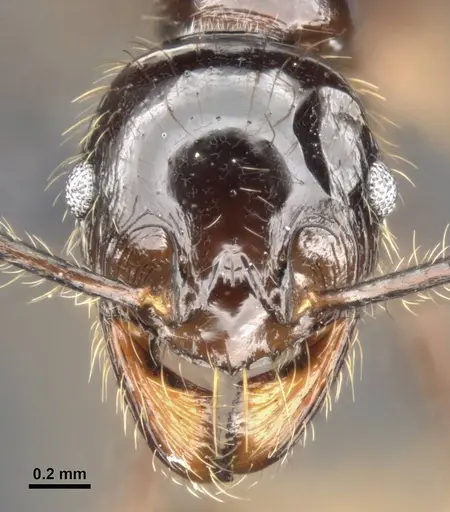
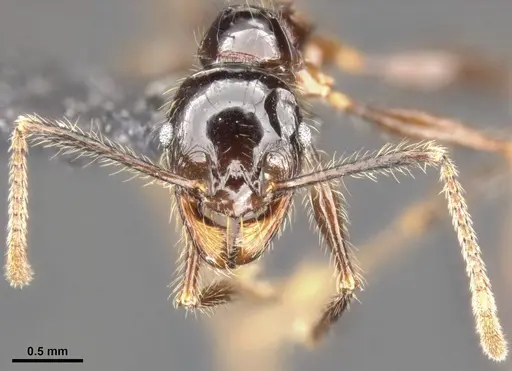
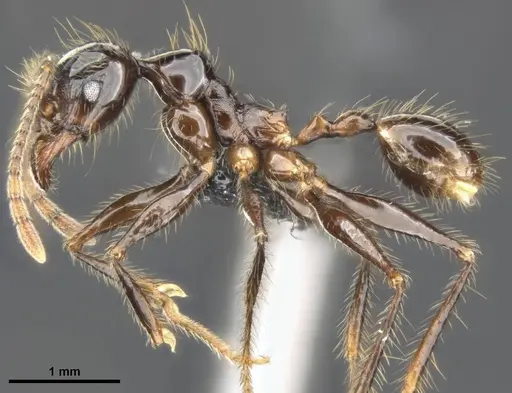
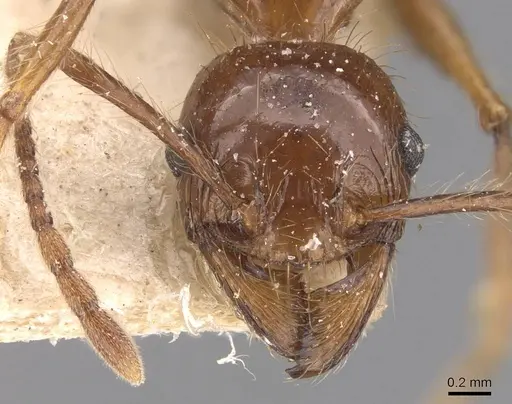
Pheidole dugasi is a large Indo-Chinese ant species with dimorphic workers. Majors have a distinctive 3-segmented antennal club and large heads, while minors have smooth heads. It is found in Vietnam, southern China, Thailand, and Laos, typically nesting underground in woody gardens and forest edges. Majors serve as repletes, and workers forage for seeds from mammal feces .
Quick Summary
- Difficulty: Medium
- Origin & Habitat: Vietnam, southern China, Thailand, and Laos. Typically nests underground in woody gardens and forest edges [1][2].
- Colony Type: Unconfirmed, context does not specify queen number or social structure.
- Size & Growth:
- Queen: Size data unavailable, no total length measurements in literature.
- Worker: Size data unavailable, no total length measurements in literature.
- Colony: Up to several hundred workers (estimated from related Pheidole species).
- Growth: Moderate, inferred from related species.
- Development: Unknown, specific data not available in literature. (Development time is not documented for this species.)
- Antkeeping:
- Behavior: Majors serve as repletes, storing liquid food. Workers are active foragers and have been observed collecting seeds from mammal feces. They are not aggressive but will defend the colony. Escape prevention should be moderate due to their size [1][2].
- Common Issues: replete majors may drown in water reservoirs if tubes are overfilled, use proper setup., tropical species may struggle if temperatures drop too low., seed-eating behavior may ignore some protein foods, offer varied diet., colonies may be slow to establish due to unconfirmed founding behavior.
Appearance and Caste Structure
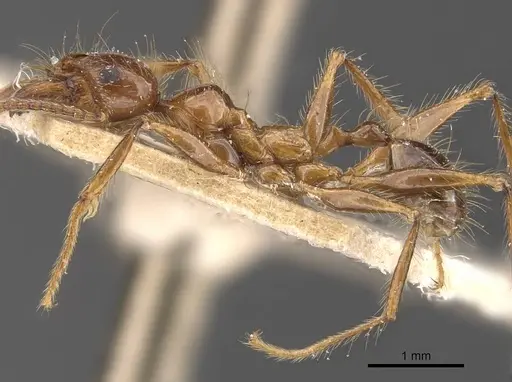
Pheidole dugasi is a dimorphic species with two worker castes. Majors are large-headed with a 3-segmented antennal club, while minors have smooth heads. The size difference is notable, but specific body measurements are not available in the literature [1][2].
Natural History and Foraging
This species typically nests underground in woody gardens and forest edges across its range. Majors serve as repletes, storing liquid food, and workers forage for seeds from mammal feces, showing adaptability in diet [1][2].
Temperature and Housing
As a tropical species, keep temperatures around 24-28°C. Provide underground nests with soil or compact substrate that holds moisture [1].
Feeding and Diet
Offer a varied diet including proteins like insects and sugars like honey. Based on seed-foraging behavior, they can handle diverse foods [1][2].
Colony Development
Specific development data is not available. Colonies may grow slowly initially, but once established, growth can accelerate [1].
Frequently Asked Questions
How long does it take for Pheidole dugasi to produce first workers?
Unknown, specific development data is not available in the literature.
What do Pheidole dugasi ants eat?
They are omnivorous, foraging for seeds from mammal feces in the wild, and accept proteins and sugars in captivity [1].
Are Pheidole dugasi good for beginners?
They are considered medium difficulty due to their need for warm temperatures and moderate humidity, inferred from their tropical habitat [1].
Do Pheidole dugasi majors serve as repletes?
Yes, majors function as repletes, storing liquid food in their abdomens [1].
What temperature do Pheidole dugasi ants need?
Keep them warm at 24-28°C, as inferred from their tropical habitat [1].
How big do Pheidole dugasi colonies get?
Colony size is not directly documented, but up to several hundred workers is estimated from related species.
What type of nest does Pheidole dugasi need?
They need underground nests with soil or compact substrate [1].
Where is Pheidole dugasi found in the wild?
This species is found in Vietnam, southern China, Thailand, and Laos, nesting underground in woody gardens and forest edges [1][2].
Can I keep multiple Pheidole dugasi queens together?
Unconfirmed, context does not specify if multiple queens can coexist.
Report an Issue
The current care sheet is based fully on literature. See inconsistencies, or something that's incorrect? Please , it will be resolved after review from an admin. Contributing to the blogs tab also helps providing information, to make us be able to further improve the caresheets. Thank you for your support!
References

This caresheet is licensed under CC BY-SA 4.0 .
Community Blogs
CASENT0284030
View on AntWeb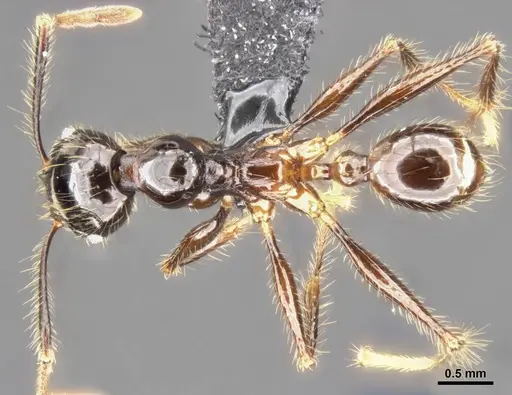
CASENT0907872
View on AntWeb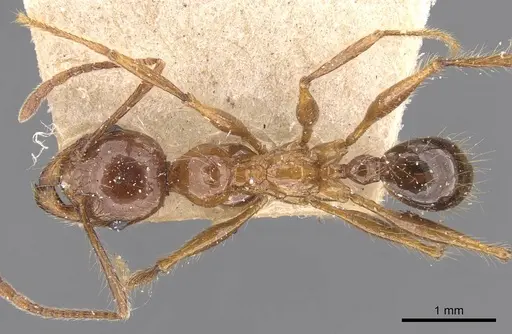
Literature
Loading distribution map...Loading products...