
Pheidole dossena
- Sci. Name
- Pheidole dossena
- Tribe
- Attini
- Subfamily
- Myrmicinae
- Author
- Wilson, 2003
- Distribution
- Found in 5 countries
Introduction
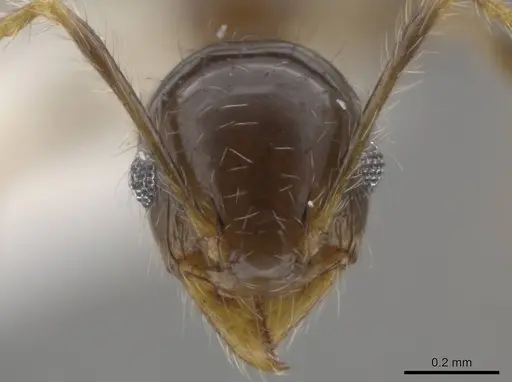
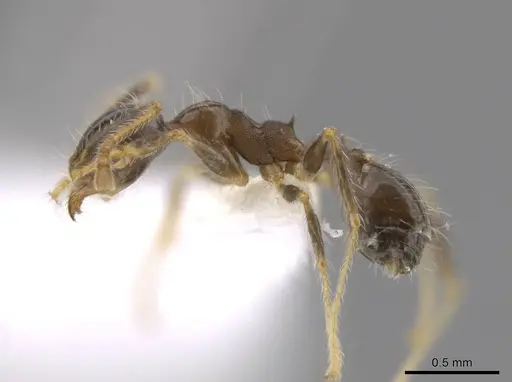
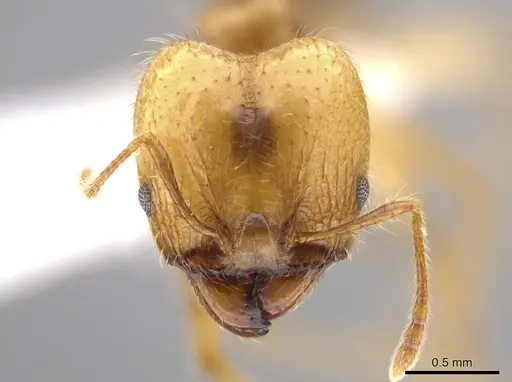
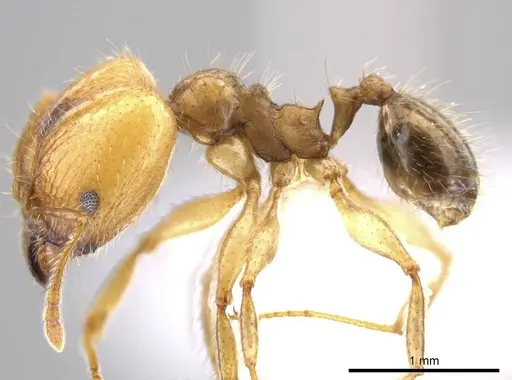
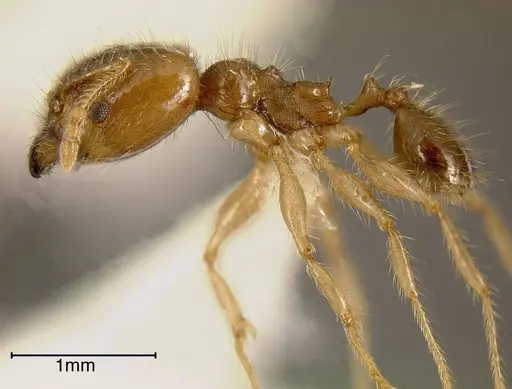
Pheidole dossena is a dimorphic ant with major and minor workers . It lives in lowland forests from southern Mexico through Central America to Panama, nesting in rotting wood on the forest floor . The species name comes from Latin 'dossena' meaning clown or jester, because the major workers have a circular brown spot on the back of their head that looks odd . Majors are brownish yellow with clear yellow legs; minors are more uniformly brownish yellow. It belongs to the fallax group of 'big-headed ants'.
Quick Summary
- Difficulty: Medium
- Origin & Habitat: Lowland tropical forests from southern Mexico (Palenque, Chiapas) through Belize, Guatemala, Honduras, Costa Rica, and Panama. It nests in rotting wood on the forest floor [2][1].
- Colony Type: Colony structure is not confirmed. Most Pheidole species have a single queen (monogyne), but that has not been proven for P. dossena.
- Size & Growth:
- Queen: Size data unavailable
- Worker: Size data unavailable, based on the Pheidole genus, total length ranges from about 2 mm (minor) to 5 mm (major)
- Colony: Unknown – not documented
- Growth: Moderate (inferred from related tropical Pheidole)
- Development: Estimated 4–6 weeks (based on related tropical Pheidole, not confirmed for this species) (Development speeds up at warm temperatures (around 25–28 °C). First (nanitic) workers will be smaller than normal minors.)
- Antkeeping:
- Temperature: Keep at 24–28 °C – these are lowland tropical ants that need stable warmth. A gentle gradient allows them to self‑regulate.
- Humidity: Keep the nest substrate consistently moist but not waterlogged. Their natural habitat is damp forest floor [2].
- Diapause: No – tropical species, so keep them warm year‑round.
- Nesting: They do best in naturalistic setups with rotting wood or cork, or in moisture‑retaining plaster or Y‑tong (AAC) nests. Avoid acrylic nests. Provide dark, humid chambers that mimic forest floor conditions [2].
- Behavior: Based on the genus, P. dossena is probably not aggressive but will defend the nest if disturbed. Since the ants are small (size not fully documented), escape risk is moderate – use tight‑sealing lids and fluon or talc barriers.
- Common Issues: high humidity can cause mold if ventilation is poor – provide airflow., colonies may die if temperatures stay below 22 °C for long – use a reliable heater., small size increases escape risk – secure the enclosure with fine mesh or oil barriers.
Housing and Nest Setup
Set up a naturalistic terrarium with a substrate mix of soil and sand. Add pieces of rotting wood or cork as nesting material – that’s where they’ll settle [2]. Keep the nest area dark and humid, while the outworld (foraging area) can be drier. Plaster or Y‑tong nests also work well if you keep them moist. Provide a water source (test tube or small dish) and a humidity gradient. Avoid acrylic nests. Mist the substrate regularly to keep it moist, but not so wet that mold takes over. Good ventilation is important to prevent stagnant air [2].
Feeding and Diet
Pheidole dossena is omnivorous. Offer small protein sources like fruit flies, pinhead crickets, or pieces of mealworm. Also provide sugar water or honey water. In the wild, they forage for dead insects and honeydew on the forest floor. Feed two to three times a week, and remove uneaten prey after 24 hours to avoid mold. There is no need to specially size food for majors – they can process larger items, while minors handle most foraging.
Temperature and Humidity Management
Keep the temperature between 24 and 28 °C year‑round. Use a heating mat on one side of the enclosure to create a warm zone and a cooler zone so the ants can choose. Humidity should be high but not waterlogged – keep the nest substrate moist but allow the outworld to dry slightly. Mist regularly and provide a water source. Monitor for mold, ensure there is enough ventilation to exchange air without letting the nest dry out.
Colony Lifecycle and Development
The founding method is not confirmed, but most Pheidole queens seal themselves into a chamber and raise the first brood on stored fat reserves. Egg development takes roughly 4–6 weeks at warm temperatures, producing nanitic (extra‑small) workers first. As the colony grows, the workers gradually reach normal size. The dimorphic caste system (majors and minors) becomes more visible once the colony has a few dozen workers. Growth is moderate, and colony size is not documented – probably a few hundred to a thousand workers in well‑kept conditions.
Behavior and Colony Structure
This species has clear caste dimorphism [1]. Minor workers handle most foraging, brood care, and nest maintenance. Major workers have larger heads and mandibles for defense and breaking up food. Based on the genus, they are not particularly aggressive toward keepers but will defend the nest. They live in rotting wood on the ground and don’t climb well on smooth surfaces, making standard barriers (fluon, talc, oil) effective. They are not associated with bromeliads [3].
Frequently Asked Questions
How long does it take for Pheidole dossena to raise their first workers?
At optimal temperatures (25–28 °C), expect 4–6 weeks from egg to first nanitic worker. This is an estimate based on related tropical Pheidole, the exact timeline hasn’t been studied for this species.
What do Pheidole dossena ants eat?
They are omnivorous. Offer small insects (fruit flies, pinhead crickets, mealworms) as protein, and sugar water or honey water as carbs. In nature they scavenge dead insects and collect honeydew.
Do Pheidole dossena ants need hibernation?
No. They come from tropical lowlands, so they don’t need a winter cool period. Keep them warm year‑round at 24–28 °C.
Are Pheidole dossena good for beginners?
They are intermediate difficulty. They need stable warmth and high humidity, which can be tricky to maintain. If you already have experience with tropical Myrmicinae, this species is manageable.
How big do Pheidole dossena colonies get?
Colony size hasn’t been documented. Related Pheidole species may reach several hundred to a few thousand workers. This species is not considered supercolonial.
Can I keep multiple Pheidole dossena queens together?
There is no data on colony structure, but most Pheidole are monogyne (single queen). Keeping multiple queens together will likely lead to fighting. Stick with one queen per colony unless you are experimenting and have a backup plan.
What makes Pheidole dossena majors distinctive?
Majors have a prominent circular brown spot in the middle of the back of the head (vertex), which gives them a clown‑like look – that’s why the species is named 'dossena'. Their body is brownish yellow with clear yellow legs [2].
What type of nest is best for Pheidole dossena?
Naturalistic nests with rotting wood or cork are ideal. You can also use plaster or Y‑tong (AAC) nests that retain moisture. They need dark, humid chambers. Avoid acrylic (it doesn’t hold humidity well) [2].
Why are my Pheidole dossena workers dying?
Common causes: temperatures below 22 °C (they are cold‑sensitive), a nest that is too dry or too wet (leads to mold or desiccation), or poor ventilation. Check that your setup stays at 24–28 °C and that the substrate is moist but not waterlogged. Ensure some airflow to prevent mold.
Report an Issue
The current care sheet is based fully on literature. See inconsistencies, or something that's incorrect? Please , it will be resolved after review from an admin. Contributing to the blogs tab also helps providing information, to make us be able to further improve the caresheets. Thank you for your support!
References

This caresheet is licensed under CC BY-SA 4.0 .
Community Blogs
CASENT0613011
View on AntWeb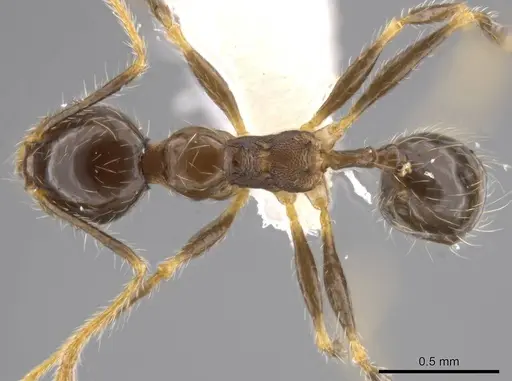
CASENT0613012
View on AntWeb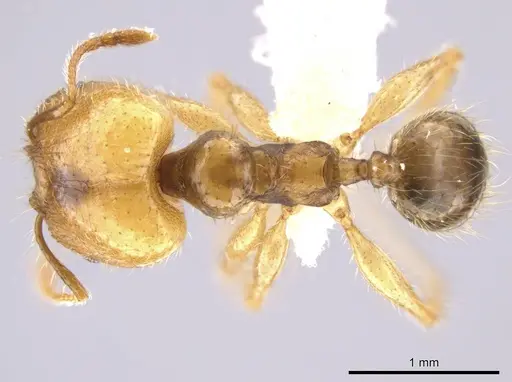
CASENT0635460
View on AntWeb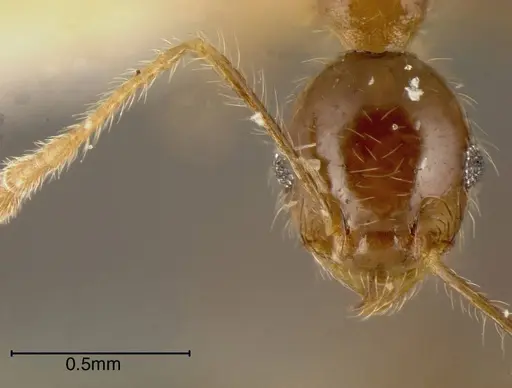
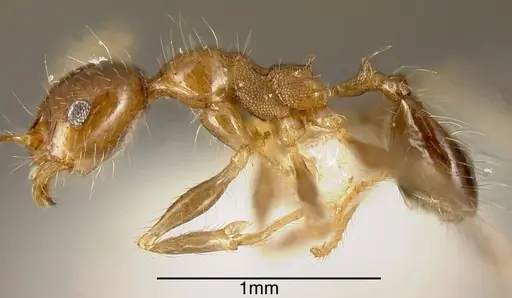
INBIOCRI002279458
View on AntWeb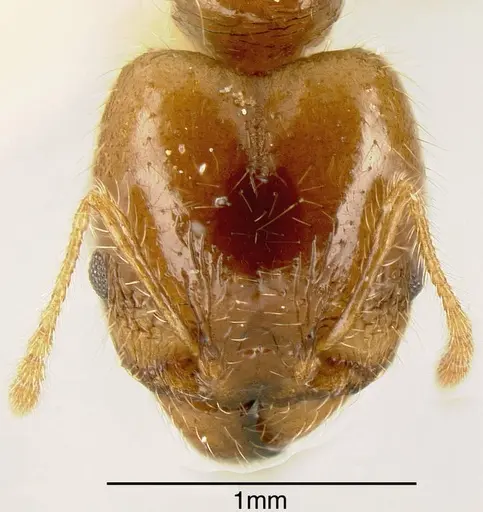
Literature
Loading distribution map...Loading products...