
Pheidole cyrtostela
- Sci. Name
- Pheidole cyrtostela
- Tribe
- Attini
- Subfamily
- Myrmicinae
- Author
- Wilson, 2003
- Distribution
- Found in 2 countries
Introduction
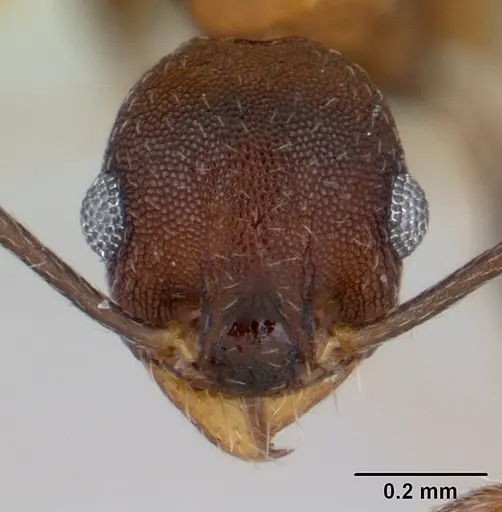
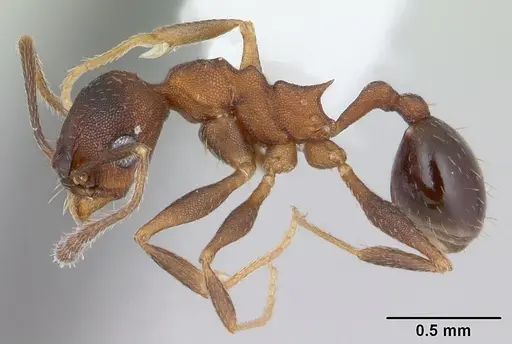
Pheidole cyrtostela is a small Neotropical ant described by Wilson in 2003 . It is native to grazed cerrado habitats in Brazil, Paraguay, and northern Argentina . Workers exhibit polymorphism with majors having enlarged heads for seed-cracking and minors handling foraging and brood care. The species is distinguished by a sharply bent petiole . Body color is medium yellow with a brown gaster .
Quick Summary
- Difficulty: Medium
- Origin & Habitat: Native to Neotropical region: Argentina, Brazil, Paraguay, found in grazed cerrado habitats [1][2].
- Colony Type: Colony structure is unconfirmed for this species, but Pheidole colonies are typically monogyne with major and minor worker castes.
- Size & Growth:
- Queen: Size data unavailable, no queen measurements exist.
- Worker: Size data unavailable, no total length measurements exist, inferred from Pheidole genus that workers are small, approximately 2-4 mm.
- Colony: Unknown, no colony size data exists.
- Growth: Unknown, no development data exists.
- Development: Unknown, no direct measurements exist. (Development timeline is estimated from genus-level data since no species-specific research exists.)
- Antkeeping:
- Temperature: Keep warm, around 24-28°C, as this species comes from tropical savannas [2][1].
- Humidity: Provide a humidity gradient, mostly dry nest chamber with one small moist area, as they nest in seasonally dry habitats [1].
- Diapause: No, as a Neotropical species, they do not require hibernation [1].
- Nesting: Soil-nesting species, in captivity, use naturalistic setups with compact earth or Y-tong/plaster nests [1].
- Behavior: Workers are ground-foraging and attracted to bait. Majors can deliver a mild sting, typical of Myrmicinae. Escape risk is high due to small size, ensure barriers are adequate.
- Common Issues: small size increases escape risk if barriers are inadequate, temperature needs are estimated, incorrect temperatures may slow development, limited documentation means care is based on genus patterns, which may not be accurate
Nest Preferences and Housing
Pheidole cyrtostela is a soil-nesting species [1]. In captivity, use naturalistic setups with compact soil or Y-tong/plaster nests. Provide tight chambers scaled to their small size. Escape prevention is critical due to their small size [1].
Feeding and Diet
Pheidole ants are primarily granivorous [1]. Offer small seeds like millet, and protein sources like insects. Major workers crack seeds, while minors forage.
Temperature and Seasonal Care
This species is from warm tropical savannas [2][1]. Keep at 24-28°C with a gradient. No diapause needed.
Colony Structure and Castes
Pheidole colonies have major and minor worker castes [1]. The species has a unique bent petiole [1]. Colony structure is likely monogyne, but unconfirmed.
Frequently Asked Questions
How long does it take for Pheidole cyrtostela to produce first workers?
The exact timeline is unknown since no development studies exist for this species. Based on related Neotropical Pheidole species, expect first workers around 6-10 weeks after queen lays eggs, assuming warm temperatures around 24-28°C. Be patient, this species may grow slowly.
Can I keep multiple Pheidole cyrtostela queens together?
Not recommended. While some Pheidole species can be polygynous, there is no data on this species. Combining unrelated foundress queens carries high risk of fighting and colony failure. Start with a single queen for best success.
What do Pheidole cyrtostela ants eat?
They are primarily seed-eaters like most Pheidole. Offer small seeds that majors can crack open. They also accept protein like small insects and sugar sources. Seeds should be constantly available, protein 2-3 times weekly [1].
Are Pheidole cyrtostela good for beginners?
This species is rated as medium difficulty. While not the most challenging ant, there is very limited specific care information since it was only described in 2003. Expect some trial and error.
What temperature do Pheidole cyrtostela need?
Keep them warm at 24-28°C. This is a Neotropical species from Brazil and Paraguay where temperatures are consistently warm [2][1].
How big do Pheidole cyrtostela colonies get?
The maximum colony size is unknown, no colony size data exists for this species. Based on typical Pheidole patterns, expect several hundred workers at maturity.
Do Pheidole cyrtostela need hibernation?
No. As a Neotropical species from tropical Brazil and Paraguay, they do not experience cold winters that would require diapause [1].
When should I move Pheidole cyrtostela to a formicarium?
Keep them in a founding setup until the colony reaches at least 20-30 workers. Once established, move to a proper formicarium with a foraging area. Ensure connections are not too large for their small size.
Why is my Pheidole cyrtostela colony not growing?
Several factors could be involved: temperatures below 24°C slow development, insufficient protein limits brood production, or the colony may be too young. Since this species has limited documentation, growth may naturally be slower.
Report an Issue
The current care sheet is based fully on literature. See inconsistencies, or something that's incorrect? Please , it will be resolved after review from an admin. Contributing to the blogs tab also helps providing information, to make us be able to further improve the caresheets. Thank you for your support!
References

This caresheet is licensed under CC BY-SA 4.0 .
Community Blogs
CASENT0178014
View on AntWeb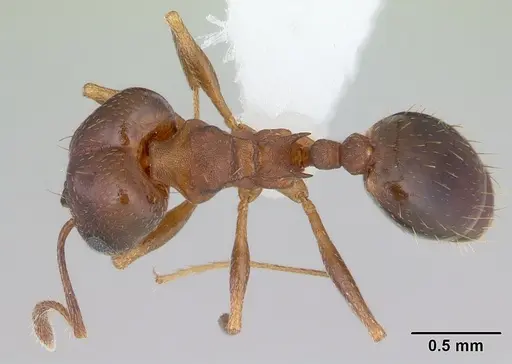
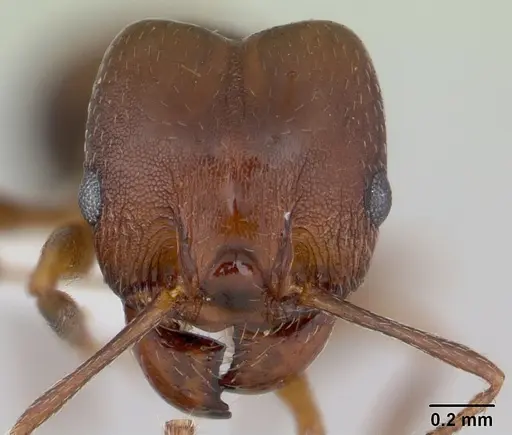
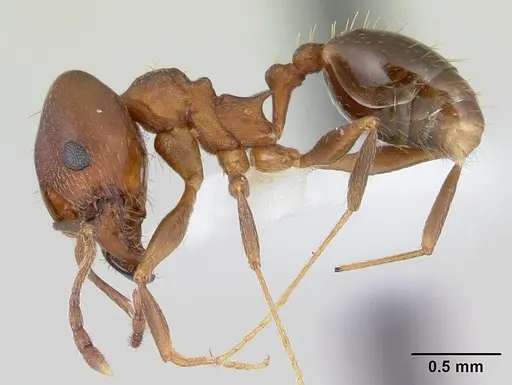
CASENT0178015
View on AntWeb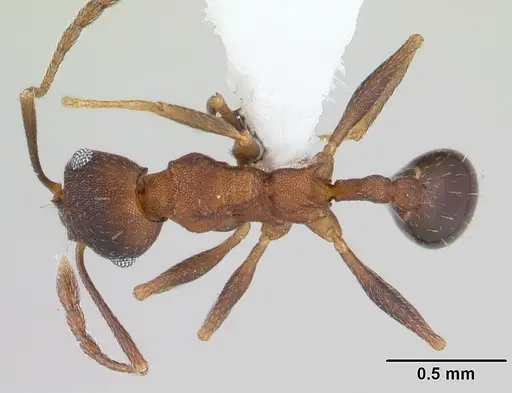
Literature
Loading distribution map...Loading products...