
Pheidole coveri
- Sci. Name
- Pheidole coveri
- Tribe
- Attini
- Subfamily
- Myrmicinae
- Author
- Wilson, 2003
- Distribution
- Found in 1 countries
Introduction
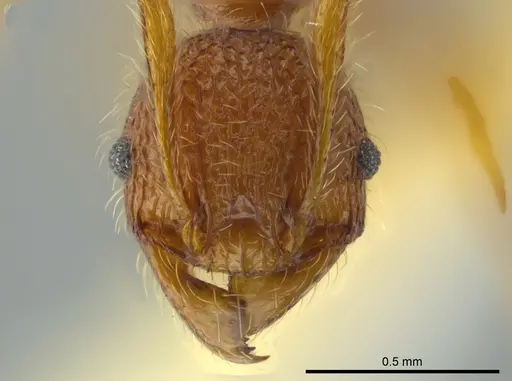
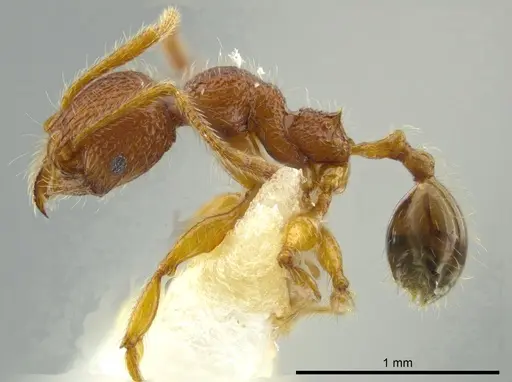
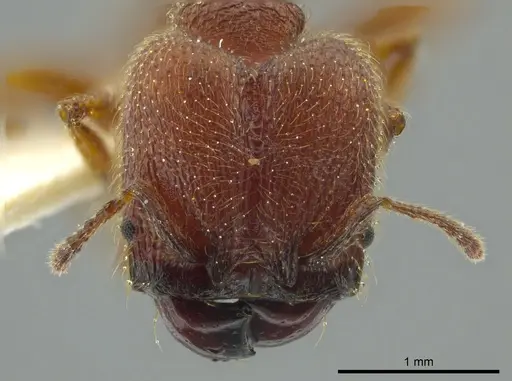
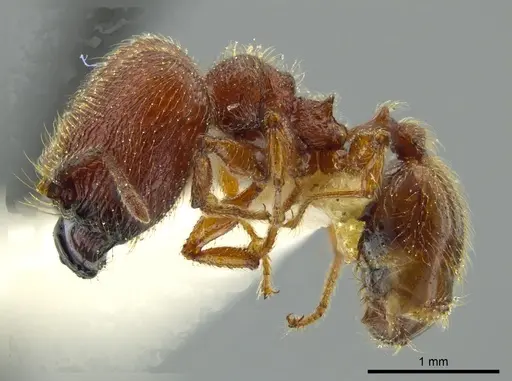
Pheidole coveri is a small big-headed ant native to Trinidad and Venezuela . Majors have enlarged reddish-orange heads and bodies, while minors are smaller and yellowish with a darker brown abdomen . This species was described in 2003 and named after Stefan Cover . Majors are highly specialized seed millers with powerful head muscles for cracking seeds . In the wild, colonies nest in rotten sticks on the forest floor in montane rainforest areas, typically containing fewer than 200 workers and a single queen .
Quick Summary
- Difficulty: Easy
- Origin & Habitat: Trinidad and Venezuela, found in montane rainforest at around 550m elevation [1].
- Colony Type: Single-queen (monogyne) colonies with majors specialized as seed millers [1].
- Size & Growth:
- Queen: size data unavailable
- Worker: size data unavailable
- Colony: Up to 200 workers [1]
- Growth: Moderate, inferred from Pheidole genus patterns
- Development: Estimated 6-8 weeks at tropical temperatures (Development time is inferred from genus patterns, direct measurements not available for this species)
- Antkeeping:
- Temperature: Keep around 24-28°C, based on their tropical origin [1]
- Humidity: High humidity, keep nest substrate consistently moist but not waterlogged, mimicking their damp forest habitat [1]
- Diapause: No, as a tropical species they do not require hibernation [1]
- Nesting: Best kept in a naturalistic setup with rotten wood or a Y-tong/plaster nest, providing damp substrate with wood material [1]
- Behavior: This is a peaceful species with a sting, but they are not aggressive. Minors handle defense while majors avoid combat, hiding inside the nest as they are specialized for seed milling. They are granivorous and store seeds in their nest. Foragers are active collecting seeds and small prey. Escape risk is moderate due to small size, use standard escape prevention [1].
- Common Issues: high humidity needs can lead to mold if ventilation is poor., tropical species cannot tolerate cool temperatures, keep warm year-round., wild-caught colonies may have parasites that affect survival in captivity.
Housing and Nest Setup
Pheidole coveri does well in a naturalistic setup that mimics its natural habitat in rotting sticks on the rainforest floor. A Y-tong nest or plaster nest with chambers works well, the chambers should be appropriately scaled to their small size. Keep the nest substrate consistently moist but not waterlogged. Because they come from damp forest environments, some keepers add a small water reservoir or moisture gradient. Provide an outworld for foraging with easy access to both nest and feeding areas. Standard escape prevention is sufficient, they are small but not particularly agile climbers [1].
Feeding and Diet
As a Pheidole species, these ants are primarily granivorous, they collect and process seeds. In captivity, offer a variety of seeds (grass seeds, millet, poppy seeds) that majors can crack open with their specialized head muscles. They also accept small insects and protein sources. One wild colony was found with a seed cache, confirming their seed-storing behavior [1]. Offer seeds constantly and protein (small crickets, mealworms) once or twice weekly. Sugar water or honey can be offered occasionally but is not a primary food source for this species.
Temperature and Humidity
Being from tropical Trinidad, Pheidole coveri needs warm and humid conditions. Keep temperatures in the 24-28°C range, room temperature is often suitable if your home is in this range. Avoid temperatures below 22°C as this species is not adapted to cool conditions. Humidity should be high to match their montane rainforest origin. The nest substrate should feel damp to the touch. A small water reservoir connected to the nest helps maintain humidity. Avoid placing the colony near air conditioning vents or in drafty areas [1].
Colony Dynamics and Behavior
Colonies are relatively small, with wild colonies containing fewer than 200 workers [1]. The colony structure includes minors (foragers and defenders) and majors (specialized seed millers). When fire ants approached the nest, the minor workers defended while majors hid inside, this reflects their specialized role for seed milling, not cowardice [1]. The single queen is the sole reproductive, and colonies remain modest in size. This peaceful temperament makes them easy to handle.
Frequently Asked Questions
How long does it take for Pheidole coveri to produce first workers?
Based on typical Pheidole development, expect first workers in about 6-8 weeks at optimal tropical temperatures (24-28°C) [1]. This is an estimate since the exact development timeline has not been directly studied for this species.
Can I keep multiple Pheidole coveri queens together?
No, this species is monogyne (single queen) in the wild. Multiple unrelated queens will fight. Only keep one queen per colony [1].
What do Pheidole coveri eat?
They are primarily seed-eaters. Offer various small seeds (grass seeds, millet, poppy seeds) that majors can mill. They also accept small insects and protein sources. One wild colony had a seed cache, confirming their granivorous habits [1].
Are Pheidole coveri good for beginners?
Yes, this is an easy species to keep. They are peaceful, stay relatively small, and have straightforward care requirements. The main requirements are warm temperatures and high humidity to match their tropical rainforest origin [1].
How big do Pheidole coveri colonies get?
Wild colonies contain fewer than 200 workers. In captivity, colonies may grow slightly larger but will likely stay under 300-400 workers. This is a small to moderate-sized colony for a Pheidole species [1].
Do Pheidole coveri need hibernation?
No, being a tropical species from Trinidad, they do not require hibernation or winter cooling. Keep them warm year-round at 24-28°C [1].
Why do the majors hide when the nest is disturbed?
This is normal behavior. Majors are highly specialized seed millers with enlarged heads packed with muscles for cracking seeds, they are not fighters. In the wild, minors handle defense while majors focus on food processing. This is adaptation, not cowardice [1].
What is the best nest type for Pheidole coveri?
A Y-tong nest or plaster nest with appropriately sized chambers works well. They naturally nest in rotting sticks, so some wood material or textured surfaces in the nest chamber is appreciated. Keep the nest moist but not wet [1].
Report an Issue
The current care sheet is based fully on literature. See inconsistencies, or something that's incorrect? Please , it will be resolved after review from an admin. Contributing to the blogs tab also helps providing information, to make us be able to further improve the caresheets. Thank you for your support!
References

This caresheet is licensed under CC BY-SA 4.0 .
Community Blogs
CASENT0627918
View on AntWeb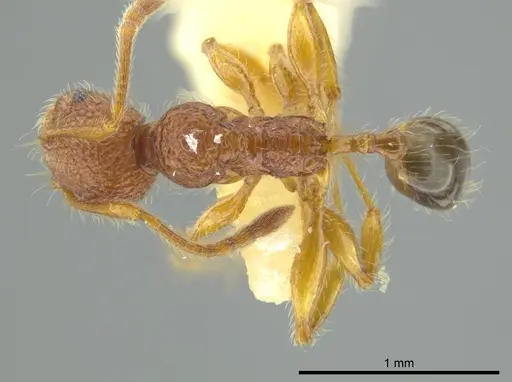
JTLC000016351
View on AntWeb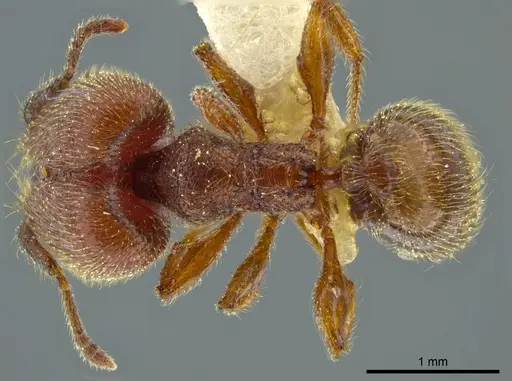
Literature
Loading distribution map...Loading products...