
Pheidole corticicola
- Sci. Name
- Pheidole corticicola
- Tribe
- Attini
- Subfamily
- Myrmicinae
- Author
- Santschi, 1910
- Distribution
- Found in 1 countries
Introduction
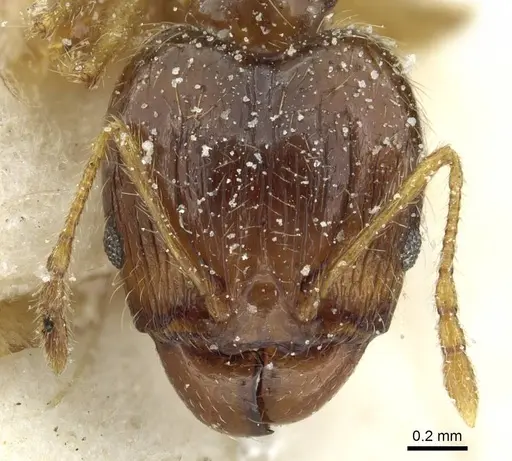
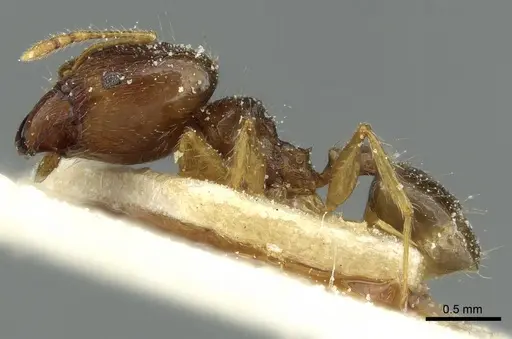
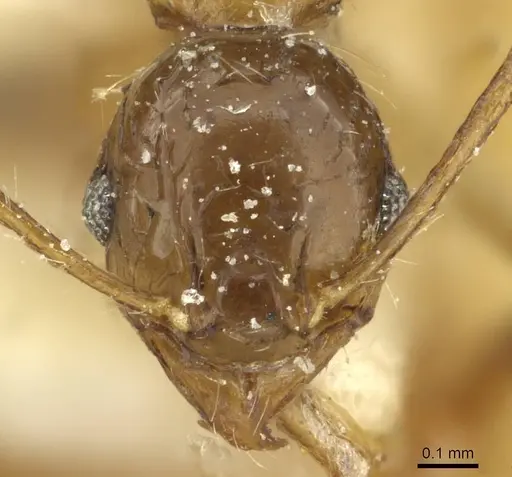
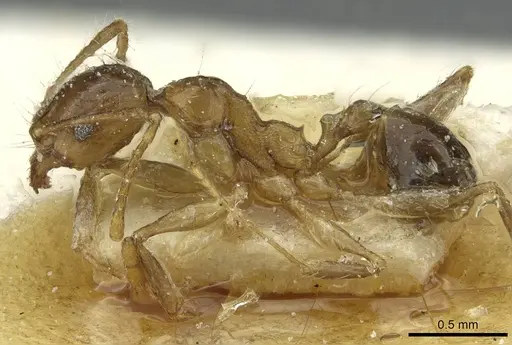
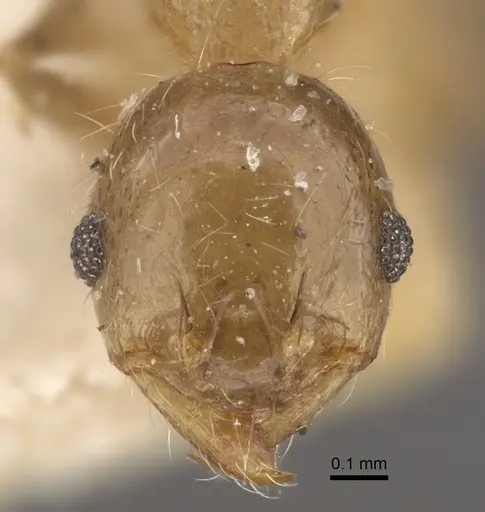
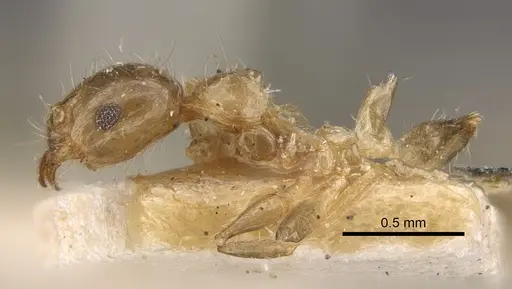
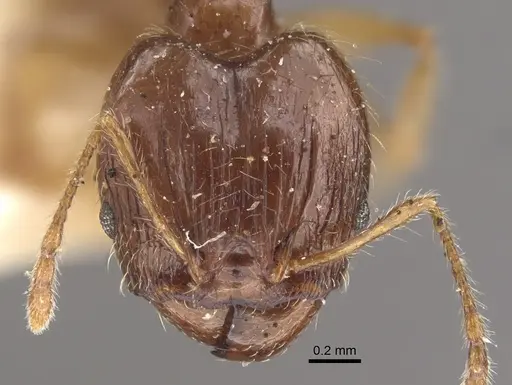
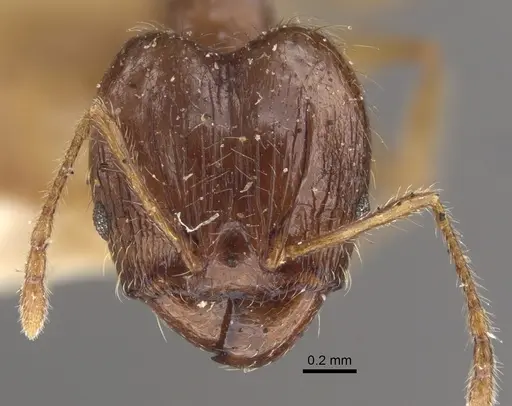
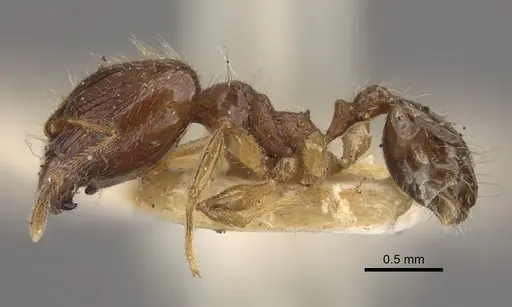
Pheidole corticicola is a small African ant species native to West and Central Africa. Workers come in two sizes: minor workers are tiny, while major workers have enlarged heads used for seed processing and colony defense . The species was described in 1910 and raised to full species status in 1937 . It is found in Benin, Congo, Democratic Republic of Congo, Guinea, Ivory Coast, and Gabon, foraging on the ground and on trees like Terminalia laxiflora and mango . This species exhibits classic Pheidole dimorphism with distinct minor and major workers. They are ground-nesting and tree-foraging, showing flexibility in habitat use.
Quick Summary
- Difficulty: Easy
- Origin & Habitat: West and Central Africa, including Benin, Congo, Democratic Republic of Congo, Guinea, Ivory Coast, and Gabon. Forages on Terminalia laxiflora and mango trees [1][2].
- Colony Type: Unconfirmed, typical for Pheidole species, but not specified in literature.
- Size & Growth:
- Queen: Size data unavailable, no total length measurements found in literature.
- Worker: Minors: 2-3mm, Majors: 4-5mm [1]
- Colony: Up to 500 workers (estimated from genus patterns)
- Growth: Moderate
- Development: Estimated 6-8 weeks at warm temperatures based on genus patterns (Development is faster in warm conditions. First workers are minor workers.)
- Antkeeping:
- Temperature: Keep warm, roughly 24-28°C, based on tropical habitat. No specific data, so maintain stable warmth.
- Humidity: Keep nest substrate consistently moist but not waterlogged. Provide a humidity gradient [1].
- Diapause: No, tropical species does not require hibernation.
- Nesting: Test tube setup works well for founding colonies. For established colonies, Y-tong or plaster nests with small chambers suit their size [1].
- Behavior: Generally peaceful but will defend the nest aggressively using major workers. Foragers are active and recruit nestmates to food sources. Minor workers handle foraging and brood care, while majors defend the colony. They have a moderate escape risk due to their small size, use fine mesh barriers and tight-fitting lids [1].
- Common Issues: escape prevention is critical due to their small size, use fine mesh barriers., colonies can stall if temperatures drop below 24°C consistently., overfeeding can lead to mold problems in the nest., test tube setups can flood if water reservoirs are overfilled., wild-caught colonies may carry parasites that cause colony collapse.
Nest Preferences
Pheidole corticicola naturally nests in soil, often under stones or in decaying wood in tropical habitats. In captivity, they do well in test tube setups for founding colonies. For established colonies, Y-tong nests or plaster nests with appropriately sized chambers work well. Keep the nest humid but ensure some dry areas exist so ants can self-regulate moisture [1].
Feeding and Diet
Pheidole species are omnivorous with a preference for seeds and protein. Offer seeds like millet or chia, protein sources like small insects, and sugar sources like honey water. Remove uneaten food within 24-48 hours to prevent mold [1].
Temperature and Care
As a tropical African species, Pheidole corticicola requires warm conditions. Keep the nest area at roughly 24-28°C for optimal brood development. Use a heating cable on one side to create a gradient if needed. No hibernation is required.
Behavior and Temperament
These ants are generally calm but defend their nest vigorously using major workers. Minor workers handle foraging and brood care. Foraging activity is moderate, and they establish trails to food sources. Their small size means escape-proof setups with fine mesh barriers are essential [1].
Colony Growth and Development
A newly mated queen may seal herself in a chamber and lay eggs. The first brood develops from her reserves. After 6-8 weeks at warm temperatures, first workers (minor workers) emerge. Major workers appear once the colony is established. Growth is moderate, reaching up to 500 workers.
Frequently Asked Questions
How long does it take for Pheidole corticicola to produce first workers?
At warm temperatures, expect first workers in 6-8 weeks. The queen raises the first brood alone.
What do Pheidole corticicola ants eat?
They are omnivorous. Offer seeds, protein like small insects, and sugar sources. Remove uneaten food to prevent mold [1].
Do Pheidole corticicola ants need hibernation?
No. As a tropical species, they do not require hibernation.
Are Pheidole corticicola good for beginners?
Yes, they are relatively easy to care for. Main concerns are their small size and escape risk [1].
How big do Pheidole corticicola colonies get?
Colonies can reach up to 500 workers, estimated from genus patterns.
Can I keep multiple Pheidole corticicola queens together?
This species is likely monogyne, but not confirmed. Combining queens may result in fighting.
What temperature do Pheidole corticicola need?
Keep them warm, roughly 24-28°C, based on their tropical habitat.
When should I move my colony to a formicarium?
Move them when the test tube becomes crowded or water runs low, typically around 50-100 workers. Ensure chambers are appropriately sized [1].
Why are my Pheidole corticicola dying?
Common causes include low temperatures, mold from overfeeding, flooding, or escapes. Check these factors and adjust accordingly.
Report an Issue
The current care sheet is based fully on literature. See inconsistencies, or something that's incorrect? Please , it will be resolved after review from an admin. Contributing to the blogs tab also helps providing information, to make us be able to further improve the caresheets. Thank you for your support!
References

This caresheet is licensed under CC BY-SA 4.0 .
Community Blogs
CASENT0913294
View on AntWeb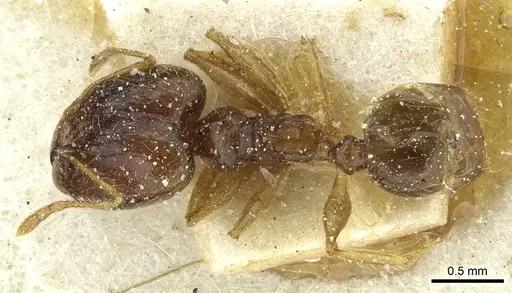
CASENT0913295
View on AntWeb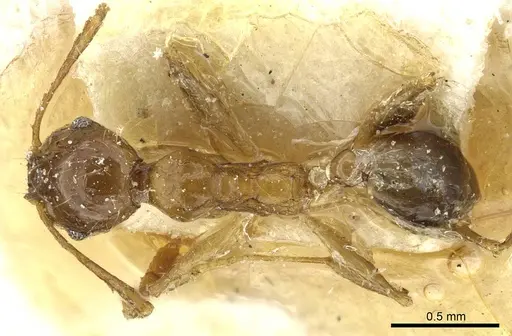
CASENT0917776
View on AntWeb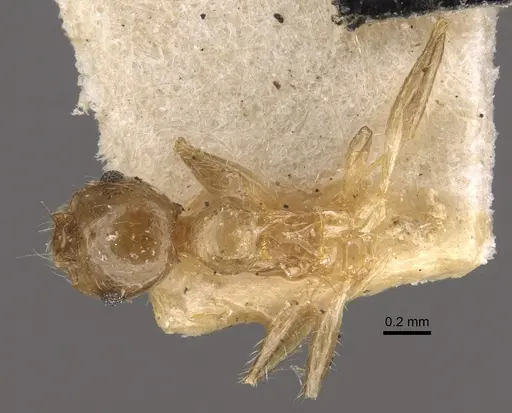
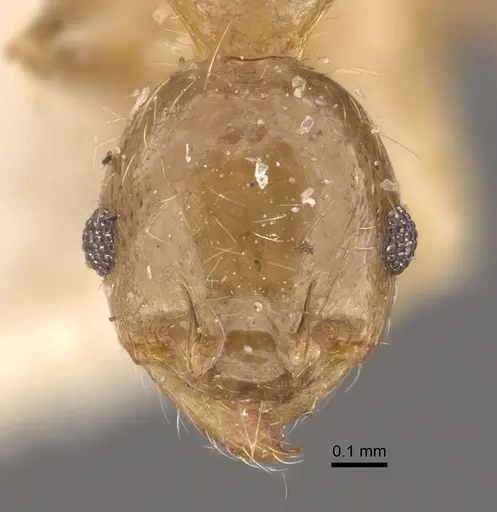
CASENT0917777
View on AntWeb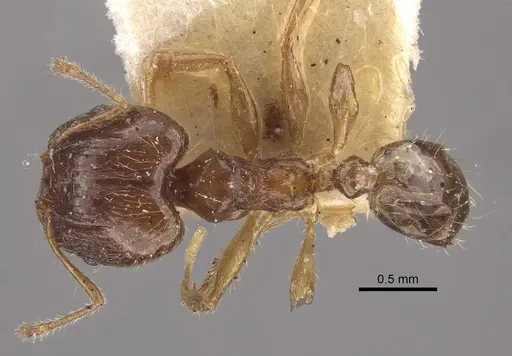
Literature
Loading distribution map...Loading products...