
Pheidole coffeicola
- Sci. Name
- Pheidole coffeicola
- Tribe
- Attini
- Subfamily
- Myrmicinae
- Author
- Borgmeier, 1934
- Distribution
- Found in 1 countries
Introduction
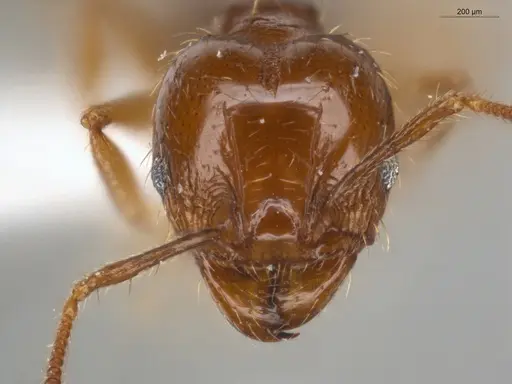
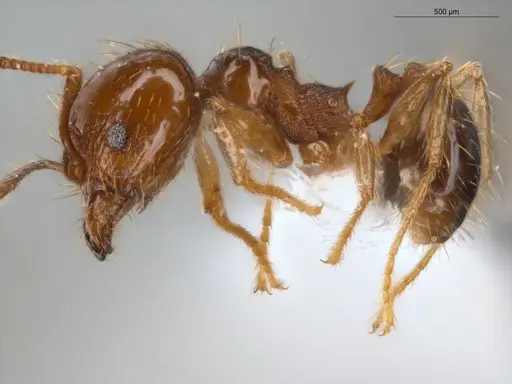
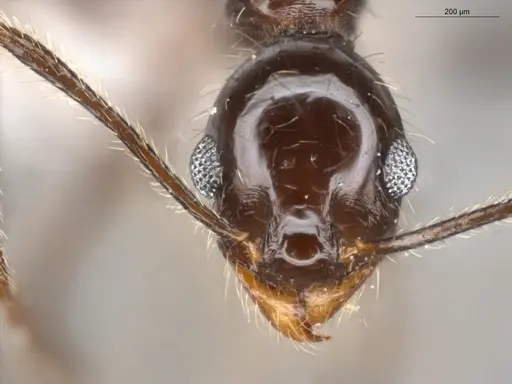
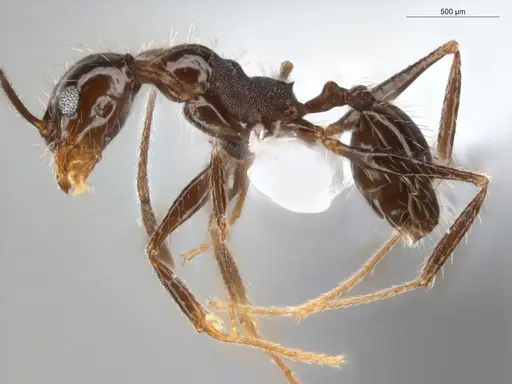
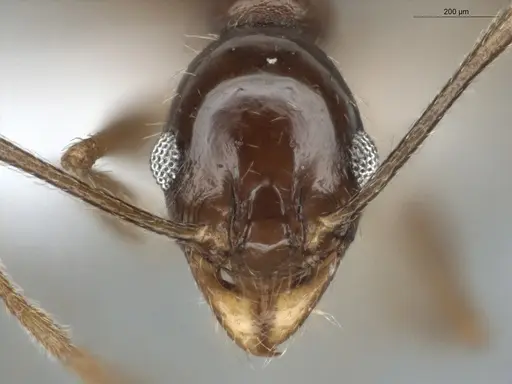
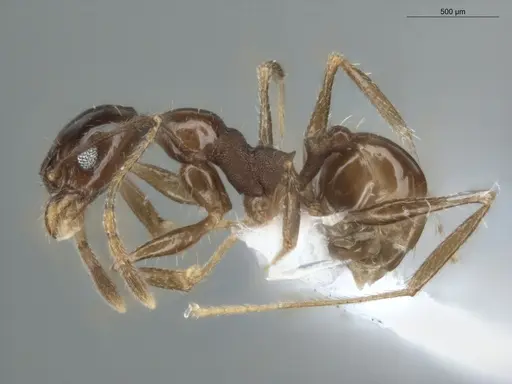
These ants are dark yellow all over, with two distinct worker sizes . The major workers have a distinctive angular shoulder and a shorter second waist segment compared to similar species, while the minor workers are tiny with short hairs that lie flat against their body and no standing hairs . They come from Suriname and Brazil in the Neotropical region . Their name means 'living with coffee' because scientists first found them in a coffee plantation in Paramaribo, Suriname . They look very similar to Pheidole pubiventris and P. variegata, but you can tell them apart by the major's angular shoulder and the pattern of ridges on the head . This species is extremely poorly studied, so nearly all care advice is inferred from related Pheidole rather than confirmed.
Quick Summary
- Difficulty: Hard
- Origin & Habitat: Suriname and Pará, Brazil, collected from coffee plantations and tropical forests [1]
- Colony Type: Likely single-queen based on typical Pheidole patterns, though unconfirmed for this species
- Size & Growth:
- Queen: size data unavailable
- Worker: size data unavailable, majors estimated ~4-5mm and minors ~2-3mm from genus patterns (inferred)
- Colony: Unknown, likely several hundred to low thousands based on genus patterns (inferred)
- Growth: Likely moderate to fast for a tropical species (inferred)
- Development: Likely 6-10 weeks at 25-28°C based on tropical Pheidole patterns (inferred) (Timing is unconfirmed, tropical Pheidole typically develop faster at warmer temperatures)
- Antkeeping:
- Temperature: Keep warm and stable around 24-28°C. This is an estimate based on their tropical origin [1].
- Humidity: Keep nest material moist but not waterlogged. Provide a humidity gradient with a moist area and a slightly drier area.
- Diapause: Likely not required. As a tropical species, they probably remain active year-round, though this is unconfirmed [1].
- Nesting: Likely nests in soil or rotting wood in nature [1]. In captivity, use test tubes for founding, then move to a small formicarium with tight-fitting chambers scaled to their size.
- Behavior: They show the classic Pheidole two-caste system. Major workers have massive heads for crushing food and defense, while smaller minor workers handle foraging and brood care. Minors are extremely small and can squeeze through tiny gaps, so escape prevention is critical. They have a functional stinger (typical of Myrmicinae), but the sting is mild and not medically significant.
- Common Issues: minors are tiny and can escape through very small gaps in mesh or lids, so use fine mesh (under 0.5mm) and secure all openings., easily confused with Pheidole pubiventris and P. variegata, which may require different care parameters, verify locality., lack of specific biological data means you must observe carefully and adjust care based on colony response rather than strict guidelines.
Nest Preferences
In nature, Pheidole coffeicola was found living in a coffee plantation in Suriname, probably nesting in soil or rotting wood [1]. For captive colonies, start new queens in standard test tube setups with a water reservoir blocked by cotton. Once the colony outgrows the tube, move them to a small formicarium. Because the minor workers are extremely small, you must use a nest with very tight seams and no gaps. Y-tong (aerated concrete) or plaster nests work well, but ensure all entrances are smaller than 0.5mm to prevent escapes. Provide a simple outworld with a barrier of Fluon or baby powder mixed with alcohol on the upper walls.
Feeding and Diet
While no one has specifically studied what Pheidole coffeicola eats in the wild, Pheidole ants are generally omnivorous. Based on typical genus patterns, offer a mix of protein and carbohydrates. Provide small live prey like fruit flies, springtails, or tiny pieces of mealworm for the majors to process. Minors will drink sugar water or diluted honey. You can also offer small seeds, as many Pheidole species harvest and store seeds. Remove uneaten food within 24 hours to prevent mold in the humid conditions they prefer.
Temperature and Care
Keep your colony warm and stable. As a tropical species from Suriname and Brazil, they likely need temperatures around 24-28°C [1]. Use a heating cable or heat mat on one side of the nest to create a gentle gradient, but place the heat source on top or side rather than underneath to prevent condensation flooding. If you cannot provide constant warmth, room temperature around 20-23°C may work but will likely slow development significantly. Humidity should be moderate to high, keep the nest material damp but not soaking wet. You likely do not need to hibernate this species, but if the colony slows down in winter, simply reduce feeding and keep them at room temperature rather than chilling them.
Behavior and Temperament
Like all Pheidole species, Pheidole coffeicola has a division of labor between major and minor workers. The majors act as soldiers with their massive heads, blocking nest entrances and crushing hard food items. The minors are the foragers and nursemaids. Minors are extremely small and are excellent escape artists. They have a functional stinger (typical of Myrmicinae) that can inject mild venom, but it is not painful or medically significant to humans. The colony will probably be shy at first, hiding when the nest is exposed, but will become more active as they grow.
Identification and Similar Species
Pheidole coffeicola looks almost identical to Pheidole pubiventris (also called P. variegata), but you can tell them apart by looking closely at the major workers [1]. P. coffeicola majors have a more angular, protruding shoulder (humerus) and a shorter second waist segment (postpetiole) [1]. The head of P. coffeicola also has less extensive wrinkling (rugoreticulum) on the sides [1]. The minor workers have short flat-lying hairs and no standing hairs, which helps distinguish them from similar species [1]. If you are buying a colony, verify the collection location, P. coffeicola comes from Suriname and Brazil, while lookalikes may come from different regions.
Frequently Asked Questions
Can I keep Pheidole coffeicola in a test tube?
Yes, test tubes work perfectly for founding colonies. Use a standard setup with water blocked by cotton. Move them out when the colony outgrows the tube or when it becomes too crowded.
How long until first workers for Pheidole coffeicola?
The exact timeline is unknown, but based on tropical Pheidole patterns, expect first workers in roughly 6-10 weeks at 25-28°C. Cooler temperatures will slow this down significantly.
Can I keep multiple Pheidole coffeicola queens together?
Not recommended. While unconfirmed for this species, most Pheidole are monogyne (single-queen). Combining multiple queens usually results in fighting and death. Start with one queen per colony.
What do Pheidole coffeicola eat?
They likely eat a mix of small insects, seeds, and sugar sources. Offer fruit flies, springtails, tiny mealworm pieces, and sugar water or honey. Remove uneaten food quickly to prevent mold.
Do Pheidole coffeicola need hibernation?
Probably not. They come from tropical Suriname and Brazil where temperatures stay warm year-round [1]. If your colony slows down in winter, simply reduce feeding and maintain room temperature. Do not put them in a refrigerator.
Are Pheidole coffeicola good for beginners?
Probably not ideal for complete beginners. While Pheidole are generally hardy, this species is poorly studied and the minor workers are extremely small and prone to escaping. Beginners might do better with a well-documented species like Pheidole navigans or Lasius niger.
How do I identify Pheidole coffeicola vs Pheidole pubiventris?
Look at the major workers. P. coffeicola has a more angular, protruding shoulder and a shorter second waist segment [1]. The minor workers have short flat-lying hairs and no standing hairs [1]. When in doubt, check the collection location, as P. coffeicola is known from Suriname and Brazil [1].
Report an Issue
The current care sheet is based fully on literature. See inconsistencies, or something that's incorrect? Please , it will be resolved after review from an admin. Contributing to the blogs tab also helps providing information, to make us be able to further improve the caresheets. Thank you for your support!
References

This caresheet is licensed under CC BY-SA 4.0 .
Community Blogs
ECOFOG-GAL18-0159-19
View on AntWeb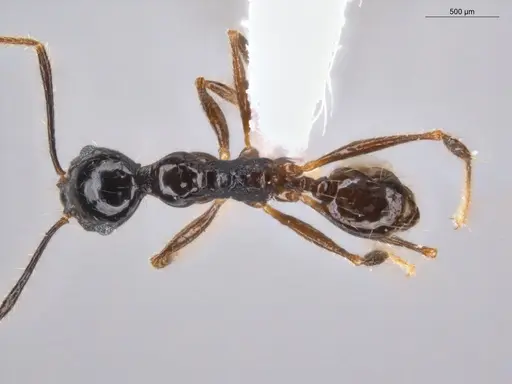
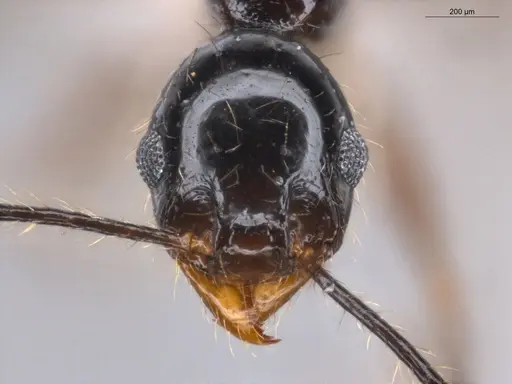
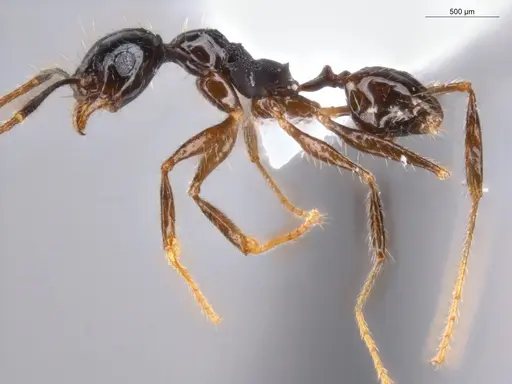
ECOFOG-KR17-0005-08
View on AntWeb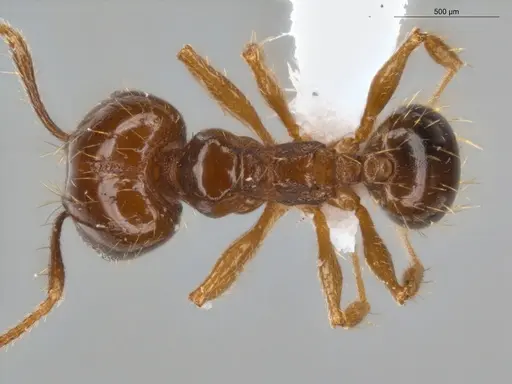
ECOFOG-KR17-0054-06
View on AntWeb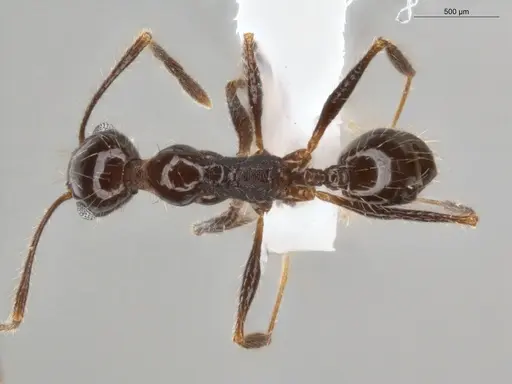
ECOFOG-MI15-0410-06
View on AntWeb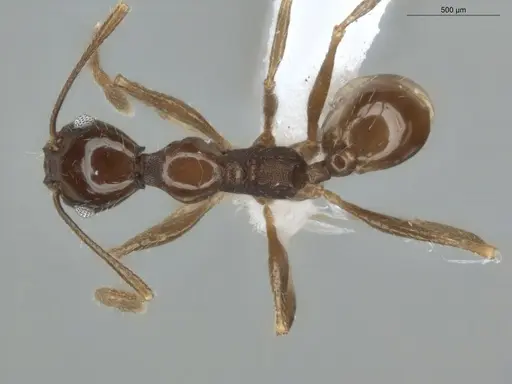
Literature
Loading distribution map...Loading products...