
Pheidole clypeocornis
- Sci. Name
- Pheidole clypeocornis
- Tribe
- Attini
- Subfamily
- Myrmicinae
- Author
- Eguchi, 2001
- Distribution
- Found in 4 countries
Introduction
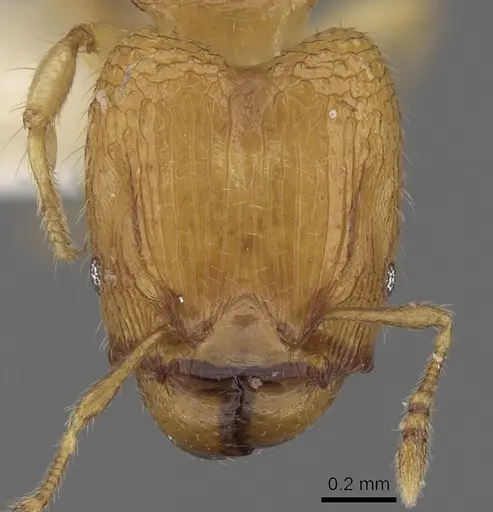
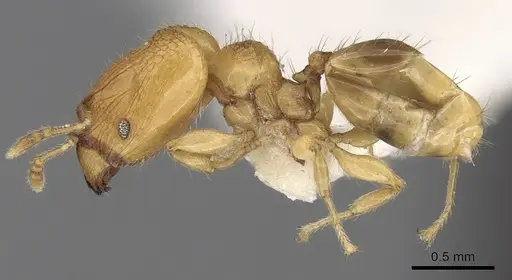
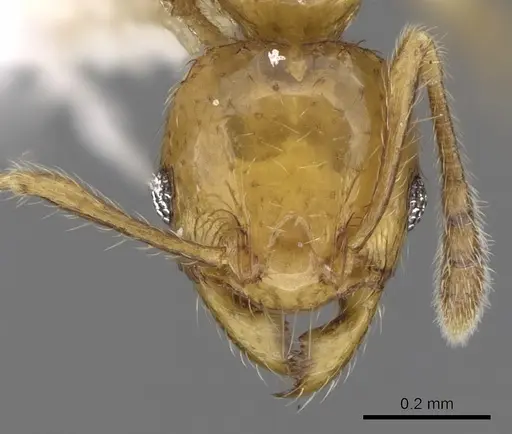
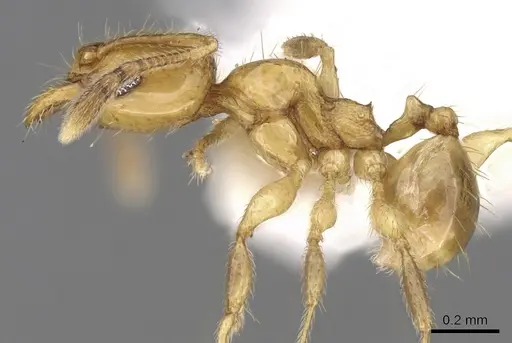
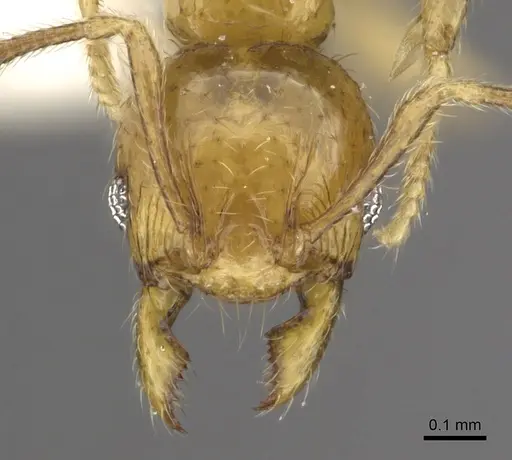
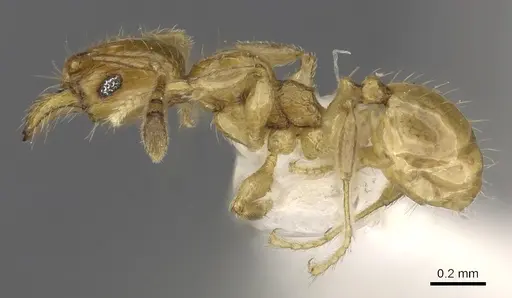
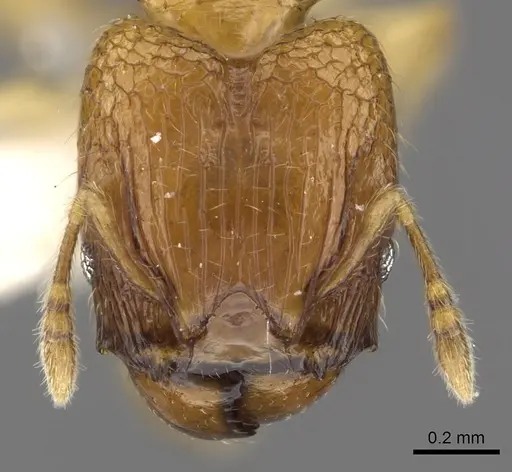
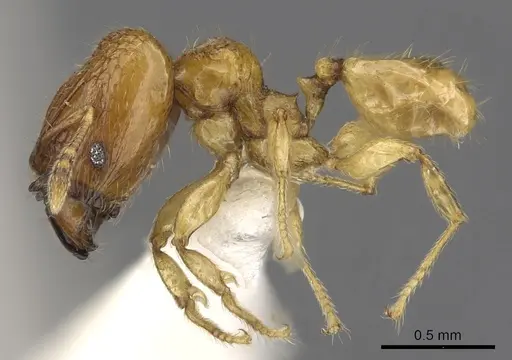
Pheidole clypeocornis is a tiny ant species native to Southeast Asia, with major workers measuring approximately 1.8-2.3 mm in total length . They belong to the P. hortensis group and are found across Borneo, the Philippines, Indonesia, Malaysia, Singapore, and Thailand in lowland dipterocarp rainforests . The species was first described by Eguchi in 2001 and is closely related to Pheidole hortensis, with the key difference being that P. clypeocornis has horn-like projections on the clypeus of major workers . These ants nest in rotting wood and have a unique behavior of storing tiny seeds in their nest, making them one of the few Pheidole species known to cache seeds .
Quick Summary
- Difficulty: Medium
- Origin & Habitat: Native to the Indomalaya region including Borneo, Brunei, Indonesia, Malaysia, the Philippines, Singapore, and Thailand. They live in lowland dipterocarp rainforests, nesting in rotting wood within leaf litter [2][1].
- Colony Type: Unconfirmed, no specific data on colony structure available.
- Size & Growth:
- Queen: Size data unavailable, no total length measurements in literature.
- Worker: Majors: ~1.8-2.3 mm TL [1], minors are smaller.
- Colony: Unknown, no colony size data available.
- Growth: Unknown
- Development: Unknown, no development studies available. (Based on genus patterns, development may take several weeks at tropical temperatures.)
- Antkeeping:
- Temperature: Keep at 24-28°C. As a tropical species from lowland rainforests, they need warm, stable conditions [2].
- Humidity: Keep the nest substrate consistently moist but not waterlogged, as they nest in rotting wood [1].
- Diapause: No, as a tropical species, they do not require hibernation [2].
- Nesting: Provide a nest that mimics rotting wood, such as Y-tong or plaster nests, with small chambers [1].
- Behavior: These are small, docile ants that are not aggressive. They are seed-storing ants, collecting and storing tiny seeds in their nest [1]. Workers forage on the ground and in leaf litter. Because of their very small size, escape prevention must be excellent, use fine mesh and tight-fitting lids [1].
- Common Issues: escape prevention is critical due to their very small size, they can squeeze through tiny gaps [1], high humidity requirements can lead to mold if ventilation is poor, slow growth may cause keepers to overfeed or disturb the colony too often, wild-caught colonies may have parasites that are difficult to detect, rotting wood nesting means the nest material can degrade if kept too wet
Nest Preferences
In the wild, Pheidole clypeocornis nests exclusively in rotting wood within leaf litter in lowland rainforests [1]. This means they need a nest environment that stays consistently moist and provides small cavities. Y-tong nests or plaster nests work well because you can control humidity and size chambers appropriately for their tiny majors at 1.8-2.3 mm TL [1]. Avoid dry, airy nests. The nest material should remain damp but never waterlogged. A humidity chamber or water reservoir connected to the nest helps maintain moisture levels.
Feeding and Diet
Pheidole clypeocornis is a seed-storing species, which is unusual for the genus, they collect and store tiny seeds in their nest rather than just consuming them immediately [1]. This means they likely have a varied diet including seeds and plant matter. For captive care, offer a mix of protein and carbohydrates. Protein sources like small insects (fruit flies, pinhead crickets, mealworms) should be offered regularly. Sugar water, honey, or commercial ant sweets provide carbohydrates. You can also offer tiny seeds, though their acceptance in captivity is unconfirmed. Feed every 2-3 days and remove uneaten food to prevent mold.
Temperature and Care
As a tropical species from Southeast Asian rainforests, Pheidole clypeocornis needs warm conditions year-round. Keep the nest area at 24-28°C. Room temperature may be sufficient if your home stays in this range, otherwise use a heating cable on one side of the nest to create a gentle temperature gradient. Never let temperatures drop below 20°C. Because they come from a stable tropical environment, avoid temperature fluctuations. No hibernation or winter rest is needed, maintain warm conditions throughout the year. The combination of heat and humidity requires good ventilation to prevent mold growth while still retaining moisture. [2]
Behavior and Temperament
These are docile, non-aggressive ants that are well-suited for colony observation. Major workers have distinctive horn-like projections on their clypeus, which makes them visually distinctive among Pheidole species [1]. They are ground-dwelling ants that forage in leaf litter. The seed-storing behavior is particularly interesting, unlike most ants that consume seeds, these ants cache them in their nest [1]. Workers are small but active. They are not known to be dangerous to keepers, but based on their subfamily, they likely have a sting, though no specific studies exist on this species. Their small size means they can escape through very tiny gaps, so use fine mesh on all openings.
Frequently Asked Questions
How long does it take for Pheidole clypeocornis to produce first workers?
The exact timeline is unknown, as no development studies are available. Based on typical Pheidole patterns, expect several weeks at optimal tropical temperatures (24-28°C).
Can I keep multiple Pheidole clypeocornis queens together?
Not recommended, as colony structure is unconfirmed. Pheidole colonies are often single-queen, and combining unrelated queens may lead to fighting. Start with one queen for best results.
What do Pheidole clypeocornis eat?
They accept a varied diet including small insects for protein and sugar sources for energy. They also collect tiny seeds in the wild, you can experiment offering small seeds, though acceptance in captivity is unconfirmed [1].
What is the best nest type for Pheidole clypeocornis?
Y-tong or plaster nests work best. They need small chambers scaled to their tiny size and the nest material must stay consistently moist [1].
Are Pheidole clypeocornis good for beginners?
They are moderate difficulty. Their small size and high humidity requirements make them slightly more challenging than common species. They are rewarding to keep once you understand moisture management.
How big do Pheidole clypeocornis colonies get?
Colony size is unknown, as no data is available. They are not among the large colony-forming Pheidole species.
Do Pheidole clypeocornis need hibernation?
No. As a tropical rainforest species from Southeast Asia, they do not require hibernation. Keep them warm year-round at 24-28°C [2].
Why are my Pheidole clypeocornis escaping?
Their very small size (majors only 1.8-2.3 mm TL) means they can squeeze through tiny gaps. Use fine mesh on all openings, check lid seals regularly, and ensure any tubing connections are secure [1].
When should I move Pheidole clypeocornis to a formicarium?
Keep them in a test tube setup for the founding stage. Once the colony is active and healthy, you can move them to a proper nest. Make sure the new nest is appropriately sized with small chambers.
Report an Issue
The current care sheet is based fully on literature. See inconsistencies, or something that's incorrect? Please , it will be resolved after review from an admin. Contributing to the blogs tab also helps providing information, to make us be able to further improve the caresheets. Thank you for your support!
References

This caresheet is licensed under CC BY-SA 4.0 .
Community Blogs
CASENT0281682
View on AntWeb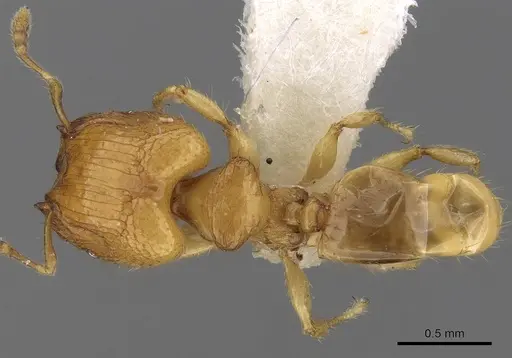
CASENT0281683
View on AntWeb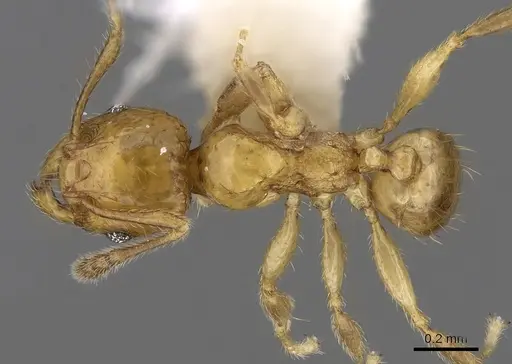
CASENT0901661
View on AntWeb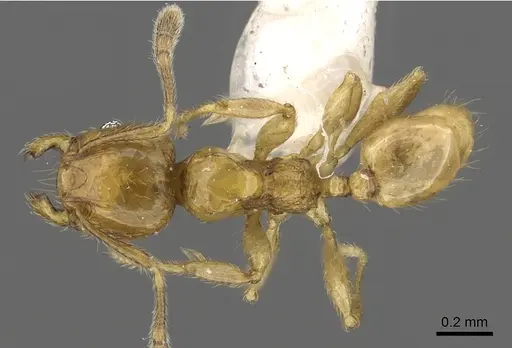
CASENT0901662
View on AntWeb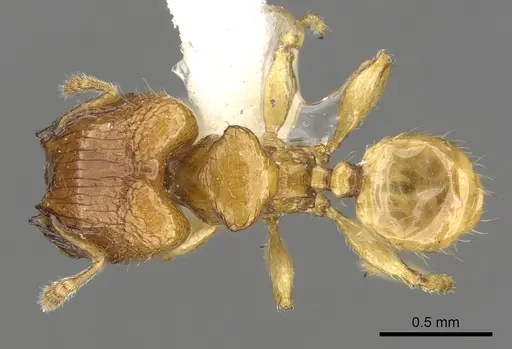
Literature
Loading distribution map...Loading products...