
Pheidole christopherseni
- Sci. Name
- Pheidole christopherseni
- Tribe
- Attini
- Subfamily
- Myrmicinae
- Author
- Forel, 1912
- Distribution
- Found in 5 countries
Introduction
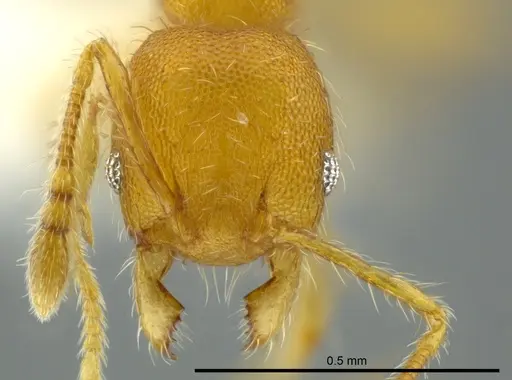
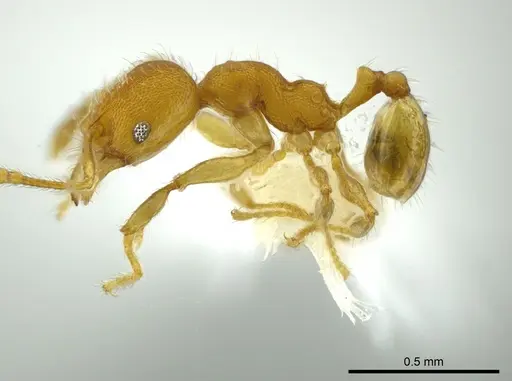
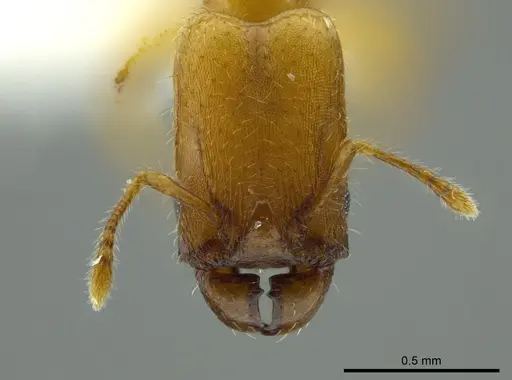
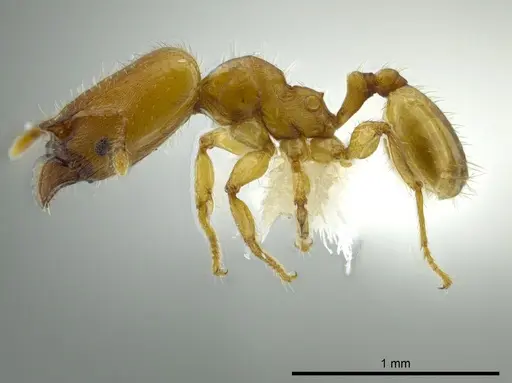
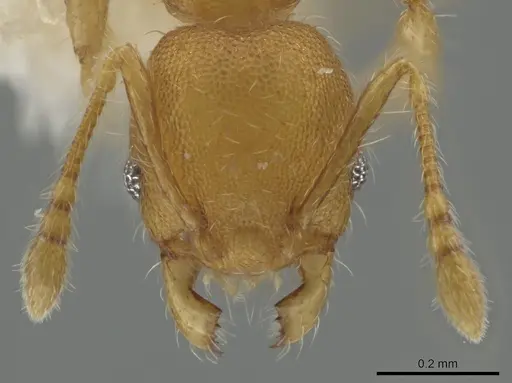
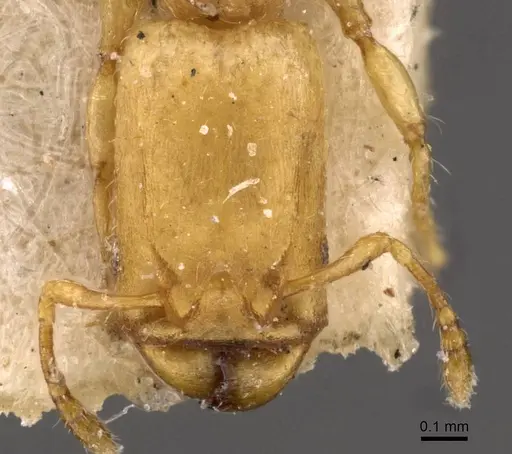
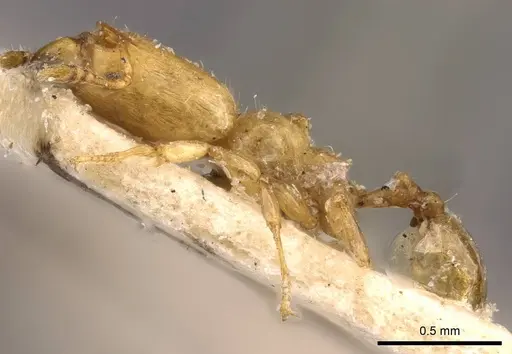
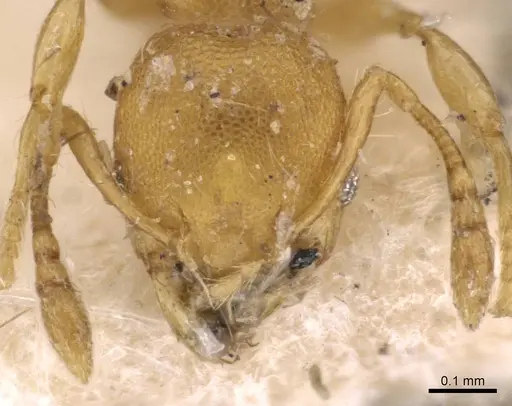
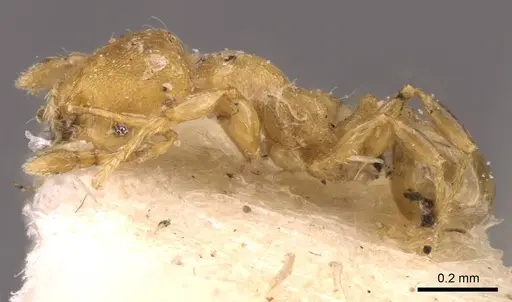
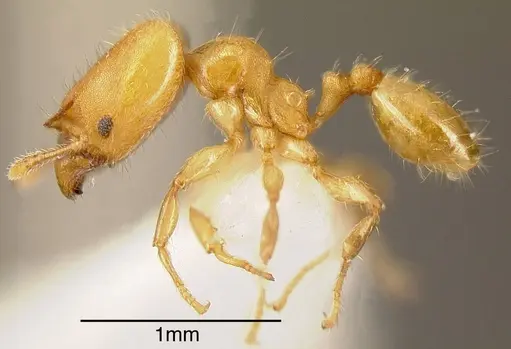
Pheidole christopherseni is one of the smallest Pheidole species. Workers are pale yellow to medium yellow. Majors have a very long, narrow head. This species lives entirely in trees and vines. In the wild, colonies nest inside thin hollow stems of plants like Bauhinia vines, Cecropia saplings, and various lianas . You can find them across the Neotropical region from Mexico through Panama to Colombia, living in rainforest environments up to 600 meters elevation . What makes this species stand out is its extreme specialization to narrow plant stems, which is unusual for ants. Size data is unavailable, but based on Pheidole genus patterns, workers are likely around 2-3 mm and queens around 4-5 mm.
Quick Summary
- Difficulty: Medium
- Origin & Habitat: Neotropical lowlands and mountains up to 600m elevation. Found in rainforest and seasonal dry forest across Mexico, Honduras, Costa Rica, Panama, and Colombia [2][1].
- Colony Type: Single-queen colonies. Like other Pheidole, workers split into two distinct castes: tiny minors that forage and care for brood, and larger majors with elongated heads that defend the nest and process food.
- Size & Growth:
- Queen: ~4-5 mm, inferred from Pheidole genus patterns
- Worker: ~2-3 mm, inferred from Pheidole genus patterns
- Colony: Up to 2000 workers, estimated based on typical Pheidole patterns
- Growth: Moderate
- Development: 6-8 weeks, estimated based on typical Pheidole development at warm temperatures (Small queen size and low fat reserves mean founding may be slower. Queens need protein quickly after first workers emerge.)
- Antkeeping:
- Temperature: Keep warm and stable, roughly 24-28°C. These are tropical ants that do not hibernate [1].
- Humidity: Keep the nest substrate consistently moist but not waterlogged. Provide a humidity gradient with one slightly damp area for drinking and brood care.
- Diapause: No, this is a tropical species that does not require winter diapause [1].
- Nesting: Arboreal specialists prefer tight, vertical chambers that mimic hollow stems. Use narrow test tubes, Y-tong nests, plaster nests, or 3D-printed nests. Avoid large, open chambers.
- Behavior: Majors guard the nest entrance but are too small to harm humans. Workers are active foragers. Their tiny size means escape prevention is critical. Use fine mesh and multiple barrier layers.
- Common Issues: workers escaping through standard barriers due to tiny size, founding queens dying from low fat reserves if protein is not offered early, nest abandonment if chambers are too large or open, mold growth if humidity is too high or food is left too long, slow founding phase causing keepers to overfeed or disturb the queen
Housing and Nest Setup
Pheidole christopherseni needs tight, vertical spaces. In the wild, they live inside thin hollow stems. Use narrow test tubes (10-15mm diameter), Y-tong nests, plaster nests, or 3D-printed nests. Avoid large, open formicaria. Place the nest vertically or at a slight angle. Cover all openings with fine mesh (0.5mm or smaller) and apply fluon to all rim edges. [1]
Feeding and Diet
Like other Pheidole, this species eats both protein and sugar. Offer tiny protein sources like fruit flies, pinhead crickets, or small insect pieces. They also accept sugar water or diluted honey. Feed protein 2-3 times per week for established colonies. Keep a constant sugar source available. Remove uneaten food within 24-48 hours to prevent mold.
Colony Founding
Queens are claustral, meaning they seal themselves inside a chamber and raise the first brood alone [3][4]. Research shows this species has a very low fat-to-mass ratio, so queens have limited energy reserves [3][4]. Offer protein very soon after the first workers emerge. Keep the founding setup in darkness and avoid vibrations. Once workers appear, gradually introduce small food items.
Escape Prevention
These ants are extremely small. Standard ant keeping barriers will fail. Use fine mesh on all openings, apply fluon generously to rim edges, and consider a water or oil moat barrier. Check all connections between the nest and outworld daily. These ants slip through gaps you cannot see with the naked eye.
Frequently Asked Questions
How long does it take for Pheidole christopherseni to produce first workers?
Expect 6-8 weeks at warm temperatures. The queen seals herself in and raises the brood alone [3][4].
Can I keep Pheidole christopherseni in a test tube setup?
Yes. Use narrow tubes (10-15mm diameter) to mimic hollow stems. Pack cotton tightly to prevent escapes.
What do I feed Pheidole christopherseni?
Offer tiny protein sources like fruit flies or pinhead crickets. Provide sugar water or diluted honey. Remove uneaten food within two days.
Are Pheidole christopherseni good for beginners?
Rated Medium difficulty. Their tiny size and high escape risk make them better suited for keepers with some experience.
Do I need to hibernate Pheidole christopherseni?
No. This is a tropical species that does not hibernate. Keep them warm year-round at 24-28°C.
How big do Pheidole christopherseni colonies get?
Based on typical Pheidole patterns, colonies can grow up to 2000 workers over several years.
Why are my founding queen's workers dying?
Some loss during founding is normal. If workers die rapidly, check humidity and temperature. Offer protein early since queens have low fat reserves [3][4].
When should I move my colony to a formicarium?
Wait until the colony has at least 50-100 workers and is actively foraging. Use a setup with narrow chambers.
Can I keep multiple queens together?
No. This species forms single-queen colonies. Queens will fight if placed together.
What's special about the major workers?
Majors have one of the most elongated heads in the ant kingdom. They defend the nest and process food.
How do I prevent escapes with such small ants?
Use fine mesh, fluon barriers, and moat barriers. Check all connections daily.
Report an Issue
The current care sheet is based fully on literature. See inconsistencies, or something that's incorrect? Please , it will be resolved after review from an admin. Contributing to the blogs tab also helps providing information, to make us be able to further improve the caresheets. Thank you for your support!
References

This caresheet is licensed under CC BY-SA 4.0 .
Community Blogs
CASENT0612251
View on AntWeb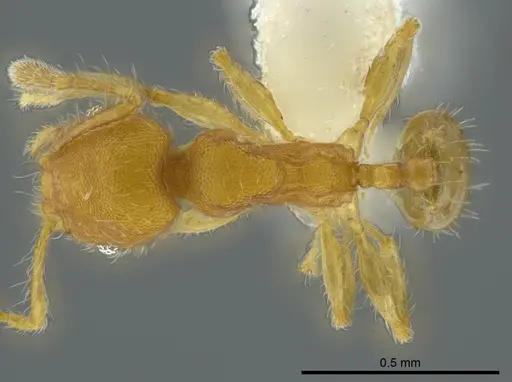
CASENT0612252
View on AntWeb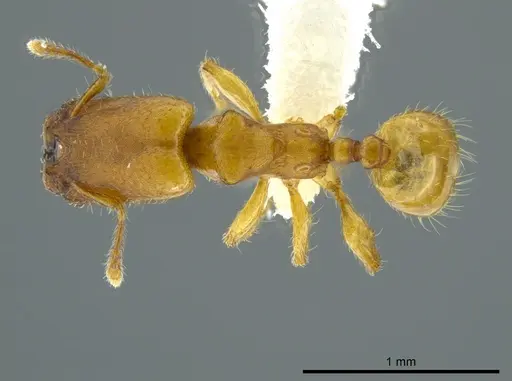
CASENT0612255
View on AntWeb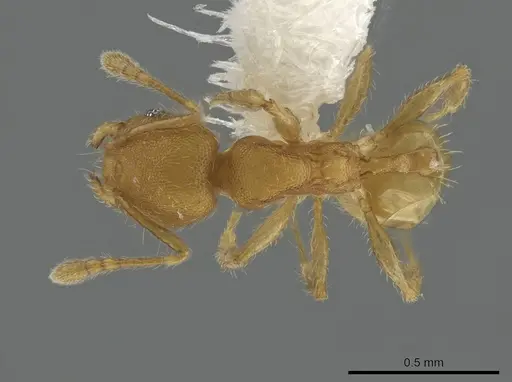
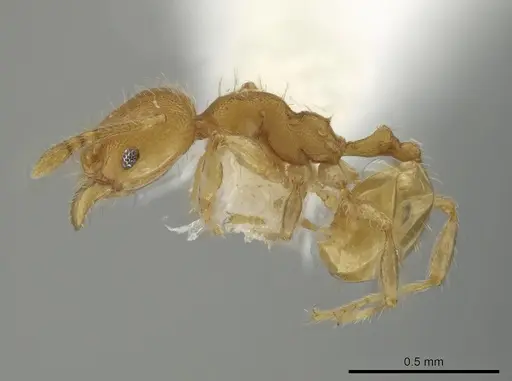
CASENT0635454
View on AntWeb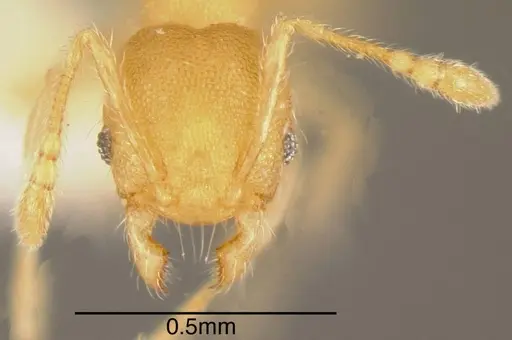
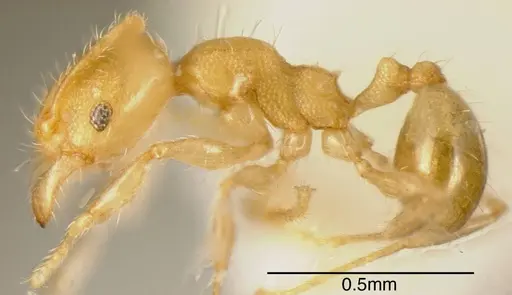
CASENT0908258
View on AntWeb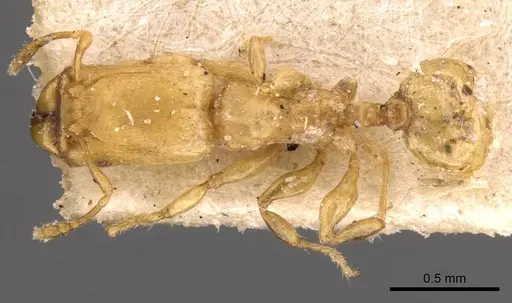
CASENT0908259
View on AntWeb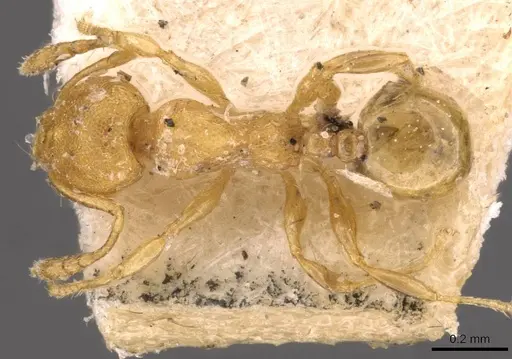
INBIOCRI001237511
View on AntWeb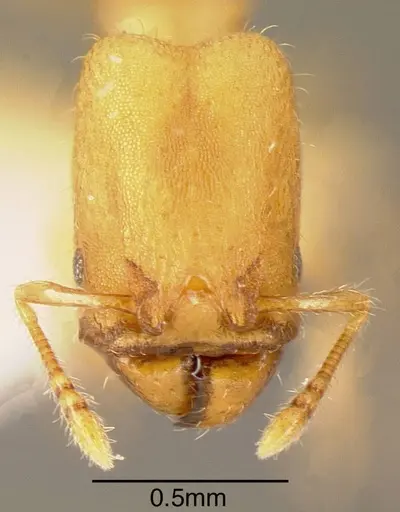
Literature
Loading distribution map...Loading products...