
Pheidole chilensis
- Sci. Name
- Pheidole chilensis
- Tribe
- Attini
- Subfamily
- Myrmicinae
- Author
- Mayr, 1862
- Distribution
- Found in 1 countries
Introduction
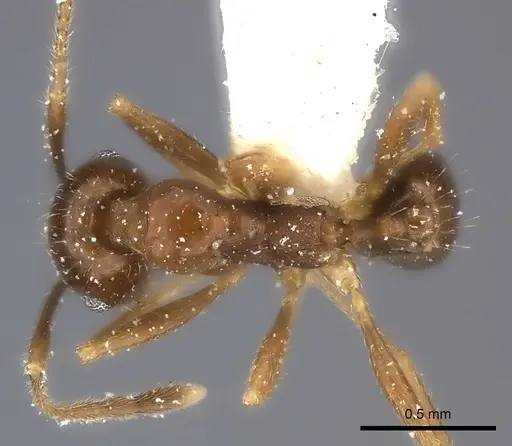
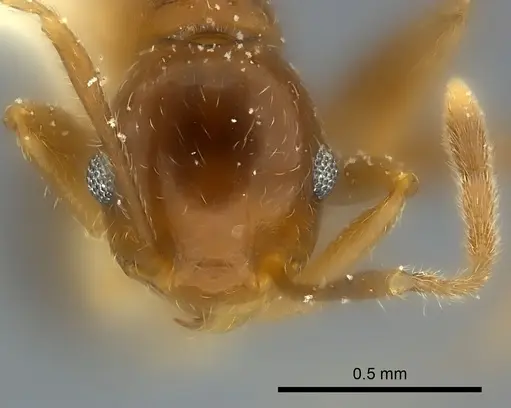
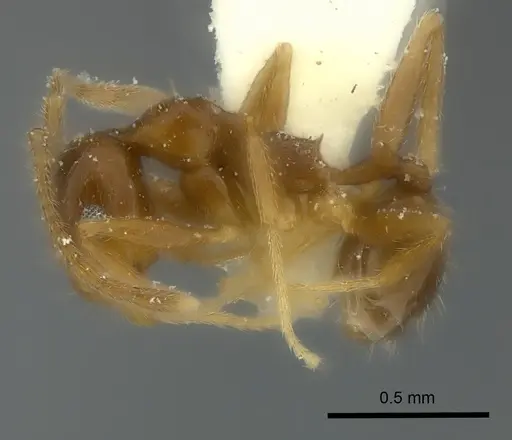
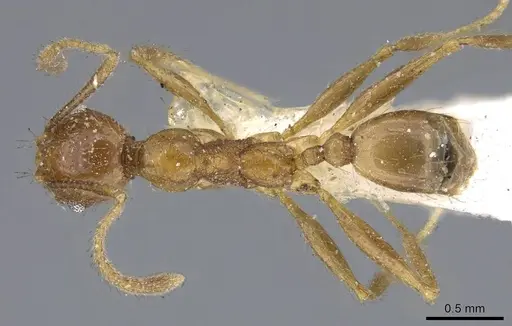
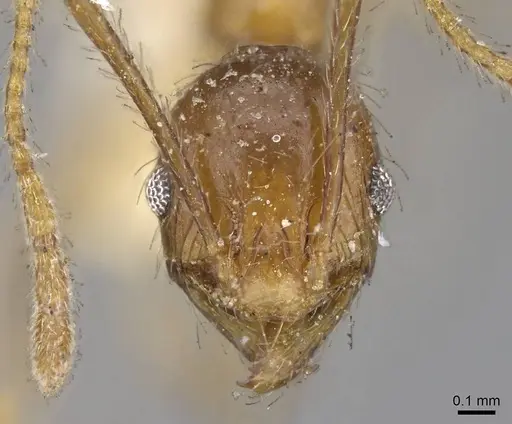
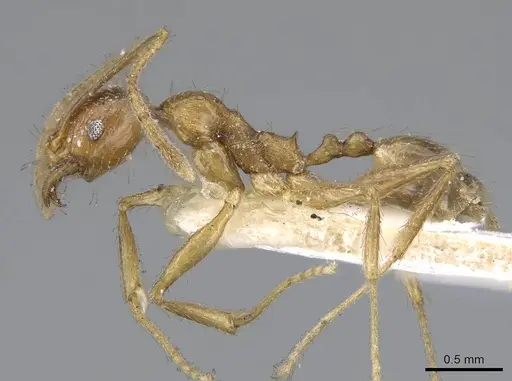
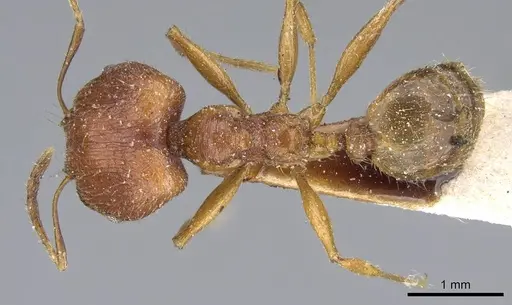
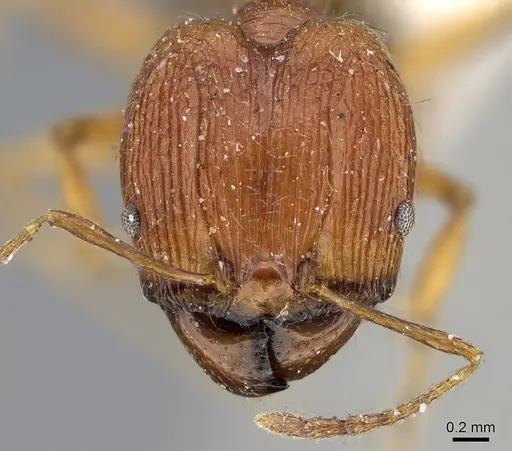
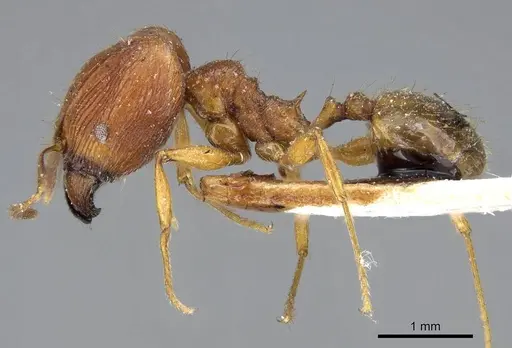
Pheidole chilensis is a Neotropical ant species originally described from Chile in 1862,with additional records from Peru . The species shows the pronounced size dimorphism typical of the genus: majors (soldiers) have a robust head with distinctive ridges, while minors are much smaller. Both castes have erect hairs on their antennae . Color varies from light reddish-yellow (Chile) to medium reddish-brown (Peru). Wilson (2003) placed it in the diligens group but noted its resemblance to the invasive Pheidole indica, suggesting it may be an exotic rather than native to Chile .
Quick Summary
- Difficulty: Unknown
- Origin & Habitat: Originally described from Chile with confirmed records from Peru, including Lima and the Piura region (coastal lowlands under 40 m) [2][3]. Found in dry forest and desert ecological zones [4].
- Colony Type: Unconfirmed, no data exists on colony structure (single-queen or multi-queen) for this species.
- Size & Growth:
- Queen: Total body length data unavailable, estimated ~7-9 mm based on related Pheidole species (inferred).
- Worker: Total body length data unavailable. Head width measures: soldier 1.46 mm, minor 0.60 mm [3].
- Colony: Unknown, no colony size data available.
- Growth: Unknown, no development data exists for this species.
- Development: Unknown, based on typical Pheidole patterns, an estimate of 6-10 weeks at warm temperatures is often suggested, but has never been confirmed. (All timelines are rough genus-level estimates. No species-specific research exists.)
- Antkeeping:
- Temperature: Inferred from Neotropical distribution: aim for 22-26 °C. Adjust based on colony activity, if workers cluster near the warm end, increase slightly, if they avoid heated areas, reduce.
- Humidity: Inferred from coastal dry habitats: moderate humidity (50-70%). Allow substrate to dry partially between waterings. Avoid soggy conditions.
- Diapause: Unknown, the mild climate suggests they may not need true hibernation. Consider a cool period (15-18 °C) during winter rather than full diapause.
- Nesting: No specific data. Based on genus patterns and dry habitats, they likely nest in soil or under stones. Standard test tubes or Y‑tong nests should work well.
- Behavior: No specific behavioral observations exist. Based on genus patterns, Pheidole are active foragers with majors defending the nest and minors foraging. Both castes have a functional sting (typical of Myrmicinae), but it is not medically significant to humans. Escape risk is moderate, minors are small (body length ~2-3 mm) so fine mesh barriers are recommended.
- Common Issues: no biological data exists, all care is based on inference from genus patterns., colony foundation may be challenging since founding behavior is unconfirmed., escape prevention needed due to small minor workers., growth rate is unknown, so patience is required., this species may be an introduced exotic in Chile rather than native, verify local regulations and never release into non‑native areas.
Appearance and Identification
Pheidole chilensis shows the dramatic size dimorphism typical of the genus. Majors have a robust head with distinctive longitudinal ridges that originate on the frontal lobes and spread outward. They possess antennal grooves and an excavated notch on the front of the clypeus. Minors have a narrowed occiput and diamond-shaped postpetiole. Both castes have abundant erect hairs on their antennae, a useful identification feature. Colour varies: original Chilean specimens are light reddish-yellow (majors) and yellow (minors), while Peruvian specimens are medium reddish-brown [3].
Distribution and Biogeography
This species was described from Chile in 1862 and long considered endemic there. Wilson (2003) later examined specimens from Lima, Peru, and recent surveys have found it in the Piura region at low elevations (5-40 m) in dry forest and desert zones [2]. The species may be native to Peru and introduced to Chile, or possibly introduced to both areas. Verify local regulations before acquiring [2][3].
Housing and Nesting
No specific natural history data exists. Standard test‑tube setups work for founding colonies. Once established, Y‑tong or plaster nests provide good visibility. Given the dry forest and desert habitats in Peru, keep the nest relatively dry, avoid constantly damp conditions. A test‑tube water reservoir with a cotton plug provides adequate humidity without creating sogginess. Use fine mesh barriers because minor workers are small (body length ~2-3 mm) and can squeeze through standard gaps [3].
Feeding and Diet
No dietary studies exist. Based on genus patterns, they are likely omnivorous, accepting protein (small insects, mealworms) and sugar sources (honey water, sugar water). In the wild, Pheidole typically forage for seeds, insect prey, and honeydew. Offer varied diet: protein 2-3 times weekly, sugar water constantly. Start with small prey appropriate to their size, fruit flies, small mealworm pieces. Remove uneaten food after 24-48 hours to prevent mold [3].
Temperature and Seasonal Care
No specific thermal data exists. The Peruvian distribution (low‑elevation coastal subtropical area) suggests warm conditions year‑round. Aim for 22-26 °C as a starting point and observe colony behavior. If workers cluster near the warm end, increase heat slightly, if they avoid heated areas, reduce. For winter, consider a cool period (15-18 °C) rather than full hibernation. Monitor for signs of stress like lethargy or clustering in corners [3].
Colony Development and Growth
Absolutely no species‑specific development data exists for Pheidole chilensis, this is one of the least‑studied ants in the literature. Development must be inferred from related species. Most Pheidole produce first workers (nanitics) within 6-10 weeks under warm conditions, but this is a rough estimate. Majors develop later and take additional time. Given the lack of data, expect slow and uncertain growth. Keep founding colonies in a quiet place with minimal disturbance. Do not be alarmed if development seems slow, without baseline data, we simply don't know what normal looks like [3].
Frequently Asked Questions
How long does it take for Pheidole chilensis to produce first workers?
Unknown, no species‑specific data exists. Based on typical Pheidole patterns, an estimate of 6-10 weeks at warm temperatures (24-26 °C) is often suggested, but has never been documented for this species [3].
What do Pheidole chilensis ants eat?
No species‑specific dietary data exists. Based on genus patterns, they likely accept protein (small insects, mealworms) and sugar sources (honey water, sugar water). Offer a varied diet with protein 2-3 times weekly and constant sugar water. Because minors are tiny, provide appropriately sized prey [3].
What temperature do Pheidole chilensis need?
No specific data exists. Based on their Neotropical distribution (coastal Peru and Chile), aim for 22-26 °C. Adjust based on colony behavior, if they cluster together, slightly warmer, if they avoid heat sources, reduce temperature [3].
Do Pheidole chilensis need hibernation?
Unknown, no overwintering data exists. The mild climate suggests they may not need true hibernation. Consider a cool period (15-18 °C) during winter months rather than full hibernation [3].
Are Pheidole chilensis good for beginners?
Difficulty level is unknown since no biological data exists. Based on genus patterns, they are likely manageable, but this species has never been kept in captivity that we know of. Proceed with caution and standard antkeeping practices [3].
How big do Pheidole chilensis colonies get?
Unknown, no colony size data exists for this species. Most Pheidole colonies reach several hundred to a few thousand workers, but this is a rough guess based on genus patterns [3].
Can I keep multiple Pheidole chilensis queens together?
Unknown, no data exists on colony structure for this species. Do not attempt combining unrelated queens until more is known about their social structure [3].
When should I move Pheidole chilensis to a formicarium?
Standard practice is to keep founding colonies in test tubes until they have 20-30 workers. For this species, wait until you see consistent brood development and active foraging [3].
Why is so little known about Pheidole chilensis care?
This species has never been the subject of biological research, literally nothing has been published about its behavior, colony development, or care requirements. All recommendations are inferences from genus patterns and related species [3].
Report an Issue
The current care sheet is based fully on literature. See inconsistencies, or something that's incorrect? Please , it will be resolved after review from an admin. Contributing to the blogs tab also helps providing information, to make us be able to further improve the caresheets. Thank you for your support!
References

This caresheet is licensed under CC BY-SA 4.0 .
Community Blogs
Literature
Loading distribution map...Loading products...