
Carroll's Big-headed Ant
Pheidole carrolli
- Sci. Name
- Pheidole carrolli
- Tribe
- Attini
- Subfamily
- Myrmicinae
- Author
- Naves, 1985
- Common Name
- Carroll's Big-headed Ant
- Distribution
- Found in 1 countries
Introduction
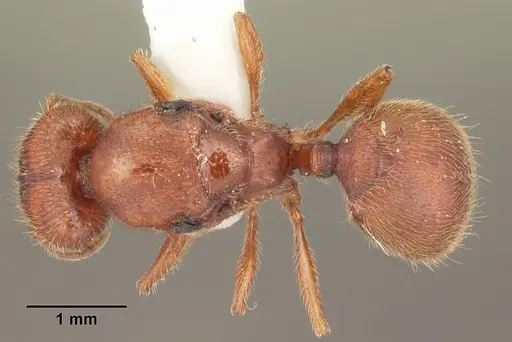
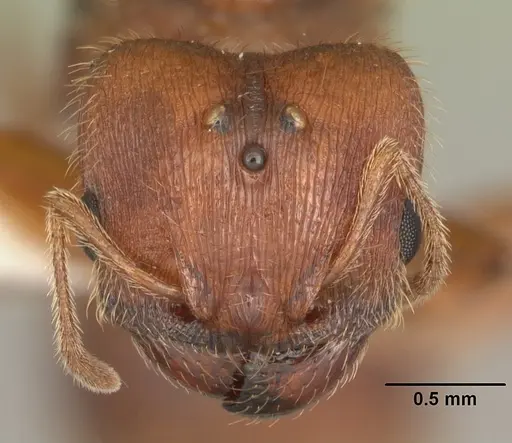
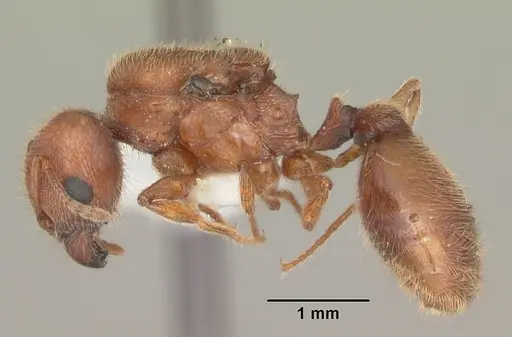
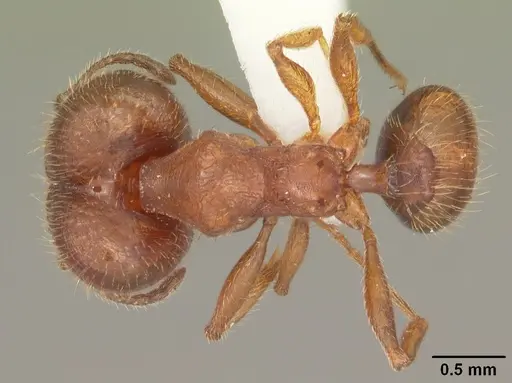
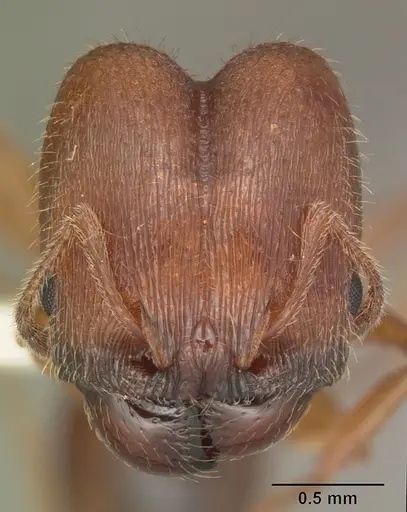
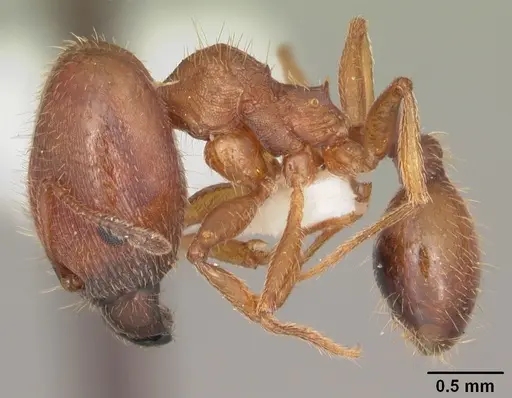
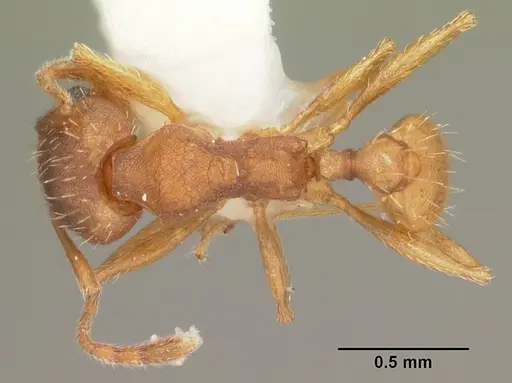
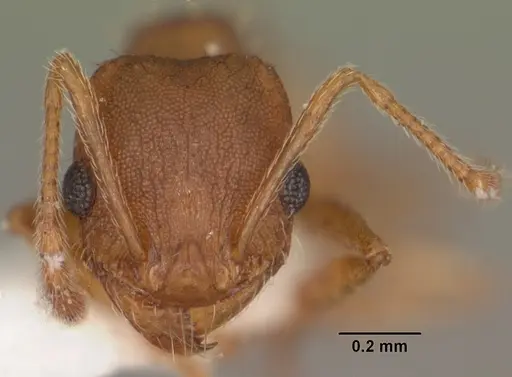
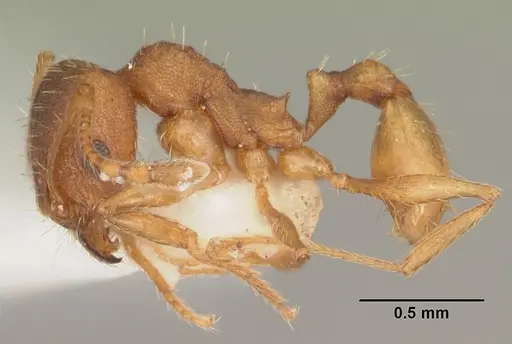
Pheidole carrolli is a small ant native to northern Florida, belonging to the 'pilifera complex' within the genus Pheidole. Majors are orange, and minors are yellowish brown. Size is inferred from genus patterns: queens around 5-7mm, minors 2-4mm, majors 4-6mm . The species is rare, known only from scattered sites in north Florida . What makes P. carrolli unusual is its defensive behavior: workers feign death when disturbed, curling around soil particles to become nearly invisible . They nest in deep vertical galleries up to 1.7 meters deep and prefer open, disturbed habitats with sandy soil .
Quick Summary
- Difficulty: Medium
- Origin & Habitat: Northern Florida, USA, found in early successional, open habitats with sandy soil, often in disturbed areas [1][2].
- Colony Type: Colonies are small, with up to several hundred workers and 1-2 majors (soldiers) present [1]. Queen number is unconfirmed.
- Size & Growth:
- Queen: ~5-7mm, inferred from Pheidole genus patterns [1]
- Worker: Minors: ~2-4mm, Majors: ~4-6mm, inferred from Pheidole genus patterns [1]
- Colony: Up to several hundred workers [1]
- Growth: Moderate
- Development: 6-8 weeks at optimal temperature, inferred from Pheidole genus patterns [1] (Development time is estimated from related species.)
- Antkeeping:
- Temperature: Keep around 24-28°C with a gradient, reflecting their warm habitat [1].
- Humidity: Keep substrate slightly moist but not waterlogged [1].
- Diapause: Unknown, no specific data available. Based on geographic range, may not require strict diapause.
- Nesting: Deep nests are essential, with vertical galleries up to 1.7m deep. Provide sandy soil substrate [1].
- Behavior: Workers are sluggish and docile. They forage singly at dusk and morning within 5 meters of the nest [1]. Death-feigning behavior is common when disturbed.
- Common Issues: deep nesting requirement may stress colonies in shallow nests [1], sluggish behavior can make health assessment difficult [1], rare species with limited distribution, wild colonies should not be collected [2], slow growth may frustrate keepers [1], death-feigning may be mistaken for mortality [1]
Housing and Nesting
Pheidole carrolli requires deep nesting space due to their natural history of digging exceptionally deep vertical galleries, one documented nest extended 1.7 meters below the surface [1]. A Y-tong nest with deep chambers or a custom deep formicarium works well. The substrate should be sandy and able to hold moisture without becoming waterlogged. These ants are not aggressive and have relatively poor escape abilities, so standard barrier methods are sufficient.
The nest entrance in the wild is difficult to spot, and the colony maintains a granary chamber filled with seeds typically located around 30cm deep [1]. In captivity, provide a dedicated seed chamber or area where they can store seeds if they choose to do so. A water tube should always be available.
Feeding and Diet
Pheidole carrolli is omnivorous with a preference for protein sources. They will accept typical ant foods including small insects, seeds, and sugar sources like honey water [1]. Feed protein sources 2-3 times per week, and provide a constant sugar source. Their sluggish foraging behavior means they may not compete aggressively for food, place food near active workers or in foraging areas they regularly use. Remove uneaten protein after 24-48 hours to prevent mold.
Temperature and Seasonal Care
Maintain temperatures between 24-28°C during the active season, reflecting the warm climate of their native Florida habitat [1]. A heating cable on one side of the nest can create a gradient, allowing workers to regulate their own temperature. Diapause requirements are unknown, but based on geographic range, a cool period may not be necessary.
Behavior and Colony Dynamics
Pheidole carrolli displays unusual behaviors that make them distinctive. Workers are exceptionally sluggish and move slowly [1]. Most notably, they exhibit a defensive behavior of feigning death, when disturbed, workers curl their bodies around soil particles, effectively becoming nearly invisible [1]. Foraging occurs singly, with no more than 15 minor workers active at any given time, primarily during dusk and morning hours [1]. The colony maintains only 1-2 major workers (soldiers) at any time.
Colony Establishment
Starting a colony requires obtaining a mated queen, as wild collection is not recommended due to the species' rarity [2]. Founding behavior is unconfirmed, but queens may seal themselves in a chamber. First workers (nanitics) will typically appear within 6-8 weeks under optimal conditions [1]. After the first workers emerge, the colony can be moved to a larger nesting area if needed. Growth is moderate, expect several months to reach 50 workers, and a year or more to reach several hundred.
Frequently Asked Questions
How long does it take for Pheidole carrolli to produce first workers?
Expect first workers (nanitics) to emerge in approximately 6-8 weeks after the queen lays eggs, when kept at optimal temperatures of 24-28°C. This timeline is based on typical Pheidole genus development patterns [1].
What do Pheidole carrolli ants eat?
They are omnivorous, accepting small insects, seeds, and sugar sources like honey water [1]. Protein should be offered 2-3 times per week with a constant sugar source available.
How big do Pheidole carrolli colonies get?
Colonies typically reach up to several hundred workers with 1-2 majors (soldiers) [1]. This is relatively small compared to many other Pheidole species.
Can I keep multiple Pheidole carrolli queens together?
Queen number is unconfirmed for this species, but combining unrelated queens is not recommended. Only one queen should be kept per colony unless specific data confirms otherwise.
Do Pheidole carrolli need hibernation?
Diapause requirements are unknown. Based on their geographic range in Florida, a strict cold hibernation may not be necessary, but a cool period could be beneficial [1].
Why do my Pheidole carrolli ants curl up and stop moving?
This is normal behavior, P. carrolli has a unique defensive habit of feigning death when disturbed. Workers curl their bodies around soil particles and remain motionless. This is not a sign of illness but a survival strategy [1].
Are Pheidole carrolli good for beginners?
They are rated as medium difficulty. While not aggressive, their sluggish behavior and specific deep-nesting requirements may present challenges. Their rarity also makes obtaining a colony difficult [1][2].
What type of nest is best for Pheidole carrolli?
A deep nest is essential, these ants naturally dig galleries 1.7 meters deep in the wild [1]. A Y-tong nest with deep chambers or a custom formicarium with vertical space works best. Sandy soil substrate that holds moisture is preferred.
Where is Pheidole carrolli found in the wild?
This species is endemic to northern Florida, USA, known only from Alachua, Citrus, and Leon Counties. It is considered rare and is found in early successional, open habitats with sandy soil [1][2].
Report an Issue
The current care sheet is based fully on literature. See inconsistencies, or something that's incorrect? Please , it will be resolved after review from an admin. Contributing to the blogs tab also helps providing information, to make us be able to further improve the caresheets. Thank you for your support!
References

This caresheet is licensed under CC BY-SA 4.0 .
Community Blogs
Literature
Loading distribution map...Loading products...