
Pheidole carapuna
- Sci. Name
- Pheidole carapuna
- Tribe
- Attini
- Subfamily
- Myrmicinae
- Author
- Mann, 1916
- Distribution
- Found in 12 countries
Introduction
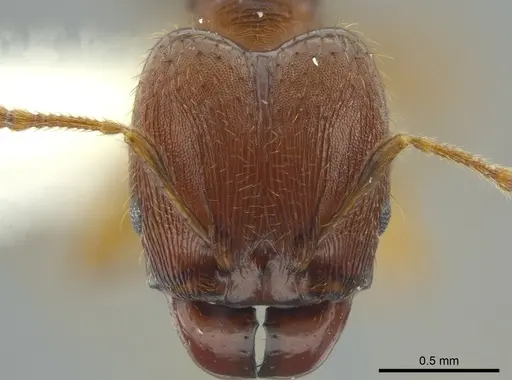
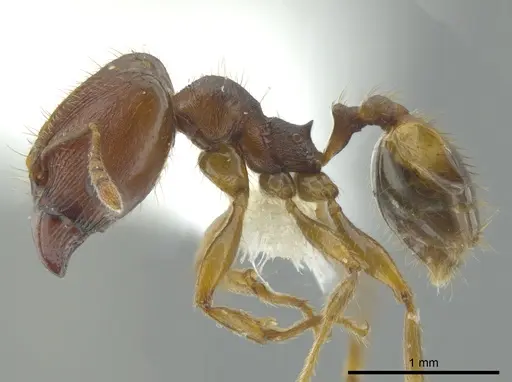
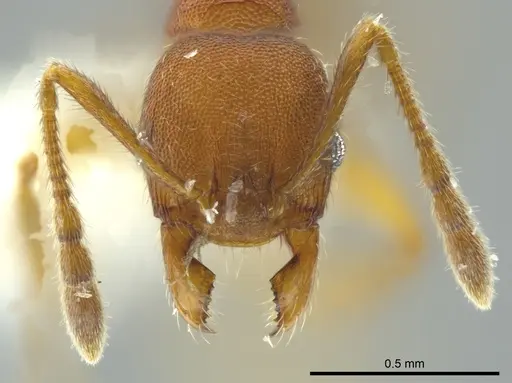
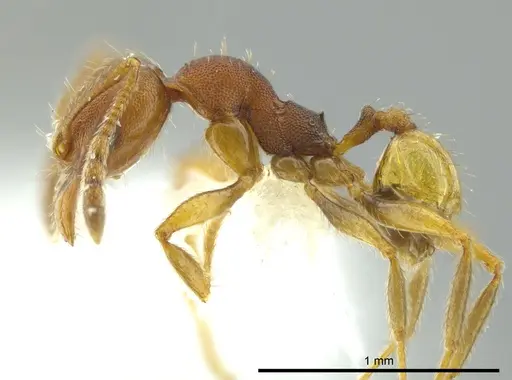
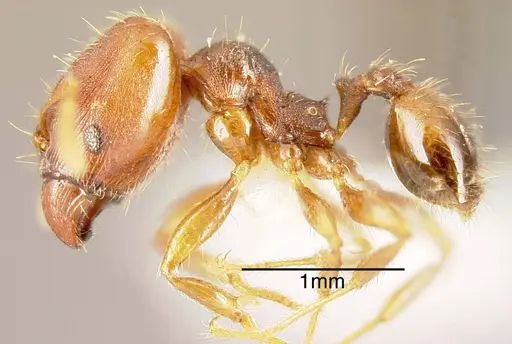
Pheidole carapuna is a small dimorphic ant belonging to the 'carapuna complex' . Major workers have large heads characteristic of Pheidole, while minors are smaller and slender. Majors are brownish-red, minors are pale yellow . This species is found in lowland rainforests from Mexico to Brazil, nesting in rotting wood and humus on the forest floor . It is a rare species and flood-intolerant, preferring moist microhabitats . Workers forage nocturnally, recruiting nestmates to large prey items like dead flies on tree trunks .
Quick Summary
- Difficulty: Medium
- Origin & Habitat: Lowland rainforests of Central and South America, from Mexico to Brazil, nesting in rotting logs and humus on the forest floor [2].
- Colony Type: Likely monogyne based on Pheidole genus patterns, but unconfirmed for this species.
- Size & Growth:
- Queen: Size data unavailable for full body length.
- Worker: Size data unavailable for full body length.
- Colony: Unknown, but typical Pheidole colonies can reach hundreds of workers.
- Growth: Moderate.
- Development: 6-10 weeks estimated. (Development time may vary based on temperature and humidity conditions.)
- Antkeeping:
- Temperature: Keep at 24-28°C, as inferred from tropical rainforest habitat [2].
- Humidity: Keep substrate consistently moist but not waterlogged, as they are flood-intolerant [3].
- Diapause: No, as a tropical species.
- Nesting: Use Y-tong, plaster, or soil nests with moist substrate, mimicking their natural rotting wood habitat [2].
- Behavior: Relatively peaceful and not aggressive. Dimorphic with majors specializing in defense and seed processing, minors handling foraging and brood care. Nocturnal foragers that recruit nestmates to food sources [2]. Not particularly escape-prone, but standard barriers are recommended.
- Common Issues: high humidity maintenance is critical, drying out can kill colonies quickly [3]., flood intolerance means avoid overwatering or placing nests in water-prone areas [3]., small size means minor workers can escape through fine gaps if barrier quality is poor.
Housing and Nest Setup
Pheidole carapuna needs a moist, warm environment like its natural rainforest habitat. Use a Y-tong, plaster, or soil nest that holds humidity well [2]. Nest chambers should be small to match their size, with passages for easy movement. Place the nest in a dark area or cover it, as they prefer dim conditions [2]. Attach an outworld for foraging, and provide a water tube for moisture [2].
Feeding and Diet
These ants are omnivorous, preferring seeds and protein. Offer small seeds like millet for majors to process, and protein sources like fruit flies or mealworms regularly. Sugar water or honey can be provided for energy. Feed every 2-3 days, removing uneaten food to prevent mold. Evening feedings may align with their nocturnal foraging [2].
Temperature and Humidity
Maintain temperatures between 24-28°C using a heating cable if needed [2]. Humidity should be high with consistently moist substrate, as they are flood-intolerant [3]. Avoid drying out or overwatering, use a moisture gradient if possible.
Behavior and Colony Dynamics
This is a dimorphic species with major and minor workers. Minors handle most tasks, while majors defend and process seeds [1]. Workers forage nocturnally and recruit nestmates to food sources [2]. Colony growth is moderate with proper care.
Seasonal Care
As a tropical species, no hibernation is needed. Keep temperatures and humidity consistent year-round. Colony activity may slow in cooler months but should remain active if kept warm.
Frequently Asked Questions
How long does it take for Pheidole carapuna to get their first workers?
Expect first workers approximately 6-10 weeks after queen lays eggs, assuming temperatures around 26°C. Actual timing depends on conditions.
Can I keep multiple Pheidole carapuna queens together?
Not recommended, as this species likely forms single-queen colonies based on Pheidole genus patterns. Combining queens may result in fighting.
What do Pheidole carapuna ants eat?
They are omnivorous. Offer small seeds, protein sources like insects 2-3 times weekly, and sugar water.
Are Pheidole carapuna good for beginners?
Rated medium difficulty due to humidity and nutrition needs. Experience with Pheidole or tropical ants helps.
What temperature do Pheidole carapuna need?
Keep at 24-28°C, as inferred from their tropical habitat [2].
When should I move Pheidole carapuna to a formicarium?
Move from test tube setup once colony reaches 30-50 workers and shows space or humidity issues.
Why are my Pheidole carapuna dying?
Common causes are low humidity, cold temperatures, or poor nutrition. Check substrate moisture, temperature, and food supply [3].
How big do Pheidole carapuna colonies get?
Exact size unknown, but based on genus patterns, expect up to several hundred workers.
Do Pheidole carapuna need hibernation?
No, as a tropical species, they do not require hibernation.
Report an Issue
The current care sheet is based fully on literature. See inconsistencies, or something that's incorrect? Please , it will be resolved after review from an admin. Contributing to the blogs tab also helps providing information, to make us be able to further improve the caresheets. Thank you for your support!
References

This caresheet is licensed under CC BY-SA 4.0 .
Community Blogs
CASENT0612022
View on AntWeb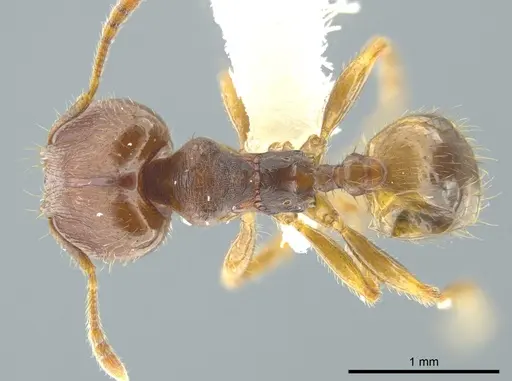
CASENT0612023
View on AntWeb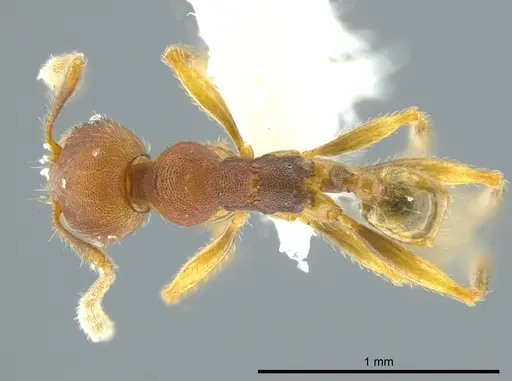
CASENT0635448
View on AntWeb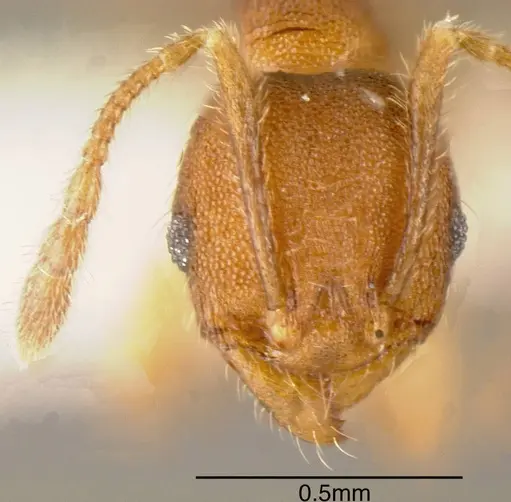
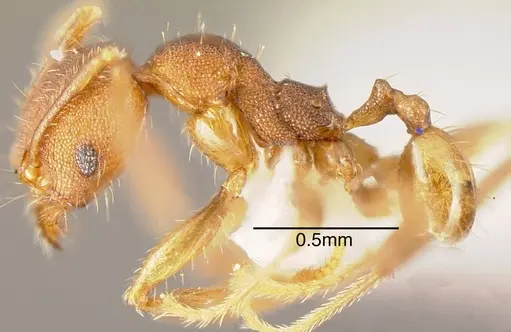
INBIOCRI002279593
View on AntWeb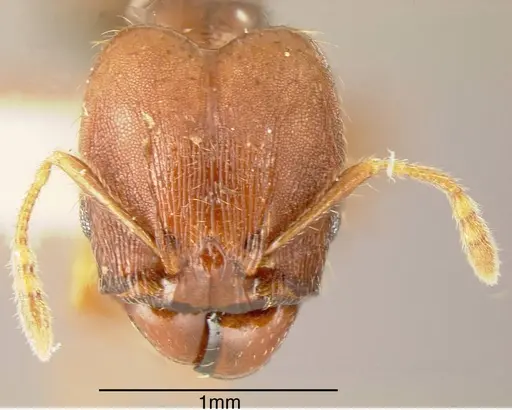
Literature
Loading distribution map...Loading products...