
Pheidole caldwelli
- Sci. Name
- Pheidole caldwelli
- Tribe
- Attini
- Subfamily
- Myrmicinae
- Author
- Mann, 1921
- Distribution
- Found in 1 countries
Introduction
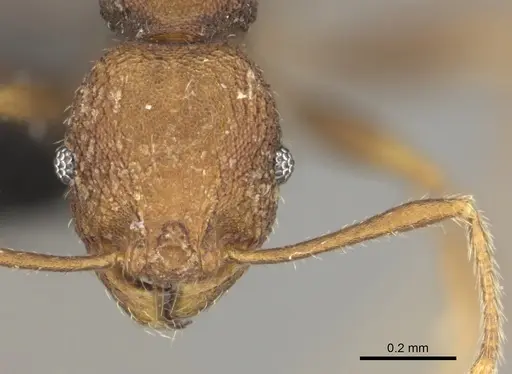
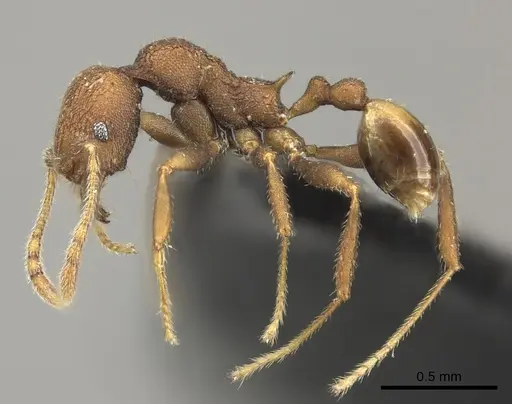
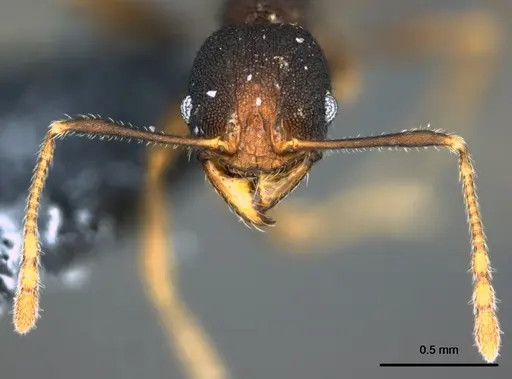
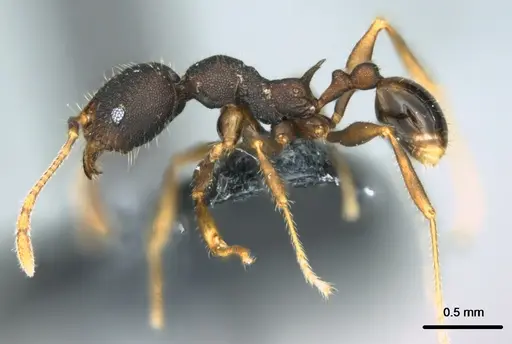
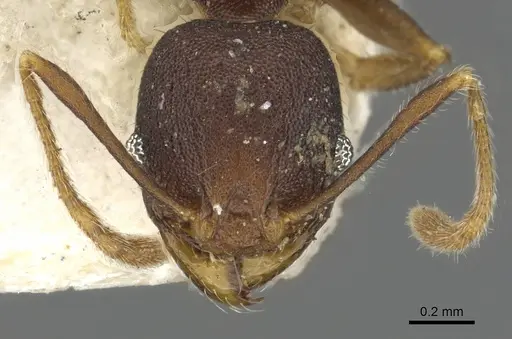
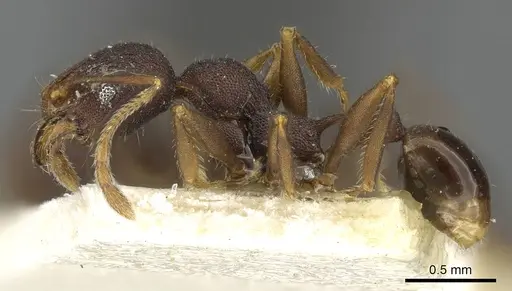
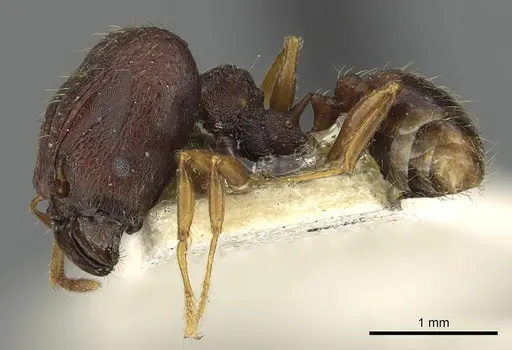
Pheidole caldwelli is a large, heavily sculptured ant species endemic to the Fiji Islands. Major workers have a head width of 1.55-1.62 mm, but total body length is unmeasured. They have very long, downcurved propodeal spines and a large postpetiole, with punctures covering nearly the entire body surface . Minor workers are much smaller, with head width 0.55-0.67 mm . The queen is also large, with a mesosoma length of 1.66 mm . This species belongs to the knowlesi group and was first described in 1921 from the mountains of Viti Levu, Fiji . What makes P. caldwelli stand out is its very restricted distribution - it is found only in Fiji's upland rainforests at 300-800 m elevation, mainly on Viti Levu and Moala Island . Unlike many widespread ants, this species specializes in the cool, damp leaf litter of primary rainforest. Collectors have found most specimens by sifting leaf litter; Mann (1921) also reported colonies under stones and logs in the Nadarivatu area . This habitat preference means captive care must mimic a damp forest floor environment.
Quick Summary
- Difficulty: Medium
- Origin & Habitat: Endemic to Fiji, recorded only on Viti Levu and Moala Island in upland rainforests at 300-800 m elevation. Found by sifting leaf litter in primary forest, also reported under stones and logs [2][3].
- Colony Type: Colony structure is unconfirmed. Pheidole species are typically monogyne (single-queen), but this has not been directly documented for P. caldwelli.
- Size & Growth:
- Queen: Size data unavailable (only mesosoma length known: 1.66 mm) [1]
- Worker: Size data unavailable (only head width known: majors 1.55-1.62 mm, minors 0.55-0.67 mm) [1]
- Colony: Unknown. Based on typical Pheidole patterns, colonies likely reach up to a few thousand workers at maturity.
- Growth: Unknown. Estimated as moderate based on typical Pheidole development.
- Development: Unknown. Based on typical Pheidole patterns in tropical species, estimate 6-10 weeks at optimal temperature. (No direct studies exist for this species. Timeline is inferred from genus-level patterns.)
- Antkeeping:
- Temperature: Keep around 24-28°C. This is a tropical upland species from Fiji, so they need warm conditions but not extreme heat. A gentle temperature gradient (e.g., using a small heating cable on one side) allows the ants to self-regulate. Room temperatures (22-26°C) work well [1].
- Humidity: High humidity, think damp rainforest floor. Keep the nest substrate consistently moist but not waterlogged. Provide a water tube or moisture source. The substrate should feel damp to the touch, with some slightly drier areas for the ants to choose. In nature they are found in leaf litter and under stones, so the environment should be humid but with good air circulation to prevent mold [2].
- Diapause: No, this is a tropical species from Fiji and does not require hibernation or winter rest. Maintain consistent temperatures year-round.
- Nesting: In nature they nest under stones, logs, and in leaf litter [2]. For captivity, a naturalistic setup with moist substrate (soil or dirt mix) works best. Y-tong (AAC) or plaster nests can be used if kept adequately moist. Provide a humidity gradient and tight chambers scaled to the majors' larger size. Avoid acrylic nests, they do not maintain moisture well. Test tube setups are suitable for founding.
- Behavior: This species is primarily ground-dwelling, found in leaf litter (49.1% of occurrences) rather than arboreal samples (1.4%) [4]. They are not aggressive and typically flee from disturbance. Major workers have powerful mandibles for seed processing and defense, but they are not dangerous to humans. Minor workers are very small (head width
- Common Issues: high humidity needed, too dry causes desiccation, too wet leads to mold, aim for damp but aerated substrate, escape prevention, minor workers are tiny (head width, temperature stability, avoid cold drafts or prolonged heat above 30°C, limited availability, this is a rarely kept species endemic to Fiji, obtaining queens may be difficult, unknown founding behavior, keepers may need to experiment, as claustral founding is unconfirmed
Natural History and Distribution
Pheidole caldwelli is a Fiji endemic, meaning it is found nowhere else on Earth. The species was first described by W. M. Mann in 1921 from specimens collected in the mountains around Nadarivatu on Viti Levu, Fiji's largest island. Mann noted it was 'very common' in that area, with numerous colonies under stones and logs [2]. More recent surveys (2012) did not find the species at the original Nadarivatu site but collected it from the Monasavu Dam area, upland forests of southeastern Viti Levu, and a single specimen on Moala Island [2][3]. All recent collections were from sifted leaf litter in primary rainforest at elevations between 300 and 800 m [1]. This narrow habitat preference, cool, damp upland rainforest, is unusual for a tropical Pheidole species.
Identification and Morphology
Pheidole caldwelli is a heavily sculptured species in the knowlesi group. Major workers have a head width of 1.55-1.62 mm, the entire body is covered with punctures, and the propodeal spines are very long, at least as long as the distance between their bases [1]. Minor workers have a head width of 0.55-0.67 mm and share the punctate sculpture. Both castes have a small process on the promesonotal posterior declivity. The queen has a mesosoma length of 1.66 mm and relatively short legs. A unique trait of this species is the absence of a median hypostomal tooth in majors and queens, which distinguishes it from other knowlesi group species [1].
Housing and Nest Setup
Simulate the natural leaf-litter habitat: use a moist soil or substrate mixture that holds moisture but drains well to prevent waterlogging. In nature, they nest under stones and logs [2], so Y-tong (AAC), plaster, or dirt nests work well if kept humid. Provide a humidity gradient, some areas moister, others slightly drier, so the ants can choose. A water tube attached to the nest helps maintain humidity. Test tube setups are fine for founding colonies. Escape prevention is critical: minor workers are tiny (head width
Feeding and Diet
Like most Pheidole, P. caldwelli is likely omnivorous with a preference for protein. In the wild, they probably eat seeds, small insects, and honeydew. For captive care, offer a variety: sugar water or honey as a constant energy source, and protein sources like small crickets or mealworms 2-3 times per week. Adjust based on colony appetite. Remove uneaten prey within 24-48 hours to prevent mold. The majors' powerful mandibles are suited for processing seeds and hard-bodied prey.
Temperature and Seasonal Care
As a tropical upland species, P. caldwelli needs warm, stable temperatures, aim for 24-28°C. Avoid prolonged temperatures below 20°C or above 32°C. This species does NOT require diapause or hibernation, maintain consistent conditions year-round. If your room runs cool, a small heating cable on top of the nest (not underneath) can create a beneficial gradient, but ensure a cooler area is available for the ants to retreat to.
Behavior and Colony Dynamics
Pheidole caldwelli has a clear caste system with major and minor workers. The majors have enlarged heads and likely handle defense and seed processing, minors do most foraging and brood care. Ward's 2008 study found them primarily in leaf litter (49% of occurrences) rather than arboreal samples (1.4%), confirming they are ground-dwelling [4]. They are not aggressive and flee from disturbance. Colony growth probably follows the typical Pheidole pattern: first workers (nanitics) are smaller, then later workers include larger majors. Growth rate is moderate.
Frequently Asked Questions
How long does it take for Pheidole caldwelli to produce first workers?
The exact timeline is unknown for this species. Based on typical Pheidole patterns, expect 6-10 weeks from egg to first worker at optimal temperature (24-28°C). The queen likely remains sealed in her founding chamber until the first nanitics emerge.
What temperature do Pheidole caldwelli ants need?
Keep them at 24-28°C. This is a tropical upland species from Fiji's mountains, so they need warmth but not extreme heat. Room temperature in most homes falls within this range.
Do Pheidole caldwelli ants need hibernation?
No. This is a tropical species from Fiji and does not require hibernation or winter rest. Maintain consistent temperatures year-round.
How big do Pheidole caldwelli colonies get?
Colony size is not documented for this species. Based on typical Pheidole patterns, mature colonies likely reach up to a few thousand workers.
What do Pheidole caldwelli ants eat?
Like most Pheidole, they are omnivorous. Offer sugar water or honey as a constant energy source, and protein like small insects (crickets, mealworms) 2-3 times per week.
Are Pheidole caldwelli good for beginners?
This species is rated Medium difficulty. They have specific humidity needs (damp rainforest floor) and are rarely available since they are endemic to Fiji. If you can meet their humidity and temperature requirements, they can be rewarding, but they are not the easiest starter species.
Can I keep multiple queens together in Pheidole caldwelli?
Colony structure is unconfirmed for this species. Most Pheidole are monogyne (single-queen), but polygyny has not been documented. It is not recommended to combine unrelated queens as this has not been studied for this species.
What type of nest is best for Pheidole caldwelli?
A naturalistic setup with moist substrate works best to mimic their habitat under stones and logs. Y-tong (AAC) or plaster nests can work if kept adequately moist. Provide a humidity gradient so ants can self-regulate. Avoid acrylic nests.
Where is Pheidole caldwelli found in the wild?
Endemic to Fiji, found only on Viti Levu and Moala Island in upland rainforests at 300-800 m elevation. Originally described from the Nadarivatu mountains, more recent collections come from the Monasavu Dam area and southeastern Viti Levu [2][3].
Why are my Pheidole caldwelli dying?
Common causes include: too dry (they need damp substrate), temperature extremes (keep 24-28°C), escape of tiny minors (check mesh gaps), or mold from overwatering. Ensure humidity is adequate, temperature stable, and remove uneaten food promptly.
Report an Issue
The current care sheet is based fully on literature. See inconsistencies, or something that's incorrect? Please , it will be resolved after review from an admin. Contributing to the blogs tab also helps providing information, to make us be able to further improve the caresheets. Thank you for your support!
References

This caresheet is licensed under CC BY-SA 4.0 .
Community Blogs
CASENT0184247
View on AntWeb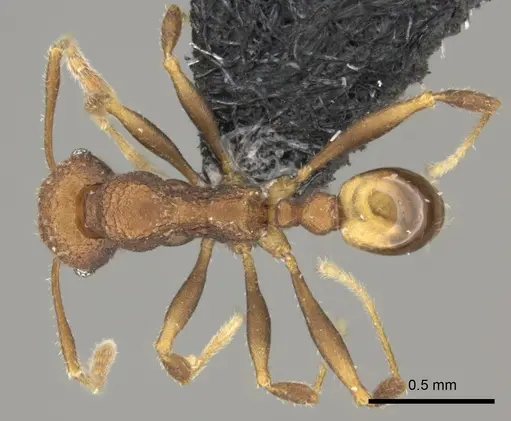
CASENT0185147
View on AntWeb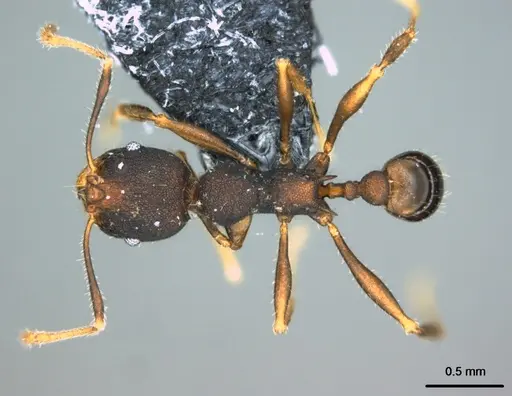
CASENT0901509
View on AntWeb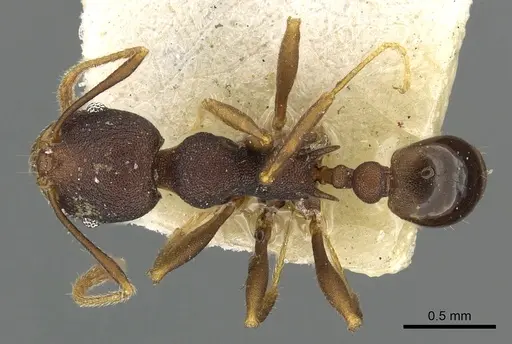
CASENT0901510
View on AntWeb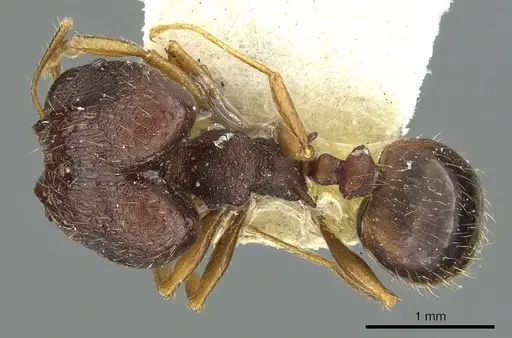

Literature
Loading distribution map...Loading products...