
Pheidole bison
- Sci. Name
- Pheidole bison
- Tribe
- Attini
- Subfamily
- Myrmicinae
- Author
- Wilson, 2003
- Distribution
- Found in 1 countries
Introduction
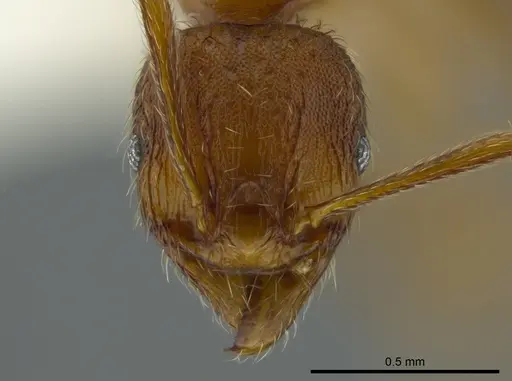
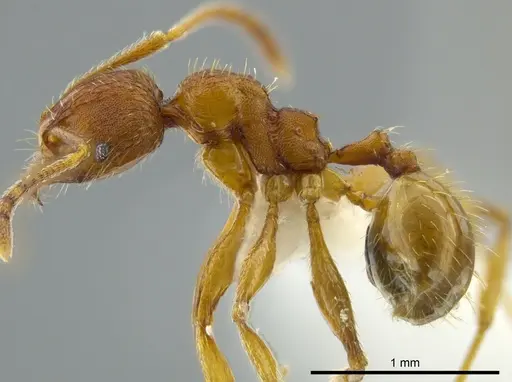
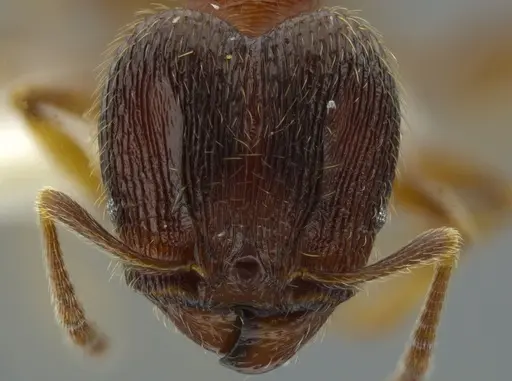
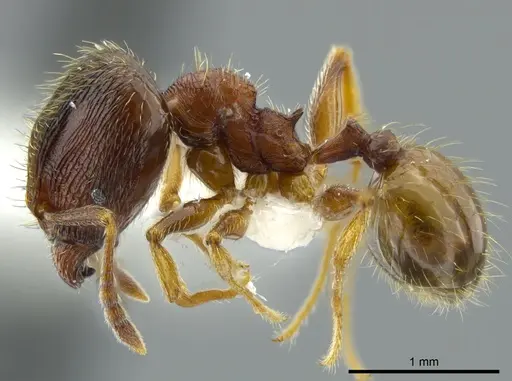
Pheidole bison is a Neotropical ant species described by Wilson in 2003 . It belongs to the tristis group and is named for the distinctive massive humped back of the major workers, reminiscent of a bison. Major workers have a dark reddish-brown head and medium reddish-brown body, while minors are smaller and brownish-yellow in color. This species is only known from its type locality in Bolivia's Noel Kempff Mercado National Park at 700m elevation, where it was collected from a savanna habitat .
Quick Summary
- Difficulty: Medium
- Origin & Habitat: Bolivia and Argentina (Neotropical region). Collected from savanna habitat at 700m elevation in Noel Kempff Mercado National Park [1].
- Colony Type: Colony structure is unconfirmed. Based on typical Pheidole patterns, it may be monogyne, but no specific data exists.
- Size & Growth:
- Queen: size data unavailable, inferred from Pheidole genus to be around 6-10 mm
- Worker: size data unavailable, majors and minors are small, with majors having a distinctive hump
- Colony: Unknown, no colony size data available. Based on genus patterns, colonies may reach up to thousands of workers.
- Growth: Unknown, estimated moderate based on genus patterns.
- Development: Unknown, estimated 6-10 weeks based on typical Pheidole development [1] (Development time depends on temperature, warmer conditions within the safe range speed up growth.)
- Antkeeping:
- Temperature: Keep at 24-28°C, inferred from tropical savanna origin [1].
- Humidity: Moderate humidity around 50-70%, allow substrate to dry partially between waterings [1].
- Diapause: No, inferred from tropical origin [1].
- Nesting: Based on collection from termite nest and savanna habitat, they likely nest in soil or rotting wood [1].
- Behavior: Behavior is unstudied in captivity. Based on typical Pheidole patterns, majors serve defense and minors forage. Primary defense is stinging, as typical for Myrmicinae ants. Escape risk is moderate due to small size.
- Common Issues: temperature stress from too cold or too hot conditions, humidity imbalance causing mold or dehydration, disturbance during founding period if queen is disturbed, parasites or diseases from wild-caught colonies, escape due to small worker size
Species Identification and Morphology
Pheidole bison is a distinctive species within the tristis group [2], named for the bison-like hump on the major workers' promesonotum. Major workers have a dark reddish-brown head covered with longitudinal carinulae, except for the frontal triangle and central clypeus. Their promesonotum is massive and forms a convex dome that drops vertically to the metanotum. Minor workers are smaller and brownish-yellow, with foveolate surfaces and reduced propodeal spines appearing as small denticles. This species was described from Bolivia in 2003 and remains known only from that region [1].
Natural History and Habitat
Pheidole bison was collected from a termite nest in savanna habitat at 700m elevation in Bolivia's Santa Cruz department [1]. This association with termite nests may indicate a predatory relationship or opportunistic nesting in termite structures. The savanna environment suggests they prefer warmer, relatively drier conditions than rainforest-dwelling Pheidole species. Like other Neotropical Pheidole, they likely have generalist diets, consuming seeds, insects, and honeydew.
Housing and Nesting
Since specific nesting data does not exist for this species, housing recommendations are based on typical Pheidole husbandry and habitat clues. For founding colonies, use a standard test tube setup with a water reservoir and cotton plug. Keep the tube in darkness and avoid disturbing the queen during the founding period. Once the colony reaches a reasonable size, they can be moved to a formicarium such as a Y-tong or plaster nest with moderate humidity chambers. Include an outworld area for foraging. [1]
Feeding and Diet
Pheidole species are generalist omnivores, and P. bison likely follows this pattern. Feed a mix of protein and carbohydrate sources. Protein options include small insects like fruit flies or pinhead crickets, and carbohydrate sources include sugar water or honey. Once established, offer small seeds for majors to process. Feed protein 2-3 times per week and keep sugar water available constantly. Remove uneaten prey after 24-48 hours to prevent mold. [1]
Temperature and Seasonal Care
As a Neotropical species from Bolivia, P. bison prefers warm conditions around 24-28°C. This can be achieved with room temperature or a heating cable on one side of the nest to create a gentle gradient. Avoid temperatures below 20°C or above 32°C. Given their tropical origin, a true hibernation or diapause is not required, but activity may slow in cooler months. [1]
Frequently Asked Questions
How long does it take for Pheidole bison first workers to emerge?
The exact development time is unknown. Based on typical Pheidole development, expect first workers around 6-10 weeks after egg laying, depending on temperature [1].
What do Pheidole bison ants eat?
Like other Pheidole species, they are generalist omnivores. Offer small insects for protein and sugar water or honey for carbohydrates. They may also accept seeds once the colony is established [1].
Can I keep multiple Pheidole bison queens together?
Pheidole bison colony structure is unconfirmed. Most Pheidole species are monogyne (single queen), but some can be polygyne. Unless you observe multiple queens cooperating peacefully, it is safest to house only one queen per colony.
What temperature do Pheidole bison ants need?
Keep them warm at 24-28°C, matching their Neotropical savanna origin. Room temperature is often sufficient, or use a heating cable on part of the nest to create a gradient [1].
Are Pheidole bison good for beginners?
This species is not commonly kept, and limited care information exists. If you are experienced with Pheidole species, it is manageable. For beginners, more established species with known care requirements would be easier.
How big do Pheidole bison colonies get?
Colony size is unconfirmed for this species. Based on typical Pheidole patterns, colonies may reach up to thousands of workers over several years.
When should I move Pheidole bison to a formicarium?
Keep them in the test tube setup until the colony reaches a reasonable size and the water reservoir needs refilling more frequently. Moving too early can stress the colony.
Do Pheidole bison need hibernation?
No true hibernation is required given their tropical origin. They may show reduced activity in cooler months, but a formal diapause period is probably unnecessary [1].
Why are my Pheidole bison dying?
Common issues include temperature stress, humidity imbalance, disturbance during founding, parasites from wild-caught colonies, or escape due to small size. Review basic care parameters and ensure stable conditions.
Report an Issue
The current care sheet is based fully on literature. See inconsistencies, or something that's incorrect? Please , it will be resolved after review from an admin. Contributing to the blogs tab also helps providing information, to make us be able to further improve the caresheets. Thank you for your support!
References

This caresheet is licensed under CC BY-SA 4.0 .
Community Blogs
CASENT0625446
View on AntWeb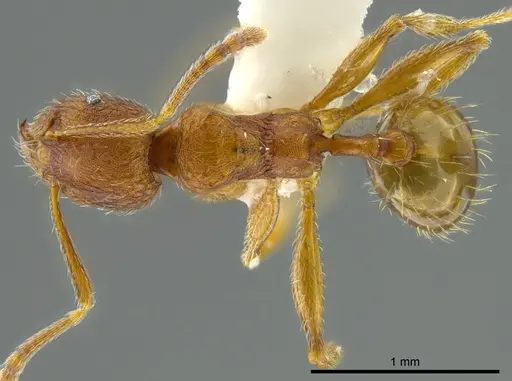
JTLC000016329
View on AntWeb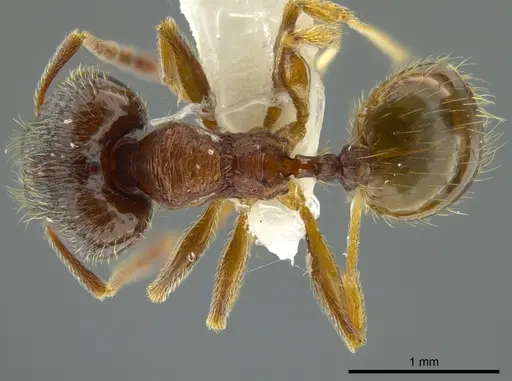
Literature
Loading distribution map...Loading products...