
Pheidole bequaerti
- Sci. Name
- Pheidole bequaerti
- Tribe
- Attini
- Subfamily
- Myrmicinae
- Author
- Forel, 1913
- Distribution
- Found in 2 countries
Introduction
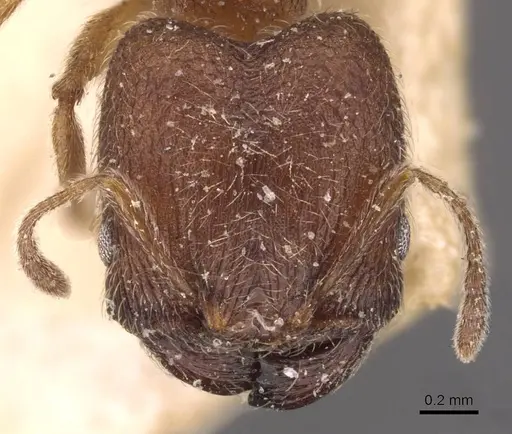
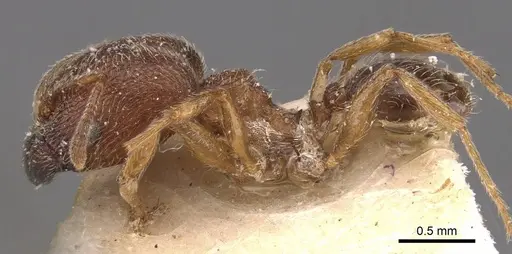
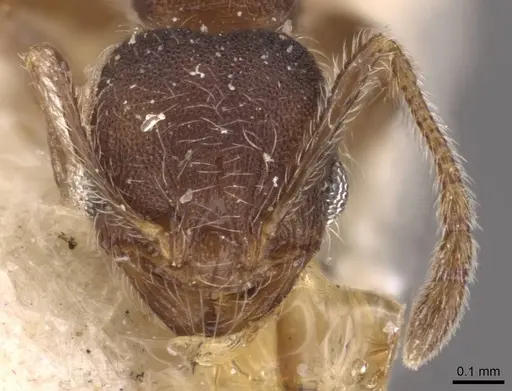
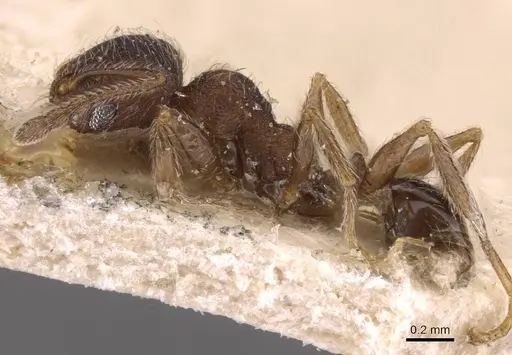
Pheidole bequaerti is a small to medium-sized ant species native to West and Central Africa. Minor workers are slender with ovoid eyes positioned well forward, and major workers have enlarged heads. Sizes are inferred from Pheidole genus patterns: minor workers around 3-4mm, major workers around 4-5mm, and queens around 7-8mm . The species is recorded in Benin, Democratic Republic of Congo, and Nigeria . Some taxonomists suggest it may be synonymous with Pheidole katonae based on eye characteristics, but this is not widely adopted . A notable feature is the distinctive ovoid eyes of minor workers, which are set well forward and angled, a trait used in identification .
Quick Summary
- Difficulty: Easy
- Origin & Habitat: West and Central Africa, found in Benin, Democratic Republic of Congo, and Nigeria, typically in tropical/subtropical habitats [2][3].
- Colony Type: Unconfirmed, no specific data on queen number or social structure.
- Size & Growth:
- Queen: ~7-8mm inferred from Pheidole genus
- Worker: Minor workers ~3-4mm, major workers ~4-5mm inferred from Pheidole genus [1]
- Colony: Up to several thousand workers inferred from genus patterns
- Growth: Moderate
- Development: 6-8 weeks estimated from related Pheidole species (Development time is inferred from genus patterns, direct measurements for this species are not available.)
- Antkeeping:
- Temperature: Keep warm, around 24-28°C, based on tropical habitat inference.
- Humidity: Keep nest substrate consistently moist but not waterlogged, based on typical ant care.
- Diapause: No, tropical species do not require hibernation, activity may slow in cooler months.
- Nesting: Test tubes work well for founding colonies. Established colonies do well in Y-tong, plaster, or soil nests with damp substrate.
- Behavior: Generally peaceful and not aggressive toward keepers. Major workers have large heads but are not dangerous. Escape risk is moderate due to their size, ensure enclosures have small gaps covered.
- Common Issues: temperature drops below 20°C can harm the colony, maintain warm conditions, test tube flooding can kill founding queens, use appropriate water reservoir size, slow founding phase requires patience, queens may not be visible for weeks during claustral behavior
Housing and Nest Setup
For founding colonies, a simple test tube setup works well. Fill a test tube about one-third with water, plug with a cotton ball, and place the queen in the tube. The queen will seal herself in the dark end and begin laying eggs. For established colonies with 50+ workers, move them to a Y-tong nest, plaster nest, or naturalistic setup with soil. Provide a water tube or moisture source to regulate humidity [1].
Feeding and Diet
Pheidole species are generalist omnivores. Offer sugar sources like honey or sugar water constantly. Provide protein every 2-3 days with small insects like fruit flies or pinhead crickets. Remove uneaten prey after 24 hours [1].
Temperature and Seasonal Care
As a tropical species, keep the nest area at 24-28°C. Use a heating cable on one side to create a gradient if needed, but avoid direct heat. Room temperature in heated homes is often adequate. No hibernation is required, but activity may slow in cooler periods [1].
Colony Development
After the queen seals herself in, she uses stored fat reserves to feed the first brood. This claustral phase typically takes 4-6 weeks before nanitic workers emerge. Growth is moderate, expect several months to reach 50 workers. Colonies can grow large over time, producing both minor and major workers [1].
Behavior and Temperament
This species is generally calm and not aggressive. Major workers are used for seed processing and defense, not attacking humans. Workers are active foragers and recruit nestmates to food sources. Escape prevention should be moderate, ensure enclosures are secure [1].
Frequently Asked Questions
How long does it take for Pheidole bequaerti to produce first workers?
Expect 6-8 weeks from egg to first worker under optimal conditions (24-28°C). The queen seals herself in during claustral founding and may not be visible for several weeks, this is normal behavior [1].
What do Pheidole bequaerti ants eat?
They are generalist omnivores. Offer sugar water or honey constantly, and provide protein sources like small insects every 2-3 days [1].
Do Pheidole bequaerti need hibernation or diapause?
No, being a tropical African species, they do not require hibernation. Keep them warm year-round at 24-28°C [1].
How big do Pheidole bequaerti colonies get?
Mature colonies can reach several thousand workers over several years. You will see both minor workers and major workers in established colonies [1].
Can I keep multiple Pheidole bequaerti queens together?
This is not recommended, as colony structure is unconfirmed. Pheidole species are typically monogyne, and combining queens often leads to fighting [1].
What temperature is best for Pheidole bequaerti?
Keep them warm at 24-28°C. Use a heating cable on one side of the nest to create a gentle gradient if your room temperature is below this range [1].
When should I move my colony to a formicarium?
Move them when the test tube becomes crowded or when you see 50+ workers. A Y-tong nest, plaster nest, or naturalistic setup works well for established colonies [1].
Why is my queen not moving or laying eggs?
Queens seal themselves in during claustral founding and may remain inactive for weeks while producing brood. This is normal, do not disturb the queen. Patience is key during the founding phase [1].
Is Pheidole bequaerti good for beginners?
Yes, this species is considered easy to keep. They are forgiving of minor care mistakes, don't require hibernation, and are not aggressive. The main challenge is the slow founding phase, which requires patience [1].
Report an Issue
The current care sheet is based fully on literature. See inconsistencies, or something that's incorrect? Please , it will be resolved after review from an admin. Contributing to the blogs tab also helps providing information, to make us be able to further improve the caresheets. Thank you for your support!
References

This caresheet is licensed under CC BY-SA 4.0 .
Community Blogs
CASENT0907845
View on AntWeb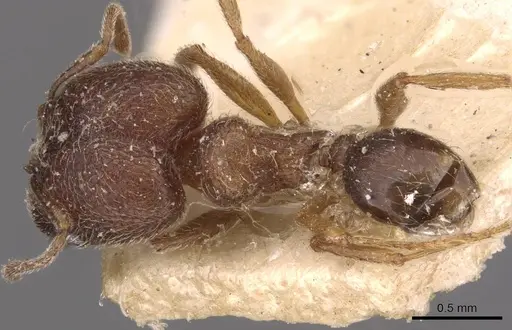
CASENT0907846
View on AntWeb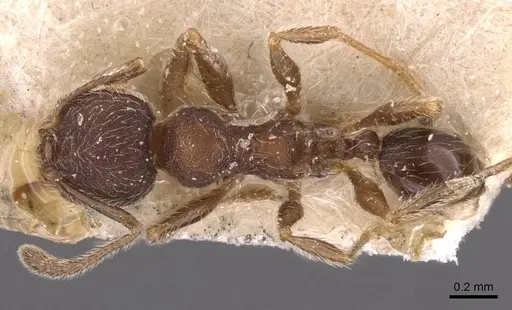
Literature
Loading distribution map...Loading products...