
Pheidole batrachorum
- Sci. Name
- Pheidole batrachorum
- Tribe
- Attini
- Subfamily
- Myrmicinae
- Author
- Wheeler, 1922
- Distribution
- Found in 4 countries
Introduction
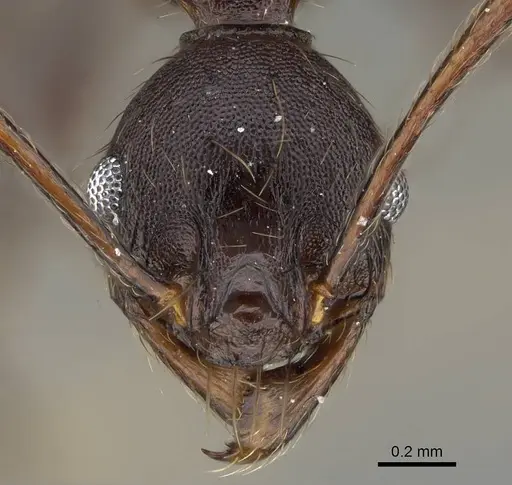
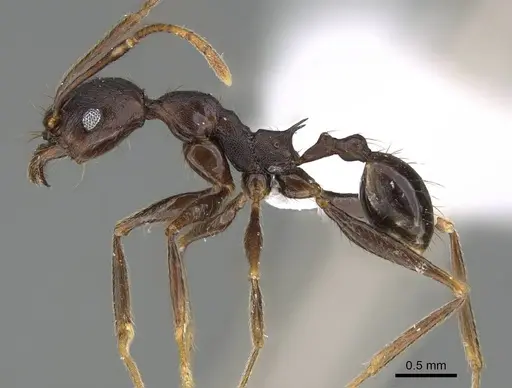
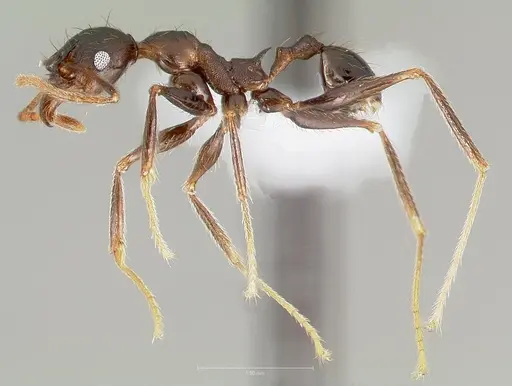
Pheidole batrachorum is a small ant species belonging to the pulchella species group, native to the tropical rainforests of Central Africa. Size data unavailable - inferred from Pheidole genus (~2-4 mm for minor workers, ~5-8 mm for major workers) . Both castes are reddish brown to dark brown in color, with minor workers displaying an elliptical and relatively narrow head shape, long antennal scapes, and distinctive hairs projecting laterally from the head margin . This species has an unusual history - it was originally described in 1922 by Wheeler from specimens collected from the stomachs of toads and frogs in the Congo rainforest, making it one of the few ant species ever discovered through predator stomach analysis . The species was later synonymized but revived as a valid species in 2012 following taxonomic revision .
Quick Summary
- Difficulty: Medium
- Origin & Habitat: Tropical rainforest of Central Africa (Democratic Republic of Congo, Gabon, and Central African Republic). In the wild, they nest in rotten logs and leaf-litter on the forest floor [1][5].
- Colony Type: Unconfirmed, likely single-queen colonies based on typical Pheidole patterns, but colony structure has not been directly documented for this species.
- Size & Growth:
- Queen: size data unavailable
- Worker: size unknown, inferred from Pheidole genus (~2-4 mm for minor workers, ~5-8 mm for major workers)
- Colony: Unknown, no colony size data exists
- Growth: Unknown, development has not been studied
- Development: Unknown, development has not been studied (Related Pheidole species typically develop from egg to worker in 5-8 weeks at warm temperatures, but this is unconfirmed for Pheidole batrachorum.)
- Antkeeping:
- Temperature: Keep warm and stable, roughly low-to-mid 20s°C. As a tropical rainforest species, they likely require consistent warmth.
- Humidity: Keep the nest substrate consistently moist but not waterlogged. Provide a humidity gradient if possible.
- Diapause: Unlikely, as a tropical species, they probably do not require a true hibernation period.
- Nesting: In captivity, they do well in Y-tong (AAC), plaster, or soil nests. They prefer tight chambers and narrow passages scaled to their tiny minor workers. Avoid tall, open spaces.
- Behavior: Major workers (soldiers) defend the colony and crack seeds, while minor workers handle brood care and foraging. Pheidole species are generally non-aggressive but will defend their nest if threatened. They are active foragers that search for seeds, dead insects, and other food sources. Minor workers are small enough to potentially escape through small gaps, use fine mesh and secure barriers.
- Common Issues: escape prevention is critical due to their very small minor workers squeezing through tiny gaps, humidity control is essential, too dry and colonies will fail, too wet causes mold, tropical temperature requirements mean they cannot tolerate cool rooms, slow colony growth may cause keepers to lose patience and overfeed, wild-caught colonies may have parasites that can devastate captive colonies
Discovery and Unusual Origins
Pheidole batrachorum has one of the most unusual origin stories in ant taxonomy. The species was first described in 1922 by William Morton Wheeler from specimens collected literally from the stomachs of toads and frogs. The type specimens came from the stomachs of Bufo polycerus (a toad) and Arthroleptis variabilis (a frog) collected in the rainforest near Akenge in the Democratic Republic of Congo [2][3]. This is extraordinarily rare in myrmecology, most ant species are described from specimens collected directly from nests or observed in the field, not from predator digestive tracts. The species name 'batrachorum' literally means 'of the frogs' in Latin, referencing this unusual discovery method. The species was later synonymized with Pheidole dea by Santschi in 1930,but was revived as a valid species in 2012 following detailed taxonomic revision by Fischer et al. [1][4].
Identification and Appearance
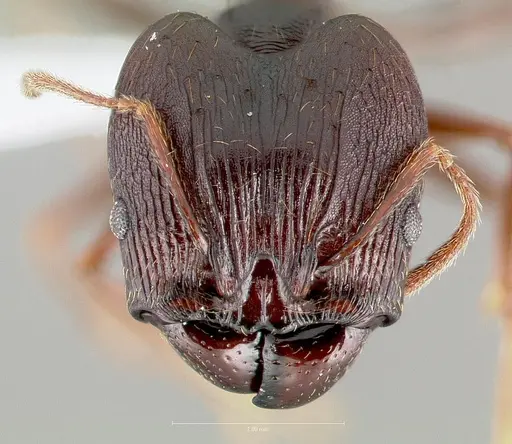
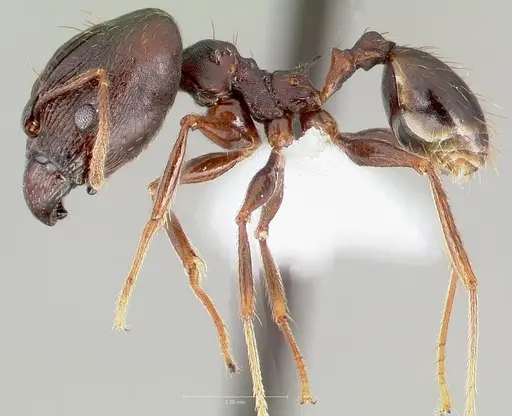
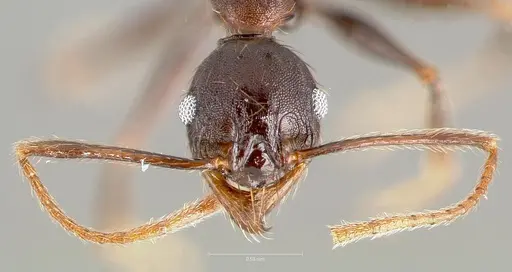
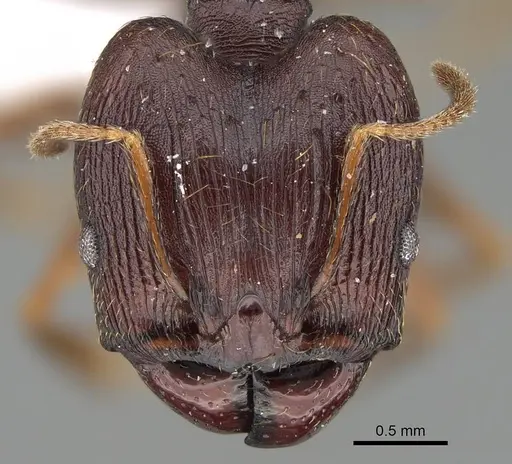
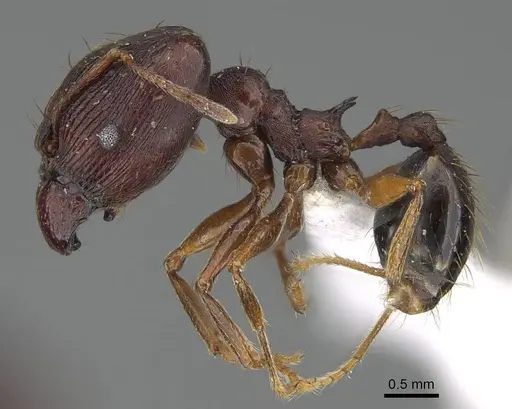
Pheidole batrachorum belongs to the pulchella species group, which is characterized by their distinctly punctate (dotted) sculpture. Minor workers are small, with an elliptical and relatively narrow head shape (cephalic index 79-86). They have notably long antennal scapes (scape index 153-172) and distinctive hairs projecting laterally from the head margin behind the eyes [1]. The frons, vertex, and most of the mesosoma are uniformly punctate, except for smooth spots medially between the eyes and on the posterior lateropronotum. Major workers are much larger, with rugose-punctate head sculpture and relatively long rugae. Their color ranges from reddish brown to dark brown, with the gaster typically darker than the head and mesosoma [1].
Natural Habitat and Distribution
This species is known from three Central African countries: the Democratic Republic of Congo, Gabon, and the Central African Republic [1][5]. They inhabit tropical rainforest environments, specifically living in rotting logs and within sifted leaf-litter on the forest floor [1]. The original specimens were collected from the stomachs of predators in what was described as rainforest habitat. Like other leaf-litter dwelling ants, they prefer dark, humid microhabitats with stable temperatures. In captivity, you should replicate these conditions with high humidity and minimal temperature fluctuations.
Feeding and Diet
As members of the Attini tribe, these ants are fungus farmers. They likely cultivate fungus on collected plant material, supplemented with seeds and insects. In captivity, offer a varied diet including protein sources (small insects like fruit flies, pinhead crickets, or mealworms) and carbohydrate sources (sugar water, honey, or diluted maple syrup). Provide a small piece of decaying leaf litter or fungus substrate to support their natural farming behavior. Feed protein 2-3 times per week and keep a constant sugar water source available.
Temperature and Humidity Requirements
As a tropical rainforest species from Central Africa, Pheidole batrachorum requires warm and humid conditions. Keep the nest area at a stable low-to-mid 20s°C. A heating cable placed on one side of the nest creates a gentle temperature gradient, allowing ants to regulate their own temperature by moving between warmer and cooler areas. Humidity should be maintained by keeping the nest substrate consistently moist but never waterlogged. Squeeze out excess water when dampening, and allow the surface to dry slightly between rehydrations. A water tube attached to the nest provides drinking water. Avoid placing the nest near air conditioning vents or windows with direct sunlight, as temperature fluctuations can stress the colony.
Nesting in Captivity
In their natural habitat, Pheidole batrachorum nests in rotting wood and leaf-litter. In captivity, they do well in several nest types. Y-tong (AAC) nests work well because you can control humidity precisely. Plaster nests also maintain humidity well. For a naturalistic approach, use a soil-filled container with pieces of rotting wood or cork bark buried partially in the substrate. Whatever nest type you choose, ensure chambers are appropriately sized, these are small ants, so tight chambers prevent wasted space and help maintain humidity. The nest should be dark (ants prefer dark nesting sites) and placed in an area with minimal vibration.
Frequently Asked Questions
How long does it take for Pheidole batrachorum to develop from egg to worker?
The exact development time has not been documented for this species. Based on typical Pheidole development patterns, expect approximately 5-8 weeks from egg to first worker at optimal tropical temperatures (around 26°C). Growth may be slower at cooler temperatures.
What do Pheidole batrachorum ants eat?
As Attini ants, they are fungus farmers. They likely cultivate fungus on collected plant material, supplemented with seeds and insects. Offer small protein sources (fruit flies, pinhead crickets, small mealworms) 2-3 times per week, and keep a constant sugar water or honey source available. Provide a small piece of decaying leaf litter or fungus substrate to support their natural farming behavior.
Are Pheidole batrachorum ants aggressive?
Pheidole species are generally not aggressive toward humans but will defend their nest if threatened. Major workers have powerful mandibles and can deliver a nippy bite. They are not considered dangerous to keepers.
Do Pheidole batrachorum ants need hibernation?
As a tropical species from Central Africa, they likely do not require a true hibernation period. However, a slight temperature reduction (by 2-4°C) during the dry season may be natural and potentially beneficial. Avoid sudden temperature drops.
How big do Pheidole batrachorum colonies get?
The maximum colony size is unknown, this data has not been documented in scientific literature. Based on related species in the pulchella group, colonies likely reach several hundred to perhaps a thousand workers at maturity.
Can I keep multiple Pheidole batrachorum queens together?
The colony structure (monogyne vs polygyne) has not been documented for this species. Most Pheidole are single-queen colonies. Combining unrelated queens is not recommended as it often leads to fighting.
What temperature should I keep my Pheidole batrachorum colony at?
Keep them warm at a stable low-to-mid 20s°C. As a tropical rainforest species, they need consistent warmth. A heating cable on one side of the nest creates a gradient they can regulate themselves.
Why were these ants found in frog stomachs?
This is how the species was originally discovered! Wheeler described Pheidole batrachorum in 1922 from specimens found in the stomachs of toads and frogs in the Congo rainforest. This is extremely unusual in ant taxonomy. The ants were likely prey items, not parasites, the frogs and toads were eating the ants, not the other way around.
Are Pheidole batrachorum ants good for beginners?
This species is rated as Medium difficulty. While not the hardest ant to keep, the lack of documented care information means you may need to experiment with conditions. Their small size and specific humidity requirements make them better suited for keepers with some experience.
What size escape prevention do I need for Pheidole batrachorum?
Excellent escape prevention is essential. Minor workers are very small (under 1mm) and can squeeze through tiny gaps. Use fine mesh (at least 0.5mm), secure lids, and barrier tape (fluon) on any edges. Check for gaps regularly.
Report an Issue
The current care sheet is based fully on literature. See inconsistencies, or something that's incorrect? Please , it will be resolved after review from an admin. Contributing to the blogs tab also helps providing information, to make us be able to further improve the caresheets. Thank you for your support!
References

This caresheet is licensed under CC BY-SA 4.0 .
Community Blogs
CASENT0401832
View on AntWeb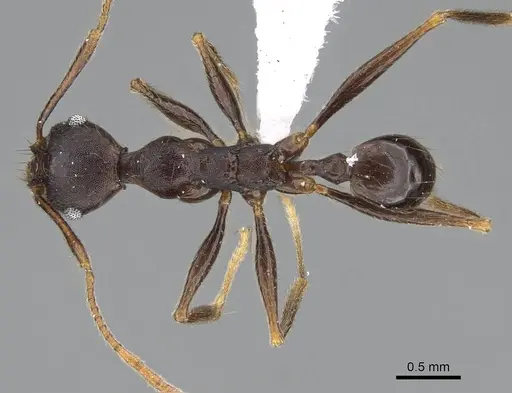
CASENT0405366
View on AntWeb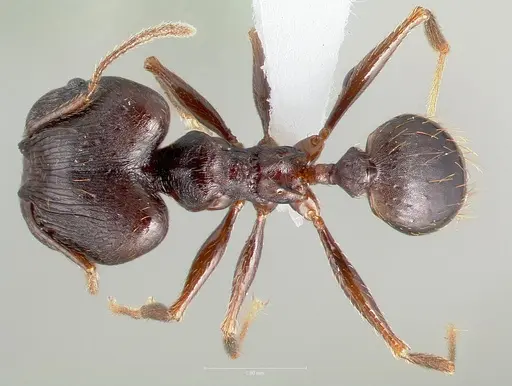
CASENT0405368
View on AntWeb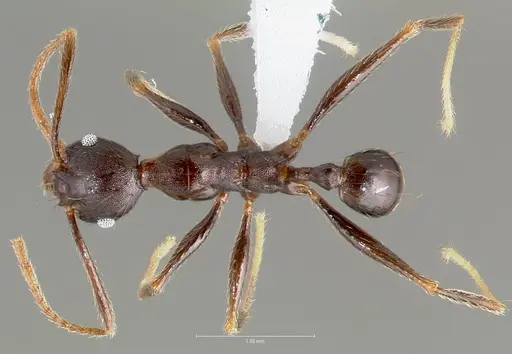
CASENT0415367
View on AntWeb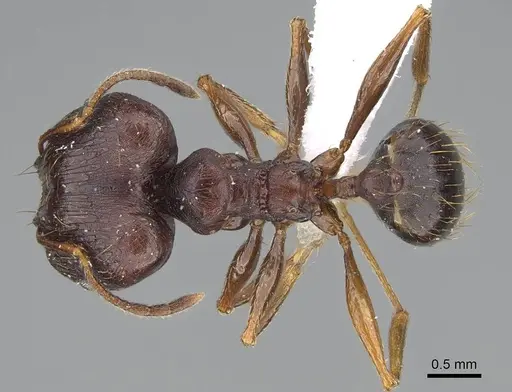
Literature
Loading distribution map...Loading products...