
Pheidole antranohofa
- Sci. Name
- Pheidole antranohofa
- Tribe
- Attini
- Subfamily
- Myrmicinae
- Author
- Salata & Fisher, 2020
- Distribution
- Found in 1 countries
Introduction
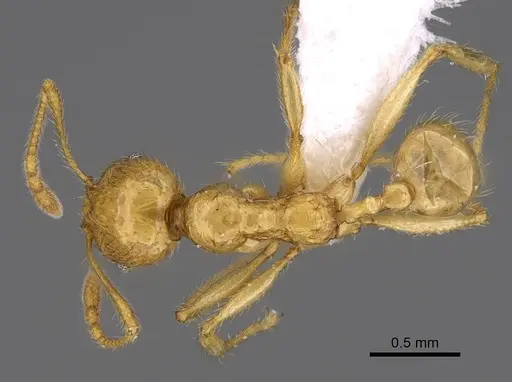
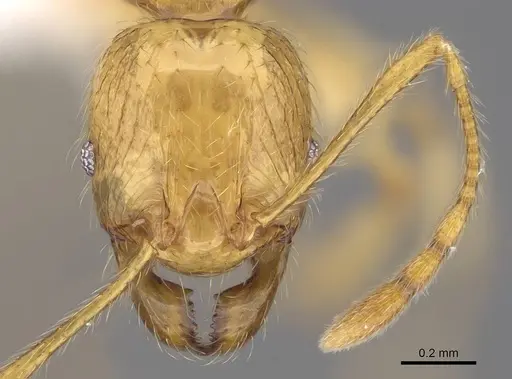
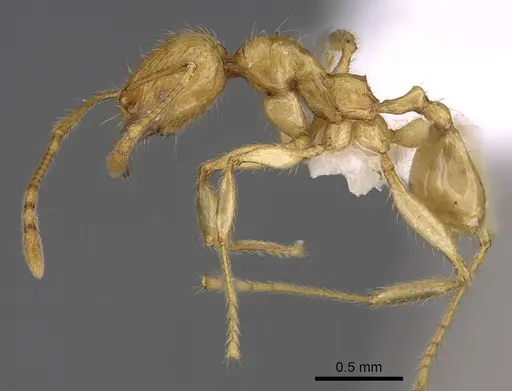
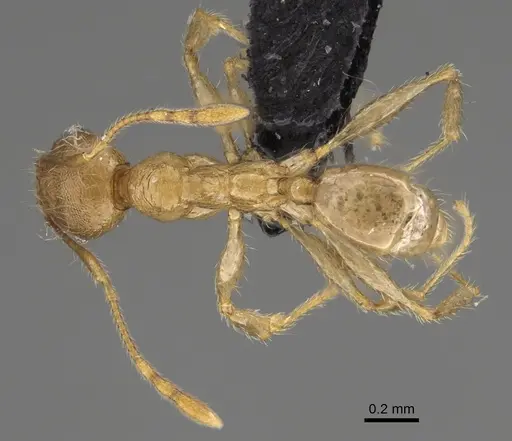
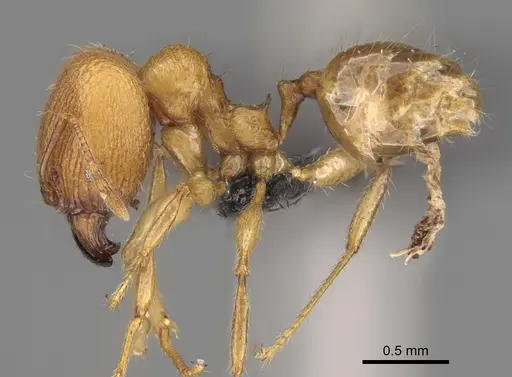
Pheidole antranohofa is a moderately large Pheidole species endemic to Madagascar, described in 2020. Major workers have a yellowish-orange body with darker mandibles, while minor workers are dark yellow. This species is known only from its type locality in Parc National de Marojejy in northern Madagascar, where it nests in rotten logs, root mats, and tree stumps at 1325 meters elevation in montane rainforest . This newly described species has limited data, making it challenging for antkeepers. Minor workers are morphologically indistinguishable from the closely related Pheidole sikorae, which has a broader distribution across Madagascar. As a montane rainforest species, it likely prefers cooler, humid conditions compared to lowland tropical ants.
Quick Summary
- Difficulty: Expert
- Origin & Habitat: Northern Madagascar (Antsiranana province), Parc National de Marojejy at 1325m elevation in montane rainforest. Nests found in rotten logs, root mats, and rotten tree stumps [1].
- Colony Type: Colony structure is unconfirmed for this species. Most Pheidole species are monogyne (single queen colonies), but specific data for P. antranohofa is not available.
- Size & Growth:
- Queen: size data unavailable
- Worker: ~3-4 mm, inferred from Pheidole genus
- Colony: Unknown, no colony size data available
- Growth: Unknown
- Development: Unconfirmed, estimate 6-8 weeks based on Pheidole genus patterns, but no direct data [1] (Development timeline not studied, estimates based on genus patterns for similar species.)
- Antkeeping:
- Temperature: Based on montane origin, keep around 20-24°C and avoid temperatures above 28°C [1]
- Humidity: Keep nest substrate consistently moist but not waterlogged, as they nest in rotting wood in humid environments [1]
- Diapause: Unconfirmed, observe colony behavior for seasonal slowdowns and consider slight temperature reduction if activity decreases
- Nesting: Natural nesting in rotten logs, root mats, in captivity, use moist plaster, Y-tong, or naturalistic setups with rotting wood [1]
- Behavior: Pheidole species are generally non-aggressive and colony-focused. Major workers process seeds, while minors handle foraging. Escape risk is moderate due to small size, so ensure enclosures are secure.
- Common Issues: newly described species means limited care information, expect a learning curve., high humidity requirements can lead to mold if ventilation is inadequate., no confirmed data on colony founding or development timelines makes captive breeding challenging., montane origin means temperature sensitivity, avoid overheating., limited availability since this species is only known from one protected location in Madagascar.
Origin and Discovery
Pheidole antranohofa was described in 2020 by Salata and Fisher as part of a revision of the Pheidole sikorae species group. The species name comes from its type locality, Antranohofa, in Parc National de Marojejy, Madagascar. It is known only from this location, collected at 1325m elevation in montane rainforest [1].
Identification and Morphology
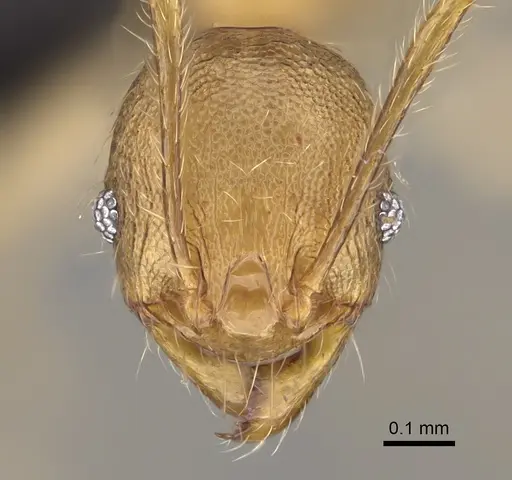
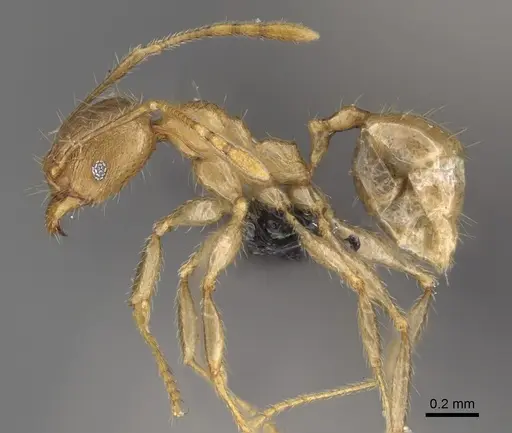
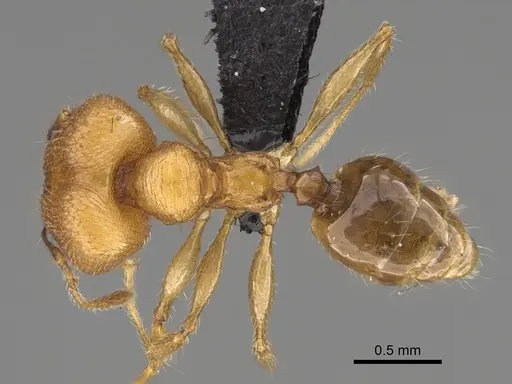
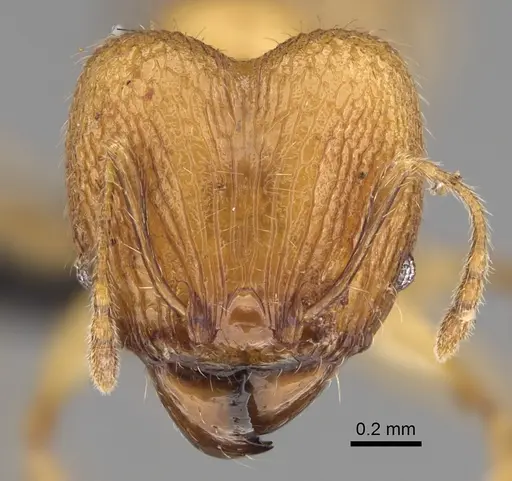
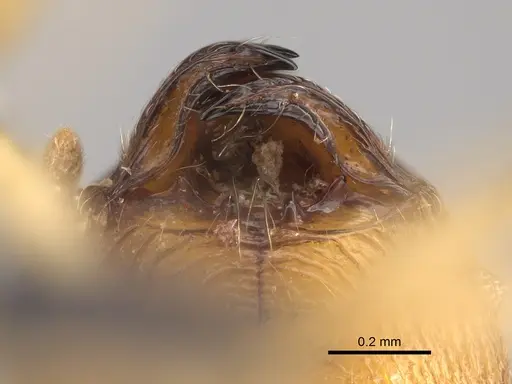
This is a moderately large Pheidole species. Major workers have a yellowish-orange body with darker mandibles and head, while minor workers are dark yellow. Major workers have a sub-oval head that widens posteriorly with dense pilosity and rugofoveolate sculpture. Minor workers are smoother with reduced sculpture. Major workers can be distinguished from Pheidole sikorae by developed mesosoma sculpture, but minors are indistinguishable [1].
Natural Nesting Habitat
In the wild, nests are found in rotten logs, root mats, and tree stumps in montane rainforest at 1325m elevation. This indicates a preference for moist, shaded microhabitats with decaying plant material. Replicate these conditions in captivity by providing consistently moist nesting materials [1].
Housing and Nest Setup
Use a naturalistic setup with rotting wood pieces or cork bark. Keep nest material moist but not waterlogged. A hybrid setup with a moist plaster or Y-tong nest connected to an outworld works well. Ensure humidity control and provide both moist and slightly drier areas for the ants to regulate conditions [1].
Temperature and Humidity Requirements
As a montane species, keep temperatures around 20-24°C and avoid above 28°C. Monitor colony activity: clustering may indicate too cold, while avoiding the nest may indicate too warm. Maintain high humidity (70-85%) with a water reservoir and misting as needed [1].
Feeding and Diet
Pheidole ants are generalist foragers. Offer small seeds, sugar water or honey, and protein sources like fruit flies or mealworms. Feed protein 2-3 times weekly and maintain constant sugar availability. Remove uneaten food to prevent mold.
Frequently Asked Questions
How long does it take for Pheidole antranohofa to produce first workers?
The development timeline is unconfirmed. Based on Pheidole genus patterns, estimate 6-8 weeks from egg to first worker at optimal temperature, but this is an estimate since no direct data exists [1].
What temperature do Pheidole antranohofa ants need?
As a montane species, they prefer cooler conditions around 20-24°C. Avoid temperatures above 28°C [1].
Are Pheidole antranohofa good for beginners?
No, this is an expert-level species due to limited data and unknown care requirements. Recommended only for experienced antkeepers.
What do Pheidole antranohofa ants eat?
They are generalist foragers. Offer small seeds, sugar water or honey, and small insects. Major workers process seeds, so include seeds in their diet.
How big do Pheidole antranohofa colonies get?
Colony size is unknown for this species. No published data on colony size exists.
What humidity do Pheidole antranohofa need?
High humidity is essential. Keep nest substrate consistently moist but not waterlogged, as they nest in rotting wood [1].
Can I keep multiple Pheidole antranohofa queens together?
Colony structure is unconfirmed. Most Pheidole are monogyne, but without specific data, it is not recommended to house multiple queens together.
What type of nest should I use for Pheidole antranohofa?
Naturalistic setups with rotting wood, cork bark, or moist plaster nests work best. The nest must maintain consistent moisture [1].
Do Pheidole antranohofa need hibernation?
Diapause requirements are unconfirmed. Observe colony for seasonal slowdowns and consider a slight temperature reduction if activity decreases, but do not force hibernation without evidence.
Report an Issue
The current care sheet is based fully on literature. See inconsistencies, or something that's incorrect? Please , it will be resolved after review from an admin. Contributing to the blogs tab also helps providing information, to make us be able to further improve the caresheets. Thank you for your support!
References

This caresheet is licensed under CC BY-SA 4.0 .
Community Blogs
Literature
Loading distribution map...Loading products...