
Pheidole annexa
- Sci. Name
- Pheidole annexa
- Tribe
- Attini
- Subfamily
- Myrmicinae
- Author
- Eguchi, 2001
- Distribution
- Found in 2 countries
Introduction
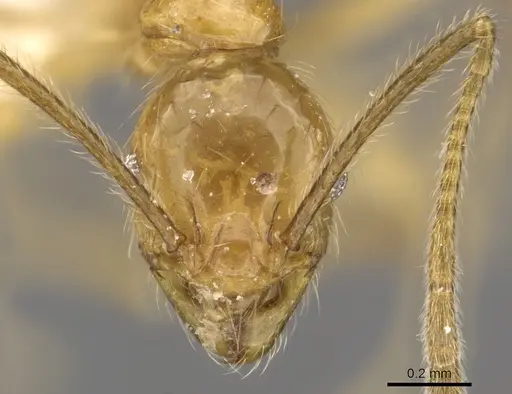
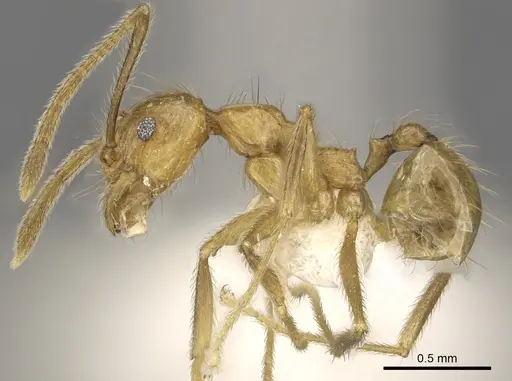
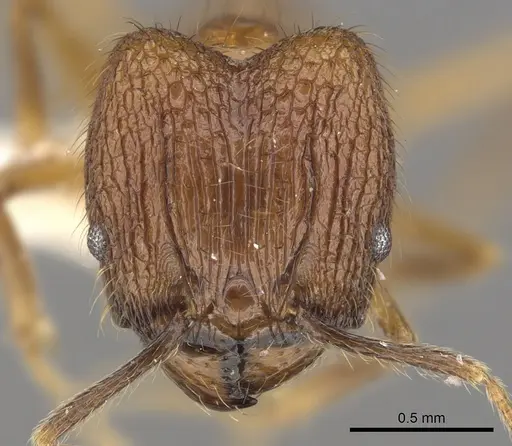
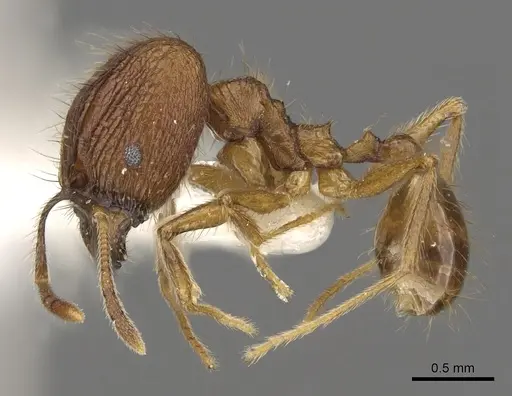
Pheidole annexa is a small to medium-sized ant species native to Southeast Asia, found in Borneo, Indonesia, Malaysia, the Philippines, and southern Thailand . Major workers measure up to 2.7 mm and minor workers up to 2.1 mm . This species is a forest specialist, inhabiting well-developed lowland rainforests where it lives in leaf litter and rotting wood . Unlike many generalist Pheidole species, P. annexa is highly sensitive to habitat disturbance and has never been found in secondary forests or agricultural areas like rubber plantations .
Quick Summary
- Difficulty: Medium
- Origin & Habitat: Native to the Indomalaya region, Borneo, Indonesia, Malaysia, Philippines, and southern Thailand. This is a forest specialist species found in well-developed lowland rainforests, particularly kerangas and dipterocarp forests [1][3]. They live in leaf litter and rotting wood in primary forest habitats.
- Colony Type: Monogyne, colonies have a single queen. The researcher who described this species specifically noted never encountering colonies with more than one dealate queen [1].
- Size & Growth:
- Queen: Size data unavailable, no total length measurements provided in literature.
- Worker: Major workers: up to 2.7 mm, Minor workers: up to 2.1 mm [1]
- Colony: Up to several hundred workers, estimated from typical Pheidole colonies.
- Growth: Moderate, typical for small tropical Pheidole species.
- Development: 6-10 weeks at tropical temperatures. (Development time estimated based on typical Pheidole development at 24-28°C. Minor workers develop faster than majors.)
- Antkeeping:
- Temperature: Keep at 24-28°C, based on tropical lowland rainforest habitat. A gentle gradient is beneficial but not required if ambient temperature stays within range.
- Humidity: Keep nest substrate consistently moist but not waterlogged, based on forest floor habitat. Provide a water tube for drinking water.
- Diapause: No, as a tropical species, they do not require hibernation.
- Nesting: Prefer humid nests with tight chambers, such as Y-tong (AAC) or naturalistic setups with moist substrate [1]. Avoid dry conditions entirely.
- Behavior: This species is relatively calm with typical colony defense behaviors. Majors serve as soldiers and foragers while minors handle brood care and nest maintenance. They are likely predatory or scavengers based on their trophic position (high δ15N values indicate a higher trophic level) [4]. They are not aggressive toward keepers but will defend the nest. Escape prevention should be moderate, minors are small (1.8 mm) and can escape through standard barrier gaps.
- Common Issues: forest specialist sensitivity, they are highly sensitive to dry conditions and may decline in suboptimal humidity [3], slow colony establishment, like many forest species, founding colonies may take time to establish, habitat specialist stress, wild-caught colonies may struggle with captive conditions after being adapted to primary forest, escape risk, minors are small and can escape through standard barrier gaps, overheating danger, tropical forest species are not heat tolerant and should not be exposed to temperatures above 32°C
Nest Preferences and Housing
Pheidole annexa naturally nests in rotting wood, leaf litter, and soil in well-developed forest habitats [1]. In captivity, they do best in setups that replicate these conditions. A Y-tong (AAC) nest with moist chambers works well, as does a naturalistic setup with moist soil and pieces of rotting wood. The key is maintaining high humidity while ensuring good ventilation to prevent mold. These ants are small, so chambers should be appropriately sized, not too large or they may feel insecure. A test tube setup can work for founding colonies, but expect to move them to a more spacious formicarium once the colony reaches 30-50 workers. Avoid dry nest materials entirely, this species is a forest specialist adapted to consistently moist conditions.
Feeding and Diet
Based on their trophic position (high δ15N values of 6.50), Pheidole annexa occupies a higher trophic level, suggesting they are predatory or scavengers that consume other small invertebrates [4]. In captivity, offer them small live prey like fruit flies, pinhead crickets, and small mealworms. They will also accept protein-based commercial ant foods. Sugar sources like honey water or sugar water are typically accepted, though protein should make up the majority of their diet. Feed them 2-3 times per week, adjusting based on colony size and consumption. Always remove uneaten prey after 24 hours to prevent mold. A constant water source should be available, a water tube with a cotton plug works well.
Temperature and Seasonal Care
As a tropical lowland rainforest species from Borneo and surrounding regions, Pheidole annexa requires warm, stable temperatures. Keep the nest area at 24-28°C, this matches their natural habitat in dipterocarp and kerangas forests. Room temperature in most homes is often adequate, but you may need a small heating cable on one side of the nest during cooler months. They do not tolerate temperature drops and have no diapause requirement, keep them warm year-round. Avoid placing the nest near air conditioning vents or drafty areas. Unlike temperate species, they remain active throughout the year and do not slow down in winter. The main concern is maintaining consistent warmth without overheating. [1]
Behavior and Colony Dynamics
This species exhibits typical Pheidole colony structure with distinct major and minor worker castes. Major workers serve as soldiers and foragers, while minor workers handle brood care and nest maintenance [1]. Colonies are monogyne with a single queen, and the queen is likely long-lived like other Pheidole species. They are not particularly aggressive but will defend the nest if threatened. Workers are active foragers that search for food both on the forest floor and in leaf litter. In captivity, they will readily explore and forage in the outworld. The colony will establish a scent trail to food sources once discovered.
Field Research and Conservation Notes
Pheidole annexa is notable as a forest specialist that has never been found in disturbed habitats like secondary forests or rubber plantations [3]. Studies have shown that forest fragmentation significantly reduces genetic diversity in this species [5], making them an indicator of healthy, intact forest ecosystems. They are part of the leaf-litter ant community in Bornean rainforests and are collected using Winkler extraction methods from leaf litter samples. This sensitivity to habitat disturbance means wild colonies may be stressed if collected from fragmented areas. For antkeepers, this underscores the importance of providing stable, high-quality conditions that replicate their natural forest floor habitat.
Frequently Asked Questions
Is Pheidole annexa good for beginners?
This species is rated as Medium difficulty. While not the hardest species to keep, they have specific humidity requirements that make them better suited for keepers who have already established successful ant colonies. Their forest specialist nature means they are less forgiving of suboptimal conditions than generalist species.
How long does it take for Pheidole annexa to produce first workers?
Expect first workers (nanitics) to emerge in 6-10 weeks at optimal tropical temperatures (24-28°C). This is typical for small Pheidole species. The queen will seal herself in a chamber and raise the first brood alone until the nanitics emerge.
Can I keep multiple Pheidole annexa queens together?
No. This species is confirmed monogyne, colonies have only a single queen [1]. Multiple unrelated queens will fight. Only keep one queen per colony.
What do Pheidole annexa ants eat?
They are predatory/scavenging based on their trophic position [4]. Feed them small live prey like fruit flies, pinhead crickets, and small mealworms. They also accept protein-based commercial foods and sugar sources like honey water. Protein should make up the majority of their diet.
What temperature do Pheidole annexa need?
Keep them at 24-28°C (tropical room temperature). They are adapted to stable warm conditions in lowland rainforests and do not tolerate cool temperatures. A small heating cable may be needed in cooler climates.
Do Pheidole annexa need hibernation?
No. As a tropical species from Southeast Asian rainforests, they do not require hibernation or winter cooling. Keep them at stable warm temperatures year-round.
When should I move Pheidole annexa to a formicarium?
Move them when the colony reaches 30-50 workers or when the test tube becomes crowded. They prefer humid nests with tight chambers, so a Y-tong or naturalistic setup works well. Avoid moving too early as founding colonies can be sensitive to disturbance.
Why are my Pheidole annexa dying?
The most common causes are low humidity (they need consistently moist substrate), temperature issues (too cold or too hot), or stress from wild-caught origins. Ensure the nest is consistently moist, temperatures are stable at 24-28°C, and they have adequate protein. Forest specialists are more sensitive than generalist species.
How big do Pheidole annexa colonies get?
Colony size is not directly documented, but typical Pheidole colonies reach up to several hundred workers. Growth is moderate, expect several months to a year to reach 100 workers from a founding colony.
Report an Issue
The current care sheet is based fully on literature. See inconsistencies, or something that's incorrect? Please , it will be resolved after review from an admin. Contributing to the blogs tab also helps providing information, to make us be able to further improve the caresheets. Thank you for your support!
References

This caresheet is licensed under CC BY-SA 4.0 .
Community Blogs
CASENT0901626
View on AntWeb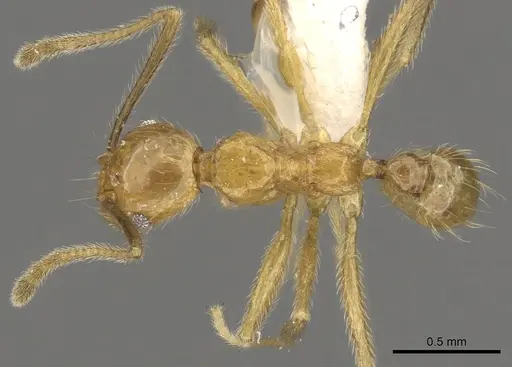
CASENT0901627
View on AntWeb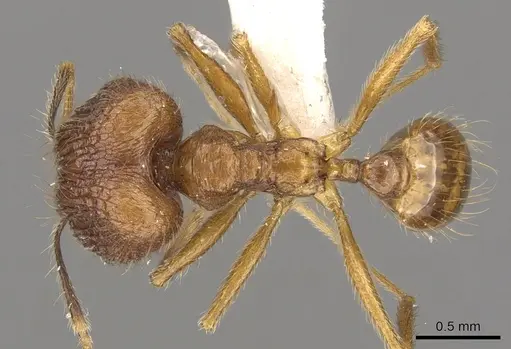
Literature
Loading distribution map...Loading products...