
Pheidole allarmata
- Sci. Name
- Pheidole allarmata
- Tribe
- Attini
- Subfamily
- Myrmicinae
- Author
- Wilson, 2003
- Distribution
- Found in 6 countries
Introduction
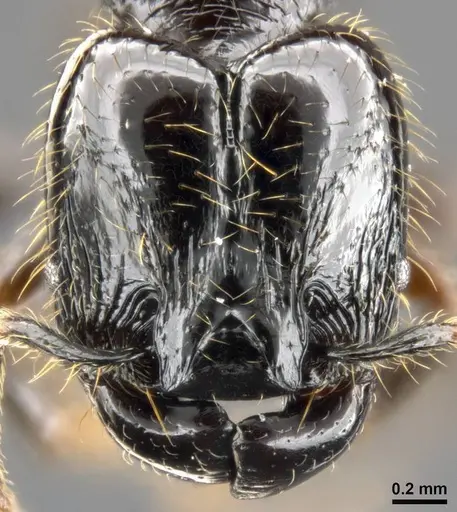
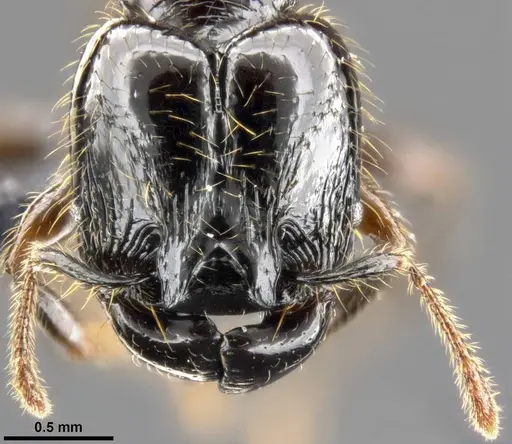
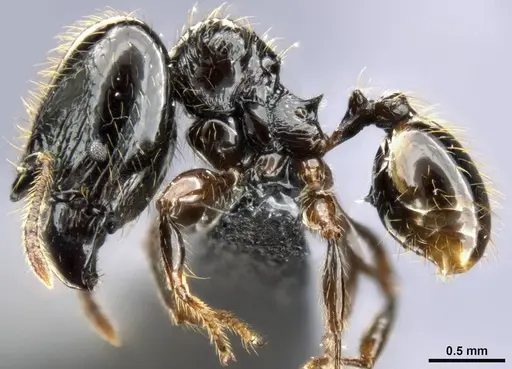
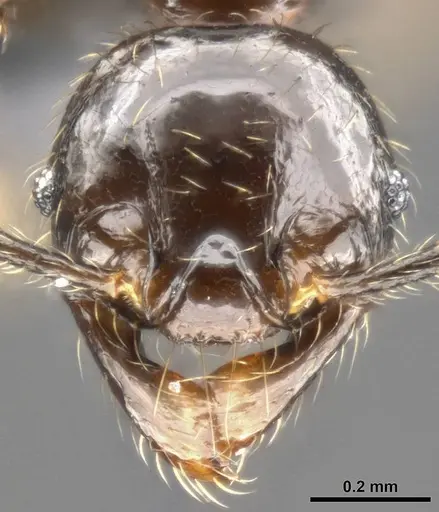
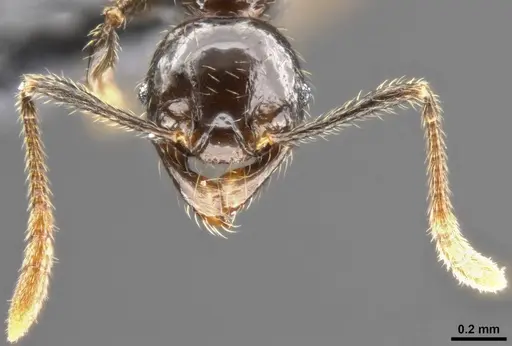
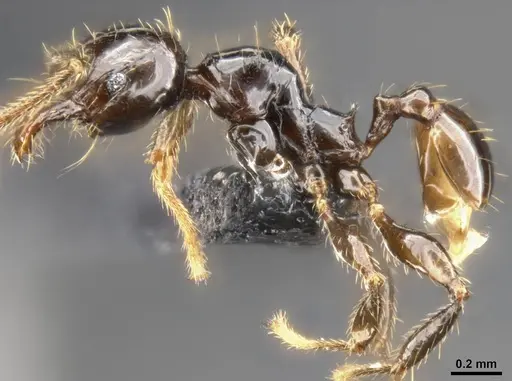
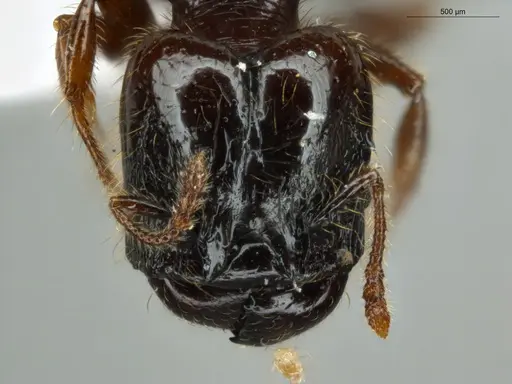
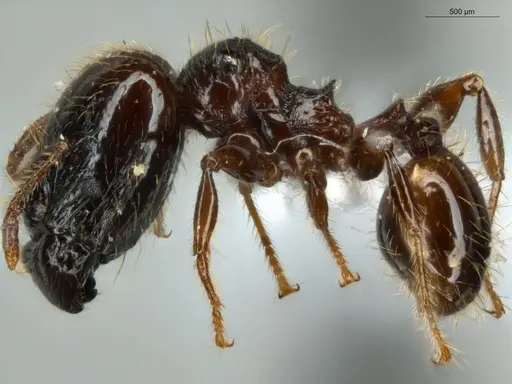
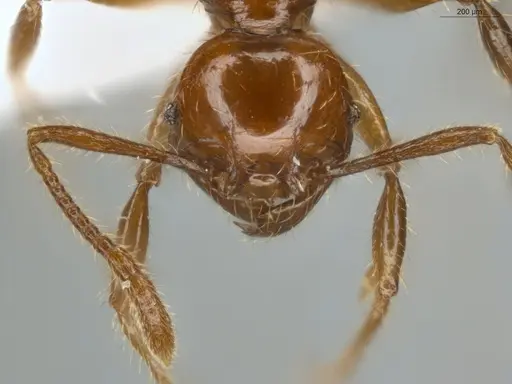
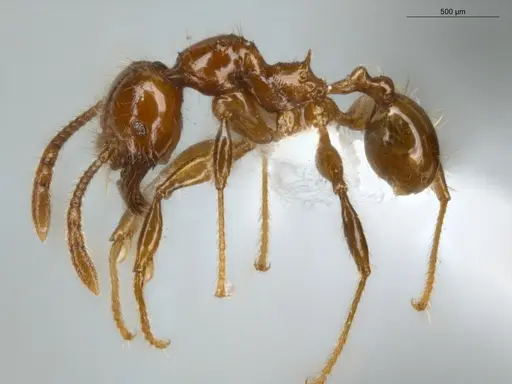
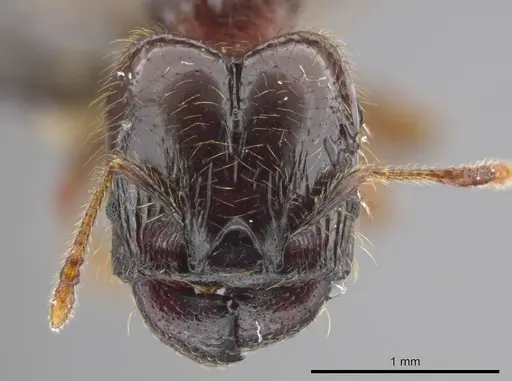
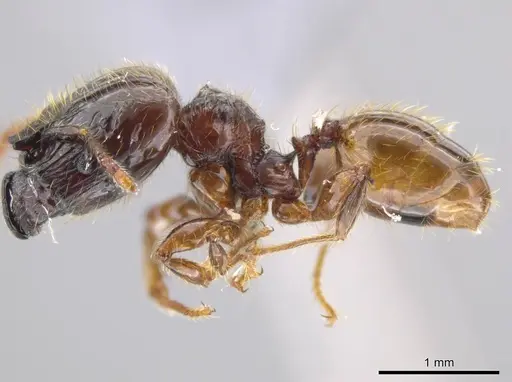
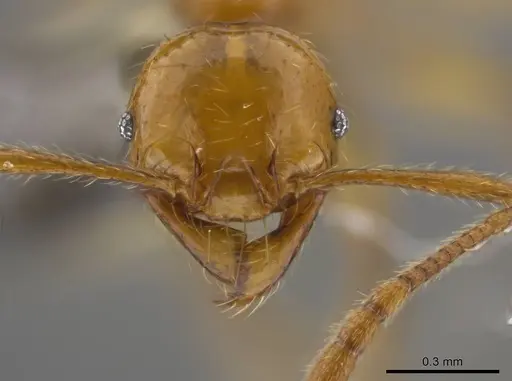
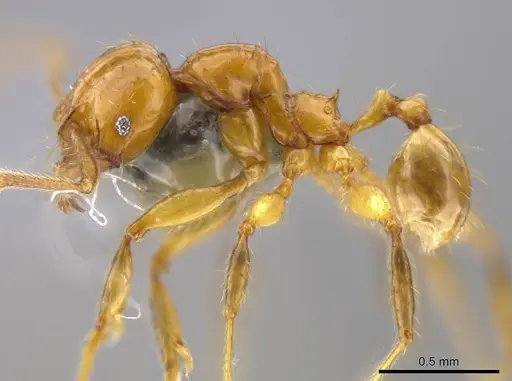
Pheidole allarmata is a small Amazonian ant species with major workers that have elongated frontal lobes projecting forward like thin spines, strongly developed humeri, and a spinose postpetiolar node. The body is largely smooth and glossy. Minor workers have long, thin erect propodeal spines and a nearly smooth shiny body. This species is found in the Amazon basin, including Brazil, Colombia, Ecuador, Peru, Suriname, and French Guiana, nesting in rotten sticks and twigs on the forest floor . Colonies are small with a single queen, and one nest contained a seed cache, suggesting opportunistic seed collection .
Quick Summary
- Difficulty: Medium
- Origin & Habitat: Amazonian rainforest regions of South America, including Brazil, Colombia, Ecuador, Peru, Suriname, and French Guiana. Found in terra firme rainforest, nesting in rotten sticks and twigs on the forest floor [3][2].
- Colony Type: Monogyne (single-queen colonies). Colonies are small with up to 100 workers and one queen [2].
- Size & Growth:
- Queen: size data unavailable
- Worker: size data unavailable
- Colony: Up to 100 workers [2]
- Growth: Moderate
- Development: Estimated 6-10 weeks based on typical Pheidole genus patterns (Development time may vary with temperature and conditions)
- Antkeeping:
- Temperature: Keep warm, around 24-28°C, based on Amazonian habitat inference
- Humidity: Keep nest substrate consistently moist but not waterlogged, as they are from rainforest floor [3][2]
- Diapause: No, tropical species do not require hibernation
- Nesting: Twig-nesting species, they naturally nest in small rotten sticks and twigs [3]. In captivity, use small test tubes for founding or snug chambers in Y-tong or plaster nests.
- Behavior: These ants are relatively docile and not aggressive toward keepers. Major workers serve as soldiers but are not particularly aggressive. Their very small size means escape prevention is critical, they can squeeze through tiny gaps [2].
- Common Issues: escape prevention is critical due to their tiny size, use fine mesh barriers and tight-fitting lids, colonies remain small, do not expect large colonies even when established, low flood tolerance, keep nest substrate moist but never waterlogged [3], slow growth compared to faster-developing species, patience is required, twig-nesting preference means they may not adapt well to large open formicaria without appropriate chamber sizes
Housing and Nest Setup
Pheidole allarmata naturally nests in small rotten sticks and twigs on the Amazon rainforest floor. In captivity, they do well in test tubes for founding colonies, or small Y-tong or plaster nests with chambers sized appropriately for their tiny workers. The chambers should be snug, these ants prefer tight spaces. If using a naturalistic setup, provide small pieces of rotting wood or cork bark as nesting material. Ensure the nest has a water reservoir to maintain humidity. Escape prevention is critical due to their very small size, use fine mesh on any ventilation holes and ensure lids fit tightly [3][2].
Feeding and Diet
As omnivores, Pheidole allarmata accepts a variety of foods. Offer protein sources like small insects (fruit flies, pinhead crickets, mealworms), and sugar sources like honey water or sugar water. One wild colony was observed with a seed cache, suggesting they may opportunistically collect and store seeds [2]. You can offer small seeds occasionally, but protein should be the primary focus. Feed small amounts 2-3 times per week, removing uneaten food promptly to prevent mold. Fresh water should always be available.
Temperature and Humidity
These Amazonian ants require warm and humid conditions. Maintain temperatures around 24-28°C year-round, they do not tolerate cool conditions. A heating cable placed on one side of the nest can create a temperature gradient. Humidity should be high, keep the nest substrate consistently moist but not saturated. As litter-dwelling ants from the Amazon floor, they are adapted to stable, humid conditions [3][2].
Colony Development
Pheidole allarmata colonies remain relatively small, typically under 100 workers even in established colonies [2]. This is normal for the species. Development from egg to worker likely takes 6-10 weeks based on typical Pheidole genus patterns, though this has not been directly studied for this species. The presence of distinct major and minor workers is characteristic of Pheidole, majors develop from larger larvae and serve as soldiers, while minors handle most daily tasks. Colonies grow slowly but steadily with proper care.
Behavior and Temperament
This species is relatively docile and not aggressive toward keepers. They are ground-foraging ants that search for food on the nest surface and surrounding area. The major workers, while visually striking with their elongated frontal lobes and spiny postpetiolar node, are not particularly aggressive. Activity levels are moderate, you will see foragers exploring the outworld regularly. Their small size means they are not a stinging concern, though they may bite if handled roughly. The key behavioral consideration is their excellent escape ability due to tiny size, always use proper escape prevention [2][1].
Frequently Asked Questions
How long does it take for Pheidole allarmata to produce first workers?
Based on typical Pheidole development, expect 6-10 weeks from egg to first worker. Actual timing depends on temperature, warmer conditions speed development.
Can I keep multiple Pheidole allarmata queens together?
No, this species is monogyne, meaning colonies have a single queen. Multiple unrelated queens will fight. Only introduce a second queen during the very brief dealate introduction window immediately after mating, and even then success is uncertain [2].
What size colony does Pheidole allarmata reach?
Colonies remain small, typically up to 100 workers even in established colonies. This is normal for the species and not a sign of poor care [2].
What do Pheidole allarmata eat?
They are omnivores, offer small insects (fruit flies, pinhead crickets, mealworms) as protein and sugar water or honey as carbohydrates. They may also accept small seeds occasionally [2].
Do they need hibernation?
No, as an Amazonian tropical species, they do not require hibernation. Keep them warm year-round.
What is the best nest type for Pheidole allarmata?
They naturally nest in small twigs and rotten sticks. In captivity, use small test tubes for founding colonies, or Y-tong or plaster nests with appropriately sized chambers. They prefer snug spaces [3][2].
Are Pheidole allarmata good for beginners?
They are moderate difficulty. Their small size requires careful attention to escape prevention, but their docile nature and simple care requirements make them manageable for intermediate antkeepers.
Why are my ants escaping?
Their tiny size means they can squeeze through very small gaps. Use fine mesh (at least 0.3mm), ensure all lids fit tightly, and check for any gaps around tubing connections [2].
Will they accept sugar water?
Yes, like most Pheidole species, they will readily accept sugar water or honey as a carbohydrate source. Provide it in a shallow container or cotton ball to prevent drowning.
Report an Issue
The current care sheet is based fully on literature. See inconsistencies, or something that's incorrect? Please , it will be resolved after review from an admin. Contributing to the blogs tab also helps providing information, to make us be able to further improve the caresheets. Thank you for your support!
References

This caresheet is licensed under CC BY-SA 4.0 .
Community Blogs
CASENT0282797
View on AntWeb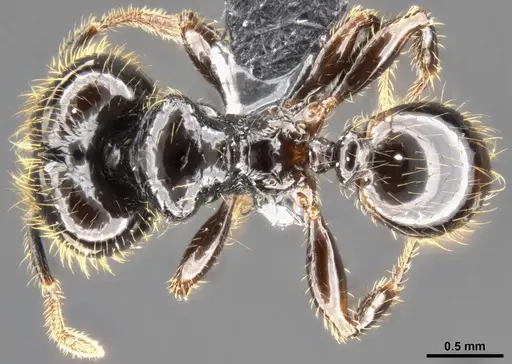
CASENT0282941
View on AntWeb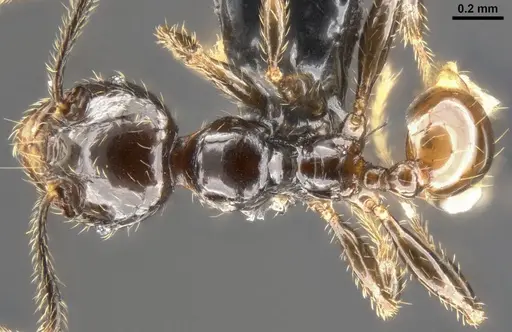
ECOFOG-IT14-0311-60-S
View on AntWeb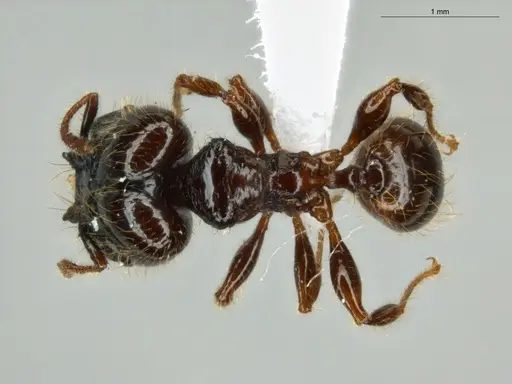
ECOFOG-IT14-0311-60
View on AntWeb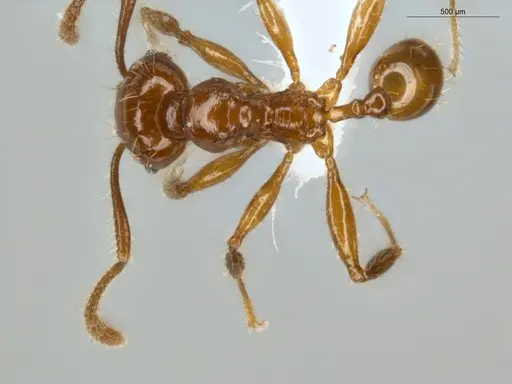
USNMENT00445114
View on AntWeb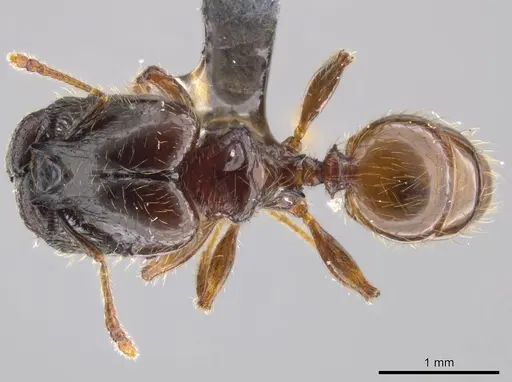
USNMENT00689909
View on AntWeb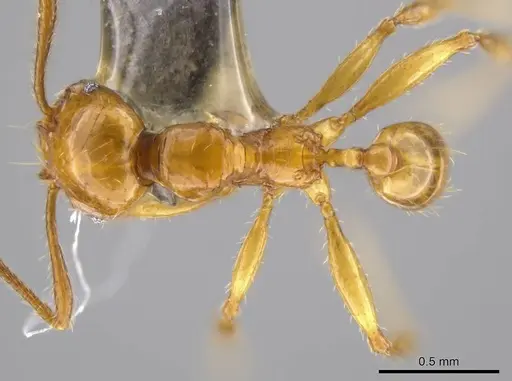
Literature
Loading distribution map...Loading products...