
Perissomyrmex snyderi
- Sci. Name
- Perissomyrmex snyderi
- Tribe
- Crematogastrini
- Subfamily
- Myrmicinae
- Author
- Smith, 1947
- Distribution
- Found in 3 countries
Introduction
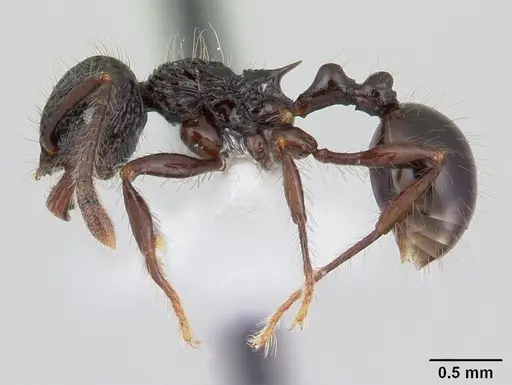
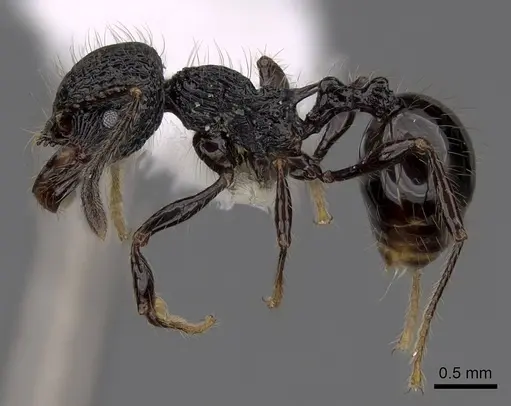
Perissomyrmex snyderi is a small, blackish ant with workers measuring 3.74-4.94mm in total length . It is the only Central American species in a genus otherwise found in Asia, making its distribution unusual . The genus name means 'strange ant' due to its distinctive morphological features . Workers are polymorphic, with both major and minor castes . This species was first described from specimens intercepted in quarantine in 1947 and was later rediscovered in cloud forests of southern Mexico and Guatemala in 1994,confirming its native status . Perissomyrmex snyderi has a relictual distribution, meaning it is a leftover from a once more widespread lineage, which is rare among ants .
Quick Summary
- Difficulty: Hard
- Origin & Habitat: Native to cloud forests of southern Mexico and Guatemala at 1500-2000m elevation, living in leaf litter [1][2].
- Colony Type: Unconfirmed, polymorphic workers documented, but queen number and social structure unknown.
- Size & Growth:
- Antkeeping:
- Temperature: Estimated 18-22°C based on cloud forest habitat.
- Humidity: Keep substrate consistently moist but not waterlogged, mimicking cloud forest floor.
- Diapause: Unknown, no specific data.
- Nesting: Prefer moist substrate nests like Y-tong (AAC), plaster, or soil nests with high humidity.
- Behavior: Workers are shy and non-aggressive. Defense mechanism is smearing venom rather than stinging, typical of Myrmicinae. Escape risk is moderate due to small size (under 5mm), so standard precautions are needed.
- Common Issues: high humidity requirements can lead to mold if ventilation is poor., cool temperatures needed, temperatures above 25°C may be harmful., small size requires tight chambers to prevent escape.
Natural History and Distribution
Perissomyrmex snyderi has an unusual distribution as the only Central American species in a genus otherwise found in Asia [1]. Scientists believe this represents a relictual distribution from a once more widespread lineage [3]. The species was first described in 1947 from specimens found in begonia roots from Guatemala intercepted in quarantine [2]. It was rediscovered in 1994 in cloud forest leaf litter in Chiapas, Mexico, and Guatemala, confirming its native status [2]. These cloud forests are at 1500-2000m elevation with high humidity and cool temperatures [1].
Identification and Morphology
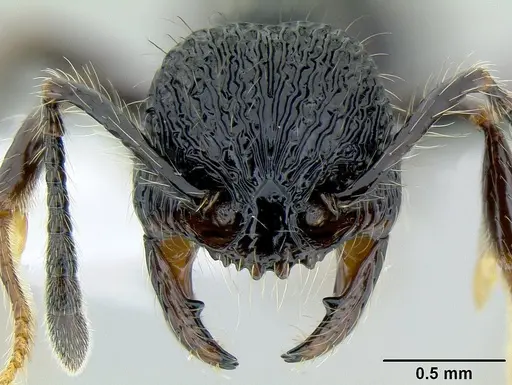
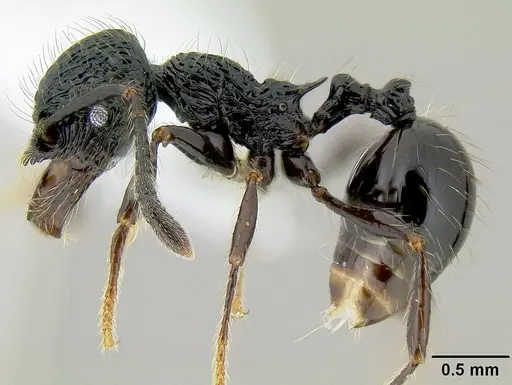
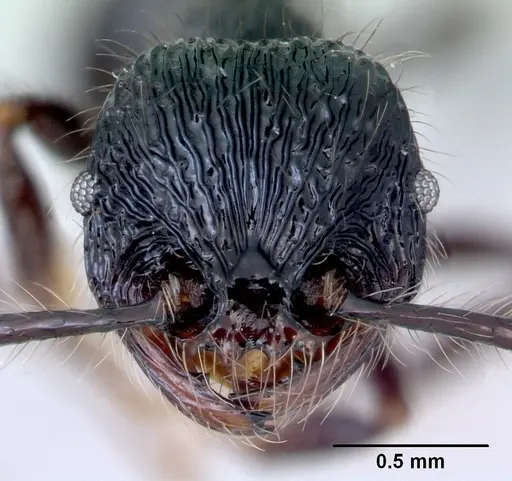
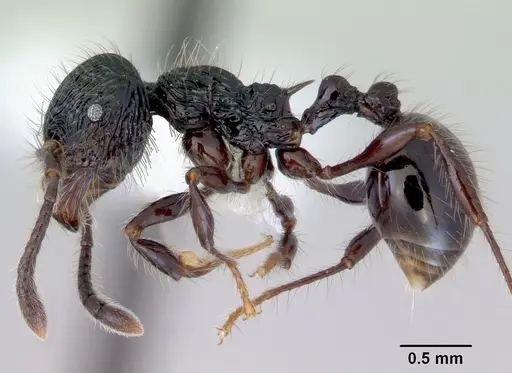
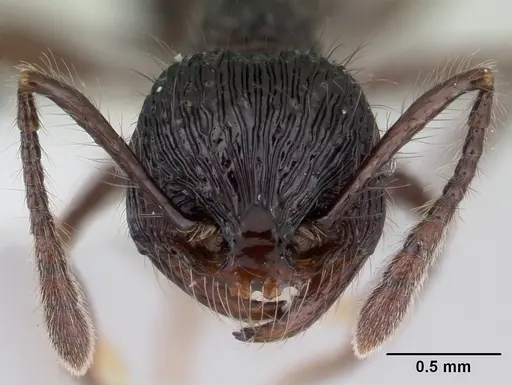
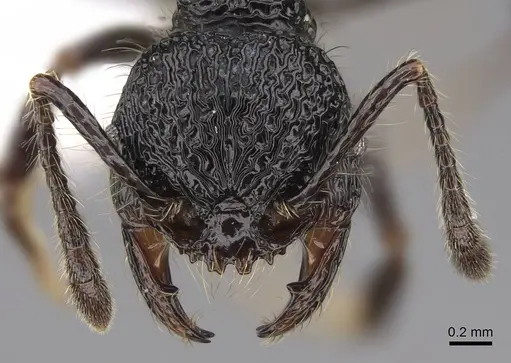
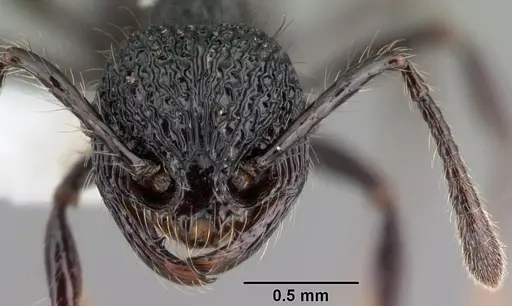
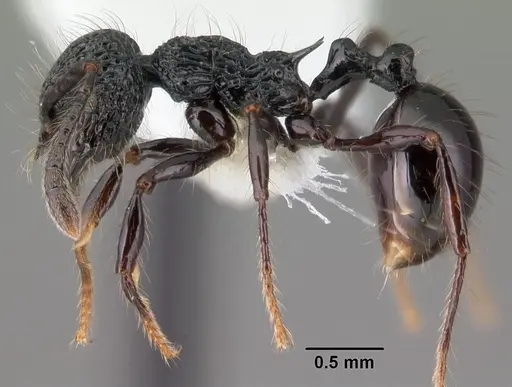
Workers of Perissomyrmex snyderi are small, measuring 3.74-4.94mm in total length, with a blackish body color [1]. They are polymorphic, meaning colonies contain both major and minor worker castes [1]. This species can be identified by a subpetiolar process (a small tooth-like projection on the underside of the petiole), which is unique among Perissomyrmex species [1]. The clypeus has three pairs of projections that vary in size and may fuse in major workers [1]. The sculpture on the head and mesosoma is coarse and irregularly ridged [1].
Housing and Nesting
Mimic their natural cloud forest floor habitat with a moist substrate nest. Use Y-tong (AAC), plaster, or soil nests with small chambers scaled to their size. Keep the nest substrate consistently moist but not waterlogged, and provide ventilation to prevent mold. Place the setup in a cool location away from direct heat.
Feeding and Diet
Their natural diet is not well studied, but as leaf-litter ants, they likely eat small insects and arthropods. In captivity, offer small protein sources like fruit flies or pinhead crickets, and occasional sugar water. Feed small amounts 2-3 times per week, removing uneaten food to prevent mold.
Temperature and Seasonal Care
Based on their cloud forest habitat, keep temperatures around 18-22°C and avoid warmth above 25°C. No specific diapause data exists, but a slight temperature reduction in winter may be appropriate. [1]
Challenges and Considerations
This species requires careful attention to humidity and temperature due to its cloud forest origins. High humidity can lead to mold, so ensure proper ventilation. Small size means escape prevention is critical. There is no captive breeding data, so keepers must monitor colony behavior closely.
Frequently Asked Questions
How long does it take for Perissomyrmex snyderi to develop from egg to worker?
No direct studies exist, but based on related species, estimated 6-10 weeks at optimal cool temperatures.
What temperature do Perissomyrmex snyderi ants need?
Keep them cool, around 18-22°C, based on their cloud forest habitat.
Are Perissomyrmex snyderi ants good for beginners?
No, due to rarity, specific care needs, and lack of captive data, they are better suited for experienced keepers.
Do Perissomyrmex snyderi ants sting?
No, they have a smear defense mechanism using venom, but do not sting, typical of Myrmicinae.
How big do Perissomyrmex snyderi colonies get?
Colony size is unknown, as this is a rarely collected species.
What do Perissomyrmex snyderi ants eat?
Likely small insects and arthropods from leaf litter, in captivity, offer fruit flies, pinhead crickets, and occasional sugar water.
Can I keep multiple Perissomyrmex snyderi queens together?
Colony structure is unknown, do not attempt combining queens without specific knowledge.
What is the best nest type for Perissomyrmex snyderi?
Moist substrate nests like Y-tong (AAC), plaster, or soil nests with high humidity.
Where is Perissomyrmex snyderi found in the wild?
Native to cloud forests of southern Mexico and Guatemala at 1500-2000m elevation [1][2].
Why is this ant called the 'strange ant'?
The genus name Perissomyrmex means 'strange ant' due to its unusual morphological features [2].
Do Perissomyrmex snyderi need hibernation?
Unknown, no specific data, but a slight temperature reduction in winter may be appropriate.
Why is Perissomyrmex snyderi so rare in antkeeping?
It has a limited distribution in cloud forests, lives hidden in leaf litter, and was rediscovered only in 1994 [2].
Report an Issue
The current care sheet is based fully on literature. See inconsistencies, or something that's incorrect? Please , it will be resolved after review from an admin. Contributing to the blogs tab also helps providing information, to make us be able to further improve the caresheets. Thank you for your support!
References

This caresheet is licensed under CC BY-SA 4.0 .
Community Blogs
CASENT0106226
View on AntWeb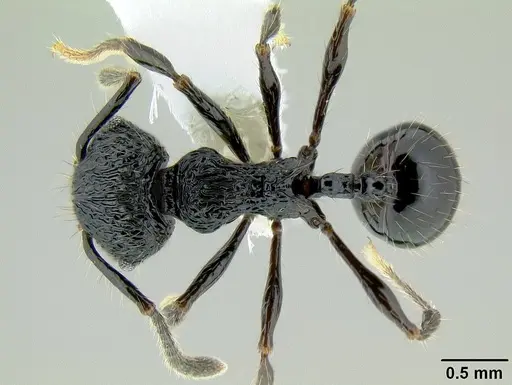
CASENT0172276
View on AntWeb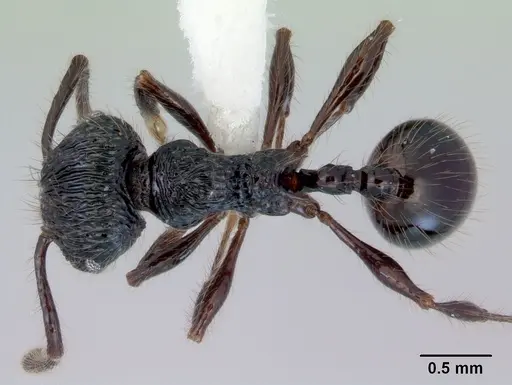
CASENT0178558
View on AntWeb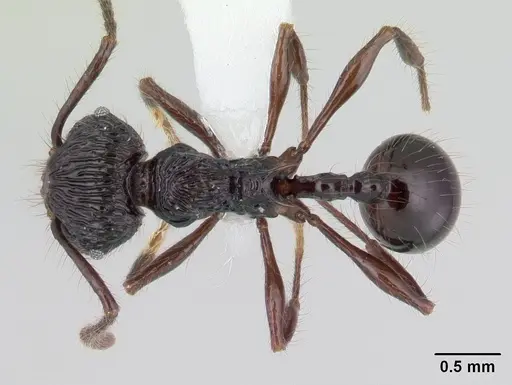
CASENT0922980
View on AntWeb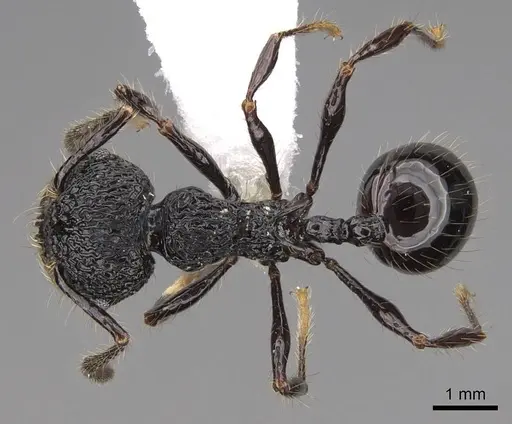
PSW11581-5
View on AntWeb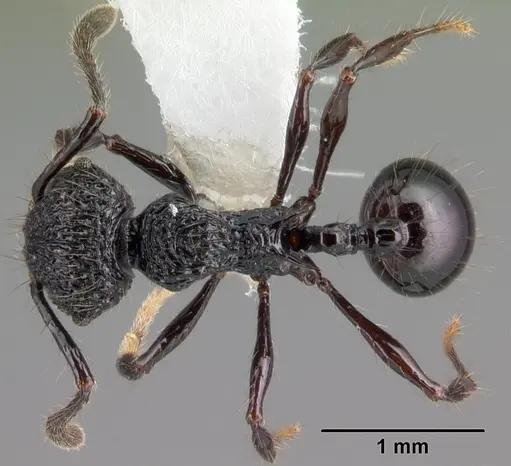
Literature
Loading distribution map...Loading products...